An induction hob kettle must be a stovetop kettle designated for induction and suitable for the particular hob. Check the actual model instructions, usable base dimensions, fill limits and handle arrangement before heating water. A stainless appearance, a whistle or a magnet that sticks to one spot does not establish the complete product’s suitability. Electric kettles with their own powered bases belong to a different appliance category and should not be placed on a hob.
The practical question is more specific than whether induction can boil water. It is whether your kettle can be recognized, supported and handled as its manufacturer intended on your appliance. This guide separates those checks, including the pouring step that a simple compatibility label does not describe. It does not supply a universal heating time, power setting or water capacity.
Start with the product model rather than the material named in a marketplace listing. Obtain instructions that clearly cover stovetop use and induction suitability. A seller may use the word kettle for a stovetop vessel, a plug-in appliance or a decorative item. Photographs can look similar while the intended heat source differs. Match the packaging, model number and supplied instructions before purchasing.
A kettle with an electrical connector, cord or dedicated powered base follows its own appliance instructions. It is not converted into stovetop cookware by removing that base. Likewise, a vessel sold only for another heat source should not be experimentally heated on induction to see whether it responds. If the exact product information is missing, obtain clarification or select a documented alternative.
ENERGY STAR guidance on electric cooking products explains that induction works through magnetic interaction with suitable cookware. That supports checking a kettle’s designated base construction. It does not mean every stainless steel kettle works, because material names alone do not describe the entire base assembly. Use a magnet only as a preliminary screening aid where the supplier recommends it, followed by the model-specific compatibility information.
Keep three decisions separate: whether the kettle is induction designated, whether its base fits the selected zone, and whether its handling arrangement suits your kitchen. A favorable answer to one does not settle the others. A supplier should be able to identify which kettle sizes within a product family are suitable; do not assume a statement about the largest model automatically covers the smallest version.
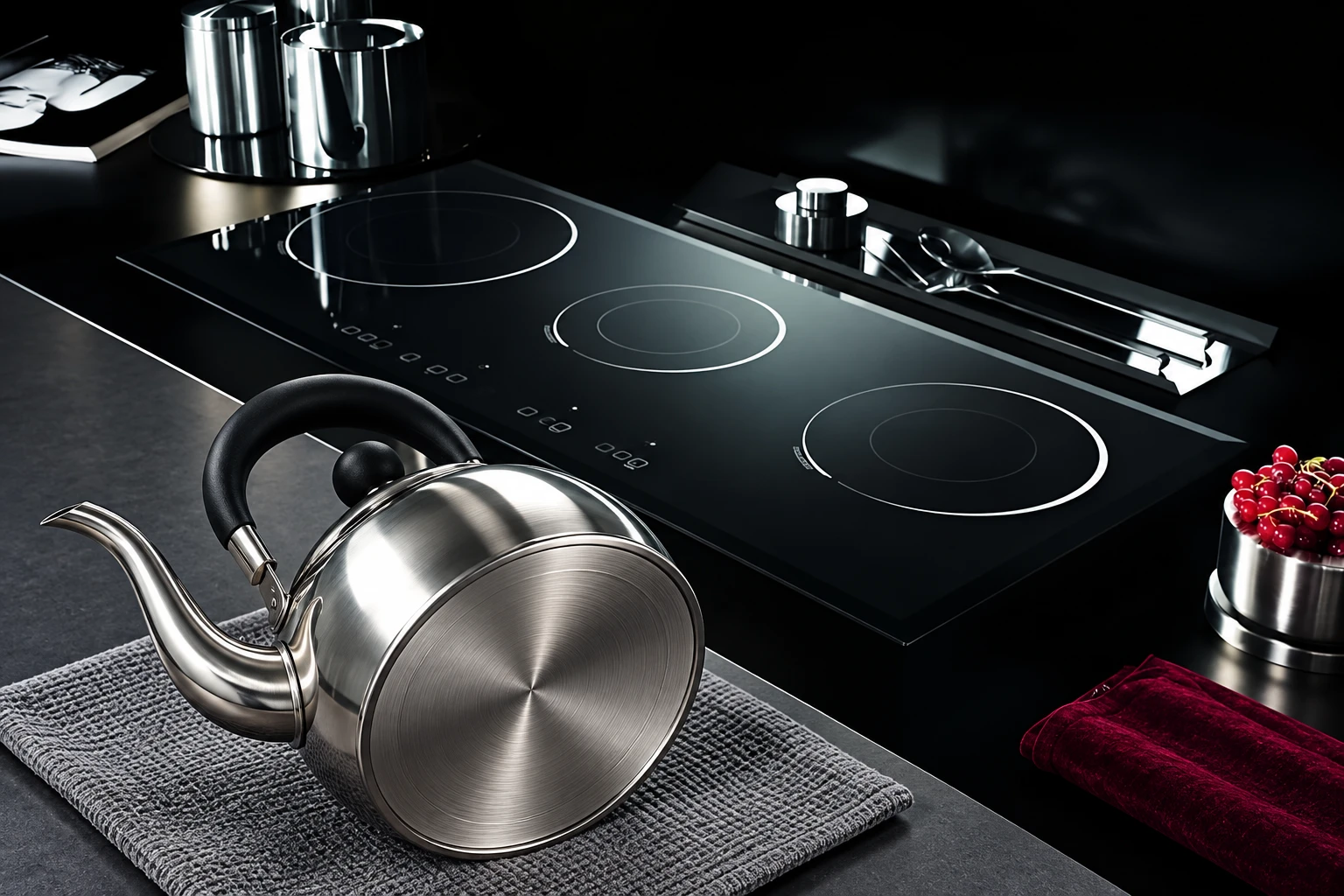
A rounded kettle can have a much smaller contact base than its widest body. Compare the dimensions relevant to the hob’s instructions, including any specified recognition range. Our guide to measuring the usable pan base explains this distinction for cookware generally. Measure only when the vessel is cool and empty. Avoid substituting a decorative rim diameter for the actual usable base.
Place the kettle as the appliance instructions direct. Do not move it partly off a zone to make room for the spout or handle. If the approved placement blocks access or conflicts with another vessel, use a different compatible zone or choose a more suitable kettle. A larger outer body does not justify bridging several zones unless the appliance expressly permits that arrangement.
The table is a document and handling checklist, not a list of universal operating limits. The magnetic-heating principle is supported by ENERGY STAR guidance on electric cooking products; fill limits and permitted settings must come from the kettle and hob instructions. Record unresolved details before buying rather than improvising during the first boil.
| Check | Evidence to obtain | Decision if unresolved |
|---|---|---|
| Appliance category | Stovetop use stated for exact model | Do not place a powered electric kettle on the hob |
| Induction designation | Model instructions or written supplier confirmation | Choose a documented alternative |
| Usable base | Base dimensions compared with hob requirements | Resolve recognition and placement before heating |
| Filling | Minimum and maximum levels in kettle instructions | Do not invent a fill quantity from external dimensions |
| Handling | Handle, lid and spout instructions checked together | Plan cold access and pouring space first |
Follow the kettle’s marked filling guidance and written instructions, including how to check the level. Do not use a nominal advertised capacity as the automatic working fill level. The usable limit may be described differently, and the spout or whistle can affect the manufacturer’s instructions. Keep any required opening or vent unobstructed; do not modify a whistle or stopper to change the boiling behavior.
Check that the lid and handle are assembled as intended before use. If the kettle has a folding handle, confirm its permitted position and how it is moved. Do not discover a loose lid while tipping a hot vessel. The cold inspection should identify the gripping point, lid retention and the direction in which the spout will be aimed during pouring.
Set an empty cup or other intended receiving container on a stable surface and consider the lifting route while the kettle is cold. Keep the route clear of other pans, cords and people. A full vessel is heavier than an empty showroom sample. If the handling arrangement is unsuitable, choose a smaller appropriate model or another suitable appliance rather than relying on an awkward two-stage lift.
Our article on keeping cookware handles clear of controls explains access around touch controls. A kettle’s handle may remain above the body, but the spout can still project toward a walkway or another cooking zone. Consider all protruding parts. Follow the manufacturer’s directions for handle protection, and do not assume a handle remains cool merely because the glass surface has no flame.
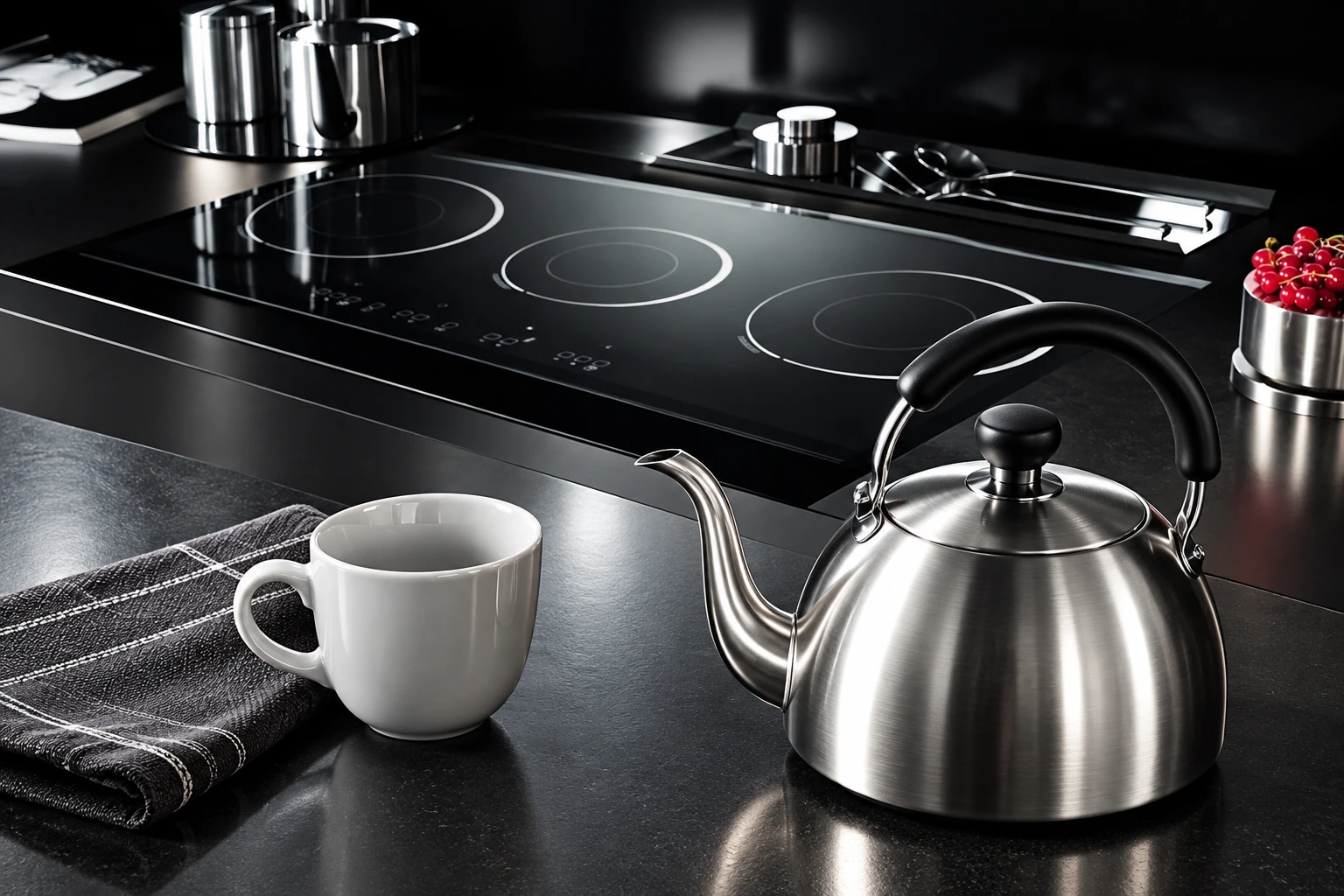
Use the hob and kettle instructions for the appropriate zone and heating sequence. Avoid a universal recommendation to use boost or the highest power setting. Different vessel designs and appliance controls require their own guidance. Stay present during heating and turn the appliance off as directed before handling. A whistle is a signal to the user, not evidence that every stovetop kettle automatically disconnects the hob.
U.S. Fire Administration cooking-safety guidance advises attending cooking and keeping combustible items away from the stovetop. Apply that principle to water heating as well. Do not walk away because the task seems brief or familiar. If the kettle is accidentally empty, visibly damaged or involved in an abnormal event, follow its instructions and support process rather than immediately refilling or repeatedly testing it.
If the hob does not recognize the kettle, first read the displayed message and the appliance’s cookware guidance. Confirm that the selected zone and base size are appropriate. Do not use repeated maximum-power attempts or an unapproved adapter plate to force recognition. A kettle that works on another appliance may still fall outside this hob’s permitted cookware arrangement.
Record the kettle model, hob model, selected zone and exact message when contacting support. Explain whether the vessel is new or previously worked, without treating that history as proof of the cause. Stop use if there is damaged glass, a loose handle, leaking joints or another condition requiring manufacturer attention. Troubleshooting should not turn into an uncontrolled hot-water experiment.
Use the kettle’s cleaning instructions for mineral deposits and exterior care. A method acceptable for one finish may be unsuitable for another. Do not prescribe a chemical concentration, soaking time or abrasive pad without product guidance. Rinse and prepare the kettle as instructed before its next use, and keep the base clean so grit is not trapped against the hob.
Lift the vessel instead of dragging it across the glass. Our guide to understanding glass surface marks distinguishes surface residue from concerns that need service attention. A visible mark is not enough to diagnose a cracked panel or certify continued use. For the appliance surface, follow the appliance cleaning sequence and wait for the appropriate cooling condition before touching or cleaning it.
Kanger’s Kanger black glass-ceramic cooktop panel is relevant to the glass surface in this cooking environment. It is not a certificate that a particular kettle works on a finished appliance. OEM buyers should define panel geometry, printing and integration needs in their own project documentation, then validate the complete appliance and intended cookware through the responsible engineering process.
The black glass-ceramic material overview provides material context for that conversation. A business buyer sourcing kettles alongside appliances should retain separate model records, instructions and supplier answers for each. Keep the approved combination traceable when either product changes. This prevents a useful component specification from being misread as an unsupported promise about heating speed, safety approval or every induction-compatible kettle.
This neutral educational explanation shows induction and cookware geometry. It is background on how a compatible vessel receives heat, not approval of a particular kettle, wok, paella pan or glass-panel assembly.
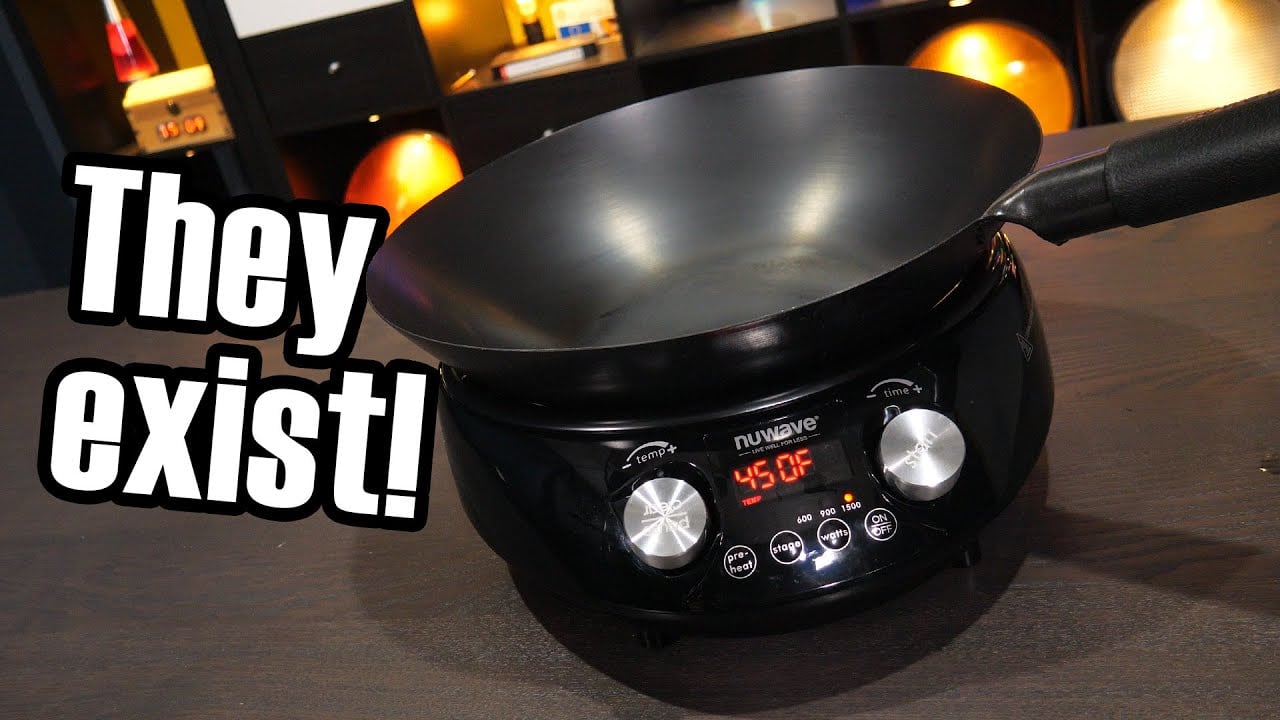
Video: Induction cooking – but what about woks?, Technology Connections. Open the educational video on YouTube.
No. Check the exact stovetop kettle model and its induction designation; a stainless appearance alone is insufficient.
Do not assume that. Follow the kettle and hob instructions and remain present during heating.
A kettle designed for its own powered base is a different appliance. Do not place it on a hob unless its manufacturer explicitly permits that use.
Compare the usable base dimensions with the hob instructions, rather than relying only on the widest body diameter.