An induction hob carbon steel wok can be suitable when its exact model is designated for induction and its base geometry meets the hob instructions. Carbon steel alone is not a complete compatibility specification. Check the flat contact area, vessel stability, handle access and the maker’s seasoning and care requirements before use. A round-bottom wok, a support ring and a flat induction surface are separate compatibility questions.
This guide focuses on choosing and maintaining the wok itself. It does not prescribe a universal seasoning temperature or high-power cooking method. The useful purchasing decision combines documented cookware suitability with a practical cold layout, then follows the instructions for the actual hob and wok. An online demonstration of a different arrangement does not replace those checks.
Obtain the model number, material description, base dimensions and intended heat sources. Carbon steel products can differ in shape, handles, surface treatment and supplied finish. Some arrive with protective coatings that require a specific preparation process; others are described as pre-seasoned. Do not remove or heat a finish based on instructions for a different product simply because both are called carbon steel.
Ask whether the documentation covers your selected size. A family name can include both flat-bottom and round-bottom versions. Check photographs against the supplied item and written specification when it arrives. If the product is misidentified or the instructions conflict with the listing, resolve the discrepancy before heating rather than assuming the more convenient description is correct.
ENERGY STAR guidance on electric cooking products describes induction’s interaction with suitable magnetic cookware. This explains why carbon steel is a plausible material to investigate, but it does not approve every wok construction or every appliance pairing. The hob must support the selected cookware arrangement according to its instructions. A preliminary magnetic check cannot establish base flatness, stable support or suitability of a handle and coating.
Use the actual bottom dimensions when comparing the wok with the zone. The wide sloping sides do not describe the area that rests on a flat glass surface. Our article on measuring the usable pan base explains this measurement distinction. An impressive rim diameter can coexist with a small base, so do not select a cooking zone from the overall bowl width alone.
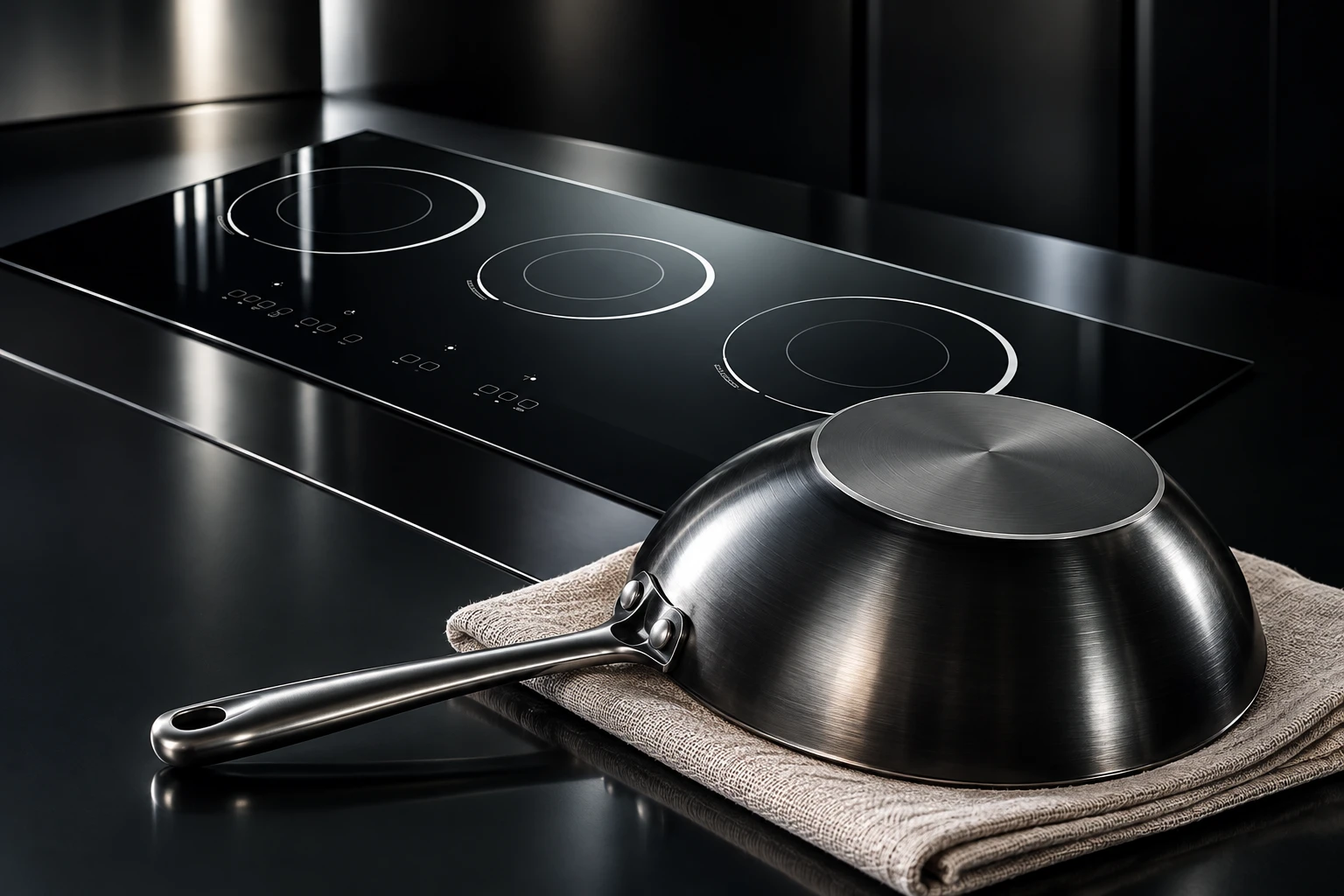
A flat-bottom wok is the appropriate category to examine for many flat induction hobs, subject to their own instructions. Check that the designated base sits as intended when the vessel is cold and empty. Do not try to bend, hammer or grind a base to make it fit. A visibly unstable vessel needs supplier attention or replacement, not a more aggressive heating trial.
A round-bottom wok may be intended for a different appliance geometry. Adding a ring changes the assembly and does not automatically establish compatibility. Our separate guide to checking wok-ring approval addresses accessory approval. Keep that question out of a simple material claim: choosing carbon steel does not by itself authorize a ring, a raised support or use across several zones.
Use this qualitative checklist to identify missing information. It draws on the induction principle described by ENERGY STAR guidance on electric cooking products, while the actual preparation, operating and care instructions must come from the wok and appliance makers. It deliberately avoids unsupported temperatures, thickness targets and guarantees about heating uniformity.
| Decision | Check for the exact wok | Do not substitute |
|---|---|---|
| Heat-source suitability | Induction designation for model and size | A generic carbon steel material claim |
| Base fit | Usable bottom compared with hob guidance | The diameter across the upper rim |
| Initial preparation | Supplied finish and removal instructions | A different brand’s seasoning tutorial |
| Routine care | Permitted cleaning, drying and storage sequence | Unverified chemical or abrasive methods |
| Handling | Loaded lifting and handle clearance | An empty-pan showroom impression alone |
Seasoning guidance must match the actual surface and product construction. Read whether seasoning is required, how the supplied finish is treated and which heat sources or methods the manufacturer permits. Do not automatically copy an open-flame demonstration onto a glass induction hob. Likewise, an oven method is only relevant if the complete wok, including handles and attachments, is designated for it.
There is no single setting in this guide that can safely replace those instructions. Power controls, base geometry and finishes differ. If the directions require a process incompatible with your appliance or available ventilation, ask the supplier for an approved method or choose another product. Do not deliberately create smoke or repeatedly run an empty vessel at high power to prove the seasoning is complete.
A wok’s sloping sides and flat base influence how it is used, but avoid assuming that a large bowl will heat uniformly on any small zone. Follow the recommended placement and operating sequence. The neutral video below explains why cookware geometry matters; its demonstrations are educational background rather than instructions for every household hob or a promise about restaurant-style results.
Plan food preparation before starting so the task remains attended. U.S. Fire Administration cooking-safety guidance advises staying with cooking and keeping combustibles away from the stovetop. Keep cloths, packaging and utensils out of the heating area. If your intended method calls for moving or tossing a loaded wok, first establish that the handling method and appliance arrangement are permitted and manageable; do not learn around hot contents.
A long handle changes the usable space around the hob. Place the cold empty wok as directed and check access to controls, nearby vessels and the lifting route. Our guide to keeping cookware handles clear of controls provides a separate layout checklist. Avoid pointing a handle into a walkway or relying on a position that shifts the base away from the approved zone placement.
Consider the loaded weight, not just the mass of the empty steel shell. A helper handle can change the lifting method, but its presence does not prove it remains cool. Use the instructions for heat protection and grip. If two hands are required, plan a suitable landing surface nearby so you are not searching for space while holding a hot vessel.
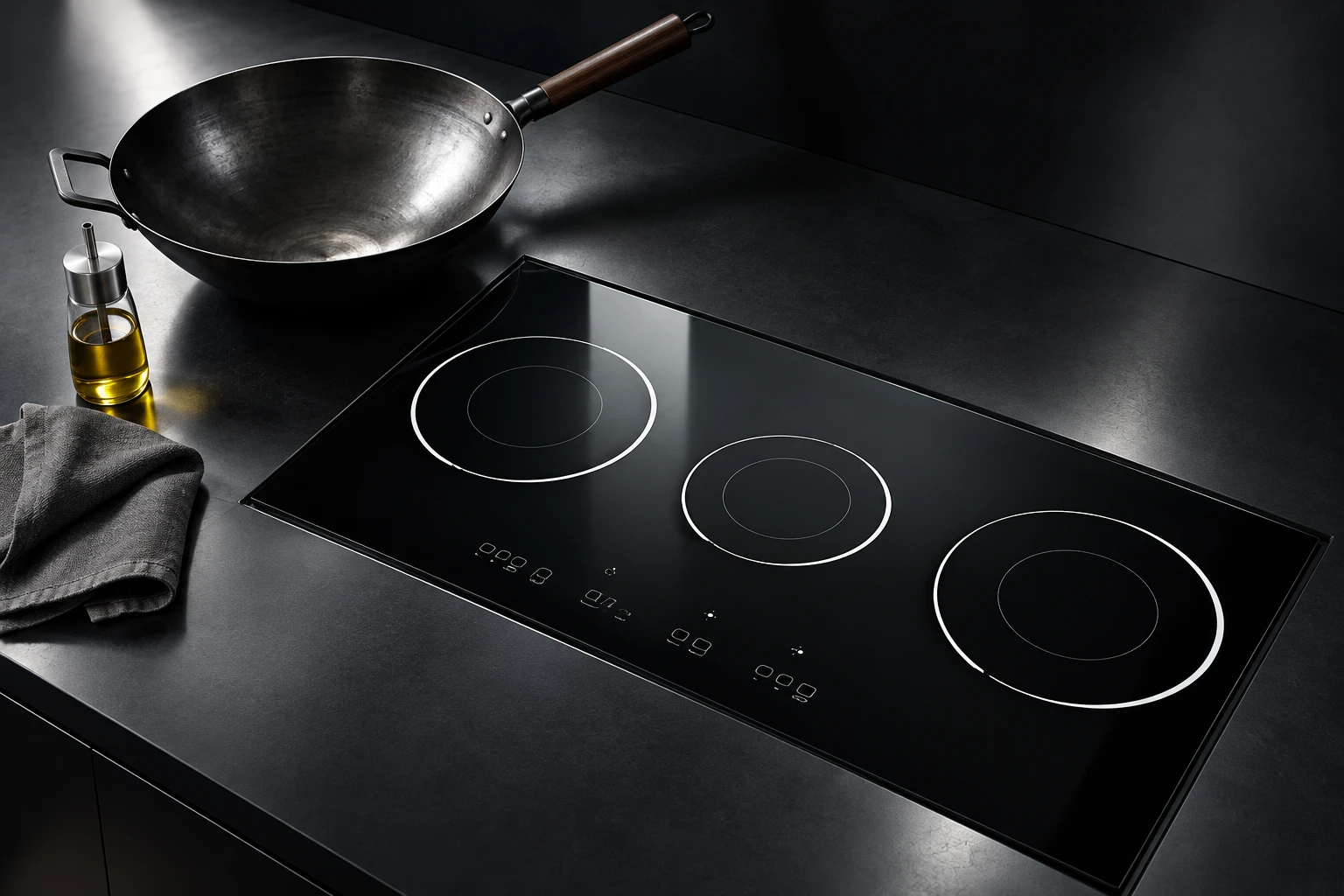
Follow the wok’s prescribed cleaning process after use. Distinguish ordinary food residue, changes to seasoning and conditions that need supplier advice. Avoid presenting every dark patch as a defect or every brown mark as harmless. The correct response depends on the finish and the observed condition. Do not recommend a strong cleaning chemical or abrasive method without model-specific support.
Dry and store the wok according to its instructions, including any recommended maintenance of the cooking surface. Keep the underside free of trapped debris before returning it to the hob. The cold-care illustration here shows preparation materials separately; it does not specify an oil type, dose or maintenance frequency. Those details remain with the cookware maker’s guidance and the actual condition of the vessel.
Lift the wok rather than sliding it across the panel. Check both contact surfaces for residue or grit when they are in the safe condition for inspection. If the glass shows marks, use the appliance cleaning instructions and the distinctions in understanding glass surface marks. Do not diagnose a crack, internal defect or structural safety from an online photograph alone.
A pad or liner placed between a wok and glass is another accessory decision, not an automatic protective improvement. Use only arrangements permitted by the relevant instructions. Adding an unapproved material can change the conditions of use. Similarly, a claim that carbon steel is lighter than some other cookware does not establish that any particular wok may be dropped, dragged or used on damaged glass.
If recognition or stability changes, stop and check the instructions before repeating the process. Record the wok and hob models, the selected zone, any visible condition and the exact message displayed. Tell support whether the base has changed shape or the finish has been treated, but do not assume those observations establish the root cause. Avoid troubleshooting through increasingly high power settings.
For commercial purchasing, keep the approved item identity with the order and receiving checklist. A substitution with the same nominal rim diameter can have a different base, handle or finish. Review those changes before accepting it into an established appliance program. Repeatable documentation is more useful than a broad statement that all carbon steel woks behave alike.
Kanger’s Kanger black glass-ceramic cooktop panel concerns the glass component used in this type of appliance environment. It does not certify a complete wok and hob combination. OEM purchasers should define the panel and integration requirements within their project and validate the finished appliance separately. Material descriptions are part of that discussion, not a substitute for system-level instructions.
The black glass-ceramic material overview provides a starting point for glass-material questions. Keep cookware selection, panel procurement and finished-appliance use traceable as separate decisions. This allows a buyer to discuss real product needs without inventing a universal seasoning cycle, a heat-output promise or accessory approval that the available documentation does not establish.
This neutral educational explanation shows induction and cookware geometry. It is background on how a compatible vessel receives heat, not approval of a particular kettle, wok, paella pan or glass-panel assembly.
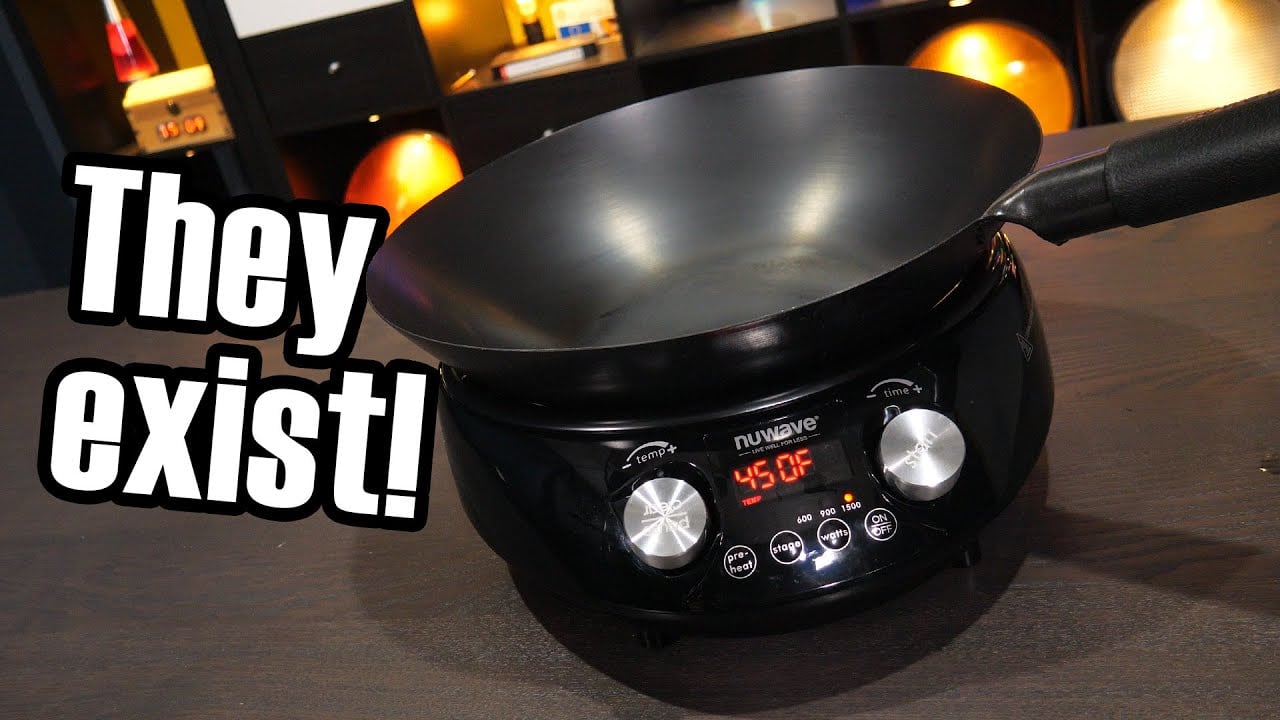
Video: Induction cooking – but what about woks?, Technology Connections. Open the educational video on YouTube.
No. Check the exact model designation, usable base geometry and appliance requirements together.
No universal setting is appropriate. Follow the preparation method permitted for the exact wok and hob.
Not automatically. The complete accessory arrangement needs permission in the relevant instructions.
Use the base dimensions and placement rules identified by the hob instructions; the wide rim alone is insufficient.



