An induction hob paella pan needs an induction-designated construction and a usable base that fits the appliance’s permitted cookware arrangement. Its broad rim and two handles do not show how much of the bottom the hob can recognize or how the pan should be positioned. Check the exact pan and hob instructions before choosing a size. Do not assume a wide shallow vessel may span several zones or use a bridge function simply because it reaches across them.
This guide addresses the vessel-selection problem rather than providing a rice recipe or guaranteed heat distribution. It explains what to measure, which documents to request and how to assess cold handling space. The same nominal paella-pan diameter can describe products with different bases, so the actual model matters more than a generic size label.
A paella pan is typically presented as a wide shallow vessel, often with two short side handles. Confirm whether the listed diameter refers to the rim, usable interior or bottom. Those dimensions answer different questions. The rim helps describe capacity and storage space, while the relevant bottom dimensions help you compare the pan with the hob’s cookware requirements.
Ask for a drawing or clearly described dimensions if the listing is ambiguous. Do not infer the bottom from a perspective photograph or estimate it from a serving-count claim. A buyer selecting several pan sizes should obtain dimensions for each model. A specification for one size within a product family should not be silently applied to all of them.
ENERGY STAR guidance on electric cooking products explains the magnetic interaction used by induction with suitable cookware. That supports checking the paella pan’s base construction and stated heat sources. It does not approve a pan merely because it is steel-colored or advertised for outdoor cooking. A stovetop model, an oven model and a vessel intended for another burner arrangement can have different permitted uses.
Use the supplied instructions or written confirmation that identifies the exact product. A magnet may assist a preliminary screening where the manufacturer recommends it, but it does not determine stability, operating settings or the suitability of a coated finish. If induction is not explicitly included, resolve the question before purchase or choose an alternative with adequate documentation.
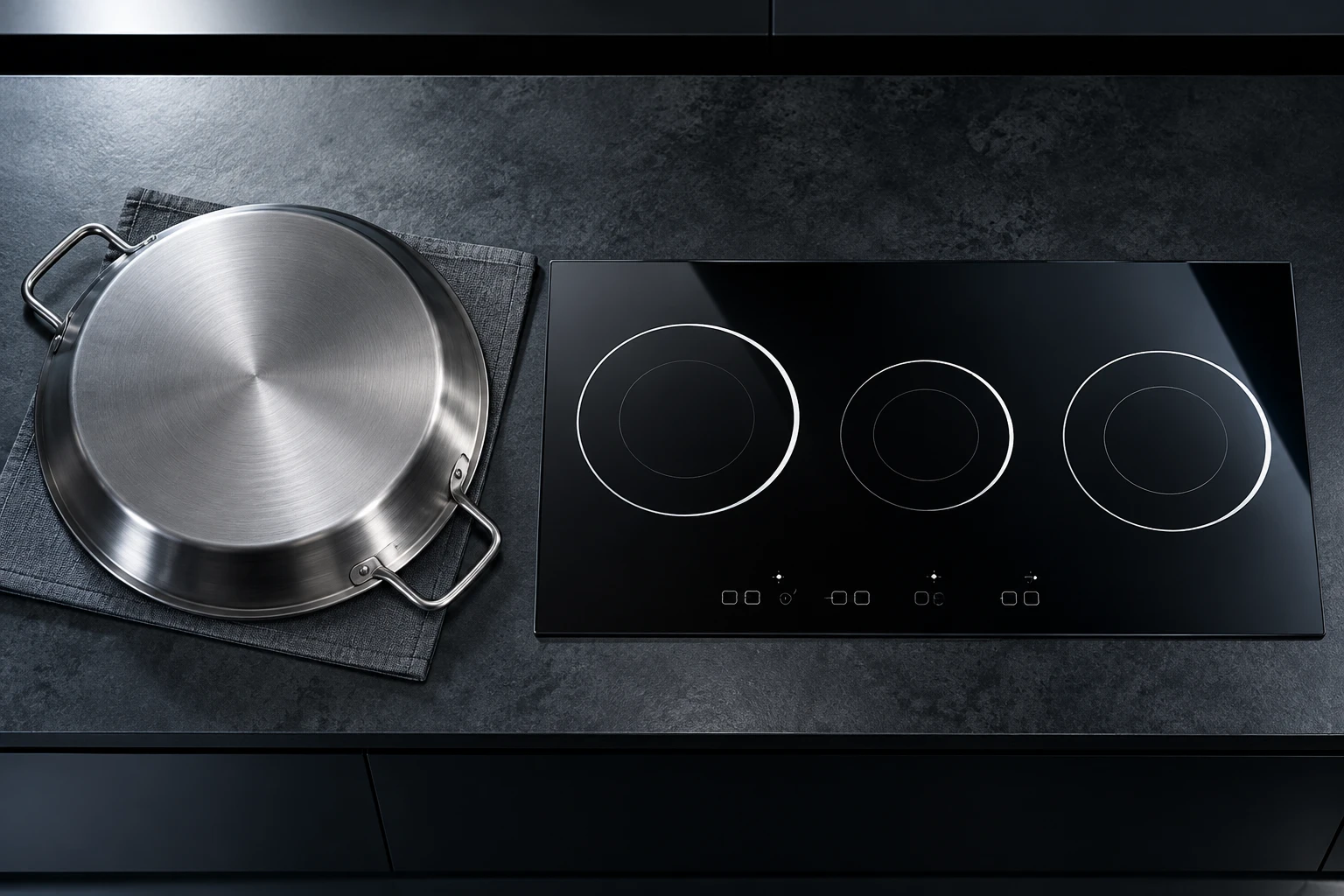
Use the procedure in measuring the usable pan base to separate the outer vessel size from the usable magnetic base. Check the minimum and maximum cookware guidance relevant to the selected zone. Do not invent a universal allowable overhang or assume a decorative printed circle defines every limit. The appliance instructions control the placement decision for that specific design.
A broad pan may physically fit on the glass while still being unsuitable for the selected operating arrangement. Confirm the position with the pan cold and empty. Keep it stable and place it only as instructed. If the documented base and zone requirements cannot be reconciled, select another pan or appliance rather than trying a series of increasingly powerful heating tests.
A bridge or flexible-zone feature has its own cookware and placement instructions. A paella pan that crosses two printed circles is not automatically approved for that mode. Check whether the appliance permits its actual shape and base dimensions, and whether the pan maker permits the intended heat-source arrangement. Both sides of the combination need to be consistent.
Do not switch on neighboring zones as a workaround for uneven results or lack of recognition. Likewise, an adapter plate or support frame introduces a separate accessory question. This article does not approve those devices. If an instruction is unclear, give the supplier the actual pan and hob models and ask for a documented answer before using the arrangement.
The following table separates checks that listings often combine. The induction principle comes from ENERGY STAR guidance on electric cooking products; the permitted dimensions, heating modes and care conditions must be confirmed in the exact product instructions. The table supplies questions rather than unsupported numeric limits or a serving-capacity formula.
| Item | Information required | Why it changes the decision |
|---|---|---|
| Rim and base dimensions | Clearly identified measurements for exact size | A wide rim does not identify the recognized bottom |
| Heat-source designation | Induction permission for exact model | Outdoor or oven suitability does not imply induction use |
| Zone arrangement | Hob placement and permitted mode | Physical overlap does not approve multi-zone heating |
| Handle access | Cold layout and loaded lifting plan | Two short handles need usable gripping space |
| Finish and cleaning | Preparation and care instructions | Carbon steel, coated and other finishes need distinct handling |
The handles can extend beyond the rim and affect nearby controls, walls and vessels. Check the cold arrangement with everything you normally use around the hob. Our guide to keeping cookware handles clear of controls addresses access to operating controls. Do not rotate a pan into an undocumented off-center position solely to solve a handle conflict. Choose a permitted arrangement that works as a whole.
Plan a two-handed lift if the pan instructions or loaded weight require one. A shallow vessel containing hot food still needs a clear route and suitable landing surface. Check that each grip remains accessible without reaching over another hot vessel. Do not assume short metal handles stay cool, and use the heat protection specified by the cookware manufacturer.
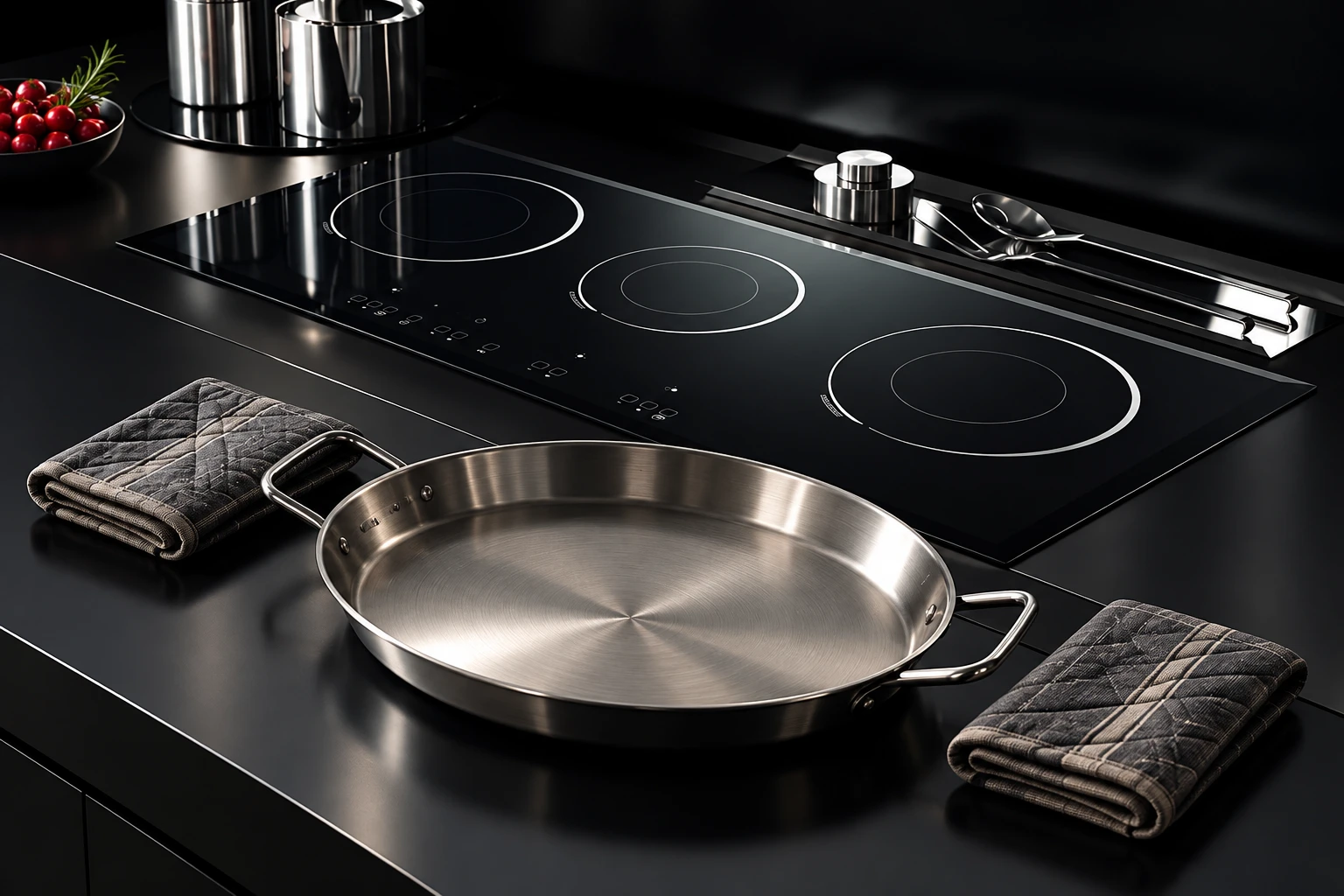
Induction heats suitable cookware through magnetic interaction, but that fact alone does not establish uniform temperature across an unusually wide pan. Vessel construction, base geometry, zone arrangement and the cooking process all matter. Do not promise an evenly heated rim or restaurant results from a diameter match. The educational video below explains cookware geometry without certifying this particular cooking task.
Follow the manufacturers’ operating sequence and the recipe’s equipment requirements where they are compatible. If a recipe assumes a different burner or pan, do not transfer its heat-setting instructions uncritically. A household hob setting is not a universal equivalent of an outdoor burner instruction. Resolve equipment limitations before preparing a large batch rather than discovering them around hot food.
A compatible pan still needs attended use. U.S. Fire Administration cooking-safety guidance advises staying with cooking and keeping combustible materials away from the stovetop. Put packaging and spare towels outside the cooking area and prepare ingredients so you do not need to leave the task. Neither a broad pan nor an induction designation removes ordinary spill, burn and fire precautions.
Avoid deliberate dry overheating or an improvised maximum-power test to judge the pan. If there is an abnormal message, unexpected deformation or a concerning sound accompanied by a visible problem, follow the applicable instructions and support process. This guide does not diagnose those conditions remotely or tell you to continue cooking through them. Keep a record of what was observed for the responsible supplier.
Paella pans can be sold with different materials and surface treatments. Read the actual preparation requirements before first use. Do not assume a seasoning method applies to a coated or differently finished product, and do not transfer an oven procedure to a pan whose handles or finish are not approved for it. Supplier instructions should resolve those details for the selected model.
After use, follow the specified cooling, cleaning and drying sequence. Avoid chemical recipes and abrasive recommendations unsupported by the cookware maker. Keep the underside clean before it returns to the hob. A practical receiving checklist should include the care document so the person using the pan does not have to infer maintenance from photographs or a short marketplace description.
Lift the pan instead of sliding its broad bottom across the glass. Inspect the contact surfaces in a safe cool condition and remove grit using approved methods. Our article on understanding glass surface marks distinguishes residue and service concerns without treating every mark as the same problem. A photo or a rubbing test cannot certify the structural safety of damaged glass.
Do not place a protective liner under the pan unless the relevant instructions permit that arrangement. An added material changes the interface and may have its own restrictions. If the pan no longer sits as intended, stop and ask for support rather than attempting to straighten it at home. The appliance surface is not a workshop fixture for reshaping cookware.
Record the pan model and size, bottom dimensions, hob model, permitted zone arrangement and any written supplier clarification. A replacement with the same serving-count description or rim diameter may have a different base. Recheck it before treating it as interchangeable. This is especially useful for hospitality buyers managing several kitchens with different appliance models.
Kanger’s Kanger black glass-ceramic cooktop panel and black glass-ceramic material overview concern the glass component and its material context. They do not approve a finished appliance for every paella-pan size. OEM buyers should specify the panel and integration requirements within their own project, then validate complete-appliance cookware suitability separately. That boundary keeps the purchasing discussion grounded in real documentation rather than unsupported capacity or performance promises.
This neutral educational explanation shows induction and cookware geometry. It is background on how a compatible vessel receives heat, not approval of a particular kettle, wok, paella pan or glass-panel assembly.
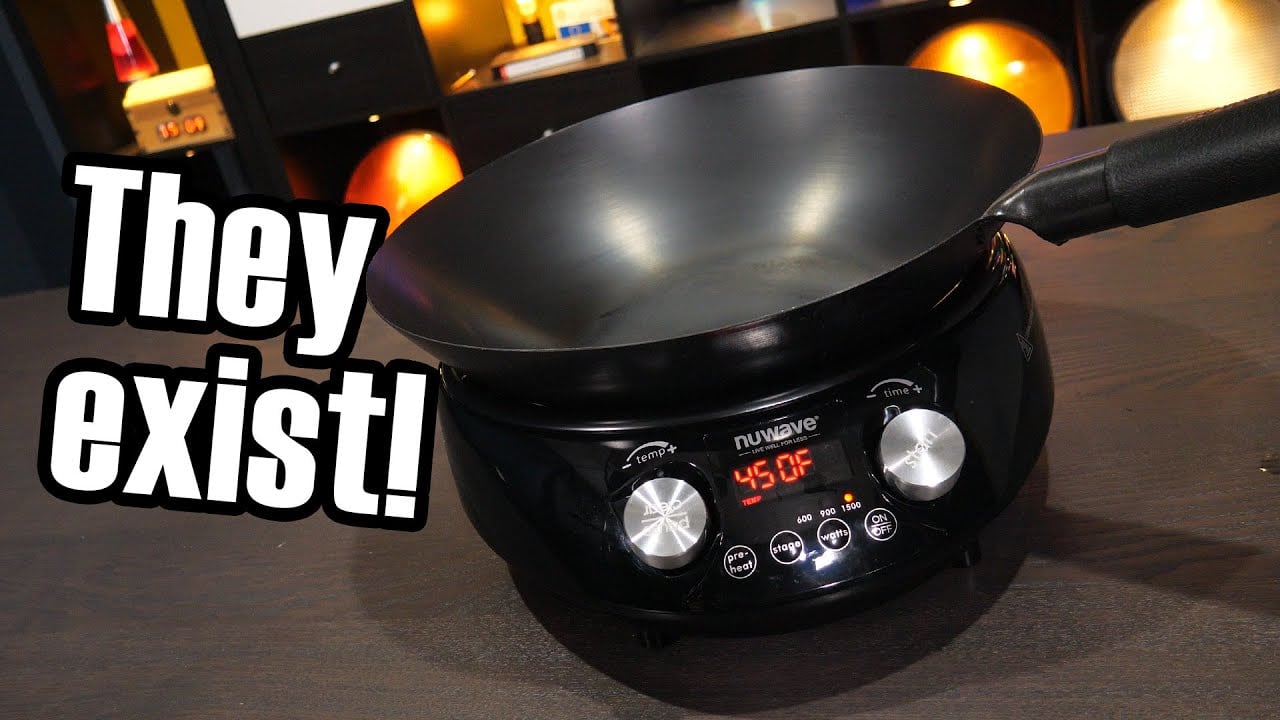
Video: Induction cooking – but what about woks?, Technology Connections. Open the educational video on YouTube.
No. Compare the usable base dimensions and complete placement requirements with the exact hob instructions.
Only when the appliance and cookware instructions permit the actual arrangement. Physical overlap alone is insufficient.
No. It does not establish a temperature distribution for every pan size and appliance pairing.
Follow the exact finish and model instructions. Do not transfer a seasoning method to an incompatible surface or handle construction.



