Black glass-ceramic cooktop RFQs should list coefficient of thermal expansion (CTE) with units, test temperature range, measurement orientation, and linked RTD/RTS fields—then require every supplier to complete the same thermal datasheet before price comparison.
OEM sourcing teams, cooktop manufacturers, and importer QA groups use CTE to judge whether a quoted black panel can survive zone heating without edge stress or premature cracking. For durability fields beyond CTE alone, see the durable cooktop RFQ checklist. For label normalization, see the RFQ terminology alignment guide.
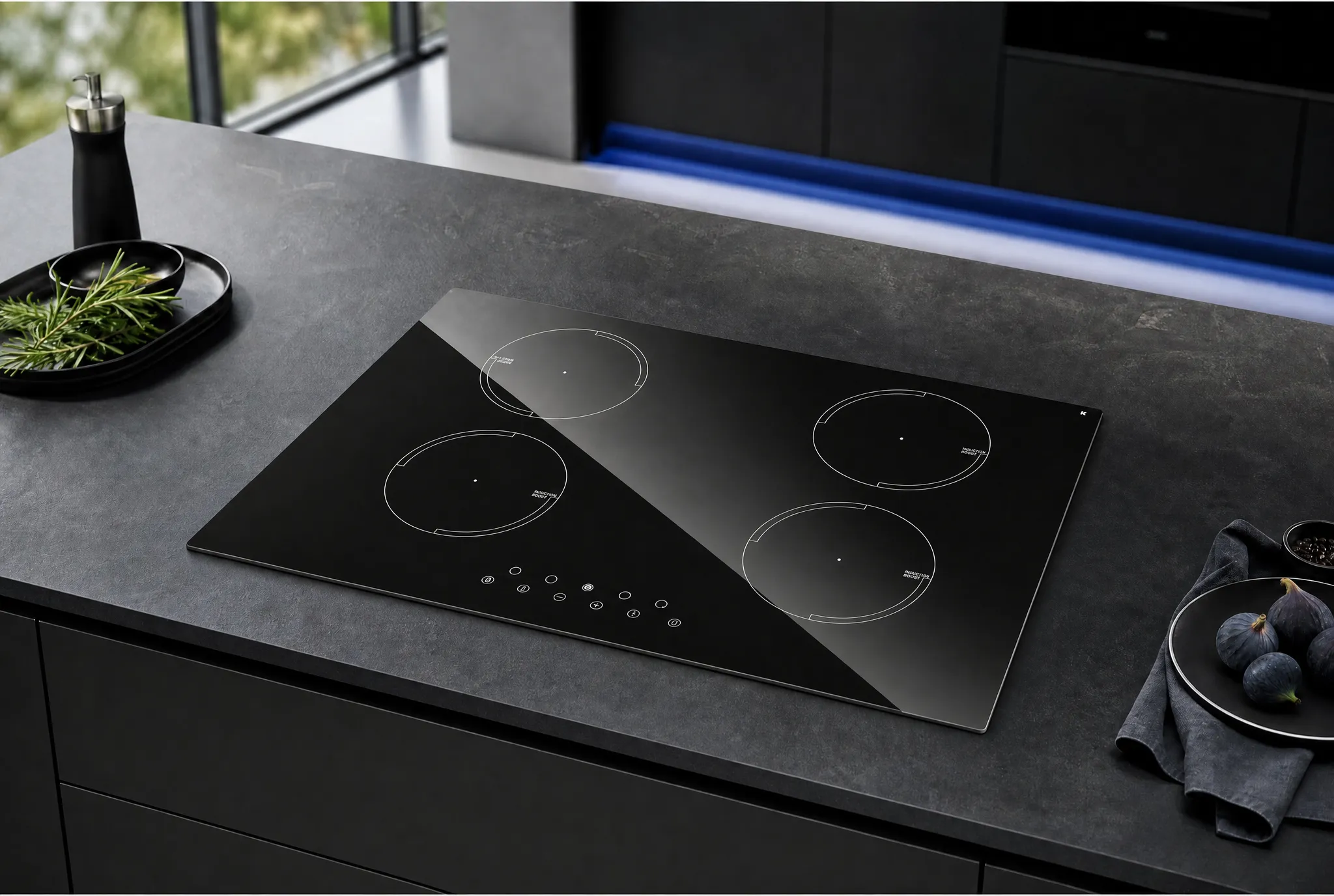
Coefficient of thermal expansion (CTE) describes how much a panel’s length changes per degree of temperature change. On cooktop glass-ceramic, buyers care because a low, stable CTE keeps the panel dimensionally compatible with the metal frame and heating assembly across repeated hot–cold cycles.
SCHOTT’s glass-ceramic materials overview positions glass-ceramic as a class engineered for near-zero expansion behavior compared with ordinary soda-lime glass. Black cooktop panels use the same material family; opacity and printing do not replace the need for a numeric CTE field in the RFQ.
| Unit or notation | Meaning in RFQs | Notes |
|---|---|---|
| ×10⁻⁶/K or ppm/K | Microstrain per kelvin | Most common in European datasheets |
| 10⁻⁷/K | Finer scale used by some cooktop grades | Confirm conversion before comparing bids |
| “Near-zero expansion” | Marketing shorthand | Require numeric value + test range |
| % linear expansion | Legacy specs | Convert or reject if test method missing |
Important: A supplier quote that says “low expansion black glass” without units, test temperatures, and orientation is not comparable with a bid that lists CTE at 20–300°C. — Source: SCHOTT CERAN® technical details
During service, a black cooktop panel sees rapid local heating at cooking zones while edges and mounting points stay cooler. When expansion differs between panel and frame—or between hot and cool zones inside the glass—mechanical stress concentrates at holes, corners, and seal lines.
Low CTE reduces the magnitude of that dimensional mismatch. It does not replace edge finishing, hole spacing, or correct RTS/RTD evidence; those fields work together in a complete thermal RFQ.
| Factor | CTE-related effect | RFQ action |
|---|---|---|
| Zone heating | Hot center expands relative to cool edge | Request CTE + max ΔT evidence |
| Metal frame capture | Panel and frame expand at different rates | Document frame material and gap design |
| Cutouts and controls | Stress risers at geometry changes | Attach drawing with hole locations |
| Repeated daily cycling | Cumulative fatigue at edges | Require thermal shock test reference |
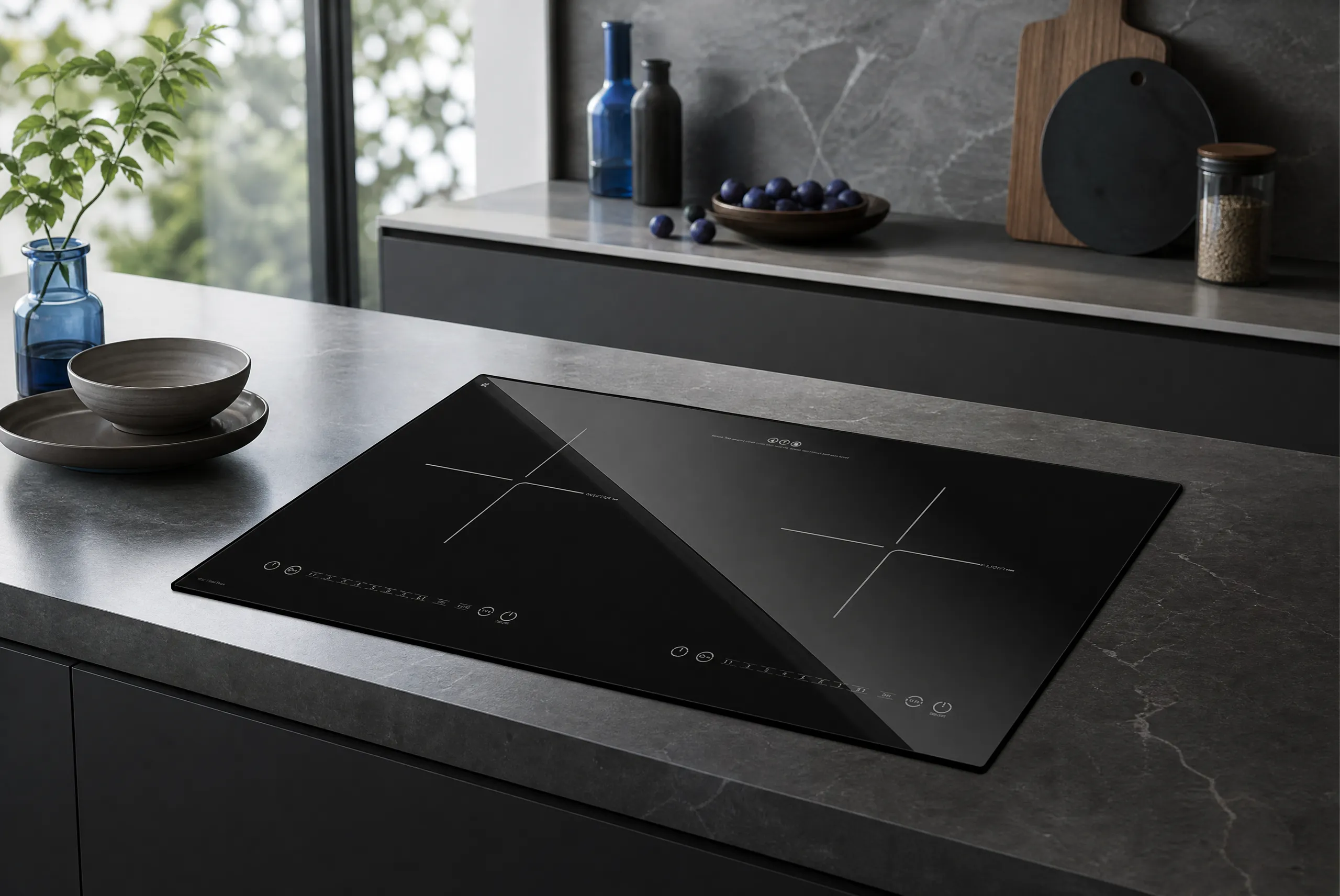
Published Kanger messaging for the black cooktop line cites rapid temperature rise up to 750°C. Treat that figure as line-level marketing context until a drawing-specific datasheet confirms CTE and shock values for your SKU.
Cooktop-grade LAS-type glass-ceramics are discussed in manufacturer literature as low-expansion materials—often single-digit ×10⁻⁷/K or low ×10⁻⁶/K depending on grade, color, and test method. Exact numbers belong to the supplier datasheet, not to a generic blog table.
Industry datasheets such as Eurokera Keralite transparent glass-ceramic sheets illustrate how suppliers publish CTE alongside maximum continuous-use temperature and ΔT resistance. Use those documents as field templates when requesting black cooktop quotes—not as proof of Kanger values.
| RFQ request | Acceptable supplier response | Do not assume |
|---|---|---|
| CTE at stated temperature range | Numeric value with units and orientation | One CTE applies to all colors |
| “Standard cooktop grade” | Supplier completes full thermal block | Same grade as a competitor brand name |
| Black opacity variant | Grade-specific datasheet | Transparent fireplace CTE equals black cooktop CTE |
| Test method reference | ISO/ASTM or internal method named | Marketing “near-zero” replaces numbers |
Start the thermal section with a header line such as “Glass-ceramic cooktop panel — black — CTE and thermal shock per attached drawing.” Follow with a table every supplier must fill in—not optional narrative.
| Field | Example wording | Why it matters |
|---|---|---|
| Material class | Glass-ceramic, cooktop grade | Blocks soda-lime substitution |
| Color / opacity | Black, opaque cooktop surface | Routes correct production line |
| CTE value | Supplier to state at 20–300°C (example band) | Enables numeric comparison |
| Measurement orientation | Parallel to panel plane (example) | Prevents mixed-orientation bids |
| RTD / RTS | Supplier standard or buyer reference method | Links expansion to shock duty |
| Drawing reference | Rev. letter + hole layout | Ties CTE review to actual geometry |
When a buyer lacks a target number, write “Supplier to declare standard cooktop-grade CTE with test range; bids without completed thermal table are non-conforming.” That wording keeps the RFQ open while blocking vague adjectives.
CTE explains dimensional change with temperature. RTD (resistance to temperature difference) and RTS (resistance to thermal shock) describe how much temperature gradient or shock the panel survives in defined tests. A low CTE panel can still fail in service if edge finish or hole design is wrong—so procurement teams compare all three evidence types.
SCHOTT CERAN® technical documentation groups expansion and thermal shock language in the same datasheet family cooktop buyers already reference. Mirror that structure in internal quote scorecards.
| Bid element | Pass criterion | Fail signal |
|---|---|---|
| CTE | Numeric, unit stated, range stated | “Low expansion” only |
| RTD / RTS | Value or “per supplier cooktop grade” with method | Omitted while CTE listed |
| Test temperature range | Matches cooktop duty | Room-temperature-only data |
| Orientation | Stated | Not mentioned across two bids |
| Drawing attachment | Same rev on all quotes | Quote without geometry review |
Rank price only after the matrix shows matching thermal evidence—or document accepted deviations in writing.
Several recurring RFQ errors produce apples-to-oranges CTE comparisons:
| Scenario | Recommendation |
|---|---|
| Black flat cooktop panel with zone heating | Glass-ceramic black line + full CTE/RTD/RTS block |
| Fireplace observation window | Transparent glass-ceramic line—different duty table |
| Oven door viewing glass | Borosilicate or tempered line—not assumed cooktop CTE |
| Only “durable black glass” wording | Rewrite using Part 4 fields before sourcing |
| Architectural facade glass | Out of scope for appliance cooktop CTE RFQ |
Route normalized black cooktop CTE RFQs to:
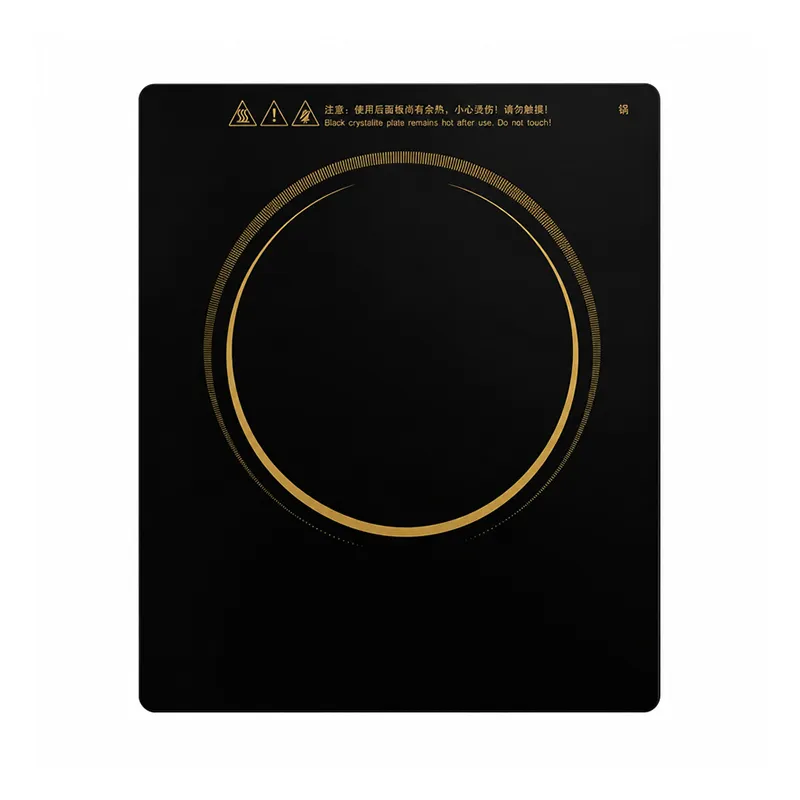
Use this routing table in sourcing notes:
| Normalized RFQ header | Send to |
|---|---|
| Black glass-ceramic cooktop, flat | Black cooktop product line |
| Black glass-ceramic cooktop, shaped/concave | Shaped cooktop product line + contour drawing |
| White or transparent cooktop variant | Respective color line with separate thermal ask |
| CTE RFQ without drawing | Hold quote until geometry rev is attached |
Pair this CTE focus with the durable cooktop RFQ checklist for edge finish, thickness, and compliance document fields.
What is the coefficient of thermal expansion for black glass-ceramic cooktops?
Cooktop-grade glass-ceramic targets low expansion, but the exact value depends on supplier grade, color, and test method. Require a numeric CTE with units and temperature range in every quote.
Does black cooktop glass have a different CTE than white or transparent panels?
Opacity and color processing can correlate with different published grades. Do not assume one CTE covers all variants—request grade-specific datasheets.
What CTE unit should appear in an RFQ?
Use the unit your engineering team standardizes on (commonly ×10⁻⁶/K or ppm/K) and require all bidders to respond in that unit or provide conversion.
Can buyers specify “near-zero CTE” without a numeric band?
Use it only as shorthand in internal notes. RFQs sent to suppliers should require a numeric value or a completed “standard cooktop grade” thermal table.
How does CTE relate to thermal shock resistance on cooktops?
CTE describes dimensional change; RTD/RTS describe shock and gradient survival. Both belong in cooktop panel evaluation.
Should CTE be measured parallel or perpendicular to the panel plane?
State the required orientation in the RFQ. Mixed-orientation bids are not directly comparable.
Which Kanger line matches a black cooktop CTE RFQ?
Use the black glass-ceramic cooktop product line entry and attach the panel drawing for confirmation.