A fireplace with glass doors can improve spark containment, provide a cleaner finished opening, and reduce uncontrolled room-air movement when the fireplace is not operating. The correct door, glass material, and operating position depend on whether the unit is a masonry fireplace, a factory-built fireplace, a wood-burning insert, or a gas appliance. Never assume every glass door can remain closed during a fire: the appliance listing and manufacturer’s instructions control.
This guide explains the main door types, tempered glass versus transparent glass-ceramic, safe open-or-closed operation, measurement, replacement specifications, and the information an OEM or buyer should include in an RFQ.
Glass doors create a physical boundary between the room and the firebox. Depending on the fireplace design, they can help contain sparks and debris, limit drafts through an unused fireplace, protect the opening when the unit is cool, and provide a clear view of the fire. They are not a substitute for a properly designed chimney, combustion-air path, mesh spark screen, or listed appliance enclosure.
The U.S. Consumer Product Safety Commission recommends a screen or glass enclosure around a fireplace to help prevent sparks or embers from reaching combustible materials. The same agency also warns that fireplace glass can become hot enough to cause serious contact burns, especially on gas appliances. Treat every panel and frame as hot until the unit has fully cooled.
A door should be selected for the fireplace it will actually serve. A set made for a site-built masonry opening is not automatically suitable for a factory-built metal firebox, and a decorative open-hearth door is not the same as a sealed door engineered as part of an insert or stove.
A masonry fireplace is built from brick, block, stone, or a combination of these materials. Door frames commonly overlap the face of the opening or fit partly inside it. Openings may be out of square, so buyers should record multiple width and height measurements rather than relying on one nominal dimension.
A prefab fireplace is a tested assembly with a metal firebox, chimney system, clearances, and model-specific components. Replacement doors must be compatible with the manufacturer and model. Adding a heavy generic frame or blocking cooling-air passages can change how the system operates.
On an insert or stove, the glass and door are functional parts of the combustion system. Panel material, gasket compression, edge condition, flatness, and retention method can affect sealing and durability. Replacement glass should follow the appliance maker’s specified material and dimensions rather than a visual match alone.
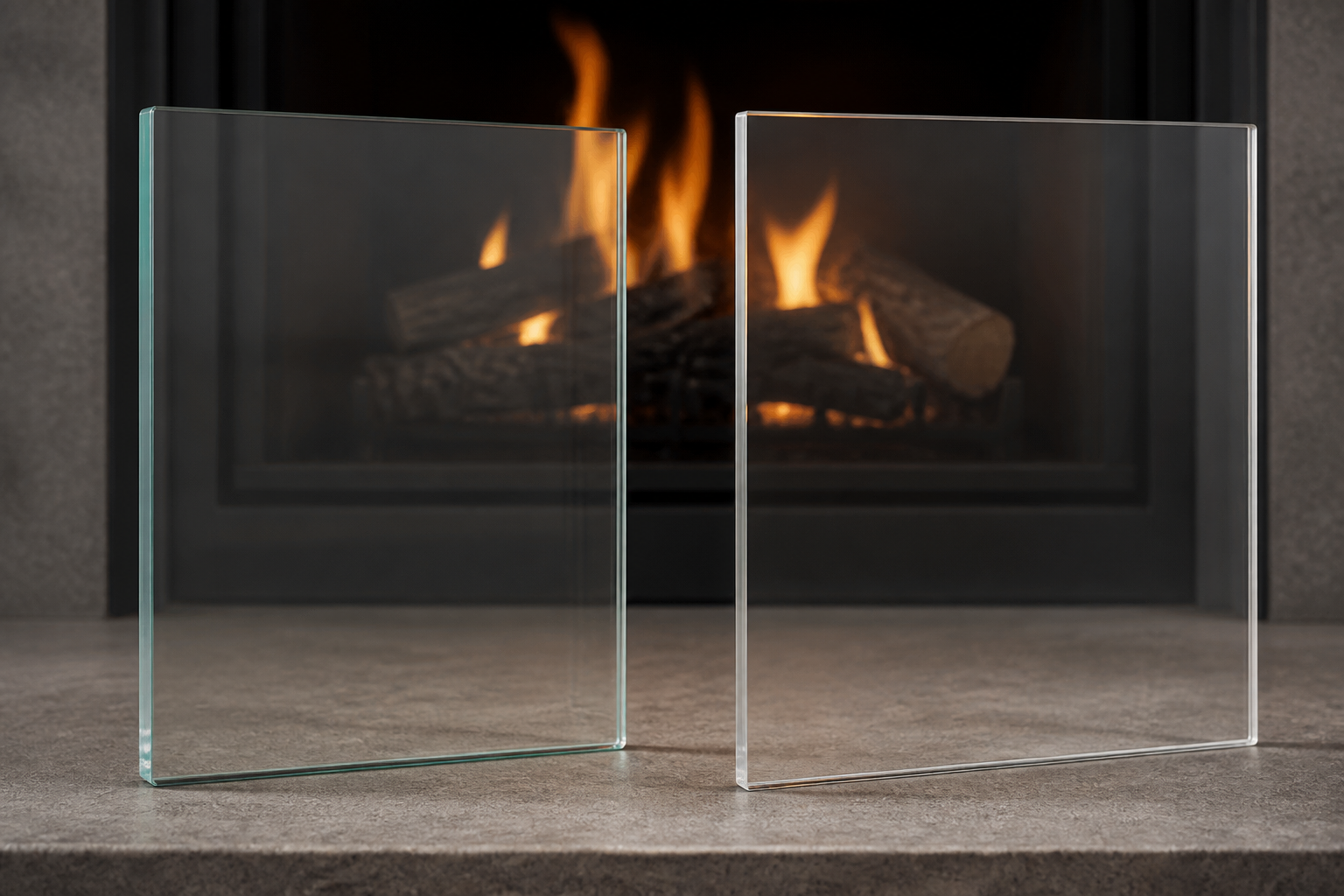
The two materials are not interchangeable merely because both look transparent.
| Decision point | Tempered glass | Transparent glass-ceramic |
|---|---|---|
| Typical role | Decorative doors on some open-hearth fireplaces | High-temperature viewing panels for fireplaces, stoves, and inserts |
| Heat exposure | Suitable only within the door system’s specified operating conditions | Selected where sustained heat and thermal cycling are central requirements |
| Processing sequence | Cutting, drilling, and edge finishing occur before tempering | Processing depends on the specified glass-ceramic grade and supplier capability |
| Replacement rule | Match the original type, thickness, edgework, holes, and dimensions | Match the specified grade, thickness, geometry, surface condition, and retention system |
For high-temperature viewing applications, see Kanger’s transparent glass-ceramic product information and the related guide to selecting glass for a fireplace observation window. Final material approval should be based on the appliance design, test requirements, and supplier documentation.
There is no universal open-or-closed rule. Follow the fireplace and door manufacturer’s operating instructions.
The EPA’s Burn Wise guidance emphasizes operating wood-burning appliances according to manufacturer instructions, maintaining the chimney, using properly seasoned fuel, and avoiding smoldering fires. Local burn restrictions and appliance rules can also apply.
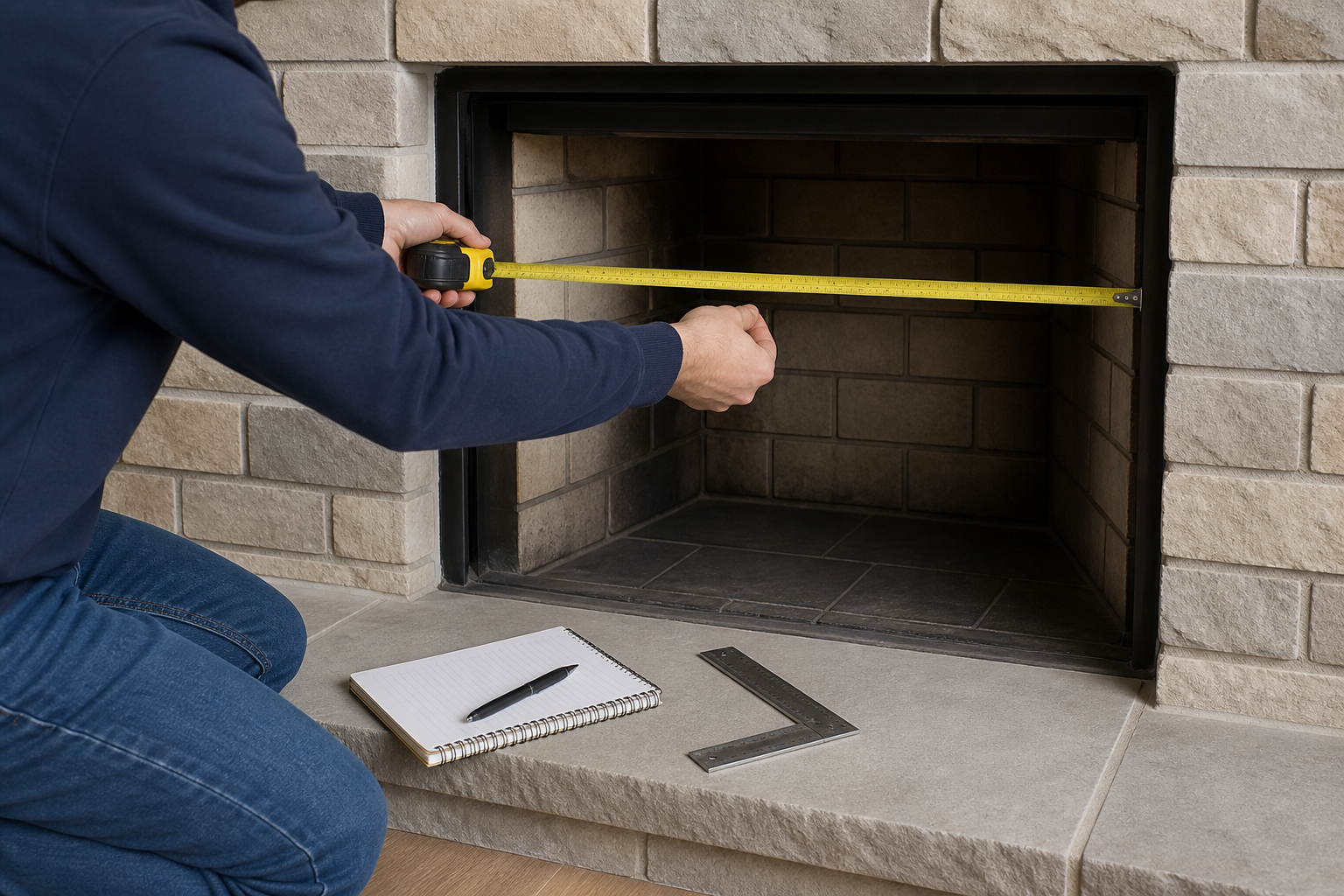
For production programs and tight-fit assemblies, use the more detailed fireplace-door glass fit and tolerance guide. A photograph with a ruler is useful, but it does not replace a dimensioned drawing.
Begin with fireplace type, model, operating mode, ventilation path, and required clearances. Finish color and door style come after functional compatibility.
Do not use “fireplace glass” as the entire specification. State tempered glass or the required transparent glass-ceramic grade, along with thickness, dimensions, edgework, holes, printing, coating, and inspection criteria.
The outer frame size, firebox opening, visible glass area, and actual cut glass size are different measurements. Label each one in the drawing.
Gasket type, compression, clip position, screw torque, frame flatness, and allowance for thermal movement should be defined by the door or appliance engineer. Glass should not be forced into a distorted frame.
Confirm whether the glass, gasket, clips, and hinges can be replaced without damaging the frame. Keep model and supplier documentation available for future service.
Kanger can review fireplace viewing-panel drawings for manufacturability and help buyers clarify material, edge, print, and dimensional requirements. Product capability and final acceptance criteria should be confirmed for each project rather than inferred from a general article.
Allow the fireplace and glass to cool completely. Use the appliance or door manufacturer’s recommended cleaner and a non-abrasive cloth. Avoid aggressive scraping, thermal shock from cold liquid on hot glass, and chemicals that may attack coatings, gaskets, or printed borders.
Stop using the door and obtain qualified service if you find a crack, chipped edge, loose retainer, damaged gasket, distorted frame, failed hinge, or unexplained contact between glass and metal. A cracked panel should be replaced with the specified material and geometry, not a generic pane cut to approximate size.
No. Masonry openings often accept compatible retrofit assemblies, but factory-built fireplaces require model-compatible doors that do not obstruct cooling or ventilation paths.
They can improve spark containment, appearance, and control of an unused opening. Their value depends on correct fit, suitable materials, safe operation, and compatibility with the fireplace.
Only if the fireplace and door manufacturer explicitly allow it. Many open-hearth tempered-glass doors must remain fully open during active burning, while some glass-ceramic appliance doors are designed for closed operation.
No. They are different material systems with different heat-response and processing characteristics. Use the material specified for the door or appliance.
Record top, middle, and bottom widths; left, center, and right heights; both diagonals; the mounting method; obstructions; and a clearly defined measurement datum.
Replace it when cracked, chipped at a critical edge, loose in the frame, or otherwise rejected under the appliance or supplier’s inspection criteria. Investigate the cause before installing a new panel.