An induction hob thermometer pot clip must match the probe, the vessel rim and the measurement task. Its job is to hold the approved probe in the intended position without forcing the cable across the hob, obstructing controls or changing the pan’s stable placement. A clip that grips a rim does not by itself establish that the sensor is in the correct liquid depth or that the probe and cable are rated for the process.
Prepare and check the arrangement with equipment cold and empty, then follow the thermometer, cookware and appliance instructions. This guide concerns attachment and access. It does not prescribe cooking temperatures, approve an improvised clip or guarantee that a thermometer will work without interference on every induction appliance.
Record the display unit, probe and clip model rather than buying by the word universal. Some probes are intended for food insertion, others for liquid or surface tasks, and an attachment can be designed around a particular stem diameter. A package photograph cannot establish the intended sensing location, permitted immersion or cable exposure conditions for a different sensor.
Read the supplied instructions before considering whether the arrangement looks convenient. Establish what is being measured and whether the probe is permitted to remain there throughout the process. An instant-read device is not automatically a leave-in instrument. A suitable clip cannot change the electronics housing, seals or cable into parts approved for continuous heat or immersion.
Compare the clip’s stated rim requirements with the vessel’s edge profile, rolled lip, pouring feature and lid arrangement. Fit the clip only as instructed, with the vessel supported on a separate worktop. Do not spread, bend or drill an attachment to force it onto an unsuitable edge. Keep the empty pan stable during the check.
Look at how the clip bears on any coating or finished rim. Follow the cookware supplier’s accessory restrictions instead of assuming every metal or silicone contact is harmless. A tight-looking fit can still be unsuitable for a delicate finish. If compatibility is undocumented, obtain an answer for the exact pairing or choose another approved measurement arrangement before beginning to cook.
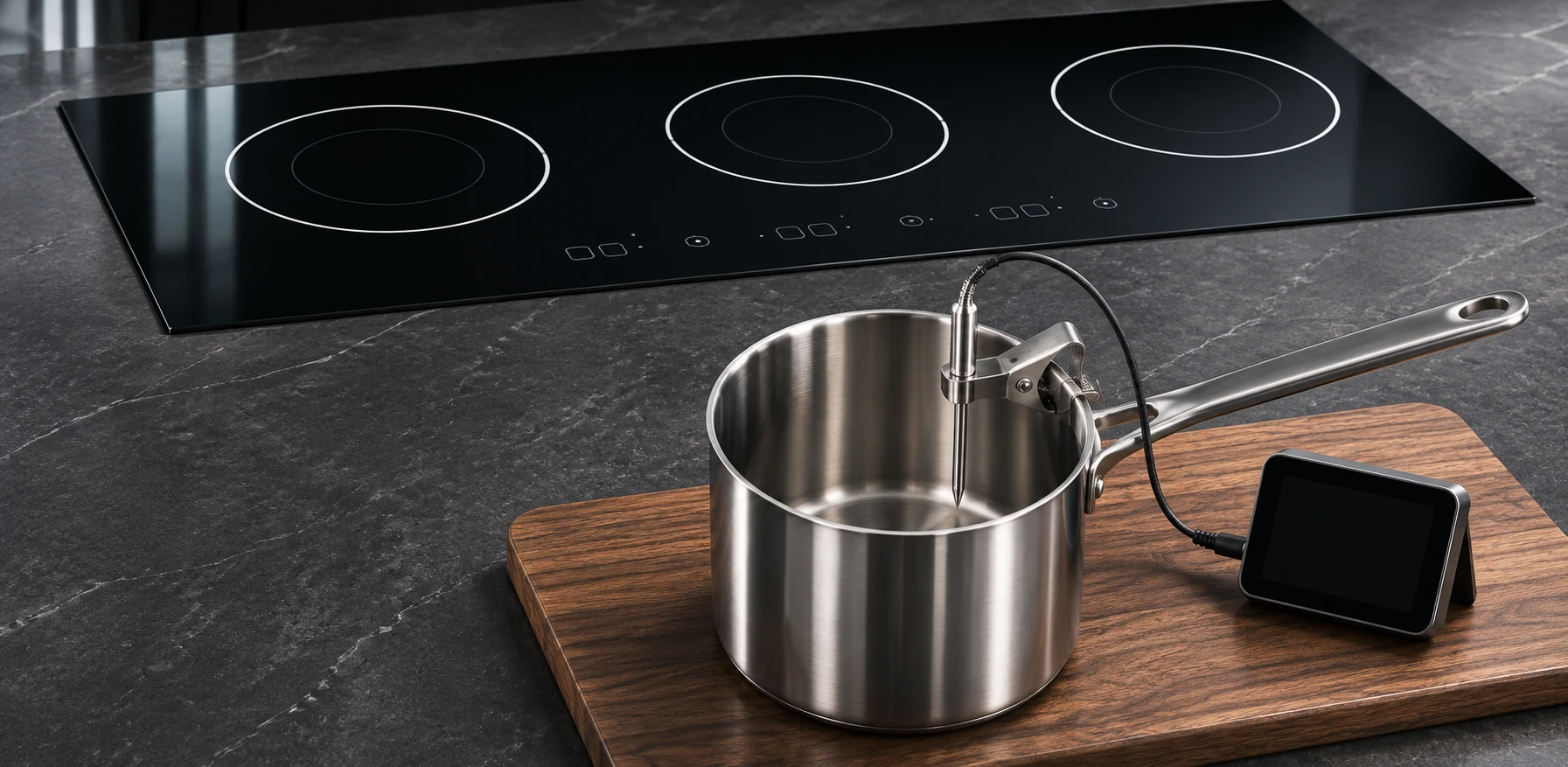
The visible tip does not necessarily describe the complete sensing region. Consult the probe documentation for its required placement and immersion. Keep the sensor in the intended measurement medium and away from surfaces when the prescribed method requires that separation. Do not use a single generic clearance distance for every probe, vessel and liquid level.
ThermoWorks’ ChefAlarm support guidance explains how its clip retains a probe and permits adjustment of the insertion position. That example supports using a matched attachment according to its design. It does not approve another stem diameter, a different clip or an arbitrary position in every saucepan.
Before heating, consider the intended operating range of liquid level within the recipe and equipment instructions. The sensing position must remain suitable as the task proceeds. A probe placed correctly for one fill state may not be in the intended medium after a change. Check the method’s instructions rather than guessing from the display alone.
Plan utensil access without striking the probe or catching the cable. Do not rely on the clip as a handle, stirring guide or support for a heavy cable loop. If normal stirring would repeatedly hit the assembly, the arrangement needs to change before use. A thermometer that cannot be positioned without interfering with ordinary safe handling is a poor fit for that vessel and task.
Place the display where it can be read without reaching across cookware and where the manufacturer permits it. Route the cable according to its stated restrictions, keeping it clear of active zones, hot edges and snag points. Do not assume a heat-resistant probe tip means the connector, cable junction and display housing have the same exposure limits.
Check that the cable does not tug the probe when the display is moved or when a nearby utensil is lifted. Keep controls accessible. Review planning handle clearance for the complete vessel outline and surrounding access. Avoid fixing a routing problem by shifting the pan outside its permitted zone position or trapping the lead beneath cookware. The probe arrangement must fit the approved cooking layout.
The table is a pre-use information checklist. It contains no universal temperature rating, immersion depth or cable-clearance figure; obtain those from the selected equipment documentation.
| Part of the arrangement | Evidence needed | If unresolved |
|---|---|---|
| Probe and clip | Approved stem fit and retention method | Do not force or modify the attachment |
| Clip and rim | Permitted edge profile and finish contact | Ask the suppliers about the exact pairing |
| Sensing position | Location and immersion instructions | Choose an appropriate documented method |
| Cable and display | Exposure limits and routing guidance | Replan before heating |
| Lid and stirring access | Unobstructed permitted operation | Use another suitable configuration |
A lid can alter the available attachment position or pinch a lead. Use the exact equipment directions to decide whether the selected lid, clip and probe can be used together. Do not force the lid to close over an attachment, file a notch into it or improvise a gap with an unrelated object. The original vessel and lid have their own intended arrangement.
If the task requires a lid and the proposed clip obstructs it, consider a documented alternative rather than accepting a poor fit. Record the permitted solution for the next user. Keep the lid’s handle accessible and provide its instructed landing place. An accessory arrangement should not make it necessary to balance a hot lid against the glass panel or another pan.
ENERGY STAR electric cooking guidance explains the magnetic heating principle, while measuring the usable cookware base addresses the usable cookware base. Neither resource establishes that a particular thermometer is compatible with the electromagnetic environment of every hob. Check any relevant instrument restrictions and consult its supplier if the readings change unexpectedly during operation. Do not immediately attribute every irregular value to the clip.
A loose attachment, a misplaced sensor, a damaged cable and instrument interference are different possibilities. Stop the task using the instructed procedure if reliable monitoring is necessary and the device cannot provide it. Avoid continuing a temperature-critical process by trusting a number that has become erratic. This guide does not supply an interference test or a method for bypassing a warning.
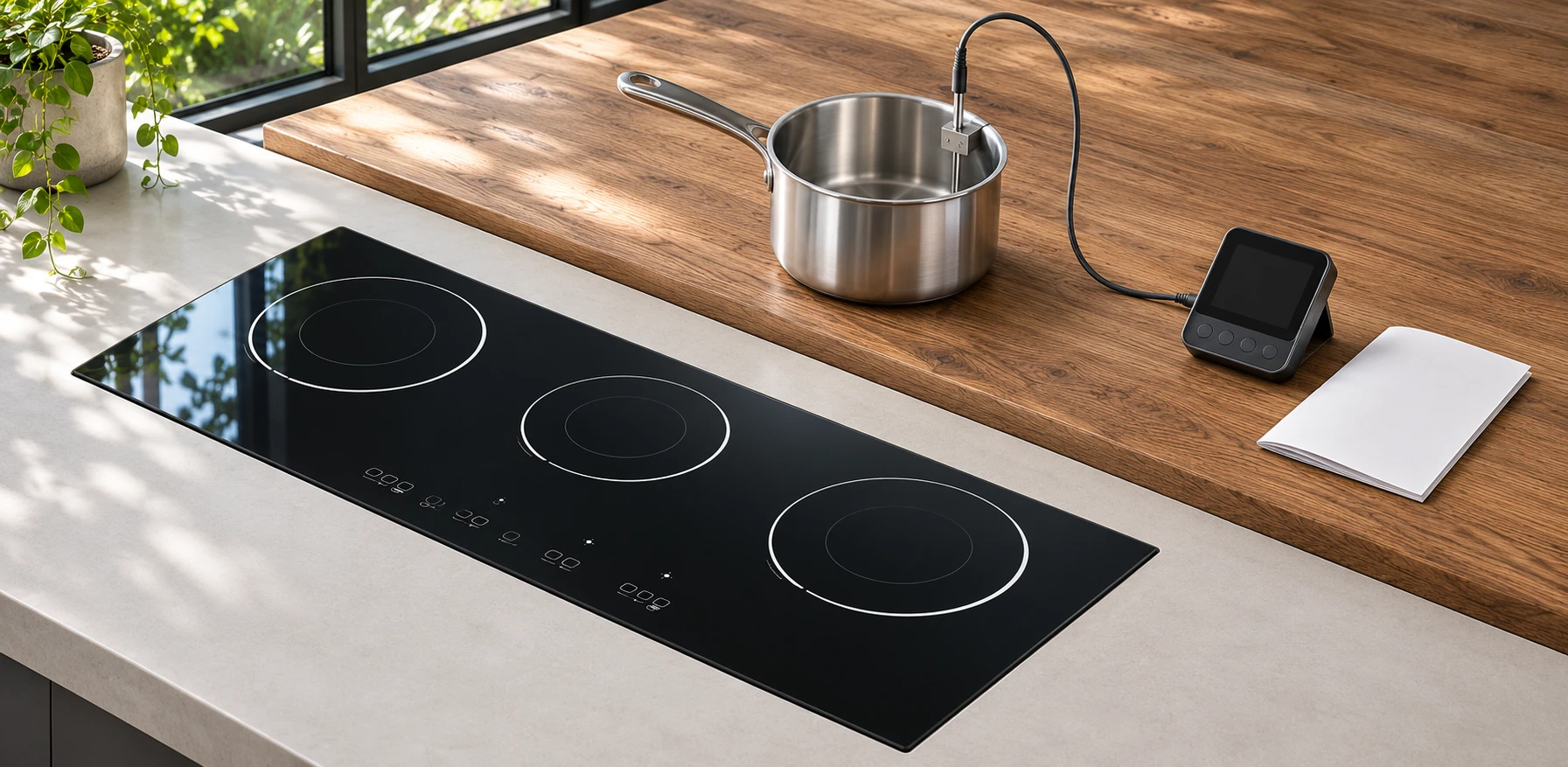
Do not substitute a household clothes peg, office clip or cable tie merely because it appears to hold the stem. Materials and shapes designed for another use can introduce additional restrictions. A statement about a broad material family does not rate an unknown assembly for the actual heat, cleaning and food-contact conditions. Obtain a purpose-specified attachment for the selected instrument.
Similarly, avoid transferring a seller’s maximum temperature for one component to the whole system. The weakest permitted exposure among the probe, cable, seal, connector and display may govern the arrangement. Ask for the complete model instructions when procurement descriptions are incomplete. A higher advertised number is not a reason to overlook poor fit, unsafe routing or an unsuitable sensing method.
Follow the instrument and clip instructions for removal, cleaning and drying. Keep the process within the stated immersion and detergent restrictions. Inspect the attachment for damage and the cable for visible changes without bending it sharply or pulling on the connector. Do not assume a dishwasher-safe clip makes the probe or electronic display dishwasher safe.
Store the parts so the probe tip and cable are protected and the matched clip can be identified next time. If the assembly has moved during use or no longer holds as intended, withdraw it pending appropriate advice. Repeatedly squeezing an unknown clip tighter is not a substitute for a replacement or a documented maintenance method. Retain the relevant model information with the kit.
U.S. Fire Administration cooking safety guidance supports attentive cooking and a clear stovetop. Keep spare clips, packaging and documentation off active or potentially hot zones. Use checking marks on the glass surface for separate glass-surface observations; do not scrape a dropped attachment across the panel or use the glass as a tool tray. A cold setup rehearsal should establish where each loose part belongs.
Kanger’s Kanger black glass-ceramic cooktop panels and black glass-ceramic material guide describe the glass-panel supply context. They do not certify a thermometer, clip or completed appliance arrangement. For OEM or kitchen procurement, keep the accessory compatibility record alongside the appliance requirements and specify the responsible support contacts. The useful outcome is a matched, documented setup with safe access, not a universal approval based on appearance or the ability to grip a rim.
This independent educational video explains how induction heats suitable cookware and why vessel geometry matters. It is background on the heating system, not a demonstration of thermometer accuracy, clip compatibility or a repair approval.
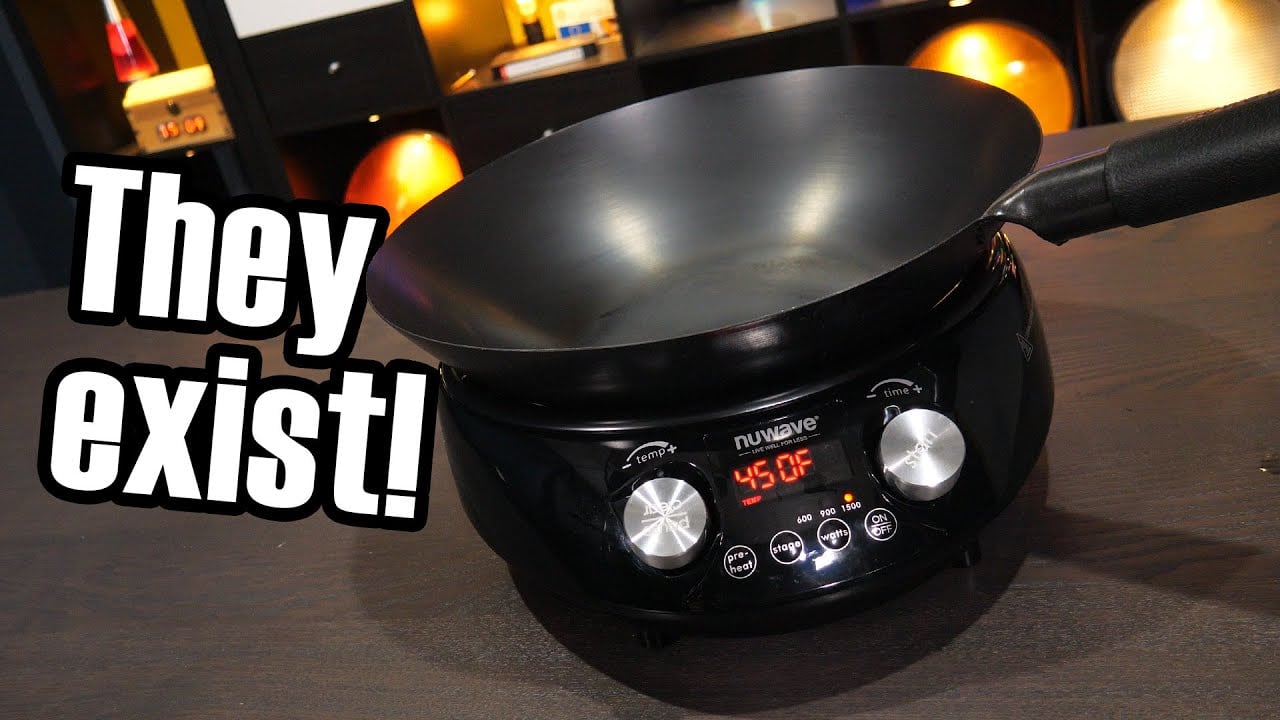
Video: Induction cooking – but what about woks?, Technology Connections. Open the educational video on YouTube.
No. Verify the exact stem fit, retention method and intended task from the documentation.
No. Check each component’s stated exposure restrictions.
Do not force the arrangement. Follow the lid and thermometer instructions or choose a documented alternative.
No. Probe position, instrument suitability and the measurement method must also be correct.