Size a concave glass-ceramic cooktop panel from the approved commercial wok burner envelope, wok-foot contact zone, concave profile, and flat border together—not from a burner diameter alone. Put those interfaces on a controlled top view and section drawing, then require deviations to be declared before quoting.
For material-selection context, read the wok-burner material guide. For the initial geometry choice, use the flat versus concave decision guide.
Treat “commercial wok burner sizing” as an interface decision, not a catalogue dimension. The buyer needs a controlled relationship between the burner envelope, the wok-foot contact zone, the concave profile, and the panel’s flat border where the panel meets its surrounding structure.
Each item answers a different fit question. The burner envelope identifies the heating assembly’s occupied area; the wok-foot contact zone identifies the intended support relationship; the concave profile defines the formed surface; and the flat border provides a reference for the remaining panel and frame interface.
| Decision input | What it defines | What the RFQ should show |
|---|---|---|
| Commercial wok burner envelope | Heating assembly footprint and center location | Outline, centerline, and supplier-supplied interface reference |
| Wok-foot contact zone | Intended seating relationship | Wok drawing, contact-zone definition, or approved interface note |
| Concave profile | Bowl geometry through the wok zone | Section view with project dimensions |
| Flat border | Transition from bowl to surrounding panel | Border width, frame interface, and drawing datum |
| Panel outline and cutouts | Overall part geometry | Controlled top view and revision |
Do not turn these inputs into generic numeric rules. Their approved values depend on the specific burner, wok, structure, and production drawing.
A burner diameter can locate the heating zone, but it cannot define the required panel bowl. It does not show the wok-foot shape, the seating diameter, the desired bowl depth, or the radius or sagitta that connects the concave area to the rest of the panel.
The decision sequence should therefore move from interfaces to geometry:
This sequence prevents a common mismatch: a supplier can match the nominal burner circle while quoting a different bowl profile. A price comparison is meaningful only after the geometry basis is the same.
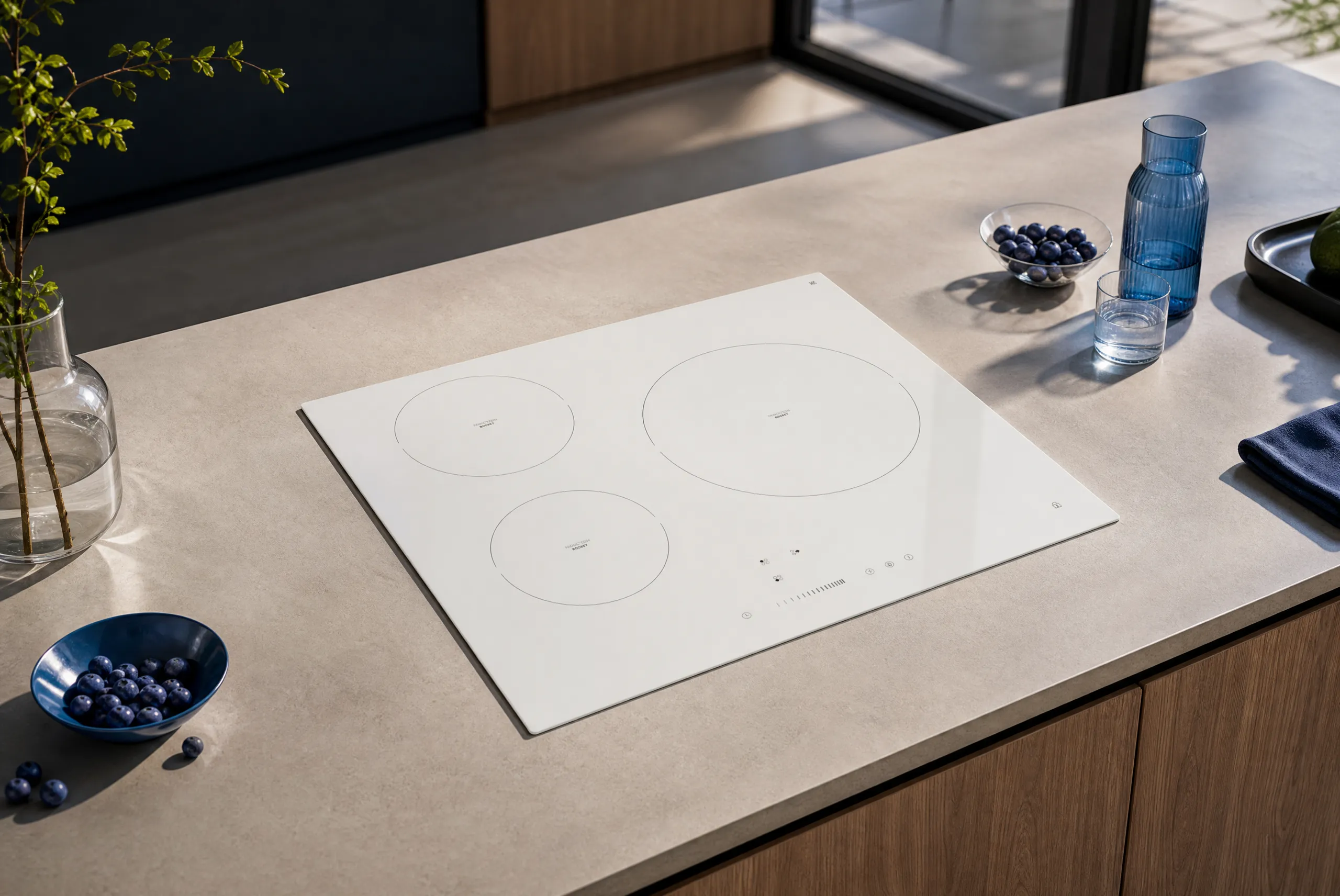
Use a top view and a section view on the same controlled revision. The top view establishes the panel outline, burner center, cutouts, and concave-zone boundary; the section view establishes the non-planar profile that a plan view cannot communicate.
| Drawing element | Why it matters | Required response |
|---|---|---|
| Top view | Locates the burner envelope and panel features | Show centers, outlines, cutouts, and revision |
| Section through wok-zone center | Defines bowl depth and concave profile | Show the drawing datum and profile dimensions |
| Seating diameter | Identifies the intended wok-seat zone | State how it relates to the wok-foot contact zone |
| Radius or sagitta | Describes the profile method | Use one unambiguous controlled definition |
| Flat border and transition | Shows the interface outside the bowl | Identify border width and transition location |
| Tolerance note | Controls allowed departure from the drawing | State project-specific tolerance and inspection basis |
Name the datum that controls the section. Without a drawing datum, words such as “depth” and “recess” can be measured from different surfaces and create conflicting bids.
Start with the approved platform, not a generic concave-panel template. Record the intended bowl depth, seating diameter, radius or sagitta, flat-border geometry, and tolerance only where the engineering team has released a controlled value.
If a value is still open, make it an explicit supplier-response field rather than silently selecting a number. Ask the supplier to identify the proposed value, the reference surface, the inspection method, and every deviation from the drawing.
| RFQ field | Buyer input | Supplier response |
|---|---|---|
| Burner envelope | Controlled interface drawing or reference | Confirm fit basis or list deviation |
| Wok-foot contact zone | Wok drawing or contact definition | Confirm the assumed contact relationship |
| Bowl depth | Released value or “supplier proposal required” | State proposed value and drawing datum |
| Radius or sagitta | Released profile definition or proposal request | State profile method and any deviation |
| Seating diameter | Released interface dimension | Confirm relationship to the wok design |
| Tolerance | Released tolerance or review requirement | State inspection basis and exceptions |
Avoid a blanket requirement such as “standard concave wok panel.” That phrase does not define the shape, tolerance, or acceptance basis for a commercial program.
Geometry approval does not replace material and thermal review. A shaped panel still needs the thermal documentation and test context appropriate to the buyer’s application, and the drawing should identify features that need separate mechanical review, such as cutouts, transitions, and the frame interface.
SCHOTT’s glass-ceramic materials overview and CERAN technical details illustrate that glass-ceramic technical documentation contains material and thermal context. Use that pattern to request supplier-specific information; do not transfer third-party figures to a Kanger panel.
| Review topic | Ask for | Do not assume |
|---|---|---|
| Material identification | Supplier’s declared glass-ceramic grade or product documentation | A named material class proves the approved part |
| Thermal data | Test context and application-relevant supplier documentation | Another supplier’s thermal values apply |
| Contour transition | Review of the formed zone and adjoining features | A visual match proves mechanical fit |
| Frame interface | Shared drawing review of support and border conditions | A flat-panel frame fits a concave panel |
| Deviations | Written list before quote comparison | Silence means conformance |
The concave route fits only when the approved design actually requires a non-planar wok-seat profile. It is not a shortcut for a buyer who merely wants a commercial-looking cooktop or a dark decorative surface.
| Scenario | Recommended route |
|---|---|
| Approved commercial wok platform with a defined concave section | Shaped-line RFQ with controlled top and section views |
| Planar commercial cooktop with no designed wok seat | Flat cooktop route after platform confirmation |
| Burner selected but wok and panel interfaces unresolved | Hold the RFQ until the interface drawing is complete |
| A cheaper flat-panel substitute is proposed | Reject by default unless an engineering change approves a planar redesign |
| Fireplace, oven door, or architectural glass | Outside this cooktop-sizing workflow |
For a broader geometry choice before this sizing step, see the flat versus concave decision guide. For concave selection factors beyond the drawing handoff, see the concave panel selection guide.
When the commercial wok program has an approved concave profile and complete interface drawings, route the RFQ to shaped glass-ceramic cooktop panels. Attach the current top view, section view, burner envelope, wok-foot contact definition, frame interface, heating type, and requested thermal documentation.
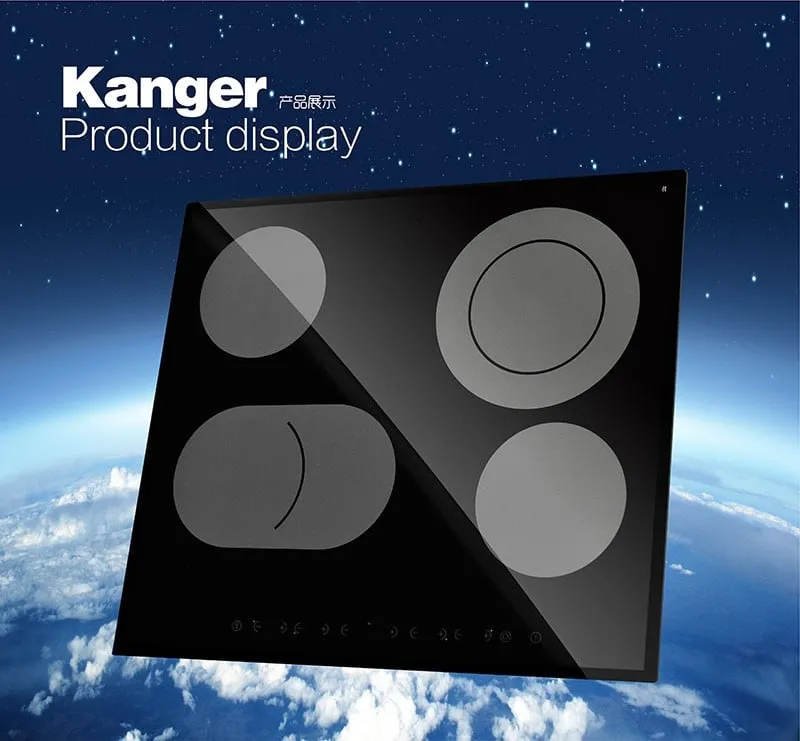
Choose the shaped product route for a confirmed concave or custom-contour cooktop program. Do not treat that route as a compatibility approval: Kanger should review the project drawing and requirements before a supplier commitment is made.
| RFQ condition | Route |
|---|---|
| Concave wok zone and controlled section drawing | Shaped glass-ceramic cooktop panels |
| Flat, level cooking surface | Review the flat cooktop route instead |
| Multiple unresolved contour options | Complete engineering selection before requesting a quote |
| Supplier proposes a changed profile | Obtain written design approval before comparison |
To begin the drawing-led review, send the wok-panel drawing with the interface fields from this guide.
What does commercial wok burner sizing mean for a concave panel?
It means defining the burner envelope, wok-foot contact zone, concave profile, and surrounding panel interfaces together on a controlled drawing. A burner label by itself is not a complete panel specification.
Can a burner diameter alone define a concave wok panel?
No. It locates one interface but does not establish the wok seat, bowl depth, seating diameter, profile method, or tolerance.
Which dimensions belong on the concave section drawing?
Show the drawing datum, bowl depth, radius or sagitta, seating diameter, flat border, transition location, and any released tolerance or supplier-response requirement.
Should buyers specify a universal bowl depth or radius?
No. Use project-specific dimensions approved for the burner, wok, frame, and panel design. If a dimension is unresolved, require a documented proposal and review it before accepting the quote.
Does a concave wok panel need thermal data as well as geometry?
Yes. Geometry does not replace supplier-specific material and thermal documentation. Request the required test context and review it alongside the drawing.
When should a buyer avoid a concave wok-panel RFQ?
Avoid it when the platform is planar, when no designed wok seat exists, or when the burner and wok interfaces have not been defined. Resolve the design gate before sourcing.