A durable glass-ceramic cooktop panel RFQ must define thermal shock behavior, coefficient of thermal expansion, operating temperature, thickness, edge treatment, and required test documents—not the adjective “durable” alone. Engineering durability on a cooking surface is proven with thermal metrics and inspection records, not marketing copy.
This checklist is for cooktop OEM buyers, appliance R&D teams, and importers who need a repeatable specification sheet before sourcing black, white, or shaped panels. For terminology alignment, read the companion RFQ terminology alignment guide. For buyer-oriented context, see the black glass-ceramic cooktop buying guide.
In OEM sourcing, durable should map to measurable panel performance:
Consumer articles often discuss durability as scratch resistance or cleaning convenience. Those topics matter to end users, but they do not replace thermal shock and expansion data in a factory RFQ. SCHOTT CERAN® technical documentation frames cooktop durability with temperature-difference resistance and thermal shock behavior—language procurement teams should mirror.
Copy this block into internal specs:
| Durability dimension | RFQ must state |
|---|---|
| Thermal cycling | Maximum zone temperature and expected cycle profile |
| Thermal shock | Cold quench or rapid cool-down test requirement, if any |
| Temperature gradient | Allowed ΔT between hot zone and frame edge |
| Mechanical handling | Assembly torque limits, clamp points, forbidden contact zones |
| Service replacement | Whether panel is field-replaceable and required edge clearance |
Thermal metrics are the core evidence for cooktop glass-ceramic panels. SCHOTT’s glass-ceramic materials overview explains that lithium-aluminosilicate glass-ceramics can be engineered for near-zero expansion, which underpins thermal shock resistance.
| Metric | What it tells the buyer |
|---|---|
| Coefficient of mean linear expansion (CTE) | How panel size changes with temperature |
| Maximum continuous-use temperature | Long-duty limit at hot zone |
| Resistance to temperature difference (RTD) | Risk of edge/frame cracking under gradient |
| Resistance to thermal shock (RTS) | Survival of rapid cooling from hot state |
| Thermal conductivity (if published) | Heat transfer behavior in multi-zone designs |
Industry datasheets such as the Eurokera Keralite sheet list CTE, ΔT, and thermal shock values as comparable rows. Require suppliers to complete the same rows even if your panel is black and opaque rather than transparent.
Tip: Do not accept a quote that only says “heat resisting >700°C” without stating whether that refers to continuous use, peak event, RTD, or RTS. Each label tests a different failure mode. — Source: SCHOTT CERAN® technical details
Thermal numbers alone do not define a manufacturable panel. Mechanical and edge requirements determine whether the panel survives assembly and field service.
| Item | Specify |
|---|---|
| Nominal thickness and tolerance band | e.g., drawing callout with ± tolerance |
| Flatness / bow limits | Especially for large rectangular panels |
| Hole, notch, and cutout locations | With radii and minimum edge distance |
| Edge grind type | Polished, arrised, or specified profile |
| Corner treatment | Radius or chamfer per drawing |
| Printing or coating | Side, color system, and curing requirements |
| Protective interleave / packaging | If required for automated assembly lines |
Stress concentrates at cutouts and sharp edge transitions. If the drawing cannot be released yet, state provisional dimensions but mark thermal and mechanical review as conditional until the final CAD is issued.
Durability requirements shift with heating technology and panel color.
Induction-compatible black panels emphasize magnetic coupling aesthetics and zone marking. Infrared applications may emphasize radiant transmission and zone graphics.
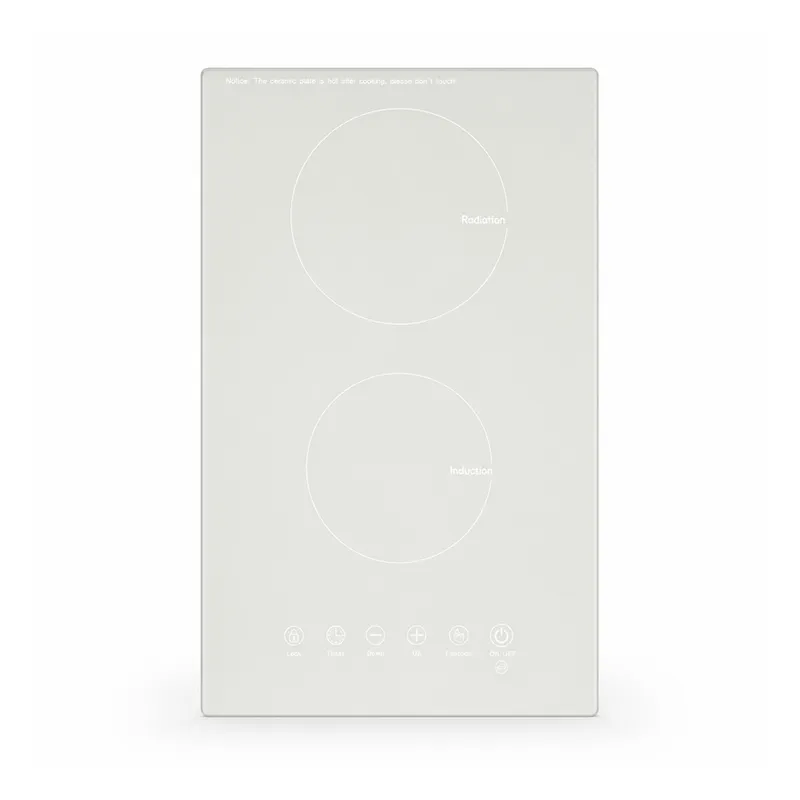
White panels may prioritize decorative consistency across lots. Kanger’s public products narrative assigns different published temperature bands by line—black cooktop messaging cites rapid rise up to 750°C, while white and shaped lines publish different limits.
Do not copy one temperature figure across every color or geometry.
| Variant | Additional RFQ notes |
|---|---|
| Black cooktop panel | Zone silk-screen, induction marking, surface finish |
| White cooktop panel | Color consistency lot criteria, decorative specs |
| Transparent observation panel | Transmission requirements, coating, framing clearance |
| Shaped / concave panel | 3D contour tolerance, wok-burner fit, commercial duty |
| Multi-zone layout | Zone boundary tolerances and thermal map, if available |
For performance narrative without repeating this checklist, see durability performance context.
Request documents by name in the RFQ. Do not assume compliance from product photos.
| Document | Purpose |
|---|---|
| Material datasheet for quoted grade | CTE, RTD/RTS, thickness options |
| Drawing approval record | Version control for holes and edges |
| Thermal shock test summary | Shows panel survived defined quench/gradient |
| Inspection criteria for visual defects | Bubbles, inclusions, chip limits |
| Certificate or declaration relevant to target market | Model-specific only—request list, do not assume |
| Packing and handling guide | Prevents field durability failures in transit |
SCHOTT CERAN® technical details reference cooktop-related IEC/EN appliance safety standard families as examples of how manufacturers discuss compliance context. Treat standards as project-dependent: the applicable clause follows the finished appliance model, not the panel quote alone.
Most field failures trace to incomplete RFQs, not to the word “durable.”
| Mistake | Consequence |
|---|---|
| Using “heat resistant glass” without application | Supplier quotes fireplace or oven grade |
| Omitting thickness and edge finish | Assembly stress and chip-outs |
| Copying consumer “glass top stove” language | Wrong material class enters bid |
| Comparing quotes with different test fields | False low-price winner |
| Assuming one temperature rating covers all colors | White or shaped lines may need different validation |
| Skipping cutout radii on early drawings | Cracks initiate at sharp internal corners |
| Buyer situation | Action |
|---|---|
| Only marketing durability language available | Stop and issue engineering RFQ block from Part 1 |
| Need transparent fireplace duty | Route to transparent line, not black cooktop default |
| Need oven door glass | Route to borosilicate/tempered lines |
| Need fastest quote without drawing | Request indicative range only; mark not production-ready |
For black cooktop glass-ceramic panels, start with the black glass-ceramic cooktop product line and attach:
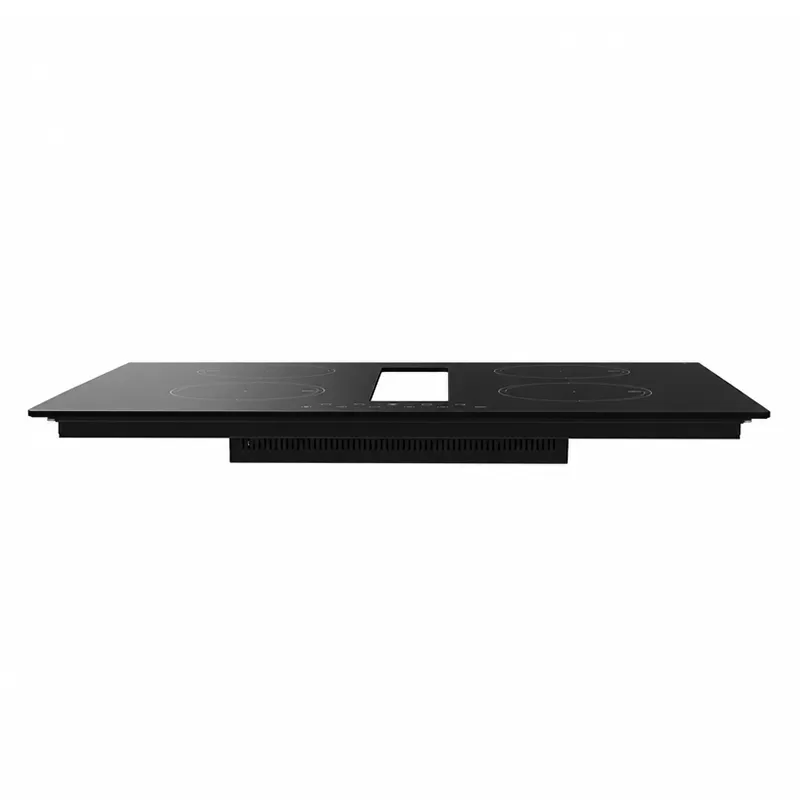
Kanger’s published black-line messaging cites low thermal expansion, excellent thermal shock resistance, and rapid temperature rise up to 750°C. Use those statements as conversation starters, then confirm values on the approved drawing and supplier datasheet.
Send the package through Contact Kanger or your existing account channel. For portfolio context beyond black cooktops, review Kanger appliance glass product lines.
What makes a glass-ceramic cooktop panel durable in an RFQ?
Define thermal shock resistance, CTE, operating temperature, thickness, edge quality, and test evidence—not adjectives alone.
How hot should a cooktop panel specification go?
Use the duty profile of your appliance. Published Kanger line messaging cites different temperature bands by color and shape; confirm on your SKU.
What is thermal shock resistance for cooktop glass?
It is the panel’s ability to survive rapid temperature change without cracking, often documented as RTS or related test language.
What thickness should buyers specify?
Use the appliance drawing. Thickness affects strength, heating behavior, and edge processing.
How do OEMs specify cooktop glass panels?
Issue drawing, material class, thermal table, mechanical edge requirements, and document list—this article’s Parts 1–5.
Can this checklist replace the black cooktop buying guide?
No. The buying guide supports evaluation; this checklist is the RFQ field sheet for sourcing.
Which Kanger page fits a durable black cooktop RFQ?
Use the black glass-ceramic cooktop product line page and attach engineering inputs.