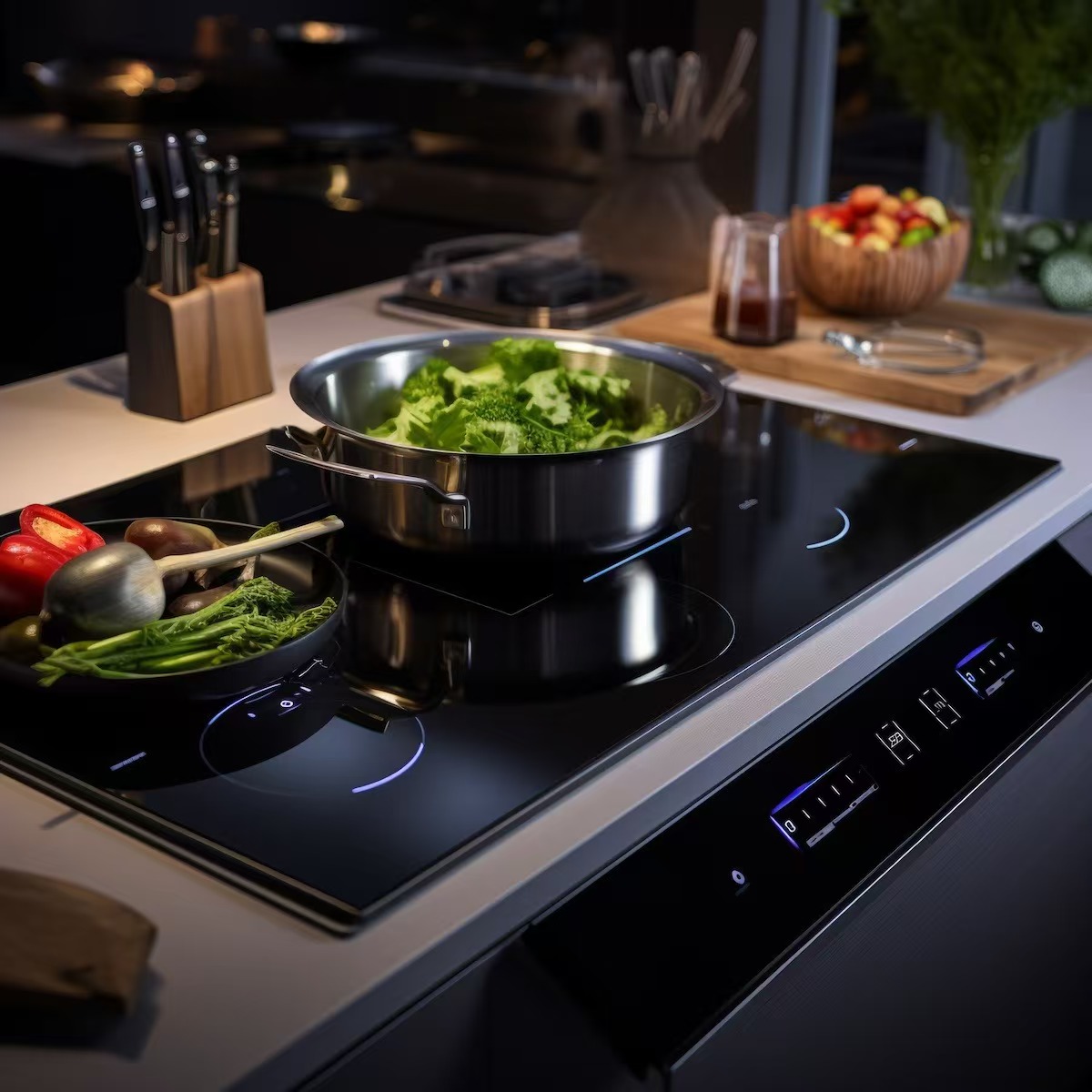
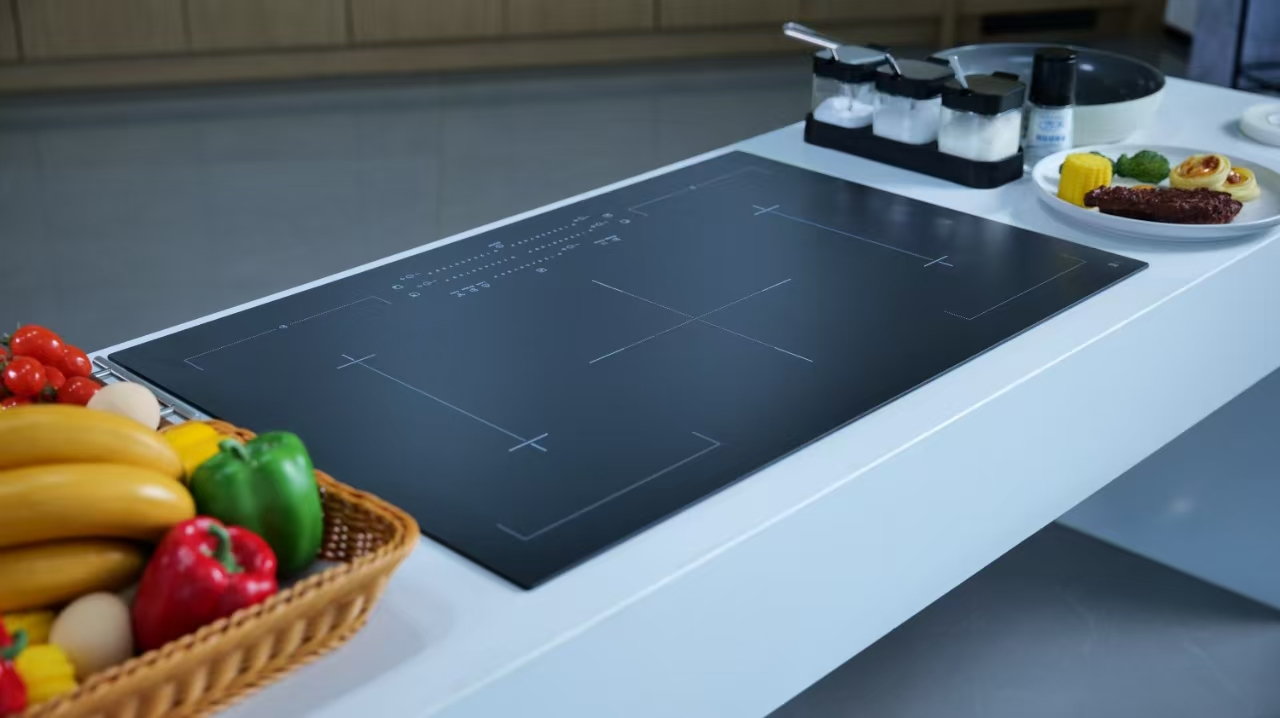
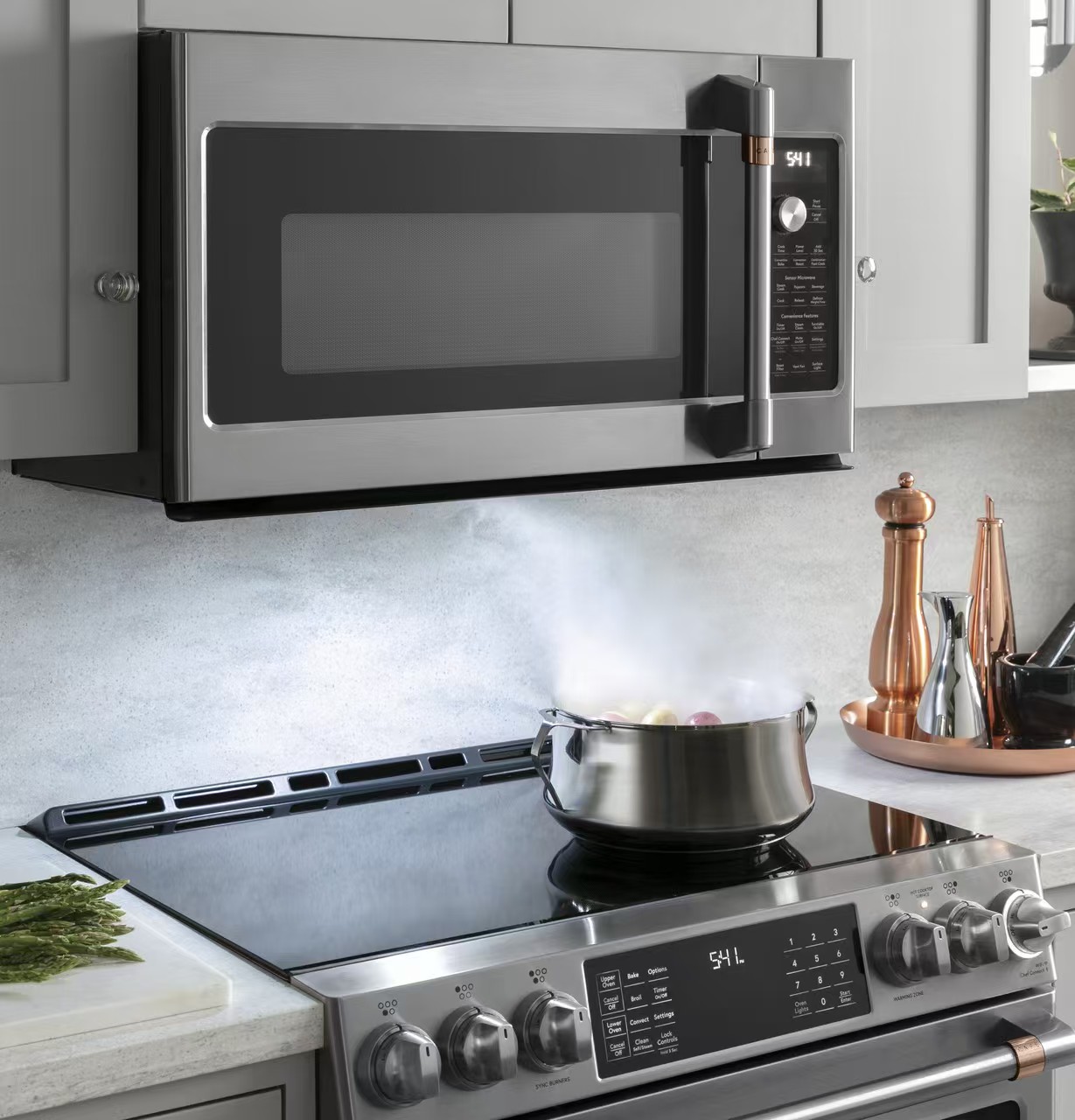
OEM teams should specify heat resistant induction cooker glass panels on one controlled drawing that locks induction heat-duty, induction coil zone marking, thickness and edge callouts, openings, and grade-tied thermal evidence—then compare quotes only against that same package. The sections below cover the material facts that matter, the induction interface fields buyers forget, the documents that keep a glass-ceramic cooktop panel RFQ comparable, and the sibling topics that belong elsewhere. When the package is ready, route flat black programs to Kanger’s black cooktop product hub.
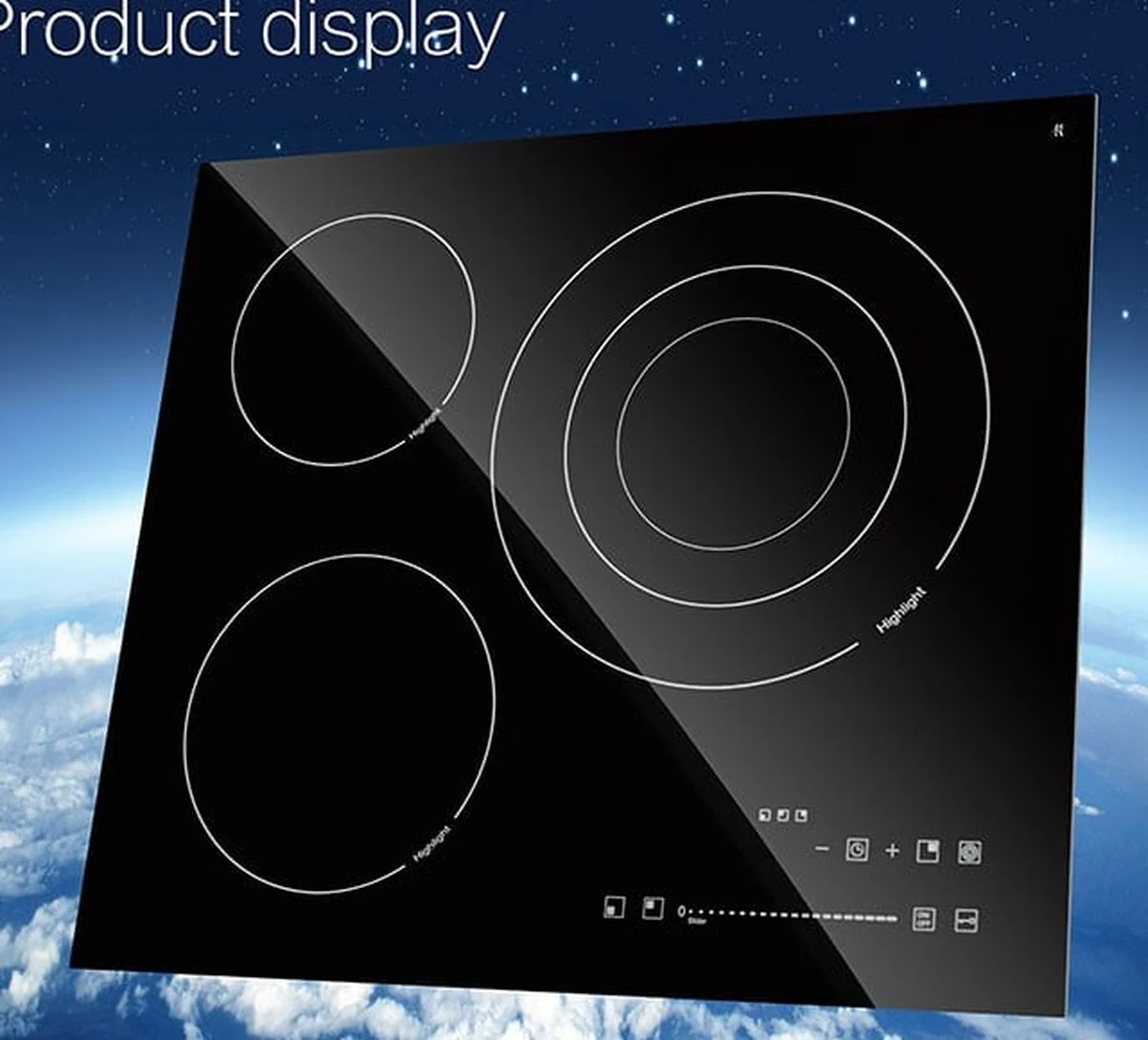
OEM teams are locking a drawing-controlled induction panel package for quotation and production—not shopping for a consumer hob and not accepting a brochure temperature line as a finished specification.
Procurement and mechanical engineering share the same failure mode: a supplier returns a glossy sheet that says “heat resistant induction glass,” while the coil map, print keep-outs, and thermal evidence rows are missing. Two quotes then look cheap for different reasons, and the cheaper one often omitted the hard work.
Treat the RFQ as a configuration control problem. If the drawing revision, heating technology, and evidence set are not identical across bidders, price ranking is theater.
Treat glass-ceramic—sometimes called microcrystalline glass in buyer shorthand—as a lithium aluminosilicate (LAS) material class chosen for near-zero thermal expansion, then confirm the quoted grade rather than inventing a universal temperature rating from a marketing headline.
Glass-ceramic cooktop surfaces combine glass-like smoothness with ceramic-like thermal stability after controlled ceramization. Industry cooktop materials such as SCHOTT CERAN® are documented for thermal shock / temperature difference resistance between a hot cooking zone and a cooler panel edge, and CERAN materials are stated to withstand sudden thermal shocks of up to 700˚C in brand technical literature.
Those figures illustrate the material class. They are not a free pass to copy 750℃, 760℃, or 850℃ claims from unrelated catalogs onto your SKU.
For an induction cooker glass-ceramic panel, the buyer-relevant translation is simple: the surface must survive zone-to-edge gradients and repeated thermal cycling while staying dimensionally stable around the induction coil / heating zone layout. Ask which grade is being quoted and which datasheet rows apply to that grade.
Common process descriptions for Ceran-class panels mention rolling to roughly 4–5 mm before crystallization. Use that only as industry context when you discuss thickness with newcomers.
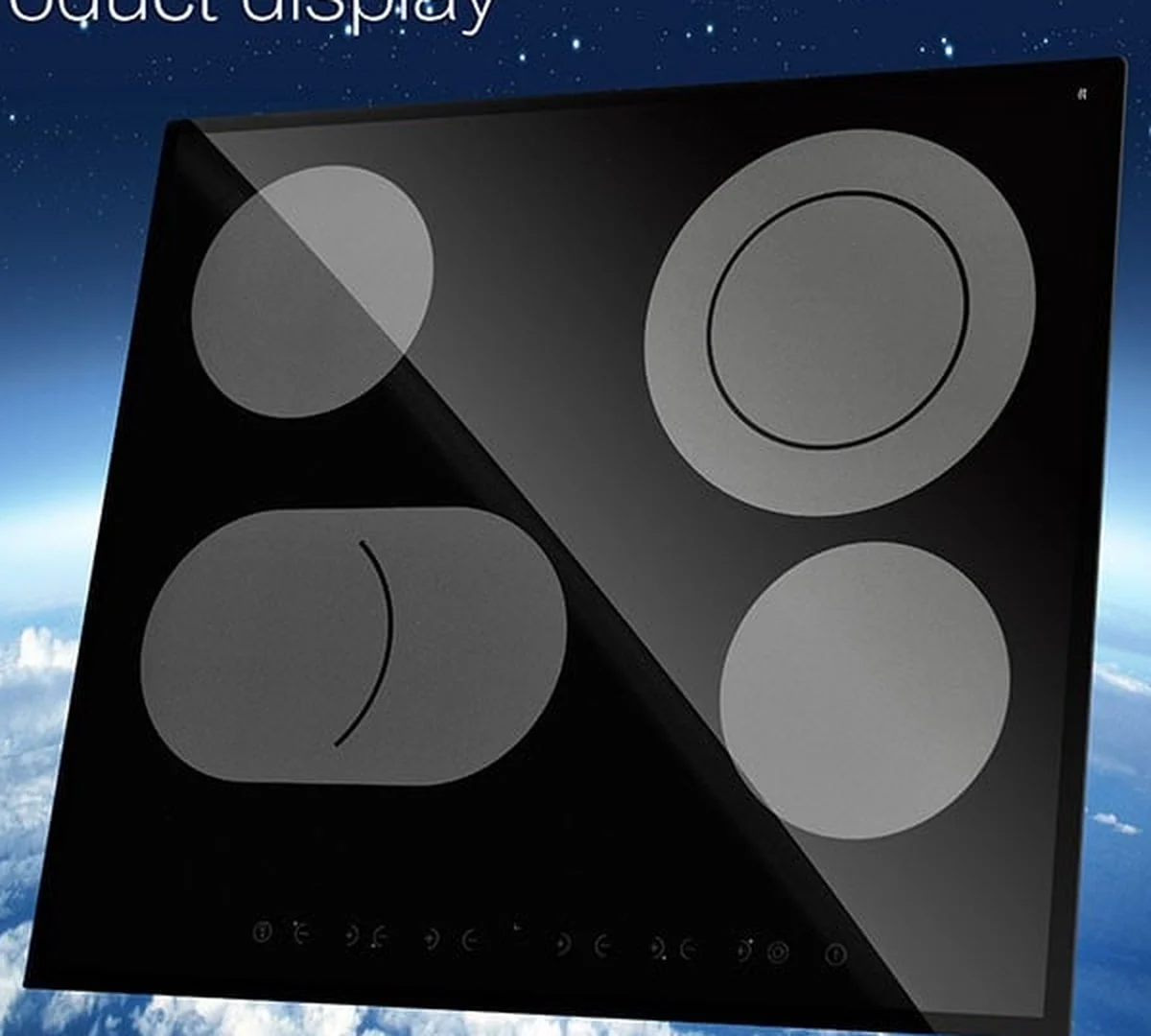
Put the coil and zone layout, silk-screen keep-outs, and control openings on the same drawing revision as the outer geometry—otherwise the quote is for a blank that does not match the appliance.
Induction heating couples energy into the cookware through the panel. The panel still carries zone markings, sensor keep-outs, and often touch or knob openings that must align with the chassis. Supplier customization lists routinely mention screen printing, holes, and thickness and edge finish work; those items only help if they sit on one controlled revision.
| RFQ field | What to lock on the drawing | Risk if missing |
|---|---|---|
| Heating technology | Induction (not “cooktop glass” alone) | Wrong duty assumptions |
| Outer size + tolerance | Length, width, squareness | Fit rejects at assembly |
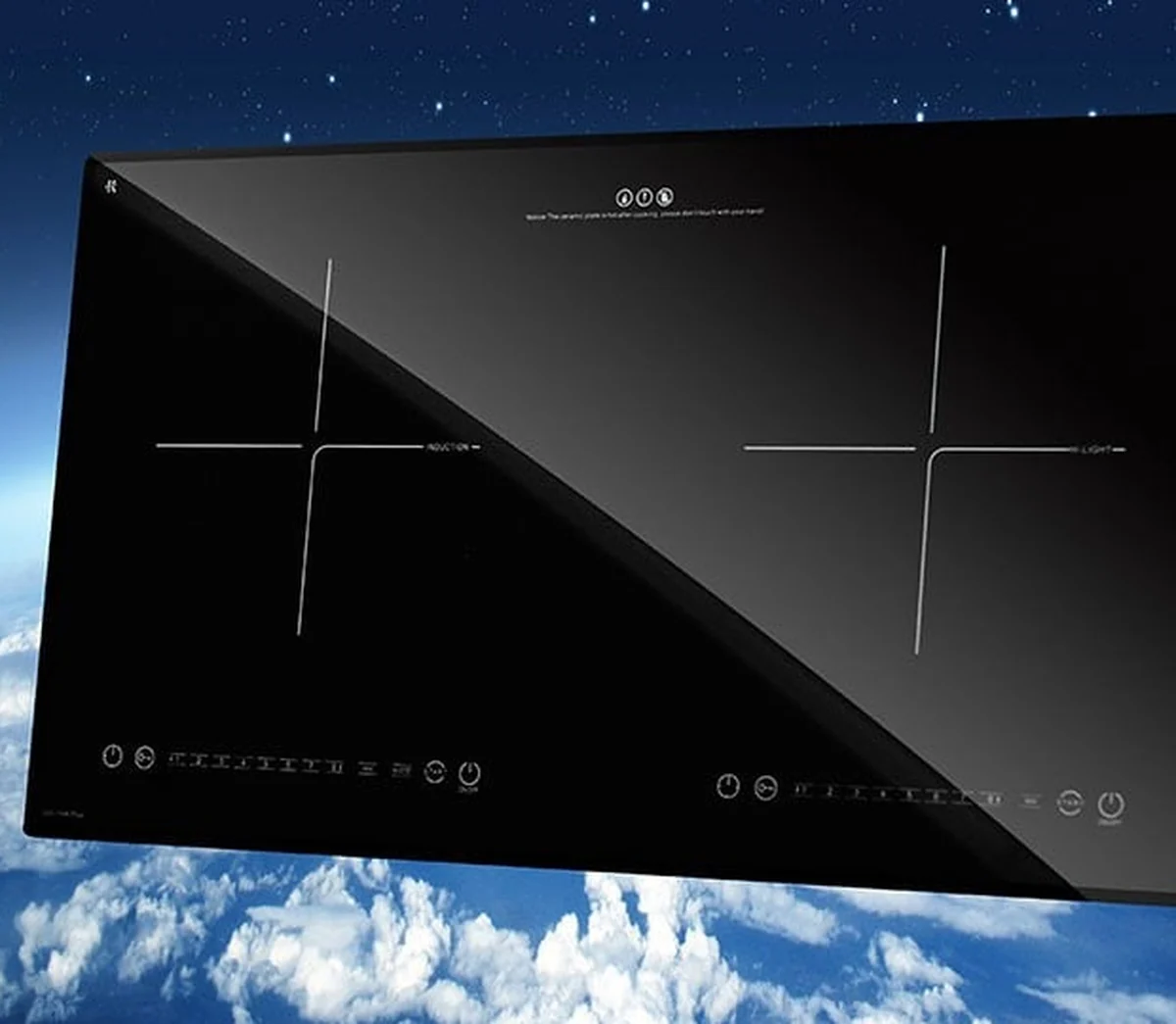
| Zone / coil artwork | Zone diameters, bridge zones, print side | Hot-spot or print misalignment |
| Keep-outs | Sensors, logos, unprinted margins | Artwork conflicts |
| Openings | Knob holes, windows, cutouts with positions | Chassis clash |
| Edge / corner class | Grind profile and corner treatment | Chip and seal issues |
If your platform also has infrared emitters, do not silently reuse this induction block. Use the live induction versus infrared panel comparison when the decision is technology split, not flat induction specification.
State nominal thickness with tolerance, an explicit edge class, and every opening size and position—then deepen thickness detail on the dedicated thickness guide when that is the only open question.
Market OEM sheets commonly advertise 4 mm and 6 mm induction panel options and ask buyers for dimensions, holes, printing, and quantity. That pattern is useful as a reminder of which fields appear in serious RFQs. It is not a rule that every Kanger program must default to one of those two numbers without engineering review.
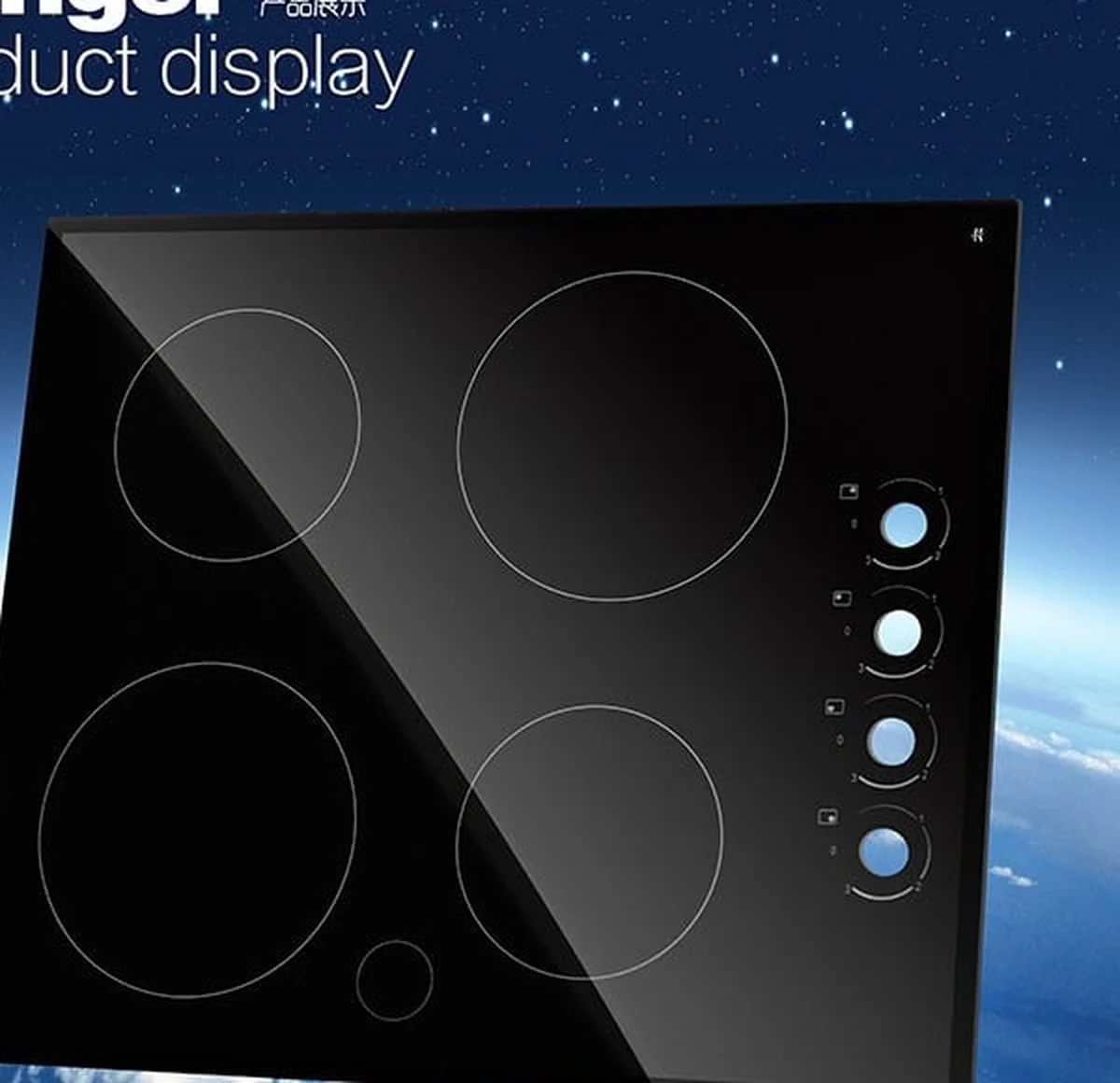
Write openings as controlled features, not “holes as needed.” Knob cutouts with printed dial scales, slider touch areas, and warning icons all change print tooling and inspection criteria.
When the dispute is only about black panel thickness and edge grind language, switch to the sibling checklist: black glass ceramic panel thickness and edge finish. Keep this article focused on the induction heat-duty package that surrounds those geometry rows.
Ask for grade datasheet rows and appliance-standard thermal evidence tied to the drawing revision. A marketing PDF that only repeats “heat resistant” is not enough.
SCHOTT’s CERAN HIGHTRANS® eco technical notes list thermal conductivity of about 1.6 W/(m·K) and state that thermal-shock requirements according to EN 60335-2-6 are fulfilled for that grade family. Use that pattern as a questionnaire: which continuous-use, peak, shock, and conductivity rows apply to the grade on your quote, and which appliance-standard thermal claims are attached?
| Document | Pass | Fail |
|---|---|---|
| Grade datasheet for the quoted material | Named grade + thermal rows | Generic brochure only |
| Drawing / artwork revision ID | Same rev on both quotes | Missing or mismatched rev |
| Thermal-shock / ΔT evidence scope | Method or standard named | “High temperature” slogan |
| Inspection criteria | Edge, visual, dimensional limits | “As sample” with no notes |
From the field: Home users who crack an induction top after a corner impact often ask for “generic / OEM glass” and later report the crack growing across the panel (OzBargain thread; Fixya induction glass thread).
That language is about impact and model-matched replacement geometry—not proof that a thermal-duty test was failed. Keep impact handling, packaging, and edge class in the RFQ instead of treating every crack story as a heat-resistance verdict.
Keep infrared-only, concave bowl, or thickness-only jobs out of this flat induction heat-duty RFQ, or you will compare prices for different components.
Black color alone does not prove technology interchangeability. A panel that looks identical in a gallery can still carry the wrong zone print, the wrong opening map, or the wrong duty evidence.
| Stop condition | Better route | Why |
|---|---|---|
| Need induction vs infrared RFQ split | Induction vs infrared comparison | infrared cooktop panel interface mismatch |
| Bowl / wok concave geometry | Concave induction OEM guide | concave induction panel coil clearance dominates |
| Only thickness / edge language is open | Thickness and edge finish guide | Avoid rewriting a finished checklist |
| White or transparent display glass | Matching product line, not black induction assumptions | Wrong optical and duty package |
If a supplier offers one price for “black glass-ceramic, any cooker,” ask which heating technology and drawing revision that price assumes. Silence on those two fields is a red flag.
Route flat black induction programs to Kanger’s black glass-ceramic cooktop panel line—also described on-site as black heat-resistant glass-ceramic cooktop panels—with the controlled drawing package attached. Missing coil or duty fields still block a fair quote even when the hub page is open.
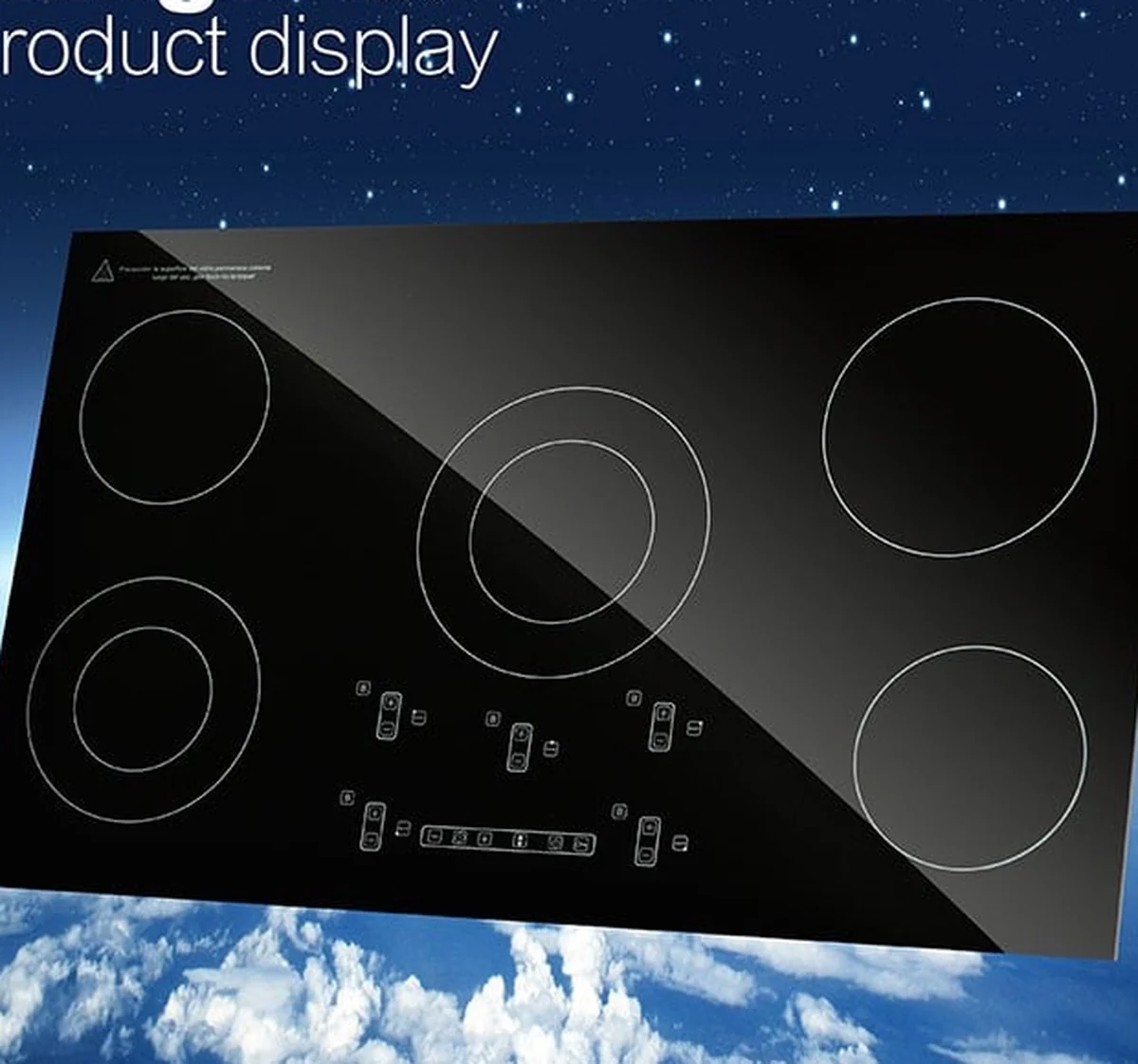
The public hub already frames buyer tasks around heating method, panel geometry, thickness, edge finish, and required thermal evidence. That matches the RFQ package in this article.
Not recommended when: the program is infrared-only without induction interface notes; the geometry is concave wok/bowl (use the concave guide); or the need is white, transparent fireplace, or tempered appliance glass rather than black cooktop glass-ceramic.
After the hub review, send the same controlled package through Contact Kanger. Keep enquiry steps outside this article so the recommendation stays on product fit, not a standalone RFQ workflow.
Lock heating technology, outer size with tolerance, zone/coil artwork, print keep-outs, openings, thickness with tolerance, edge class, and the thermal evidence set tied to one drawing revision.
Buyers often say “ceramic glass” when they mean glass-ceramic cooktop material. In sourcing language, prefer glass-ceramic / microcrystalline cooktop panel and name the quoted grade so the datasheet is unambiguous.
Common market sheets mention 4 mm and 6 mm, and Ceran-class process notes often cite roughly 4–5 mm rolled thickness. Put your program’s nominal thickness and tolerance on the drawing after structural review—do not copy a competitor default blindly.
Not safely. Zone marking, keep-outs, and duty evidence differ when the heating interface changes. Split RFQs or use the induction-versus-infrared comparison article before you force one print package onto both platforms.
Ask for the named grade datasheet, continuous-use / peak / shock rows that apply to that grade, and any appliance-standard thermal-shock claims (for example EN 60335-2-6 language on relevant industry grades). Marketing slogans without a grade are not enough.
Not by itself. Community reports show corners and edges cracking from dropped bottles or impacts, with cracks sometimes growing afterward. Treat impact, packaging, and edge finish as separate RFQ risks from thermal-duty validation.
Use the concave guide when the panel has a bowl or wok geometry that needs depth, flange, and coil-clearance notes. Flat induction heat-duty RFQs stay on this article.