An induction hob double boiler needs a lower pan that is suitable for the appliance and an upper vessel designed to fit that pan. The upper bowl does not need to act as the induction base, but its material, seating and intended use still require the manufacturer’s instructions. Check the complete matched arrangement before heating. A loose bowl balanced over an unrelated pot is not automatically equivalent to a purpose-made set.
This guide addresses cookware selection, fit and access on a glass cooking surface. It does not provide a universal water level, melting temperature or food-processing schedule. A recipe and the equipment instructions must be compatible with the actual task. The practical aim is to keep the lower-pan decision, the upper-vessel decision and the user’s handling plan clear instead of assuming that the words double boiler settle all three.
The lower pan is the cookware that sits on the hob and must meet its compatibility requirements. ENERGY STAR guidance on electric cooking products explains how induction interacts magnetically with appropriate cookware. Check the exact lower-pan model and size for induction designation rather than relying on the appearance of the upper bowl. A stainless finish alone does not describe the complete base construction or establish suitability for a particular zone.
The upper vessel receives heat through the arrangement described by its maker. Its rim, handles and material are part of that design. Read the instructions for the complete set, including whether an upper vessel may be used independently. Do not put it directly on the hob merely because the lower pan is induction compatible. Each permitted use needs support from the actual product documentation.
Compare model numbers when buying a complete set or replacement component. A product listing may show a lower saucepan, an upper bowl and a lid while selling only one of those parts. Confirm what is supplied and which combinations are permitted. Similar nominal diameters do not show how deeply a bowl nests or how its rim is supported.
Inspect the cold, empty assembly on a stable surface. The upper vessel should sit as intended without improvised clips, spacers or utensils. Do not bend a rim or force a bowl into a pot to imitate a photograph. If the fit is unclear, obtain the supplier’s answer before heating or choose a complete documented set that suits the task.
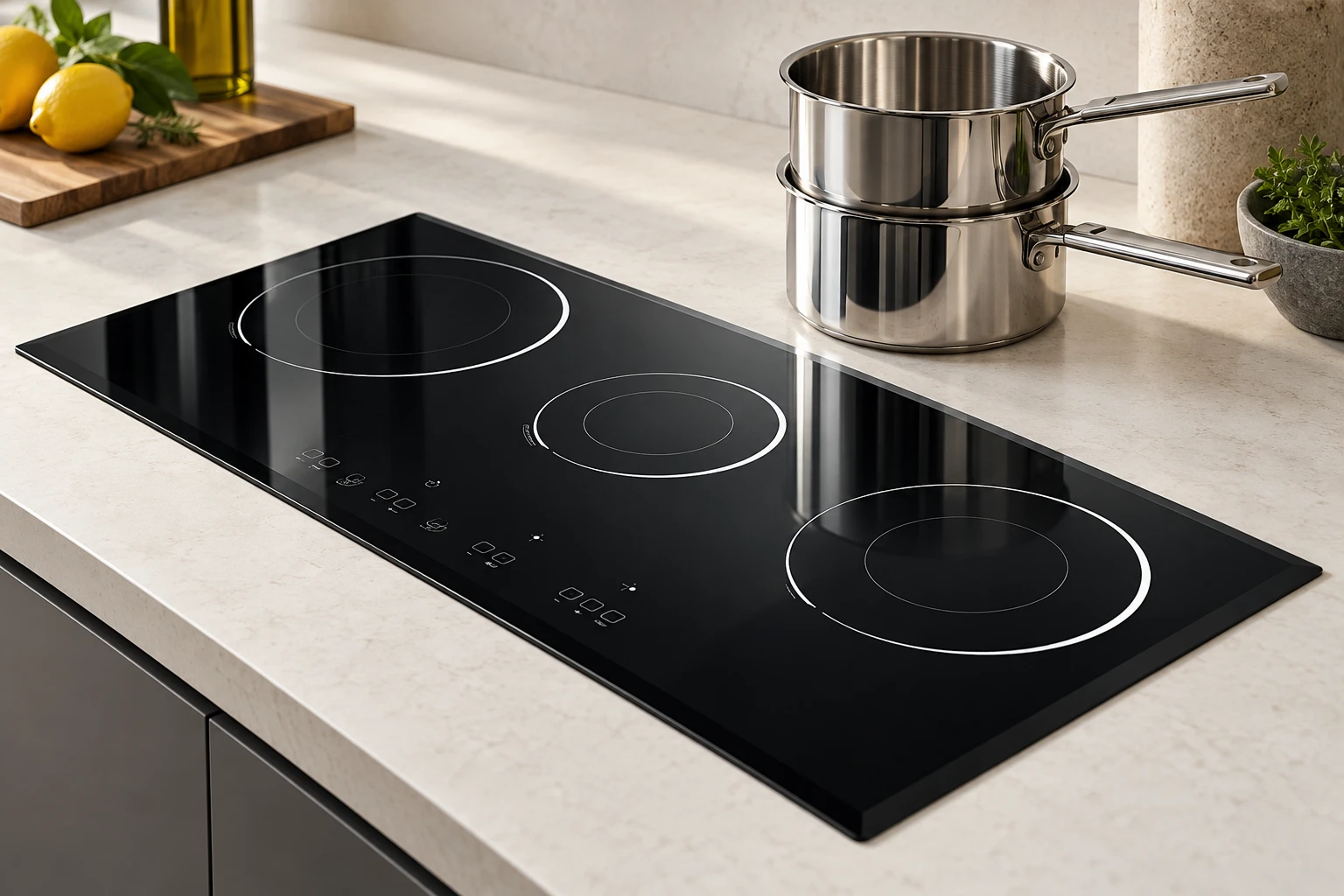
Obtain the usable bottom dimensions and compare them with the appliance’s cookware guidance. Our guide to measuring the usable pan base explains the difference between a vessel’s widest diameter and the base relevant to zone recognition. A compact lower saucepan may have a smaller working base than a buyer expects from the size of the upper bowl.
Place the lower pan in the permitted position and check that its base is clean and sits as intended. Do not move it partly off the zone to make a long handle convenient. If the arrangement blocks controls or conflicts with another vessel, select another permitted setup. An assembly that balances on a counter is not evidence that it is suitable for every hob or cooking layout.
Read how the set is filled, assembled and monitored. The relationship between water and the upper vessel must follow the manufacturer’s description; do not impose one fixed depth on every design. A shallow lower pan and a deeper one can have different instructions. The recipe’s quantity of chocolate or sauce does not establish the correct water condition in the lower vessel.
Plan any permitted replenishment or interruption before heating. Follow the product’s sequence for turning off, opening or adding water instead of lifting parts spontaneously over an active zone. Do not deliberately run the lower pan dry as a test. If that happens accidentally or another abnormal condition occurs, follow the equipment support instructions before restarting.
The table focuses on decisions that can be resolved before food is added. The induction principle follows ENERGY STAR guidance on electric cooking products. Exact water levels, power settings and handling requirements belong to the cookware and appliance documentation. No row establishes a universal temperature or guarantees a result for every recipe.
| Decision | Evidence to check | Useful action |
|---|---|---|
| Lower-pan suitability | Exact induction designation and usable base | Confirm permitted zone and placement |
| Upper-vessel fit | Matching model, rim and seating instructions | Reject improvised balancing arrangements |
| Water relationship | Set-specific filling and monitoring guidance | Plan the permitted checking sequence |
| Handling | Accessible grips and separate resting places | Rehearse with the assembly cold and empty |
| Recipe requirements | Task instructions compatible with equipment | Resolve contradictions before cooking |
A perforated steaming basket and a solid upper vessel serve different arrangements. Do not exchange them because both fit above a pan. Check the intended support, water relationship and lid use for the actual product. A recipe that calls for one method may not transfer directly to another, even when the outer silhouette looks similar.
Keep pressure equipment separate as well. Do not block openings, clamp lids or add weights to turn an ordinary double boiler into a pressure appliance. Its name describes a cooking arrangement, not pressure capability. The instructions should determine what each component is designed to do; unsupported modifications are not a way to improve its heating response.
With the equipment cold and empty, check which handles are used to stabilize and lift each part. Identify a suitable resting surface for the upper vessel and a separate place for any lid. The user should not have to balance a hot bowl on a narrow edge or rest it where its underside can contact an unsuitable surface.
Our guide to keeping cookware handles clear of controls explains control clearance. Apply it to the complete assembly, including the upper handles. Do not assume that a metal grip remains cool because induction has no exposed flame. Follow the maker’s requirements for protective equipment, and keep the intended hand position clear of other active cookware. If the arrangement requires an awkward reach, change it before use.
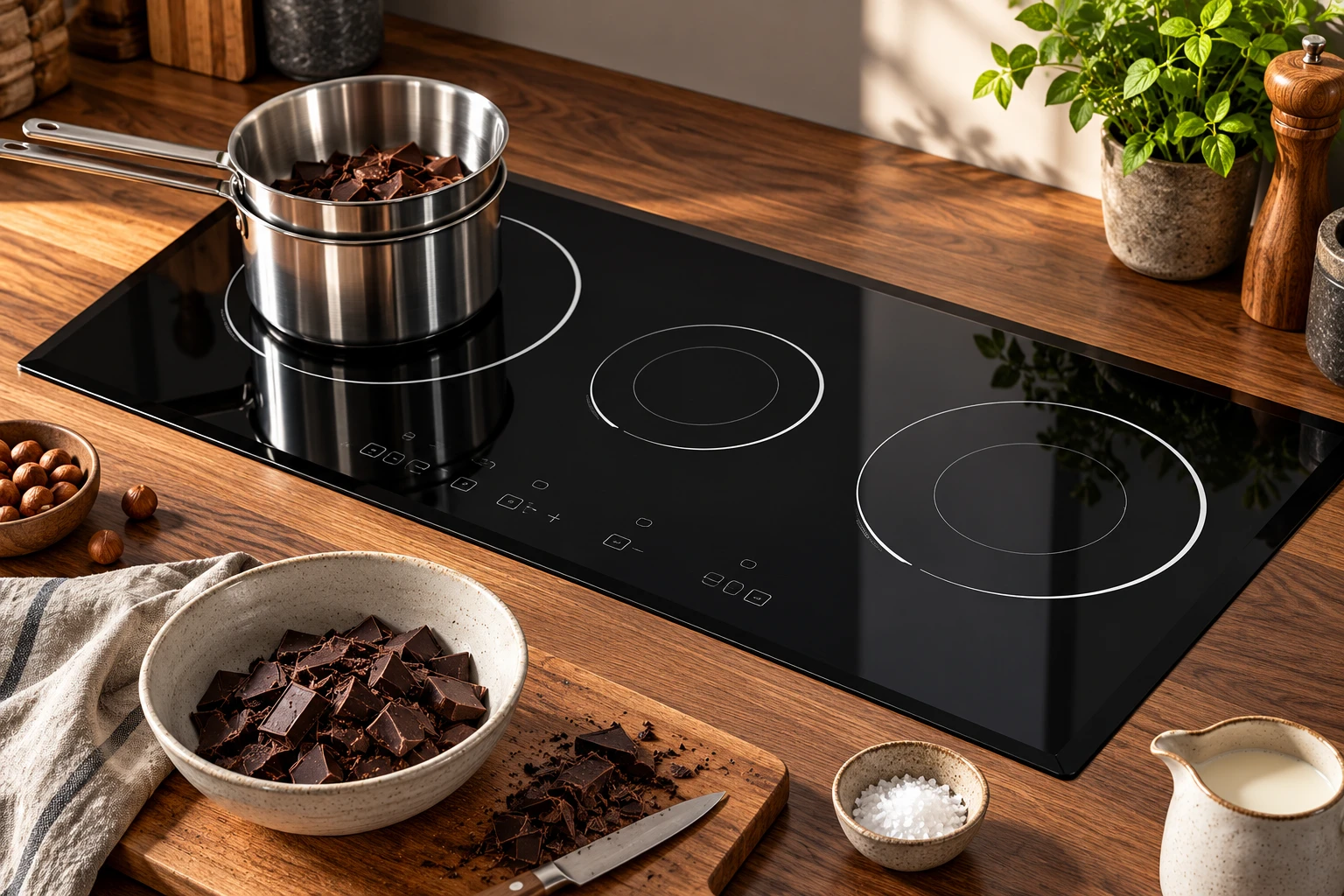
Use the equipment instructions and the recipe together. A recipe may describe an intended heating condition without specifying a setting for your hob. Do not treat another appliance’s numbered control as a universal equivalent. Resolve any contradiction with appropriate product guidance rather than improvising a high-power shortcut because the process seems slow.
A double boiler is not an automatic temperature regulator for every task. It does not remove the need to monitor the contents or follow the recipe’s food-safety requirements. This guide intentionally gives no universal melting temperature or holding time. Choose a task and cookware combination whose instructions can be followed with the equipment actually available.
U.S. Fire Administration cooking-safety guidance advises attending cooking and keeping combustible items away from the stovetop. Prepare ingredients, utensils and resting places before the hob is switched on. Do not leave an operating assembly unattended because the upper vessel separates the food from the lower pan. A timer, lid or lower water vessel does not replace the user’s supervision.
Keep packaging, spare towels and loose paperwork out of the cooking area. If the assembly becomes unstable, the water condition is uncertain or the appliance shows an abnormal message, follow the relevant instructions. Do not try to correct fit by pressing down on the upper bowl during heating. A problem with support or seating needs a safe stop and a documented solution.
If the appliance does not recognize the setup, consult its cookware guidance and record the displayed message. Check the lower pan’s designation and usable base first. The upper vessel’s width does not establish the bottom pan’s suitability. Do not use an unapproved adapter or repeated maximum-power attempts to force an incompatible arrangement to operate.
When seeking support, record both cookware component models, the hob model and the permitted assembly being used. Describe the observed issue without claiming that it proves a glass defect. A photograph helps explain fit and placement but cannot certify compatibility or diagnose internal electrical behavior. Keep modifications out of the troubleshooting process unless the responsible maker supplies an approved procedure.
Follow each component’s cooling, cleaning and drying instructions. Do not assume a cleaning method suitable for the lower pan is permitted for a coated or differently finished upper vessel. Inspect the seating surfaces and handles before storage. A damaged rim or a loose attachment should be addressed before the next use rather than hidden by nesting the parts together.
Lift the lower pan instead of dragging it across the panel and keep its underside free of grit using permitted care methods. Our guide to understanding glass surface marks distinguishes surface residue from conditions that need service advice. Do not use cleaning as a way to certify damaged glass or distorted cookware. Stop when the observed condition exceeds ordinary maintenance guidance.
Purchasers should retain the complete model list, assembly instructions, base dimensions and any written supplier clarification. Recheck the combination when a replacement upper vessel or lower pan changes. In a shared kitchen, store matching components so visually similar parts are not automatically mixed together. Pass the actual instructions to the user rather than only a purchasing description.
Kanger’s Kanger black glass-ceramic cooktop panel and black glass-ceramic material overview concern the glass surface and its material context. They do not approve every double-boiler combination or guarantee recipe results. OEM buyers should define panel and integration requirements in their own project and validate finished-appliance cookware suitability separately. That division keeps glass-component information useful without turning it into unsupported operating approval.
This neutral educational explanation shows induction heating and the role of cookware geometry. It supports understanding the lower vessel and its base, not approval of a stockpot load, a steaming insert, a double-boiler assembly or a particular recipe.
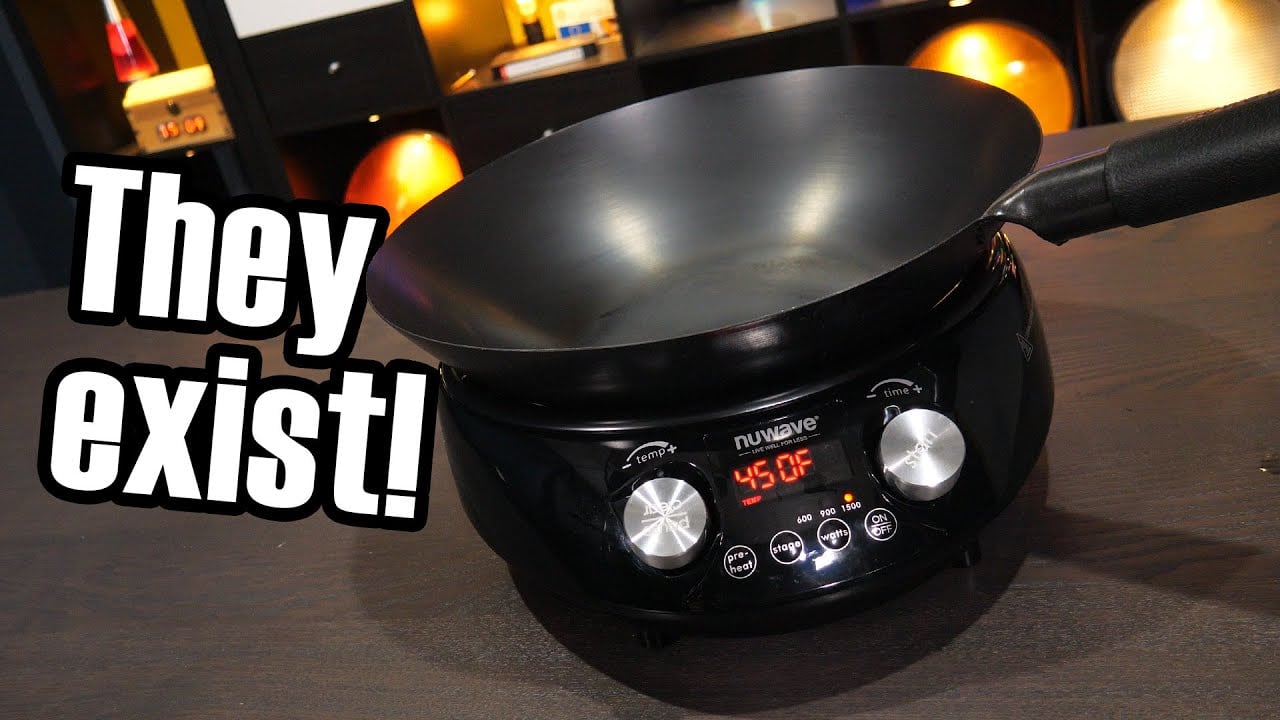
Video: Induction cooking – but what about woks?, Technology Connections. Open the educational video on YouTube.
Check its intended use separately. The lower pan is the induction base; the upper vessel still needs to be designated for the documented arrangement.
Use a matched set or a combination documented by the maker. Similar diameters alone do not establish safe support or seating.
No. Follow the recipe and equipment instructions and monitor the actual task; this guide gives no universal temperature guarantee.
Only use components in the arrangements specified by their maker. Perforated steaming inserts and solid upper vessels are not automatically interchangeable.



