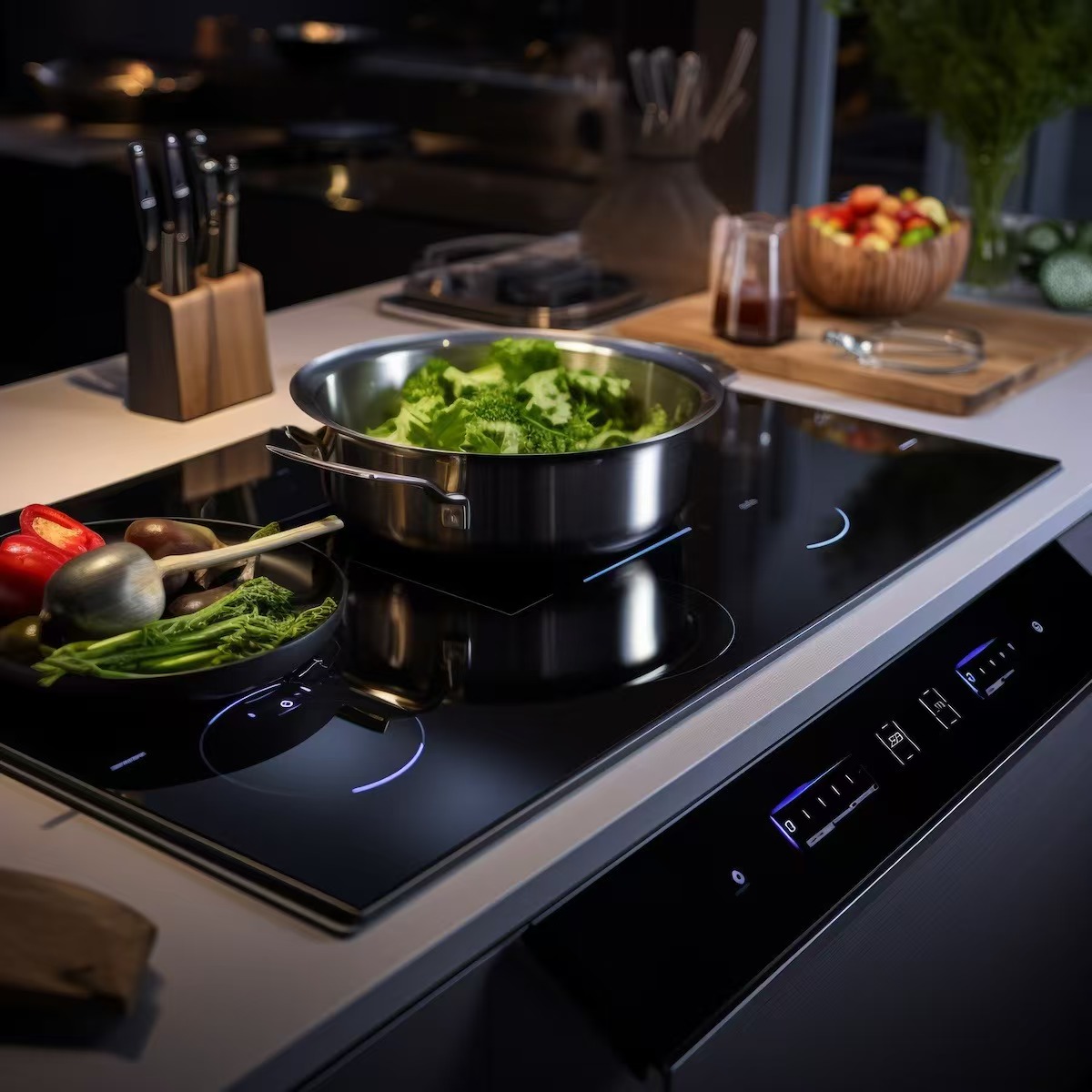
An induction hob steamer works as a complete cookware arrangement: the lower vessel must be suitable for the hob, and the insert and lid must be intended to fit that vessel. A perforated basket does not make an incompatible lower pot suitable for induction. Check the exact set, usable base dimensions, nesting arrangement and water guidance before heating. Keep an open steaming set separate from pressure-cooking equipment and from an electric steamer with its own powered base.
This guide helps buyers assess the cookware and plan access around a glass cooking surface. It does not prescribe food cooking times, a universal water quantity or a safe processing method for preserved food. Those questions require appropriate equipment and task-specific instructions. Start with a documented matched set, then check whether its assembled height, handles and operating sequence suit the actual kitchen.
Check the model designation for the bottom pot rather than the basket material alone. ENERGY STAR guidance on electric cooking products explains that induction interacts with appropriate cookware magnetically. In a conventional hob steamer, the lower vessel is the part evaluated against the appliance’s cookware requirements. An attractive stainless basket says little about the construction of the pot below it. Obtain the product instructions and match them to the size being purchased.
A plug-in electric steamer belongs to another appliance category. Removing its electrical base or taking out a bowl does not establish stovetop suitability. Likewise, a basket supplied as an accessory needs a specified compatible vessel. If the listing describes several arrangements, ask which components are included and which exact combination the manufacturer permits before treating the package as ready for hob use.
Measure or obtain the lower pot’s usable base dimensions and compare them with the hob instructions. The width of the upper basket can differ from the bottom measurement. Our guide to measuring the usable pan base explains why the advertised overall diameter may not answer the recognition question. Carry out the inspection with all components cool and empty, on a stable work surface.
Confirm that the lower pot rests as intended and that its base is clean. Do not offset it from the permitted zone position merely to move the handles away from another vessel. If the arrangement blocks controls or conflicts with a neighboring pan, use another permitted configuration or select more suitable cookware. An accessory that physically sits on the surface is not automatically an approved cooking arrangement.
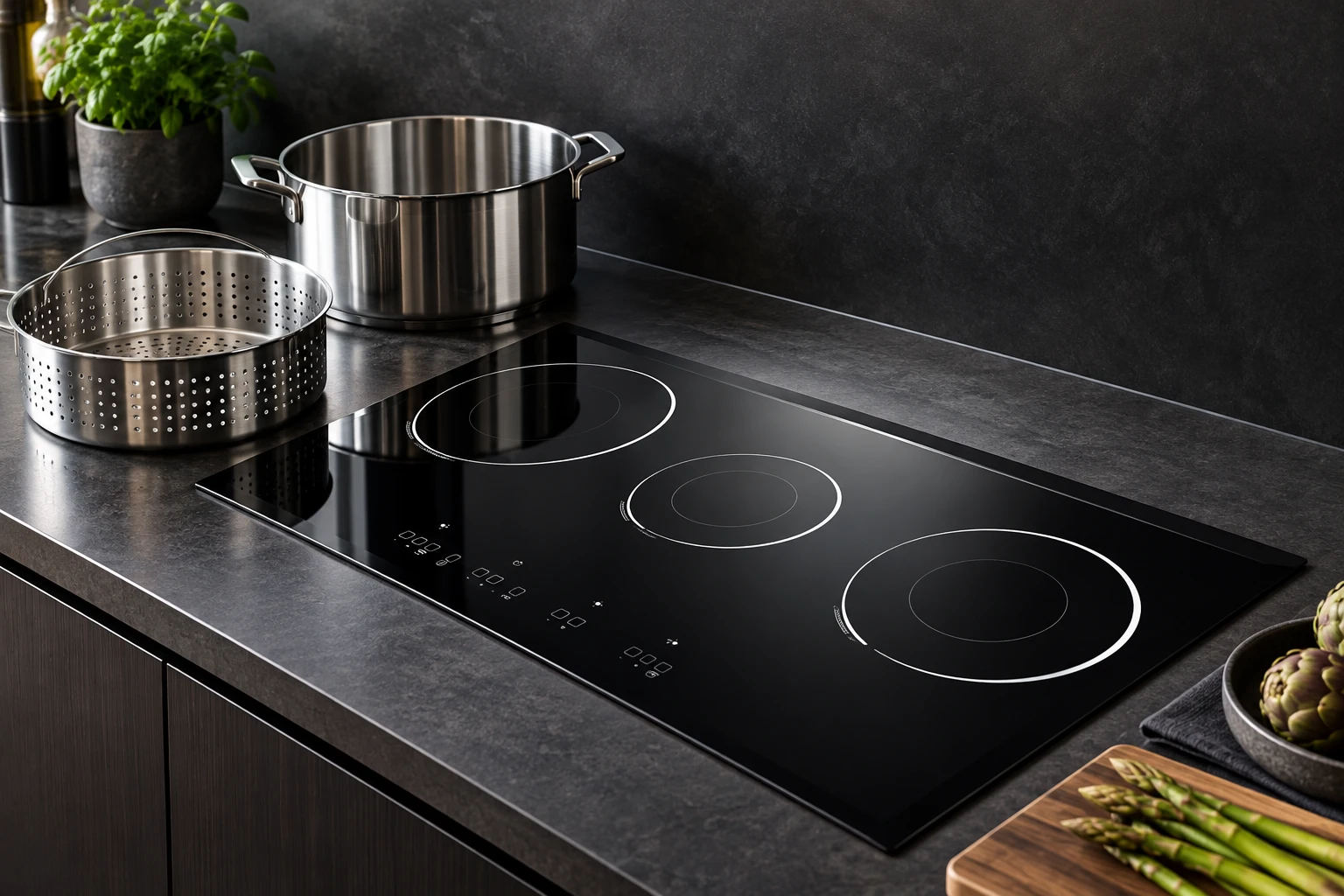
Identify how the insert is supported by the lower vessel. A purpose-made rim or seat should match the manufacturer’s description. Check that the insert rests in its intended position without being forced, wedged or held by unrelated utensils. A basket that almost fits may behave differently after food is added, and an improvised spacer introduces an arrangement the original instructions may not cover.
Read the component list carefully when buying replacements. Two parts with similar nominal diameters can have different rims, depths and handle shapes. Ask for compatibility by model number, not just a measurement taken across the opening. Do not bend a basket or modify the pot to make a replacement fit. Choose the matching part or a complete documented alternative.
A steaming insert typically has perforations that form part of its intended cooking arrangement. A double-boiler upper vessel has a different purpose and may use a different seating relationship. Do not substitute one for the other merely because both sit above a lower pan. The instructions must describe how each component is used, including its relationship to the water and the lid.
Keep pressure cookers separate as well. An ordinary stacked steamer should not be sealed or modified to hold pressure. Do not block openings or add weights to change its behavior. If a recipe assumes a pressure appliance, use the appropriate equipment and instructions. A tall lid or tight-looking rim does not establish pressure capability or an equivalent cooking process.
The table is a matching and access checklist. Its induction principle follows ENERGY STAR guidance on electric cooking products. Water levels, stacking limits and operating settings must come from the exact cookware and appliance instructions; the table supplies no universal numerical limits or food-safety treatment.
| Part or condition | Check | Decision if unclear |
|---|---|---|
| Lower pot | Induction designation and usable base fit | Resolve suitability before heating |
| Insert | Correct matching model and supported rim | Use the specified replacement or complete set |
| Water guidance | Manufacturer level and inspection method | Do not invent a fixed depth for every set |
| Lid | Correct fit, grip and resting place | Plan access while the set is cold |
| Stacked height | Permitted arrangement and clear handle access | Choose a more manageable documented setup |
Use the cookware instructions to determine how water is added, checked and managed during use. Do not assume that a quantity suitable for another pot also suits this set. The lower vessel’s shape and the intended insert relationship matter. A recipe’s ingredient list does not replace the cookware directions for maintaining the intended operating condition.
Plan what to do if the water condition needs attention. Follow the maker’s sequence for switching off, opening or adding water rather than reaching into a hot assembly while guessing. Avoid deliberate dry heating as a compatibility test. If the lower vessel has overheated or the set has been involved in an abnormal event, use its support instructions before continuing.
Assemble the permitted components empty and check the grip points. Consider where the lid and insert will rest when removed. The user should not have to balance either part on a narrow edge or reach across another active vessel. Leave the controls accessible, and check overhead space so a raised lid or basket does not meet a cabinet or extractor structure.
Our guide to keeping cookware handles clear of controls describes access around touch controls. For a steamer, include handles on every component, not just the lower pot. Follow the manufacturer’s requirements for protective equipment and handling. A cool-looking metal handle or a glass lid knob is not evidence that it remains safe to touch during cooking.
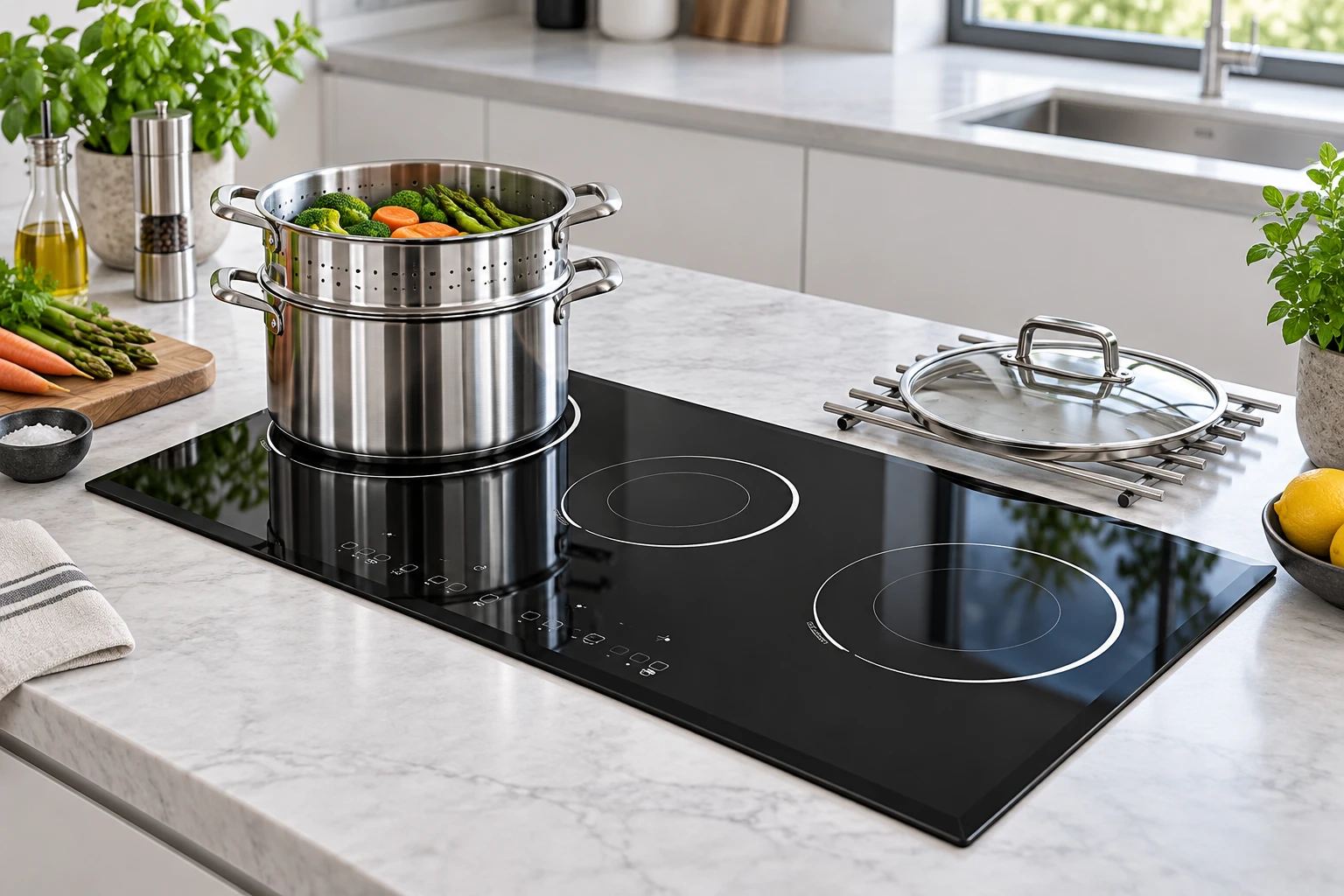
Follow the specified heating sequence and remain present. U.S. Fire Administration cooking-safety guidance advises attending cooking and keeping combustible materials away from the stovetop. Prepare ingredients and a stable resting area before the task begins. Do not use the presence of a lid or an appliance timer as a reason to leave an operating steamer unattended.
Avoid transferring power settings from another hob or claiming that every steamer needs boost to begin. The correct setting depends on the equipment and instructions. Keep the task within the permitted setup, including the number and order of components. Adding another basket changes the arrangement; it needs support from the product documentation rather than an assumption based on a similar-looking set.
If the pot is not recognized, consult the hob’s cookware guidance and note the displayed message. Check the lower vessel designation and base dimensions. Do not solve recognition by placing an unapproved adapter beneath the pot or repeatedly using maximum power. If the basket rocks or the lid does not seat correctly, address the component match before treating the issue as a heating fault.
When asking for support, provide the set model, lower-pot size, hob model and component order. A photograph can help describe the arrangement, but it cannot establish an unlisted compatibility claim. Explain whether parts were replaced or mixed from different sets. That information helps the supplier distinguish a matching problem from a cookware or appliance issue.
Allow the set to reach the appropriate condition for cleaning and follow the manufacturer’s method for the pot, basket and lid. Perforations and seating rims need inspection without unapproved abrasive tools or modifications. Do not assume a dishwasher instruction for one component applies to the entire set. Keep the lower pot’s underside clean before it returns to the hob.
Lift the lower vessel rather than sliding it over the panel. Our guide to understanding glass surface marks separates surface deposits from concerns that need service attention. A visible mark on the glass does not by itself diagnose damage or certify continued use. Stop and seek the relevant advice when there is damaged glass, a distorted base or a component that no longer fits as intended.
Record all supplied component models, the permitted assembly, the lower base dimensions and the instructions provided to the user. If the supplier changes an insert or lid, recheck the complete arrangement. This matters for shared kitchens where a replacement part can be stored alongside several similar sets and accidentally treated as interchangeable.
Kanger’s Kanger black glass-ceramic cooktop panel and black glass-ceramic material overview provide component and material context for the cooking surface. They do not approve every steamer or prescribe food cooking performance. OEM buyers should validate the finished appliance and intended cookware through their own responsible process. Keep glass-panel sourcing records distinct from the steamer’s operating instructions so each document answers the question it actually supports.
This neutral educational explanation shows induction heating and the role of cookware geometry. It supports understanding the lower vessel and its base, not approval of a stockpot load, a steaming insert, a double-boiler assembly or a particular recipe.
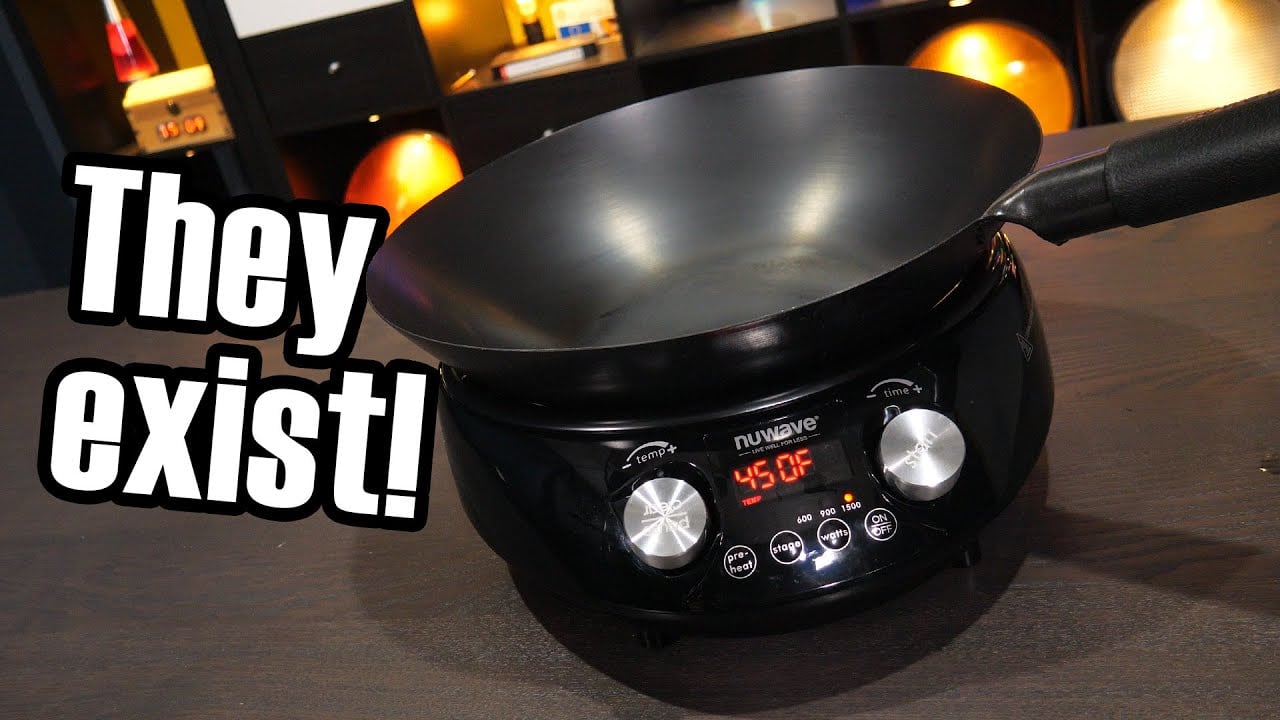
Video: Induction cooking – but what about woks?, Technology Connections. Open the educational video on YouTube.
No. Check the exact lower vessel designation and its usable base against the hob instructions.
Use the matching combination specified by the maker. Similar nominal diameters do not establish compatible rims or support.
There is no universal quantity in this guide. Follow the exact set instructions for filling, checking and managing water.
No. Do not seal or modify ordinary steaming cookware to make it behave as pressure equipment.