An induction hob crepe pan should have a documented induction-compatible base, a usable cooking floor suited to the task and a low rim that allows your intended turning tool to approach. Check the exact model and size against the hob instructions rather than relying on a pancake photograph or a nonstick claim. A thin profile does not establish magnetic suitability, and a wide upper diameter does not describe the entire base that the appliance must recognize.
This guide concerns selecting and preparing a low-sided vessel for crepes or similar thin-batter tasks. It does not rank brands, prescribe a recipe or provide a universal heating setting. The decision is different from buying a deep saute pan: access to the edge, room for a spreader and control of the complete vessel deserve their own cold checks before cooking begins.
Confirm that the product is cookware intended for a hob. A plug-in crepe maker with its own electrical base is a separate appliance and should not be placed on an induction hob. Product searches can mix these categories, as well as general frying pans and multi-cavity pancake molds. Read the selected item’s instructions and supplied parts instead of choosing by a search-result title.
For a shallow pan, examine the actual rim and working surface. A low wall may help a spatula approach the underside of thin food, but it provides a different boundary from a deeper skillet. Decide whether that geometry suits your intended task and utensils. Do not treat every round nonstick pan as equivalent merely because a photograph shows a pancake in it.
ENERGY STAR guidance on electric cooking products describes induction heating through magnetic interaction with appropriate cookware. That explains why the pan’s actual base construction matters. An aluminum-looking body or a dark surface is not a complete compatibility description. Obtain the exact model’s heat-source designation and relevant bottom dimensions before comparing the pan with the appliance’s cookware requirements.
Our guide to measuring the usable pan base explains why rim diameter and usable bottom are different measurements. A shallow pan can still have a smaller underside than its upper working area. Check the size you intend to buy, because a product family may include several constructions. Do not use an unapproved adapter disk or repeated high-power attempts to make an unsuitable pan work.
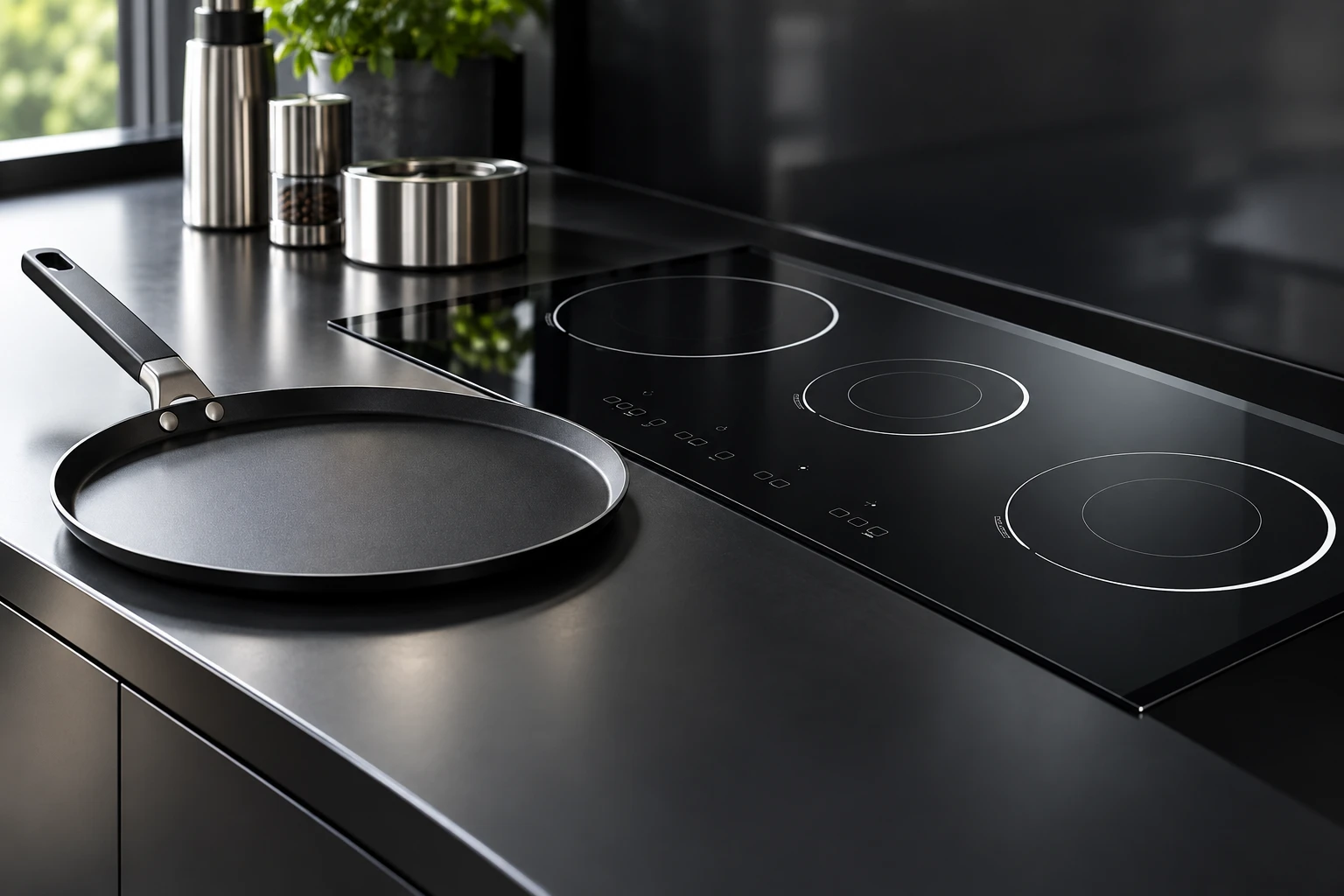
The usable floor is the area available for the intended batter-spreading and turning task. Check how it transitions into the rim, and whether the handle attachment interrupts the tool’s approach. With the appliance off and the pan empty, rehearse the movement using utensils permitted for the actual finish. This identifies access problems without attempting a hot trial.
A wooden spreader shown in a sales photograph may not be supplied or appropriate for every pan surface. Confirm its suitability and the maker’s care directions separately. Do not use a sharp edge, metal scraper or abrasive tool simply because it reaches under the rim. The right geometry should work together with a permitted utensil rather than depend on damaging the cooking surface.
A low rim changes how the vessel contains its contents during movement. Choose the intended task and manageable working quantity from the product guidance and recipe rather than applying a generic fill rule. This article supplies no universal batter amount. Do not turn a crepe pan into a deep frying vessel merely because its base is induction compatible.
Check whether the intended method calls for moving the pan at all. If it does, follow the actual cookware and appliance guidance, including permitted placement when returning it to the zone. Do not assume a theatrical flipping demonstration is appropriate for your equipment, grip or surrounding space. A stable arrangement and suitable turning tool may better match the documented task.
The induction principle follows ENERGY STAR guidance on electric cooking products. Pan preparation, coating care and operating requirements belong to the exact maker’s instructions. This table identifies evidence to collect rather than supplying universal thickness, temperature or power targets for crepe cookware.
| Feature | Check for the chosen model | Useful decision |
|---|---|---|
| Product category | Hob cookware rather than a powered crepe maker | Keep appliance types separate |
| Induction base | Exact designation and usable bottom dimensions | Compare with the hob guidance |
| Low rim | Wall transition and turning-tool approach | Rehearse access cold and empty |
| Surface preparation | Supplied finish and initial-use instructions | Do not transfer seasoning methods between products |
| Handle and route | Grip method and a suitable receiving surface | Resolve lifting access before cooking |
Crepe pans are sold with different materials and surface treatments. Determine whether the supplied finish needs washing, a specific initial preparation or seasoning, and follow the actual instructions. A bare-steel process should not be applied to a coated pan. Conversely, a claim that one surface needs little preparation is not guidance for another product simply because both are called crepe pans.
Do not prescribe an oil type, quantity or heating duration without appropriate support for the selected equipment. Where the maker describes preparation using another heat source, confirm whether that method is relevant and permitted for your complete pan. Avoid deliberate smoking or prolonged empty high-power heating based on a demonstration of different cookware. Resolve unclear instructions with the supplier before use.
Use the pan, hob and recipe guidance together for the cooking sequence. A numbered setting from an online tutorial cannot establish the equivalent output on every appliance. This guide provides no universal boost recommendation or cooking temperature. A pan’s induction label establishes a category of suitability to check, not a promise that every crepe will release or brown identically.
If the results differ from the intended recipe, record the actual equipment and method before seeking advice. Batter preparation, utensil use and cookware condition are distinct variables. Do not diagnose a glass defect from a single pale or uneven crepe. Avoid compensating for an unresolved recognition or suitability problem by repeatedly increasing power beyond the equipment guidance.
Keep the intended spatula, spreader and receiving plate in positions that do not require reaching over another active vessel. Rehearse the route with the pan cold. Our guide to keeping cookware handles clear of controls covers access around the control area. A long grip may be easy to hold while still projecting toward a walkway or obstructing another cooking position.
Choose a stable receiving area appropriate for the actual hot cookware if the pan must be lifted off the hob. Do not rely on an empty showroom impression to judge the complete task. Check the grip instructions and the user’s ability, including any required heat protection. A low-profile vessel can still become difficult to control when the surrounding space is crowded.
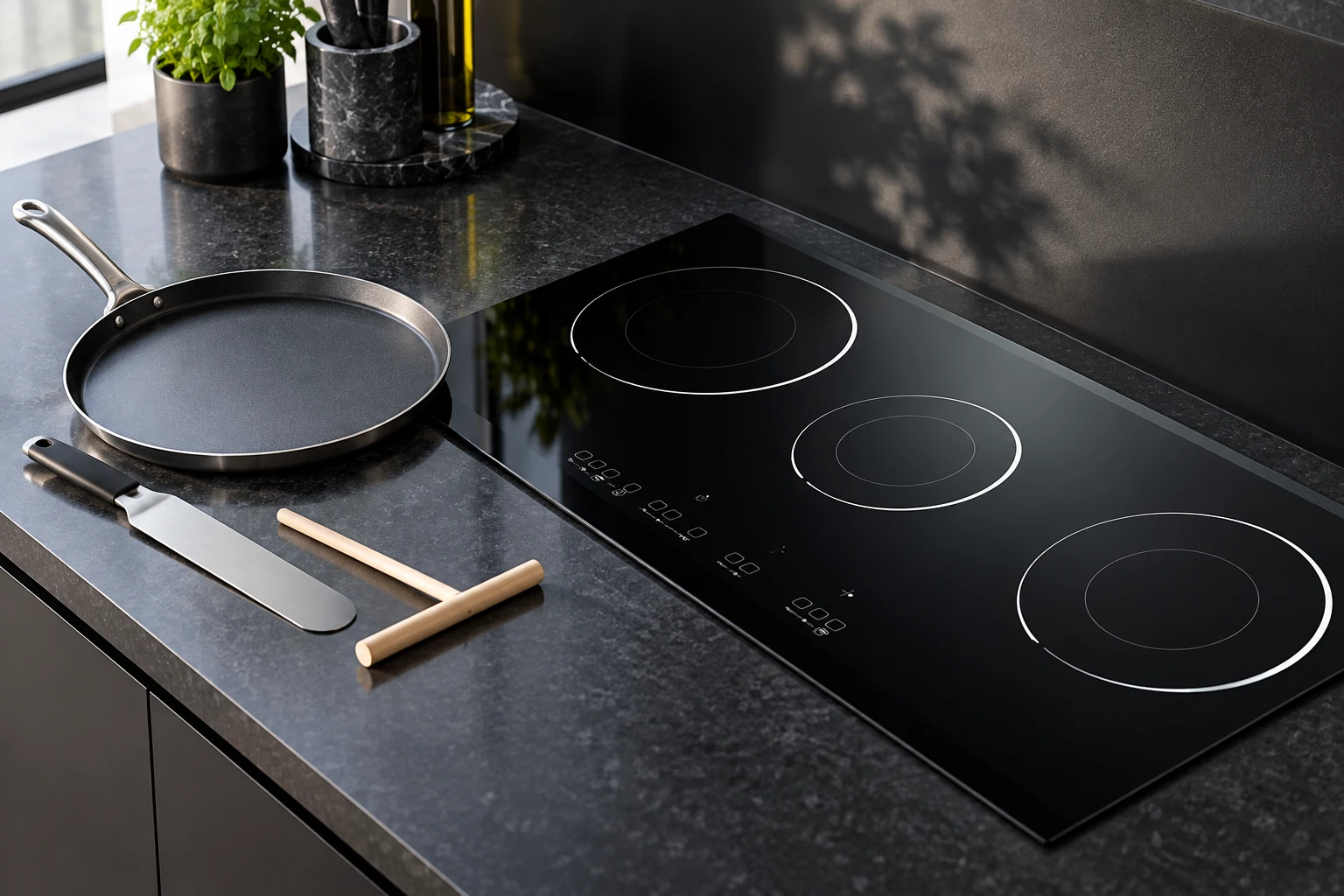
U.S. Fire Administration cooking-safety guidance advises remaining with cooking and keeping combustible materials away from the stovetop. Prepare the utensils and ingredients beforehand so a brief cooking task does not become unattended. Keep packaging and cloths away from the working area, and do not rest an unused spreader or handle across an active zone. Follow the actual appliance’s stopping instructions when needed.
A shallow pan is not a general-purpose landing surface for hot tools. Follow the product directions for temporary utensil placement and keep control access clear. If an abnormal condition arises, use the relevant support and stopping process rather than conducting repeated heating experiments. The editorial illustrations here show cold arrangements only and do not authorize a particular live cooking setup.
Follow the cookware instructions for cooling, washing and drying. Distinguish ordinary food residue from a damaged finish or a distorted base that needs supplier attention. A cleaning method permitted for bare metal may damage a coating. Do not flatten, grind or scrape the underside to improve its apparent contact with the glass, and do not use the hob as a workbench for repairs.
Lift the vessel instead of dragging it across the panel. Our guide to understanding glass surface marks discusses the separate question of marks on the glass surface. Maintain the appliance using its own cleaning instructions and required cooling condition. Removing residue does not certify that a visibly damaged pan or panel is fit for continued use; unresolved damage belongs with the responsible support process.
Record the pan model, size, surface instructions and relevant bottom dimensions alongside the hob model. Recheck a replacement even if its nominal diameter matches the previous item. Shared kitchens benefit from keeping the correct utensils and preparation directions available with the cookware. A generic box description should not replace the selected model’s operating information.
Kanger’s Kanger black glass-ceramic cooktop panel and black glass-ceramic material overview explain the material and sourcing context for the glass surface. They do not certify a crepe pan or guarantee a finished appliance’s cooking performance. OEM buyers should document panel dimensions, printing and integration needs separately, then validate complete-appliance cookware suitability through the responsible process. Keep each claim tied to the equipment and evidence it actually describes.
This neutral educational video explains induction heating and cookware geometry. It is background for evaluating a pan base, not permission for a particular oval pan, detachable grip or crepe pan.
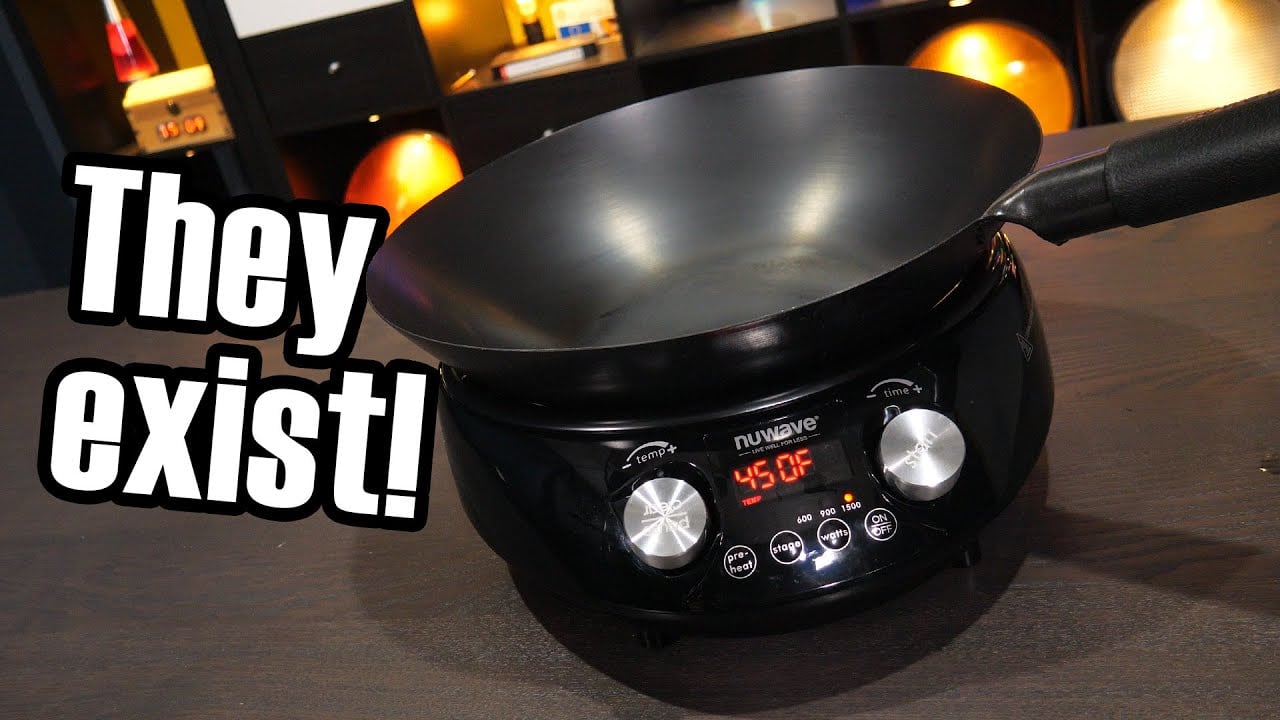
Video: Induction cooking – but what about woks?, Technology Connections. Open the educational video on YouTube.
No. A powered appliance with its own base is different from cookware designed for a hob.
No. Check the exact pan base designation and usable bottom against the hob instructions.
No. Follow the preparation instructions for the actual material and supplied finish.
No. Follow the chosen pan, appliance and recipe guidance rather than transferring a numbered setting directly.



