An induction hob removable handle pan needs two independent checks: the vessel must suit the hob, and the detachable grip must belong to that exact cookware system. A handle that appears to clamp onto the rim is not proof of a safe match. Read the complete product instructions for attachment, checking, heating and removal. Follow the maker’s directions on when the handle should be removed, rather than leaving it attached or detaching it by habit.
This guide concerns the connection between a matched grip and its vessel. It complements ordinary pan-base and fixed-handle layout checks but does not replace them. Treat the detachable part as an essential component with its own condition and operating requirements. A space-saving cookware set is useful only when the correct handle, pan bodies and instructions remain identifiable together.
Record the pan range, model and size alongside the handle reference. Similar-looking rims or grips from another collection may use different mechanisms. Do not mix components based on a photograph, shared brand name or an accessory seller’s generic description. Ask the responsible supplier for written confirmation when the exact replacement combination is unclear, and retain that answer with the cookware record.
When purchasing a set, confirm the number and identity of the supplied handles as well as the vessels. A photograph showing several bodies does not establish that each has a dedicated grip. Consider the planned sequence of use: you may need access to more than one vessel at a time. Resolve how that sequence follows the actual system instructions before relying on a single shared accessory.
ENERGY STAR guidance on electric cooking products explains the magnetic interaction used by induction with suitable cookware. The removable grip does not establish that the vessel base is compatible. Confirm the selected pan and size have the relevant induction designation, then compare their usable bottom dimensions with the appliance instructions. Our guide to measuring the usable pan base explains why the upper diameter alone is insufficient for that comparison.
Check every body in a mixed set rather than assuming identical suitability from the handle system. A detachable grip can be associated with different pan shapes and intended heat sources. Keep claims about storage and transfer separate from induction compatibility. A magnet check, where recommended by the maker, remains preliminary screening and does not replace the appliance’s cookware requirements.
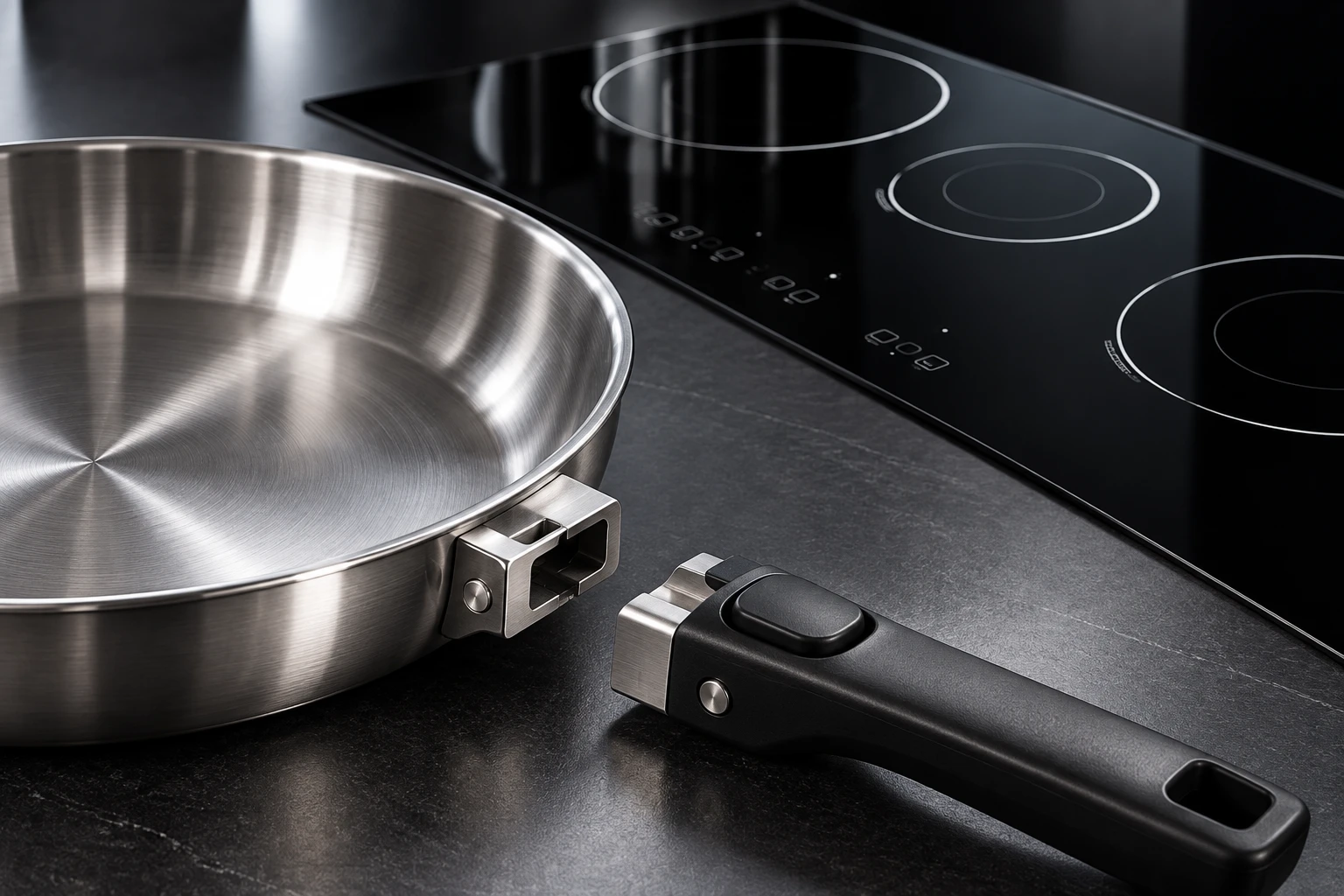
Read the supplied attachment sequence before trying the mechanism. Use a cold, empty matching vessel on a stable surface, and rehearse only the checks the instructions prescribe. Identify the intended connection area, operating parts and confirmation method. Do not invent a shaking or overloaded lifting test to prove the grip is secure, and do not assume that an audible click is the required confirmation for every design.
If the mechanism does not behave as documented, stop and resolve it through the supplier. Food residue, damage or an incorrect component may be relevant observations, but they are not a diagnosis from this guide. Avoid filing, bending, lubricating or modifying parts unless the actual instructions explicitly provide an approved maintenance method. A detachable connection should not depend on improvised repairs.
Some systems direct users to remove the grip during cooking when it is not needed. That is a model-specific operating instruction, not a universal rule for every detachable handle. Find the actual guidance and plan how the handle is kept available and protected. Do not infer that an accessory can remain beside an active zone merely because it is not attached to a pan.
Before moving the vessel, follow the maker’s method for reconnecting and confirming the grip. Keep the operation within the actual instructions and the user’s ability. If the task would require an awkward reach over hot cookware, reconsider the arrangement while it is cold. Never treat the release control as an ordinary carrying grip or operate it while supporting a vessel unless the documented method specifically requires it.
The induction principle follows ENERGY STAR guidance on electric cooking products; grip attachment, permitted loads, removal and cleaning must follow the exact cookware documentation. This table is a purchase and preparation record. It does not supply a universal carrying capacity or certify a particular connection design.
| Component or task | Information to retain | Question to resolve |
|---|---|---|
| Pan body | Model, induction designation and usable base | Does it meet the hob cookware requirements? |
| Removable grip | Exact matching accessory reference | Is this combination documented? |
| Connection check | Maker’s attachment and confirmation method | Can it be followed with the vessel cold? |
| Heating sequence | When to remove and reconnect the handle | Can the user follow the sequence without awkward access? |
| Replacement and care | Inspection, cleaning and replacement instructions | Are damaged or unidentified components excluded? |
Learn which parts operate the latch and which form the carrying grip. Follow the specified finger position and handling method rather than assuming every clamp behaves alike. Choose a working quantity and route the user can manage within the actual instructions. A compact storage feature does not eliminate the weight of the pan and its contents during transfer.
Set up a suitable stable landing area before heating begins. Our article on keeping cookware handles clear of controls covers control access and nearby cookware, but a detachable grip adds a separate connection step to that layout. Keep the route clear and avoid passing a vessel between unmatched accessories. Do not substitute kitchen tongs or another clamp if the proper handle is unavailable.
A cookware body described for oven use may require its detachable grip to be removed. Check the exact directions for the body, handle, lid and any knob independently. This guide supplies no universal temperature limit. Do not carry an oven-related permission from one component to the whole set, or assume that an attached plastic-looking accessory is suitable because it can physically enter the oven.
For refrigerator or table use, follow the actual cookware and food-handling guidance rather than treating detachability as an approval for every storage task. This article addresses equipment selection, not food-storage times. Keep any storage lid distinct from a cooking lid. The useful purchasing question is which complete arrangements are documented, not how many uses a generic marketing photograph appears to suggest.
Allow components to reach the condition required by their instructions before storage. Follow the maker’s guidance for nesting and any surface protection. Do not force a stack together or assume that a heavy pan can rest against a coating without suitable protection. Keep the grip accessible so it can be identified and inspected before the next use.
Shared kitchens should label storage locations or maintain a simple inventory of matching parts without applying unapproved materials to operating surfaces. A missing grip can tempt users to borrow a similar accessory. Prevent that by keeping the exact reference and instructions available. Recheck replacements even if their color and appearance resemble the previous handle.
The pan body and grip can have different cleaning requirements. A dishwasher statement for one does not automatically cover the other. Follow the specified cleaning and drying method, including any restrictions around the mechanism. Do not immerse, disassemble or apply chemicals to an accessory based on another product’s care instructions.
Inspect a loose connection, a damaged operating part or signs of overheating through the maker’s support process. Cleaning does not restore a damaged locking mechanism, and an apparently secure cold connection does not overrule replacement instructions. Keep a questionable accessory out of service until the responsible supplier has resolved its condition. Obtain a documented matching replacement rather than modifying the old grip.
U.S. Fire Administration cooking-safety guidance advises remaining with cooking and clearing combustible materials from the stovetop. Having a detachable handle does not make the vessel self-supervising. Prepare the correct accessory and receiving area before starting. Follow the actual stopping procedure if an abnormal condition arises and avoid repeated hot tests of a connection whose suitability is uncertain.
Separate pan-recognition problems from grip problems when seeking support. Record the hob message and base information for the former, and describe the connection behavior and accessory reference for the latter. Neither observation alone diagnoses a glass defect. Our guide to understanding glass surface marks covers surface-care questions separately; do not use the detached handle as a scraper or repair tool on the panel.
Kanger’s Kanger black glass-ceramic cooktop panel and black glass-ceramic material overview explain the glass-surface sourcing context. They do not approve a detachable-handle mechanism or certify individual cookware. OEM buyers should document panel dimensions, printing and integration requirements separately from complete-appliance cookware validation. Keep claims tied to the component and evidence that actually support them.
A useful final record contains the pan and grip references, permitted heating sequence, handling method and care instructions. Update that record when any part changes. This supports a practical space-saving purchase while preserving the distinction between a documented system and a collection of accessories that merely look compatible.
This neutral educational video explains induction heating and cookware geometry. It is background for evaluating a pan base, not permission for a particular oval pan, detachable grip or crepe pan.
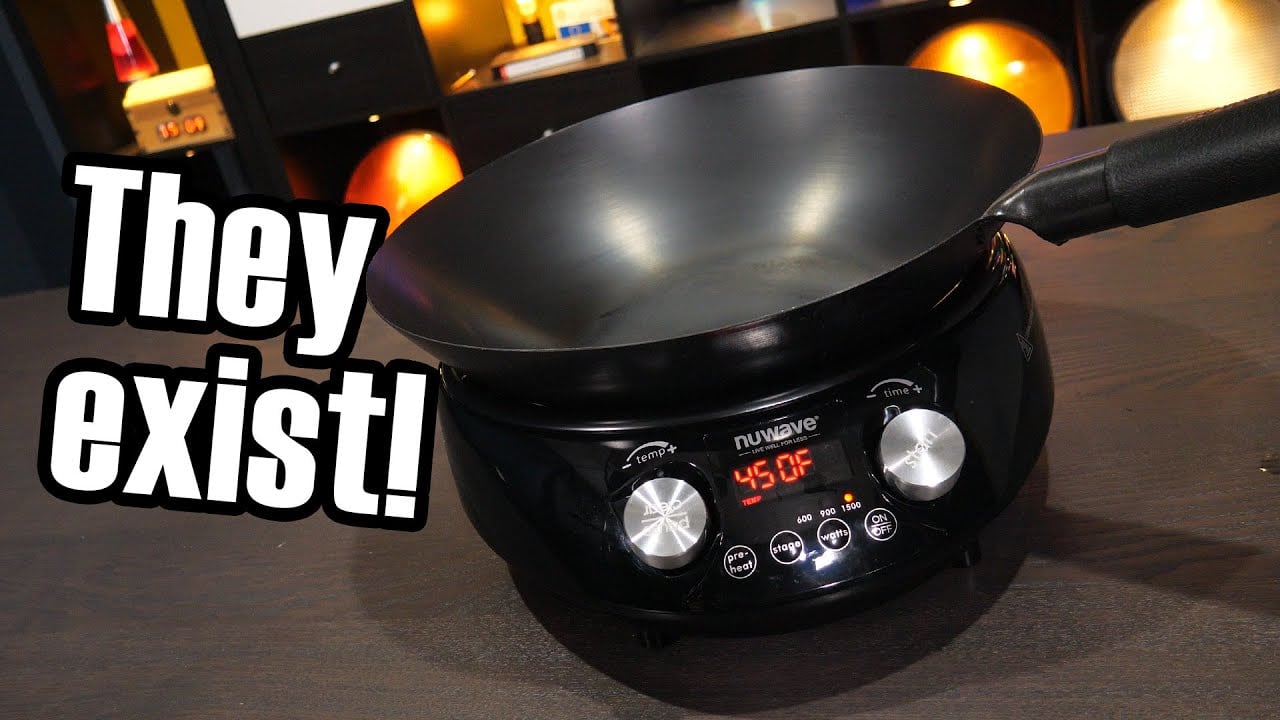
Video: Induction cooking – but what about woks?, Technology Connections. Open the educational video on YouTube.
No. Verify the actual pan base and the hob cookware requirements separately from the grip.
Do not assume so. Obtain documentation for the exact pan and handle combination.
Follow the actual system instructions, including any required removal and reconnection sequence.
No. Check the body, detachable handle, lid and other components independently.