A suspected induction hob warped pan base should be assessed with the cookware cold and empty, using the exact pan and appliance instructions. Stop using a vessel that rocks, has a separating base or shows damage until the responsible manufacturer has assessed it. Do not hammer, grind or heat the pan to force its bottom flat. A small designed cold curvature and accidental distortion are different questions, and a photograph cannot establish the acceptable tolerance for an unidentified model.
This guide organizes the evidence for a service or replacement decision. It does not provide a universal gap limit, a home repair method or a promise that replacing cookware will resolve every hob fault. Separate the condition of the vessel from the condition of the glass panel and the appliance electronics.
Write down what changed: rocking on a cold surface, a visible base separation, uneven cooking or a recognition message. These observations are not interchangeable. Food collecting at one side can involve the cooking surface level or the vessel shape. A recognition warning may involve position, base size or material rather than distortion alone. Keep the initial record factual.
Record the pan model and the hob model before seeking an explanation. Include the intended cooking position and whether the concern appeared after an impact or an unusual heating event, if known. Avoid repeating the event to prove it happened. A short account of the original observation is more useful to support than a series of increasingly aggressive heating experiments.
The Rangemaster manual for the covered cooker illustrates both unsuitable uneven bases and a slight upward curve in a cold pan. That example explains why a visible central gap is not enough to classify every vessel as damaged. It supplies no tolerance for other pans or appliances.
Ask the cookware manufacturer whether the observed profile is intended for that exact model. Provide a side photograph and the identification information. Do not apply a value found in another range’s manual or a forum discussion. Manufacturing drawings and assessment procedures can differ. If the vessel is unstable or visibly damaged, leave it out of service while obtaining the answer rather than assuming a design explanation makes it acceptable.
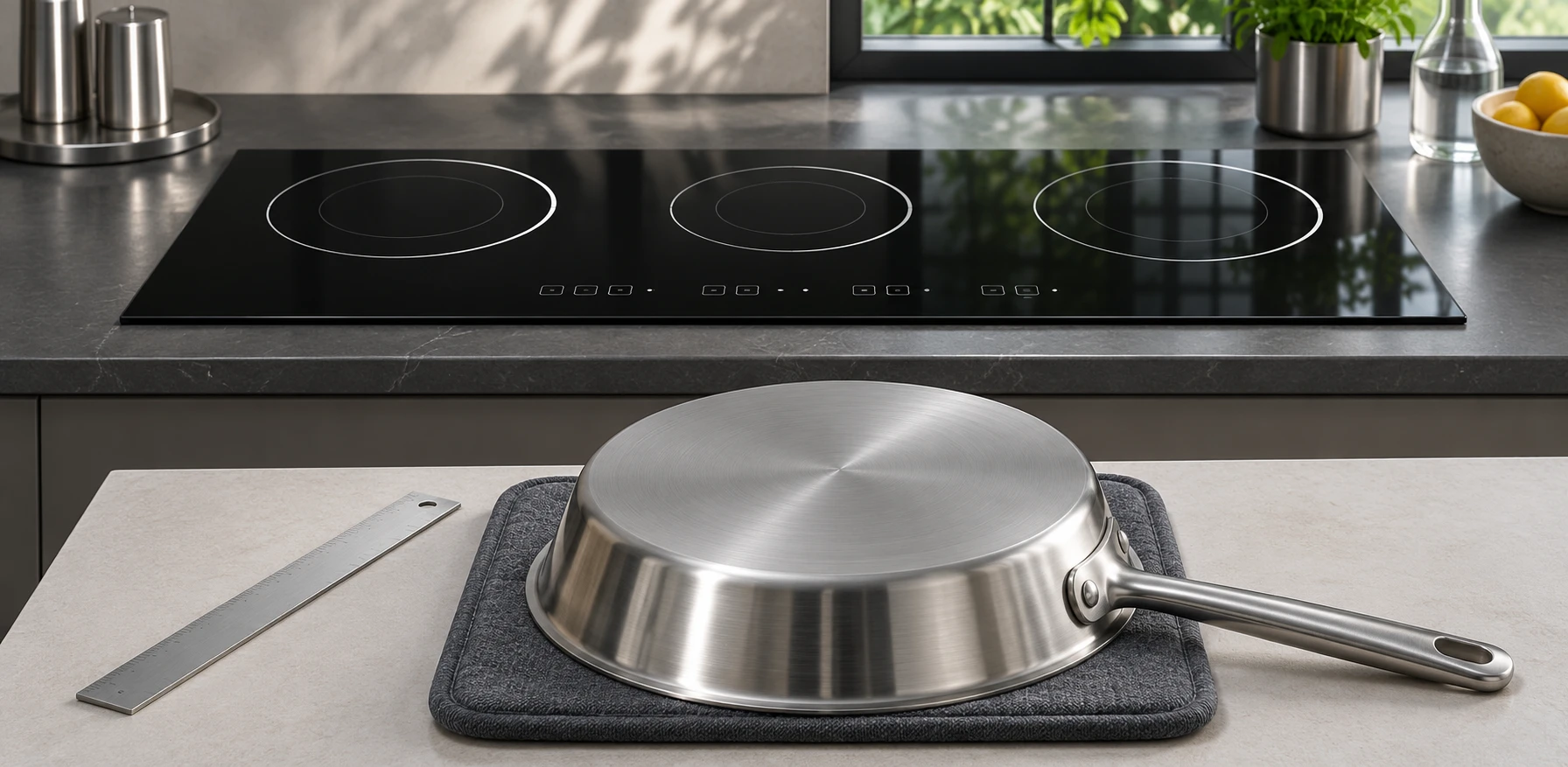
Allow the equipment to cool according to its instructions. Use a stable separate worktop for inspection, protecting the cookware finish with a suitable support. Remove loose debris by the permitted cleaning method. Do not use the hob glass as a bench for tools, an abrasive straightedge or an inverted vessel with protruding parts. Keep the original concern from creating new damage.
An ordinary worktop is not a calibrated inspection surface. A wobble observed there can help describe a symptom, but it cannot produce a certified flatness measurement. If support requests a straightedge check, follow its stated method and limitations. Do not press the handle down, load the pan with weights or use force to make the bottom appear to meet a reference line.
Look for a joint opening at a bonded base, detached material, sharp damage or other visible changes. Record what can be seen without dismantling the vessel. A base can have more than one material layer, and the visible outer plate does not reveal every internal interface. A seemingly intact underside therefore does not establish the condition of the complete assembly.
Keep the handle and lid assessment separate. A stable base cannot compensate for an insecure attachment. Conversely, a sound handle does not approve a distorted bottom. Photograph each relevant area and identify which symptom belongs to which component. This helps the cookware supplier give an appropriate response instead of treating every concern as one generic induction compatibility issue.
Thermador’s induction troubleshooting guidance identifies a warped base as one possible contributor to uneven cooking and directs users toward flat cookware. This is useful evidence for the symptom checklist, not proof that every uneven result has the same cause. Apply the instructions for the appliance actually installed.
Check the intended zone, permitted position and relevant base requirements with measuring the usable cookware base. Do not infer the usable magnetic base from the rim diameter. A vessel can satisfy one dimensional condition and fail another equipment requirement. Avoid changing several things at once without a record; otherwise support cannot distinguish a placement change from a cookware-condition change.
The table organizes conservative decisions rather than setting a material flatness specification. The model instructions and manufacturer assessment remain the authority for return to service.
| Observation | Record without heating | Next action |
|---|---|---|
| Small cold central gap, stable vessel | Model and requested profile photographs | Ask whether this shape is intended |
| Rocking or unstable vessel | Surface used and visible movement | Keep out of use pending assessment |
| Separation or damaged base layer | Clear photographs without disassembly | Seek service or replacement |
| Recognition warning only | Message, zone and usable base identity | Follow appliance troubleshooting |
| Suspected glass damage | Location and appearance after safe cooling | Contact the appliance supplier separately |
Do not strike the underside with a hammer, sand a high spot or clamp the pan between boards. Such work can alter layers, surface finish and mechanical integrity without producing a verified result. A pan that stops rocking after an improvised intervention has not passed a documented serviceability assessment. Tell support if any earlier alteration has already been attempted.
Heating an empty pan until it changes shape is also unsuitable as a diagnostic routine. ENERGY STAR electric cooking guidance explains the magnetic heating principle, but that principle does not authorize an empty heating test. Use the exact cookware heat-up directions and the appliance restrictions. A protection function is not permission to subject damaged or uncertain equipment to repeated high-power trials.
For the products it covers, Tefal’s care and troubleshooting page warns that abrupt temperature changes can distort a pan. This supports checking care history, but it does not diagnose the cause of an individual fault from appearance alone. Do not assign blame where the evidence only establishes a change in condition.
Retain the correct cleaning and cooling instructions with the vessel. If different people share the kitchen, make the permitted routine clear before returning an approved replacement to use. Avoid a universal waiting time: the relevant conditions depend on the model and task. The useful rule is to follow the supplied process, not to invent a common cooling interval for every material and construction.
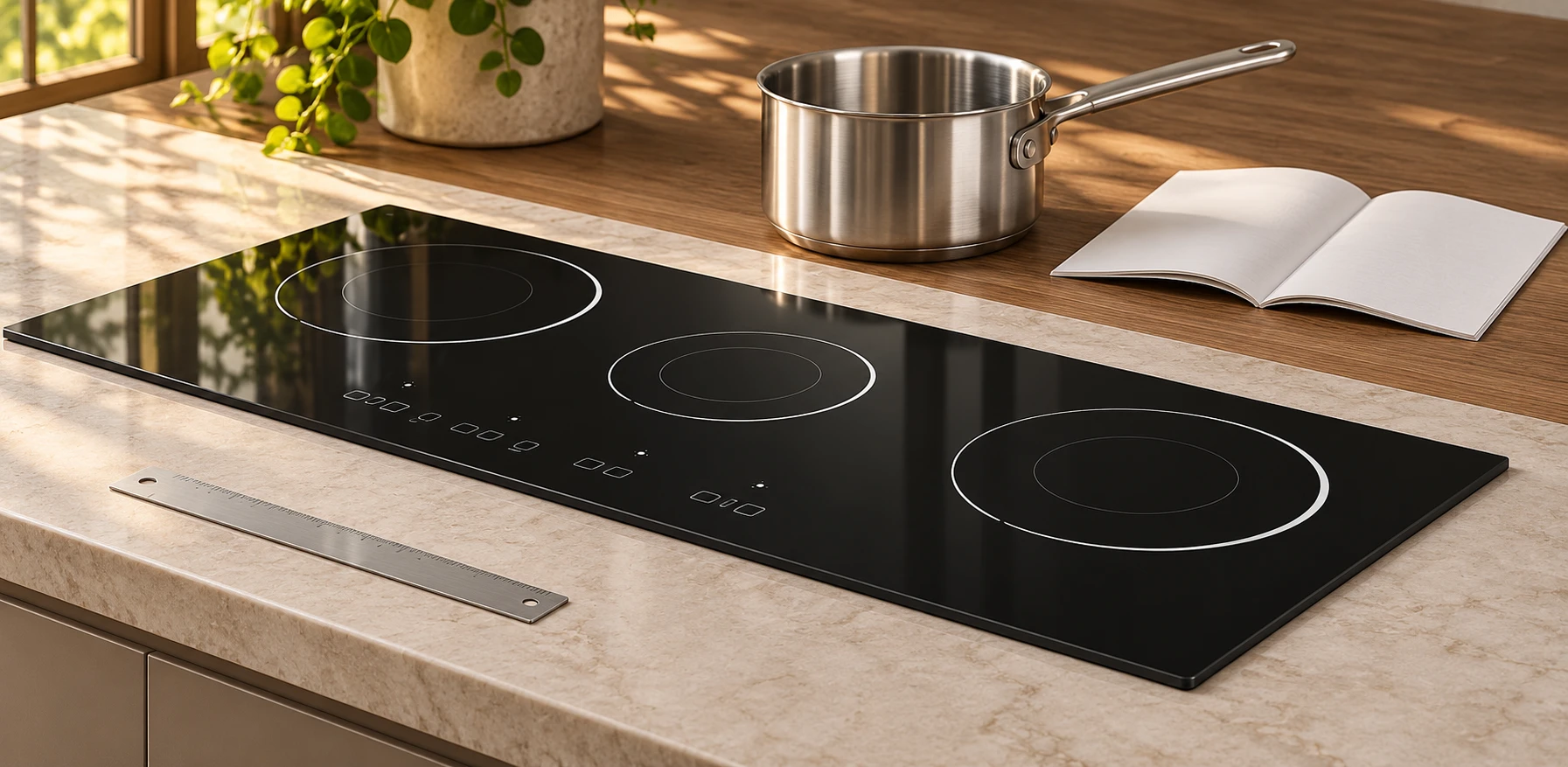
Inspect the cooled glass using the appliance’s permitted method. Our guide to checking marks on the glass surface helps separate residue questions from damage concerns. Do not assume that a line proves the pan is distorted or that cookware distortion proves the panel is cracked. Each observation needs its own evidence and the appropriate support contact.
Do not add an unapproved pad, converter disc or spacer to compensate for a base problem. An accessory changes the equipment arrangement and may have separate restrictions. Ask the appliance manufacturer about any proposed accessory before use. A smooth-looking layer cannot restore the integrity of a damaged vessel or turn an unstable assembly into an approved cooking combination.
If replacement is recommended, record the usable base, full vessel outline, material designation and care restrictions. Include the intended zone and the required task. Review planning handle clearance so the replacement leaves usable access around controls and neighboring cookware. Do not buy solely by the outside diameter or a general statement that a range works on induction.
Keep the service response with the purchase record. It should identify whether the original vessel is withdrawn, repaired through an authorized route or cleared for use under stated conditions. Do not let an uncertain pan return to the kitchen drawer without that decision. Clear disposition avoids another user unknowingly repeating the same arrangement and assuming the issue has been resolved.
Kanger supplies Kanger black glass-ceramic cooktop panels, with material context in the black glass-ceramic material guide. These component descriptions do not set cookware flatness tolerances, certify a pan repair or diagnose an installed hob. Panel integration requirements belong with the OEM documentation; cookware condition belongs with the vessel manufacturer; electrical faults belong with the appliance support process.
For OEM procurement, preserve those responsibilities in separate records. Note the panel drawing, appliance cookware requirements and service route without converting them into a universal compatibility promise. The practical result of this checklist is a documented observation and a clear use, service or replacement decision. It is not an unsupported claim that all warped pans behave alike or that one glass component can correct the rest of the system.
This independent educational video explains how induction heats suitable cookware and why vessel geometry matters. It is background on the heating system, not a demonstration of thermometer accuracy, clip compatibility or a repair approval.
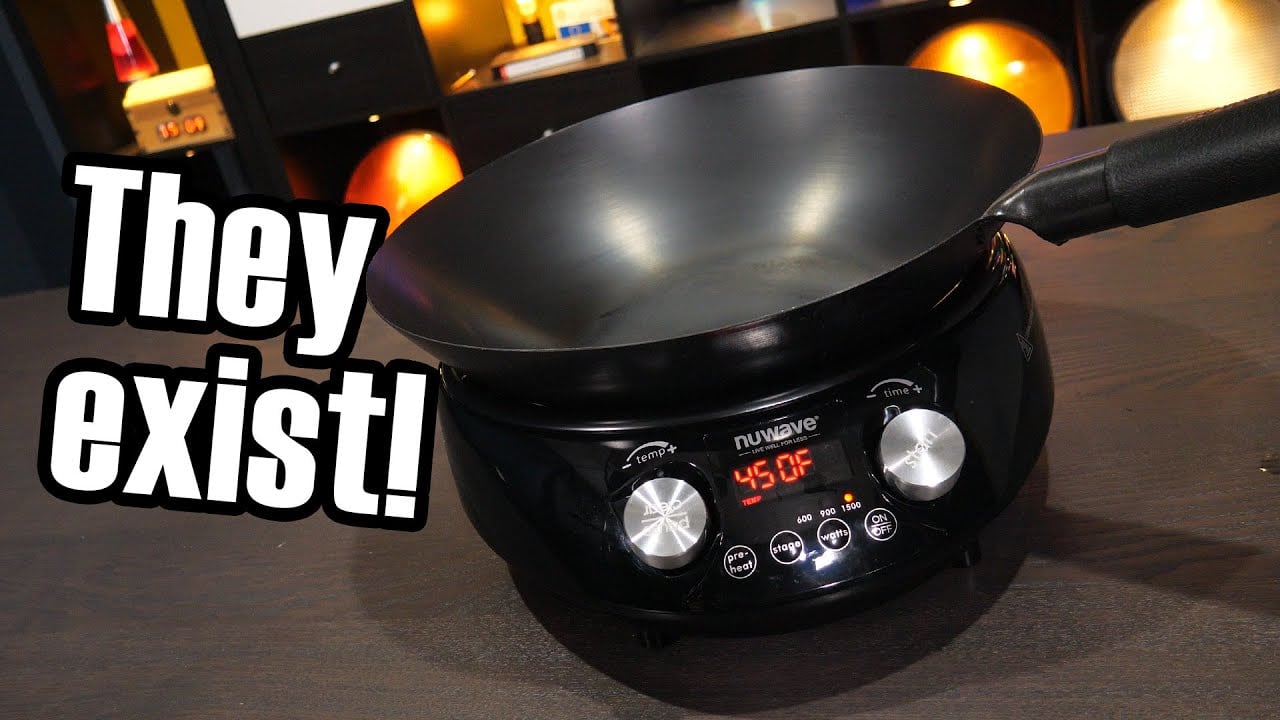
Video: Induction cooking – but what about woks?, Technology Connections. Open the educational video on YouTube.
No. Ask the exact cookware manufacturer whether the observed profile is intended; no universal tolerance is given here.
Do not improvise a repair. Keep damaged or unstable cookware out of use and obtain manufacturer guidance.
No. Record the symptom and follow the appliance and cookware troubleshooting process.
No. An accessory does not restore cookware integrity, and the appliance may restrict its use.



