Induction pan infrared thermometer readings describe radiation received from the viewed surface, not the induction power setting or the temperature inside food. A shiny metal pan can produce a misleading reading when the instrument settings and measurement method do not suit that surface. Start by identifying what you want to measure, then choose an appropriate instrument and follow its instructions. A low number from polished cookware does not establish that the pan or neighboring glass is safe to touch.
This guide helps organize surface-temperature observations without turning them into a cooking-temperature prescription. It does not supply one emissivity value for all cookware, a calibration shortcut or an empty-pan heating test. The finished appliance, cookware and thermometer manuals each control a different part of the process.
Write down whether the question concerns a pan surface, a liquid or the internal temperature of food. These are different targets. A handheld infrared instrument views a surface within its field of view. It cannot replace an appropriate penetration measurement simply because both devices show temperature units. Decide which physical location must be assessed before choosing the tool.
Include the task in the record: investigating inconsistent readings, checking a process with an approved method or comparing instruments under controlled conditions. Avoid collecting numbers without a decision they can support. If the purpose is food safety, use the appropriate food-temperature guidance and instrument. This article gives no doneness limits and does not treat cookware surface temperature as evidence that food has reached them.
ThermoWorks’ infrared care and use guidance explains that reflective metal can return surrounding radiation and that infrared instruments measure surfaces. The relevant question is therefore the viewed finish and method, not merely whether the vessel is induction compatible. An induction symbol does not supply the optical properties needed for measurement.
Describe the actual target: a polished wall, an uncoated cooking floor or a coated interior. Do not select an emissivity entry from appearance alone or assume that every dark coating shares one value. Use documentation and an appropriate validated method for the surface. This guide deliberately avoids assigning a common number that could appear precise while belonging to a different finish or instrument band.
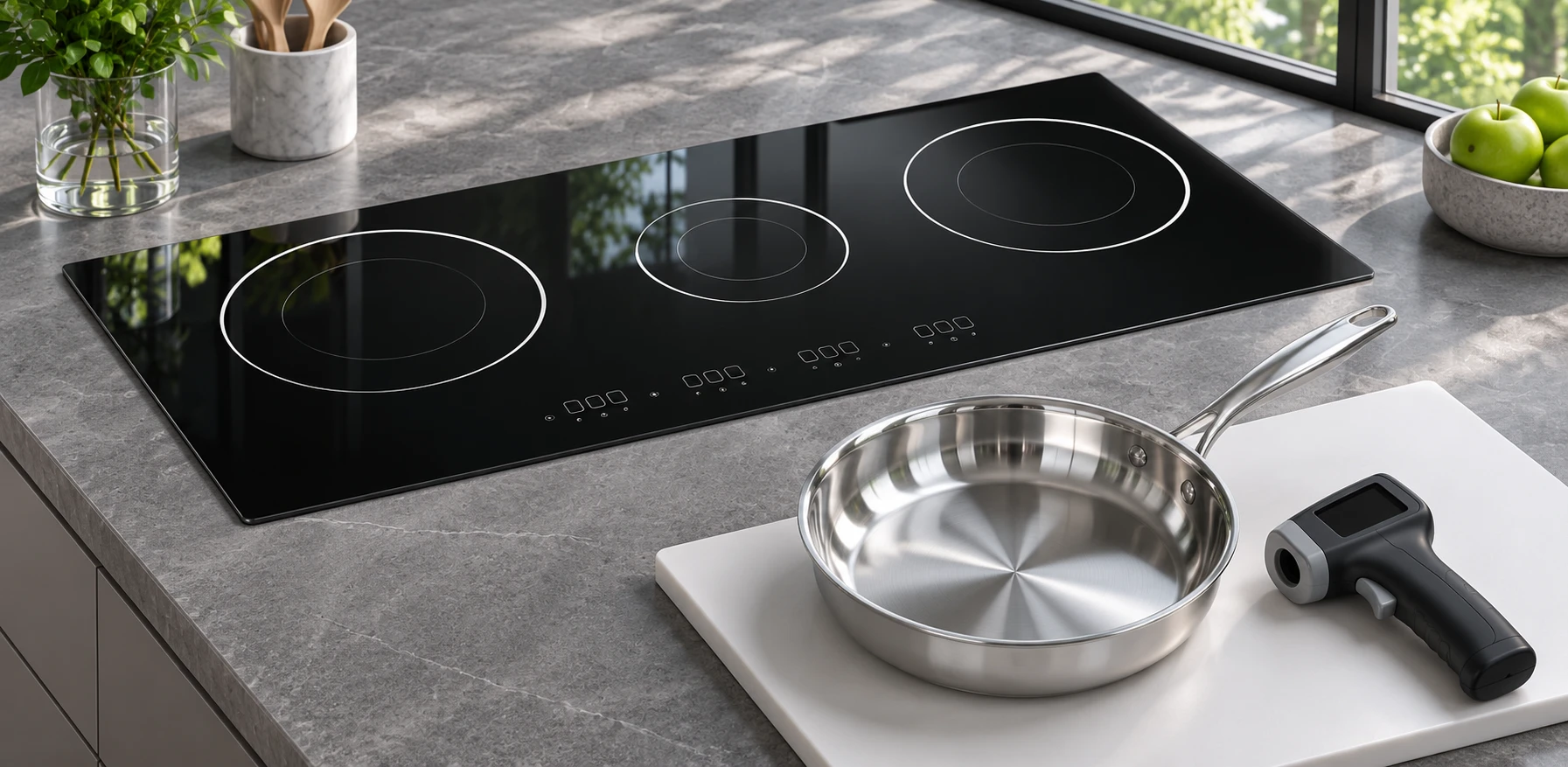
A visible aiming dot helps position an instrument but does not necessarily describe the entire region it measures. Consult the model’s distance-to-target or spot-size information. The sensing region can include a rim, adjacent surface or background when the chosen target is too small for the measurement distance. A clearly visible dot on the pan does not resolve that problem.
Plan the approach before cooking so a user does not lean over hot cookware to improve the view. Keep within the instrument’s permitted use and the appliance’s operating instructions. Do not reach across an active zone or remove a lid simply to obtain a more convenient angle. A measurement method that requires unsafe handling is unsuitable even if its optical geometry would otherwise be useful.
An exposed glass area, the outside pan wall and the cooking floor are separate surfaces with different conditions. A reading from one cannot be relabeled as another. Nor should a reading taken through an intervening material be assumed to represent the object behind it. Follow the instrument manufacturer’s limitations for the material and wavelength range involved.
Kanger supplies Kanger black glass-ceramic cooktop panels, with context in the black glass-ceramic material guide. Those component descriptions are not a temperature-measurement procedure for a finished appliance. An infrared reading cannot establish panel composition, a structural condition or a certification. If the concern is a visible mark or suspected damage, use checking marks on the glass surface and the appliance service instructions rather than treating a thermal number as a diagnosis.
For a permitted observation, keep the instrument model, units, selected settings, target description and approximate viewing arrangement together. Record the operating stage without inventing precision: for example, before cooking or after the appliance has been stopped using its instructed procedure. Avoid comparing an undocumented earlier screenshot with a later measurement from another surface.
If more than one instrument is involved, identify them separately. A disagreement is a prompt to examine the methods, not an automatic reason to declare one device defective. Check the intended temperature range and permitted target type. Do not adjust settings until two numbers agree and then call that calibration; agreement alone does not establish the correct reference or the uncertainty of the result.
The table identifies what a reading may leave unresolved. It gives no correction factor and no cooking setpoint. The instrument guidance and an appropriate reference method must supply the measurement procedure.
| Observed situation | Unresolved question | Useful next step |
|---|---|---|
| Low reading from shiny metal | Surface and reflected radiation effects | Check the permitted method for that finish |
| Different values at different distances | Target coverage and background inclusion | Review model spot-size information |
| Glass and pan values differ | Different surfaces were measured | Label each target separately |
| Food surface reading seems plausible | Internal food temperature remains unknown | Use the appropriate food probe method |
| Two instruments disagree | Method, range and reference conditions | Review documentation before judging either device |
Do not paint, tape or attach an improvised measurement patch to cookware or glass as a generic kitchen solution. Such materials can introduce separate heat, food-contact and care restrictions. A method described for industrial equipment is not automatically suitable for a food-contact pan. Obtain explicit authorization for the actual surface, task and materials before considering any specialized procedure.
Likewise, do not add oil or heat an empty coated pan solely to create a target for an experiment. The care instructions determine permitted heating and use. The absence of smoke is not proof that an unknown method is acceptable. If reliable measurement cannot be obtained within the approved process, change the measurement approach rather than modifying the equipment to suit an unsuitable instrument.
A contact surface probe and a liquid or food penetration probe are different tools. Their sensing geometry, contact requirements and permitted ranges can differ. Select a device specifically intended for the target and follow its method. A pointed food probe held against a pan is not automatically a validated surface measurement simply because the tip touches metal.
If specialist comparison or verification is required, ask the instrument supplier for a documented procedure or an appropriate service route. Avoid creating a reference by assuming a household event has one exact temperature under every condition. The useful procurement information is the target material, required decision, operating conditions and acceptable uncertainty, not the number of decimal places shown on a display.
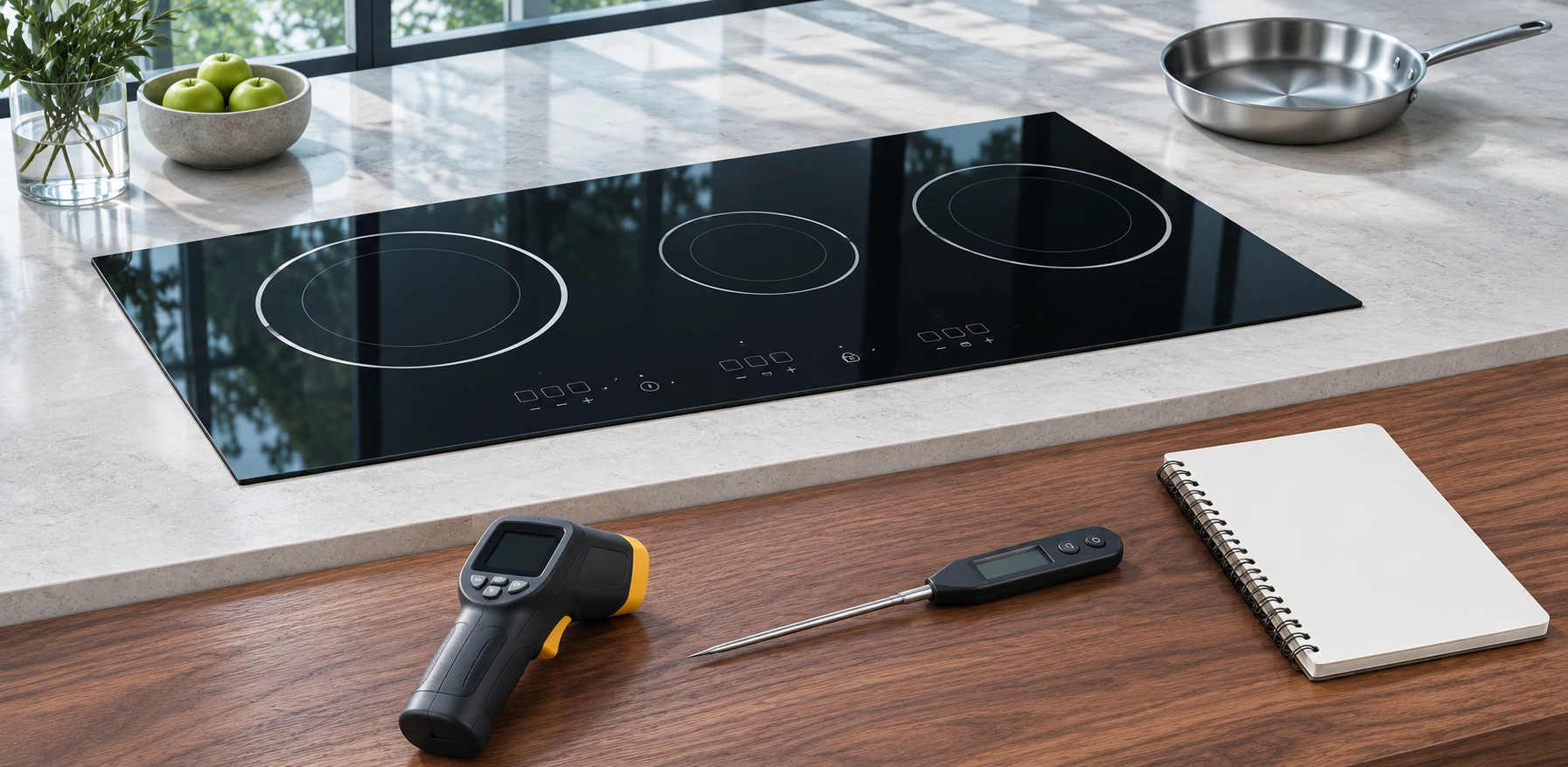
ENERGY STAR electric cooking guidance explains that suitable cookware is heated by the magnetic field. That heating mechanism does not make an infrared instrument a direct measure of electrical input or appliance efficiency. A change in surface reading can reflect several conditions, and it should not be translated into a power rating or a statement that one panel material saves energy without a suitable test.
Check vessel suitability with measuring the usable cookware base and keep placement consistent with the hob instructions. If the appliance shows a fault or fails to detect cookware, use its troubleshooting procedure. Do not use a surface thermometer reading to override a warning or to decide that the electronics are working correctly. Measurement, cookware compatibility and electrical service are separate evidence streams.
U.S. Fire Administration cooking safety guidance supports keeping attention on cooking and maintaining a clear stovetop area. Store the thermometer and its packaging in a suitable location away from active zones. A measurement should not block controls or require a cable or accessory to cross the cooking area. Review planning handle clearance when planning access around the vessel and neighboring equipment.
Follow the instrument’s own laser-use instructions where an aiming laser is fitted. Do not point it at people or use it as a toy. Keep any recording task secondary to safe cooking. If the process demands frequent observations that cannot be made safely, choose an approved monitoring arrangement or change the task; a handheld instrument does not remove the need for supervision.
Send the manufacturer a concise record of the target, instrument model, settings and symptom. Ask whether the method is suitable before asking for an explanation of a particular number. Keep the supplier’s response and any subsequent verification with the equipment record. This avoids another user repeating an unsuitable method and treating the resulting values as established limits.
For OEM buyers, distinguish panel specifications from thermal measurement requirements during product development. Define the actual measured location, permitted apparatus and acceptance process in the relevant test documentation. This article supplies a selection and interpretation checklist only. It does not certify readings, infer food safety or establish finished-appliance temperatures from the appearance of Kanger glass.
This independent educational video explains how induction heats suitable cookware and why vessel geometry matters. It is background on the heating system, not a demonstration of thermometer accuracy, clip compatibility or a repair approval.
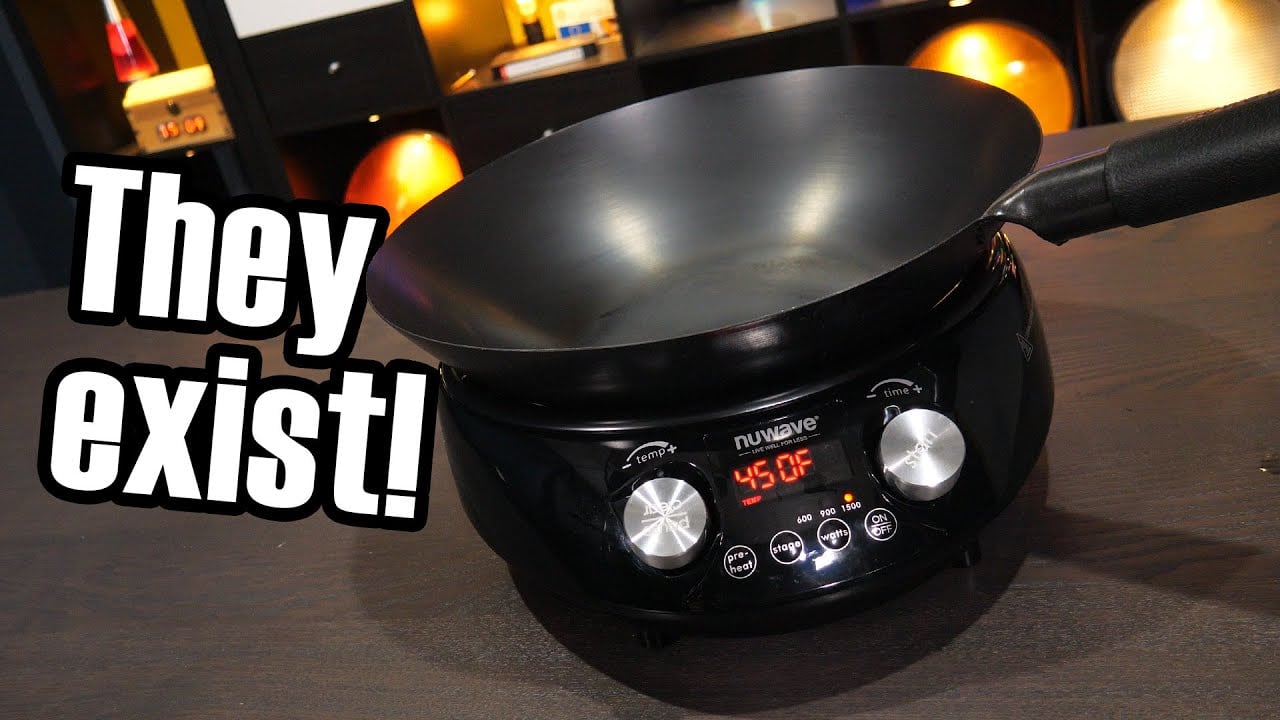
Video: Induction cooking – but what about woks?, Technology Connections. Open the educational video on YouTube.
No. It measures a viewed surface; use an appropriate food probe method for internal temperature.
Not necessarily. Check the specific instrument’s spot-size and distance guidance.
Do not assume so. The actual surface, instrument and permitted method matter.
No. A misleading reading or a different target can leave burn hazards unresolved.