A cooktop-panel drawing revision should be handed off as one named current file with a change summary, affected features, sample references, open decisions, and a responsible owner for the next response.
The handoff is a document-control decision before it is a supplier conversation. If two versions circulate without a clear current file, a correct comment can still be applied to the wrong panel definition.

It decides which drawing and related artwork or sample information the supplier should use for the next response. It does not approve every technical property of the panel. ASME’s Y14.5 overview provides useful context for a shared drawing language, but it is not a release rule for this project.
Important: A revision handoff is not evidence of panel performance, certification, or final assembly fit. Keep those decisions with the applicable project records. — Source: ISO standards catalogue
Start with a file name, revision label, issue date, and document owner that the team can repeat. Link related artwork, marked samples, or interface notes to that same identifier. The purpose is to make the package self-explanatory when it leaves the design team.
Avoid calling a file “latest” without a revision identifier. That word can change as soon as another draft is saved. The white cooktop-panel assembly review handles installed-interface questions separately from this handoff decision.
Mark the changed feature and keep enough surrounding geometry for the recipient to locate it. A concise change note can say what moved, was added, or was removed, while the controlled drawing remains the authority for the full definition.
Do not turn a highlight into an unapproved tolerance. If the revision affects appearance, edge finish, or a sample, link that question to the relevant owner. The black panel appearance review is a better destination for a cosmetic approval discussion.
Use a small field set so the receiver can confirm what arrived and what response is needed.
| Handoff field | Why it belongs in the package |
|---|---|
| Current drawing filename and revision | Identifies the document the supplier should read. |
| Change summary | Tells the reader where to start without replacing the drawing. |
| Affected feature references | Connects comments to named geometry or artwork. |
| Related sample or proof identifier | Prevents an old physical reference from silently becoming current. |
| Open question and response requested | Defines the next action. |
| Responsible owner | Keeps release authority with the project team. |
This is an RFQ and handoff aid, not a substitute for a released specification.
A sample can help explain a changed feature, but its identifier and relationship to the drawing need to be stated. If the sample predates the current revision, label it as an earlier reference and identify the question it can still support.
Do not assume a visual match means the sample follows the new file. For dimensional or edge questions, use the panel thickness and edge-finish guide instead of adding an unsupported conclusion to the handoff.
An open item should have a short description, an owner, and a disposition path. The owner may need to revise the drawing, confirm artwork, compare a sample, or ask the supplier a feasibility question.
This prevents a supplier acknowledgement from being mistaken for project approval. The handoff can be complete while a technical decision remains open, provided the open decision is visible and assigned.
When the file identity, change summary, feature references, sample links, and owners are ready, send the package through the white glass-ceramic cooktop panel enquiry route.
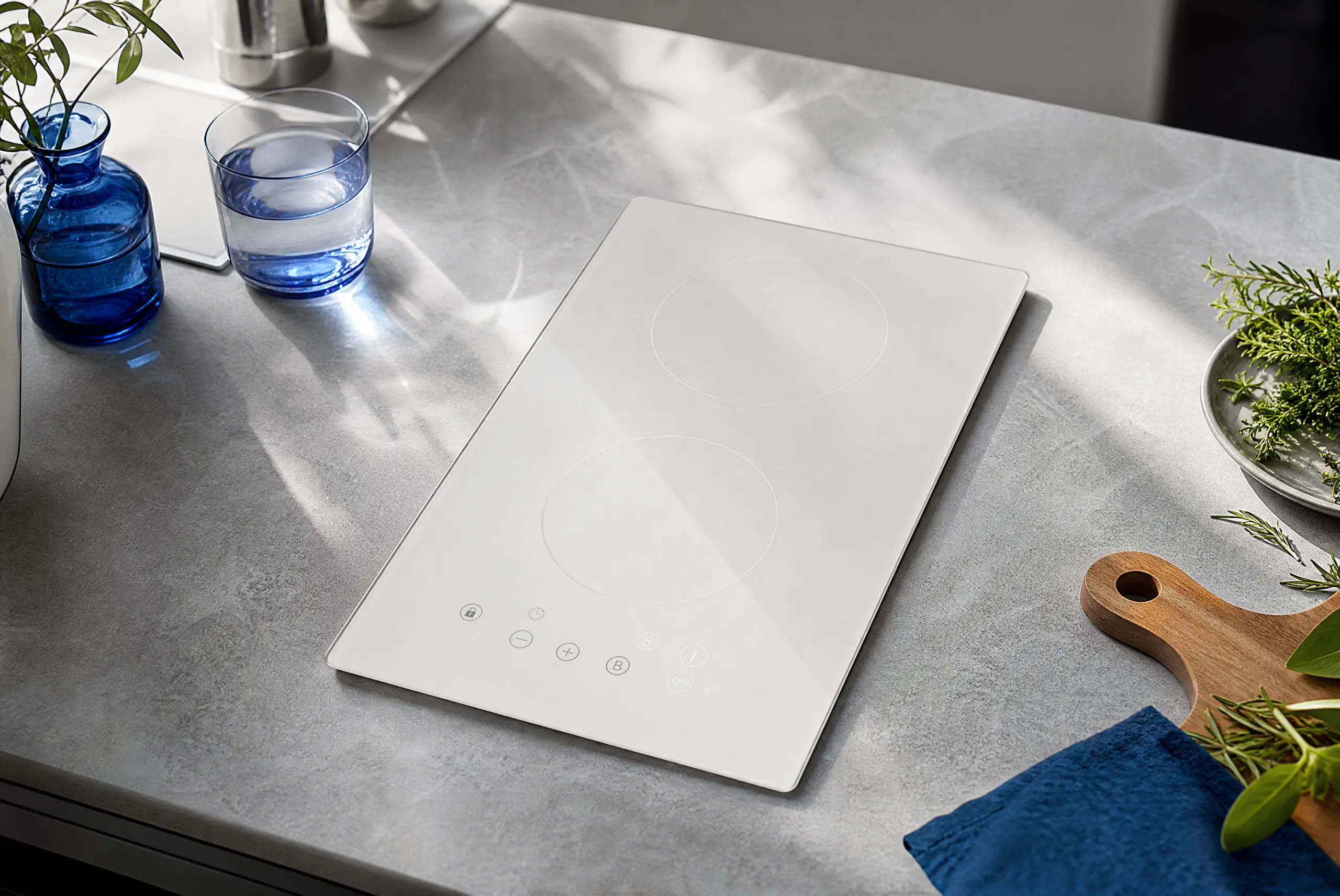
Ask for feedback against the named revision. If the request belongs to another glass family, begin at the KANGER products overview. For a project-specific question, contact KANGER.
It is the controlled transfer of one current drawing and its related references, with changed features, open questions, and ownership made visible.
One named file prevents an older PDF, screenshot, or sample note from becoming an accidental working reference.
Highlight the feature, artwork, interface, or note that changed, while retaining enough context for the recipient to locate it in the drawing.
Only as an explicitly labelled earlier reference. Confirm which question the sample can support and do not treat it as automatic evidence for the new revision.
Include the current file identity, change summary, affected features, sample references, requested response, and responsible owner.
The named project owner closes it through the controlled drawing or engineering process before treating the revision as released.