OEMs should lock geometry, whiteness and lot acceptance, edge finish, and print keep-out on one controlled drawing before they release a porcelain white glass ceramic cooker plate RFQ. That package keeps dual-supplier quotes comparable and stops color or print debates from arriving after tooling is frozen. This article walks through the RFQ fields, geometry and thickness controls, lot whiteness, edge notes, print keep-out, and how this job differs from branding-durability or display-lot briefs.
Put the drawing revision, outer geometry, thickness, edge class, whiteness/lot rule, print keep-out, and appliance duty on the same RFQ package. A white cooker plate is a glass-ceramic cooktop surface blank, so quotes that only list “white ceramic glass, custom size” are not comparable. Competitor OEM pages often bundle silk-screen printing with custom dimensions and edge processing, which is why print keep-out must appear as its own RFQ row.
Appliance OEM teams often split industrial design, mechanical engineering, and purchasing across three owners. When those owners send separate emails, one supplier prices a polished edge with zone rings while another prices a raw blank with no artwork.
| RFQ field | What to lock | Owner |
|---|---|---|
| Drawing revision | Controlled PDF/CAD identity | Mechanical engineering |
| Outer geometry | Length, width, corner radii, flatness notes | Mechanical engineering |
| Thickness | Nominal thickness and tolerance on the drawing | Mechanical engineering |
| Edge finish | Polish / bevel / C-edge class and handling film | Manufacturing engineering |
| Whiteness / lot | Master sample ID and lot acceptance rule | Industrial design + QA |
| Print keep-out | Zone rings, icons, clearances, ink side | Industrial design + electronics |
| Duty note | Induction / radiant / portable hob context | Systems engineering |
Industry OEM selectors treat white color, decoration, holes, bevels, and custom edge profiles as separate axes rather than one “white glass” line item. Kanger’s white cook-plate hub likewise asks buyers to define dimensions, printing or decoration, inspection criteria, and thermal fields on the approved design.
Write outline dimensions, thickness, hole or cutout positions, and heating zone centers on the controlled drawing before price talks start. Geometry mismatch is the fastest way to create a beautiful white plate that will not seat in the chassis.
Common catalog cooktop glass sheets are often listed at 4 mm and 6 mm thickness classes. Those catalog thicknesses are starting points only; the drawing still needs the project nominal value and tolerance.
Aftermarket replacement threads show the same discipline from the service side. Owners who order glass without confirming zone layout and model identity wait weeks for a part that may still miss a warming element or cutout.
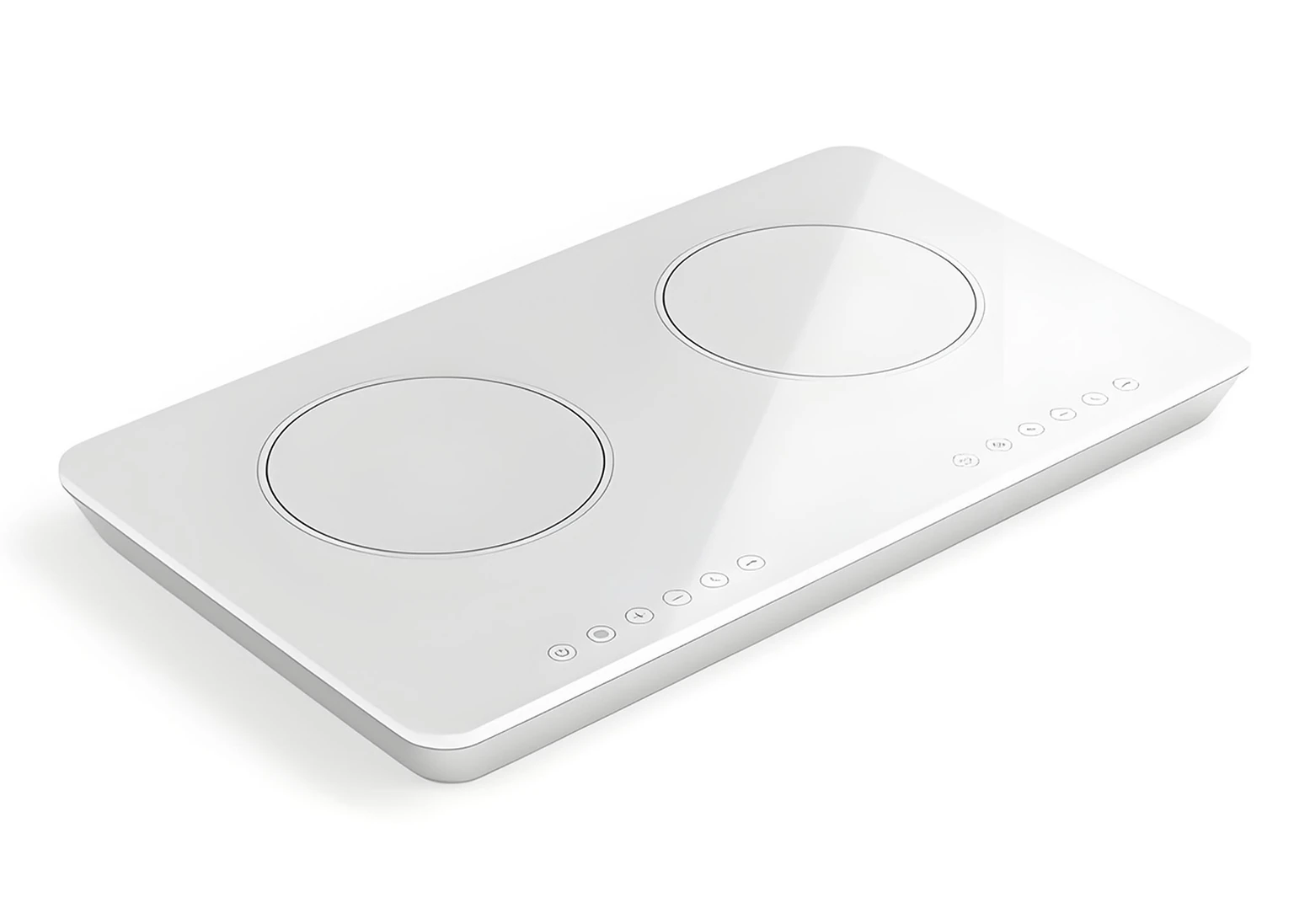
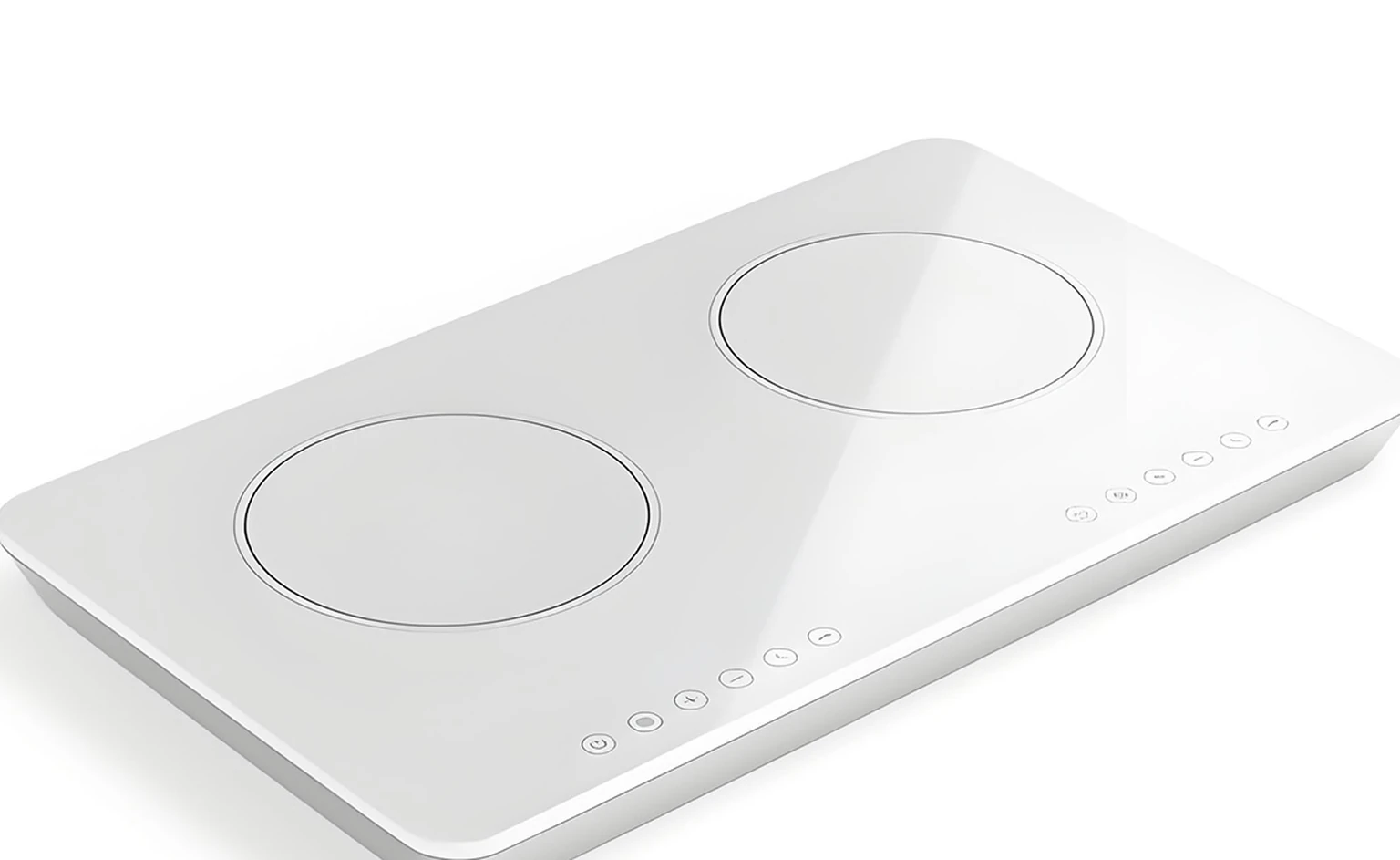
For a portable dual-zone white cooker plate, lock the outer rectangle, corner radii, glass thickness, and the two zone centers against the coil or radiant map. Do not leave approximate thickness language as the only geometry sentence in the RFQ.
Name a porcelain-white shade target, a signed master sample, and the lighting condition used for lot acceptance. White surfaces show batch drift that dark cooktops often hide.
Premium white glass-ceramic cooktop substrates advertise multiple white shades and display-oriented variants. That market language is useful as a reminder to name shade and lot rules; it is not a license to copy another brand’s shade code onto a Kanger RFQ.
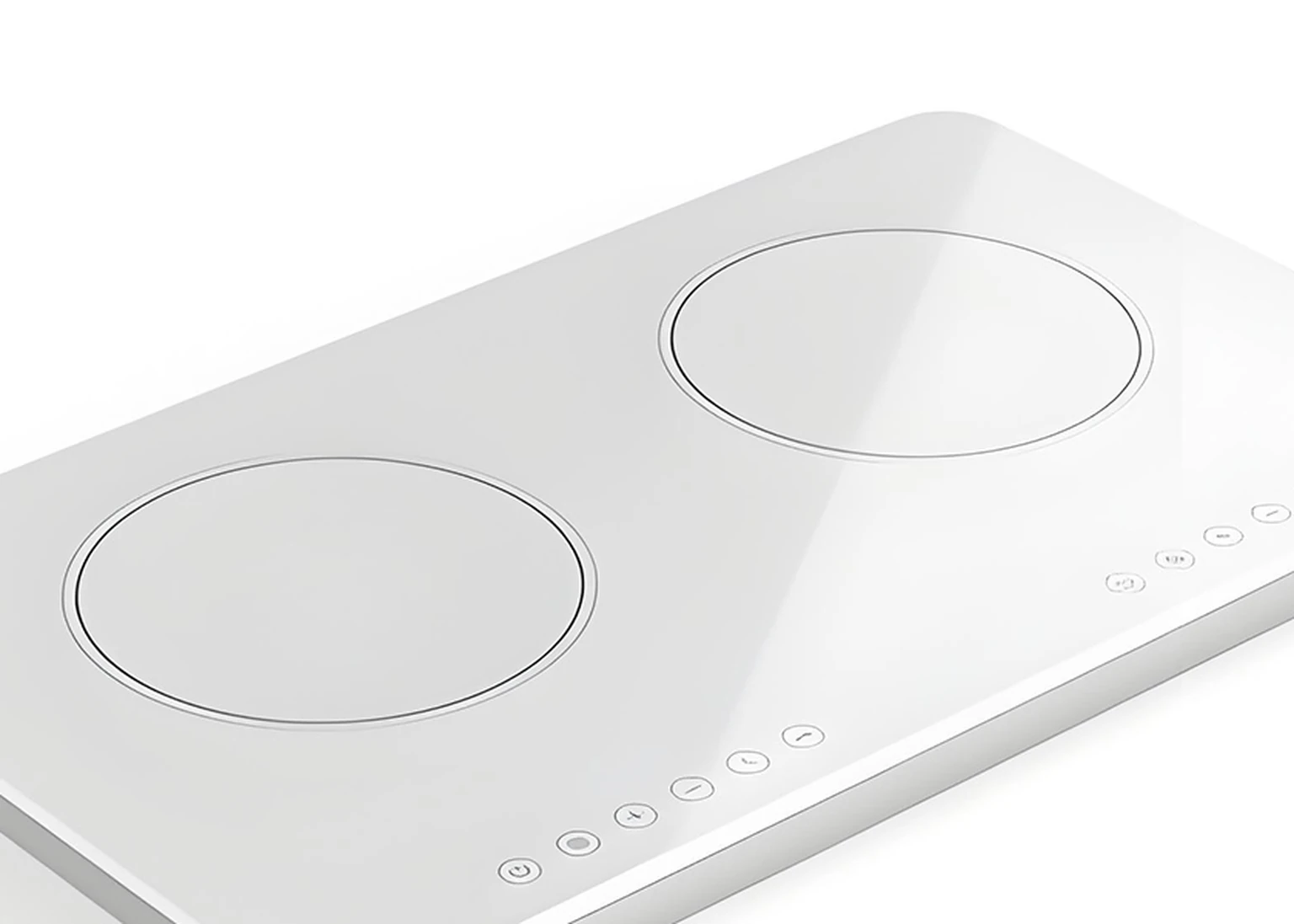
Keep this cooker-plate brief focused on surface whiteness for the cooking plate itself. If the program’s main risk is LED readability through a display-capable white, use the display-lot RFQ path instead of overloading this package.
A practical lot rule pairs a retained master coupon with carton lot IDs and a simple pass/hold band under agreed booth or shop lighting. Purchasing can then reject a shipment that matches size but misses the approved white.
Specify the edge class on the drawing and add handling limits for packing, assembly clamps, and line transfer. Edge chips on ceramic or glass cooktops leave sharp rims and often force full panel replacement.
OEM design menus routinely list bevels and custom edge profiles beside holes and decoration. Edge is therefore a priced process choice, not a free finishing detail.
Important: A through-thickness crack that crosses a burner zone is unsafe to keep using, and an edge chip with jagged glass is a full-panel problem—not a wipe-and-ship cosmetic fix. Stop heat duty on damaged glass and correct edge class plus handling before the next lot ships. — Sources: Replacing a Glass Cooktop on a Range; field edge-chip reports on appliance owner forums.
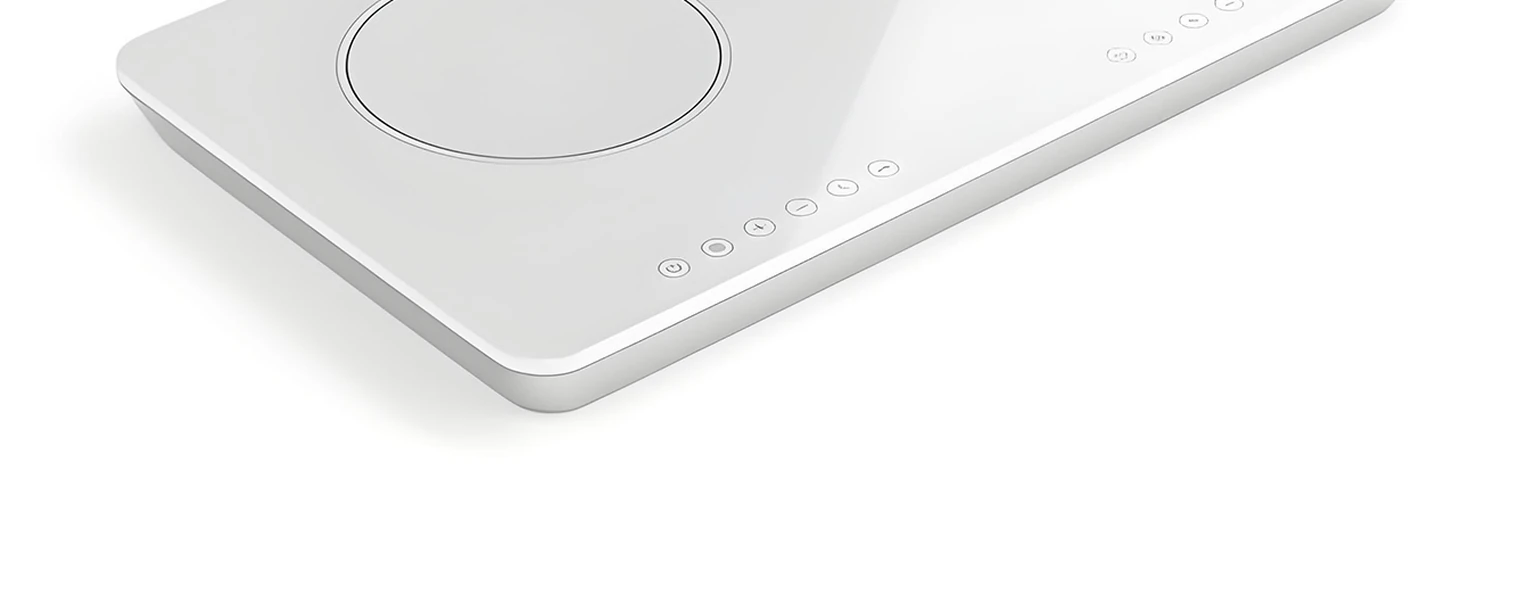
On a white cooker plate, a chipped front lip also breaks the print margin for touch icons. Edge and print keep-out therefore belong in the same review meeting.
Map heating-zone rings, touch icons, and keep-out clearances on the artwork layer with ink side and contrast notes. Porcelain white makes low-contrast greys easy to misplace against coils, sensors, and finger reach.
OEM cooktop decoration options include complex patterns, reflective inks, and multi-color layouts. On white plates, those options only help when keep-out distances to hot zones and control rows are drawn, not described verbally.
On a porcelain white ceramic glass cooktop layout, mark where ink is required, where ink is forbidden, and where sensor or display windows must stay open. Keep-out clearances prevent zone rings and icon rows from colliding with coils, sensors, or finger reach.
| Decision | Put on the artwork | Supplier reply to demand |
|---|---|---|
| Zone rings | Diameter, line weight, color | Process capability for that ink |
| Touch icons | Icon set, pitch, front margin | Print durability note for the ink system |
| Keep-out | Clearance from coil/radiant map | Confirm no ink in reserved zones |
| Ink side | Topside vs underside callout | Process route confirmation |
A dual-zone white portable plate usually needs two identical control rows along the front edge with a keep-out band between icons and zone rings. If industrial design later enlarges icons without updating keep-out, electronics and glass processing will quote different scrap risks.
Use this article when the open question is cooker-plate geometry, lot whiteness, edge finish, and print keep-out for a white cooking surface. Send branding durability or display-lot optics to their own briefs.
The live branding and durability RFQ for white induction panels focuses on logo wear, sample durability, and branding validation. The display-lot RFQ focuses on LED visibility, lot coding for display-capable whites, and optics acceptance. The older design-constraints article surveys porcelain-white constraints at a higher level.
Related reading:
– White induction-panel branding and durability RFQ
– Porcelain white display-lot RFQ
– Porcelain white glass-ceramic cooktop design constraints
If the program only needs logo abrasion language, do not dilute this cooker-plate package with branding checklists. If the program only needs display transmittance language, do not pretend a geometry RFQ will solve LED readability.
Route a confirmed porcelain-white cooker-plate specification to Kanger’s white glass-ceramic cook plate panels hub when the drawing already names dimensions, printing or decoration, inspection criteria, and the appliance thermal context. That hub is the correct white glass ceramic cook plate entry for household built-in cooking hob panels.
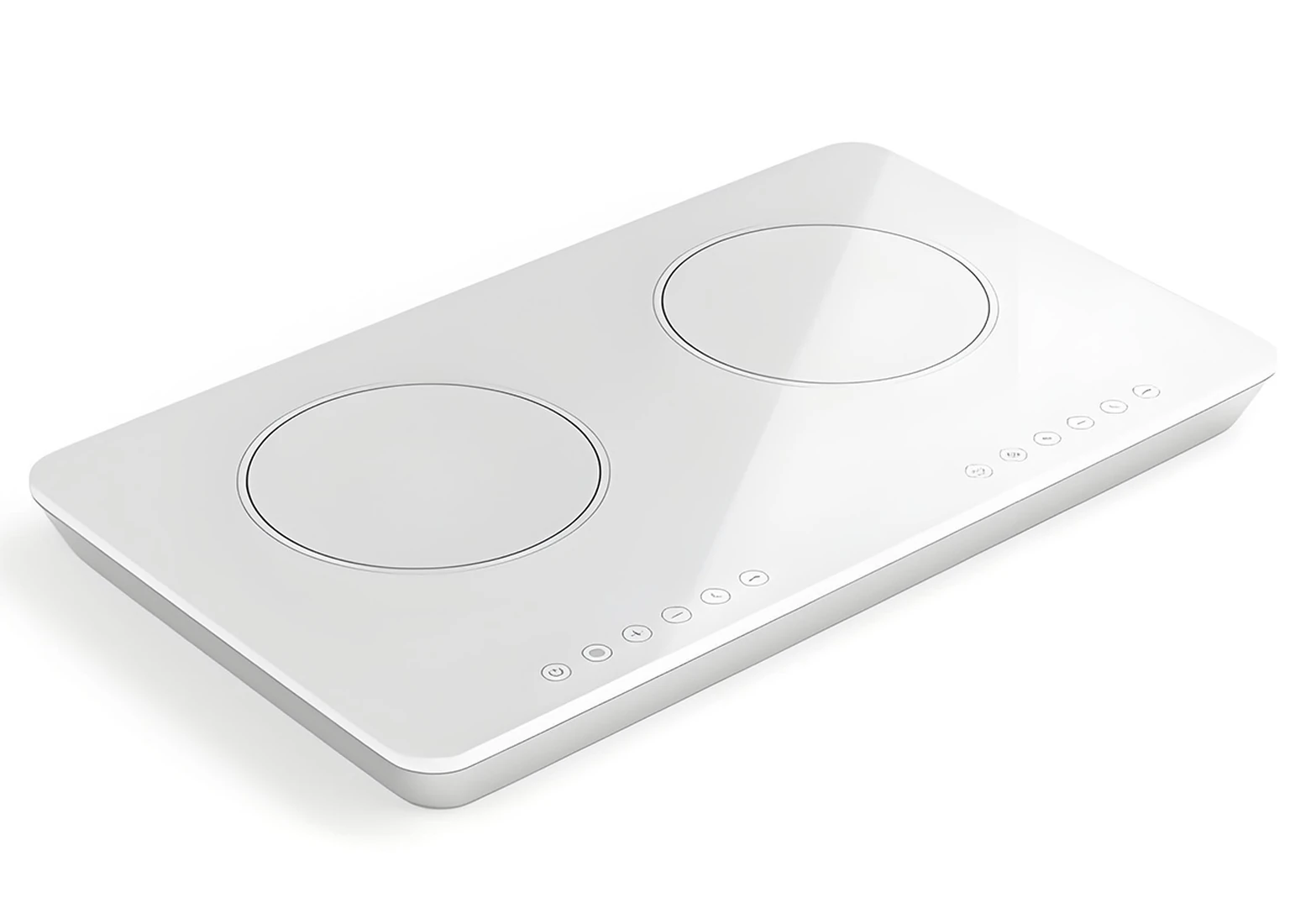
Choose another line when the surface must be dark, transparent for fireplace viewing, or shaped for wok geometry rather than a flat cooker plate. After the drawing package is ready, send it through Contact Us with the revision ID and master-sample references attached.
Glass-ceramic cooktop materials are discussed industry-wide for near-zero expansion behavior and cooktop impact test framing on authority product pages such as SCHOTT CERAN. Treat those pages as industry context while your RFQ still demands supplier evidence for the quoted white grade.
No. A cooker plate in this article means a glass-ceramic cooktop surface blank. White tempered appliance glass is a different material route and should not be substituted by color name alone.
Write the project nominal thickness and tolerance on the controlled drawing. Common catalog sheets are often offered in 4 mm and 6 mm classes, but catalog class is not an approval value until the drawing says so.
Name the edge class (for example polish, bevel, or C-edge), corner treatment, and handling or film notes. Edge chips create sharp rims and frequently force full panel replacement.
Place zone rings, touch icons, ink side, and keep-out clearances on the artwork layer tied to the heating map. Verbal “add some grey icons” instructions are not quote-ready.
This package owns cooker-plate geometry, lot whiteness, edge finish, and print keep-out. Display-lot briefs own LED optics and lot coding for display whites; branding-durability briefs own logo wear and branding samples.
Ask for confirmation against the drawing revision, edge class, print layer map, whiteness/lot rule, and material documentation for the quoted white grade. A price without those rows is not comparable.
Hold the RFQ when outline geometry, thickness, edge class, lot rule, or print keep-out is still unsettled, or when the real need is branding durability, display optics, shaped/wok geometry, or a dark panel program.
Send the controlled package to the white glass-ceramic cook plate panels hub and the contact form with revision and sample IDs attached.