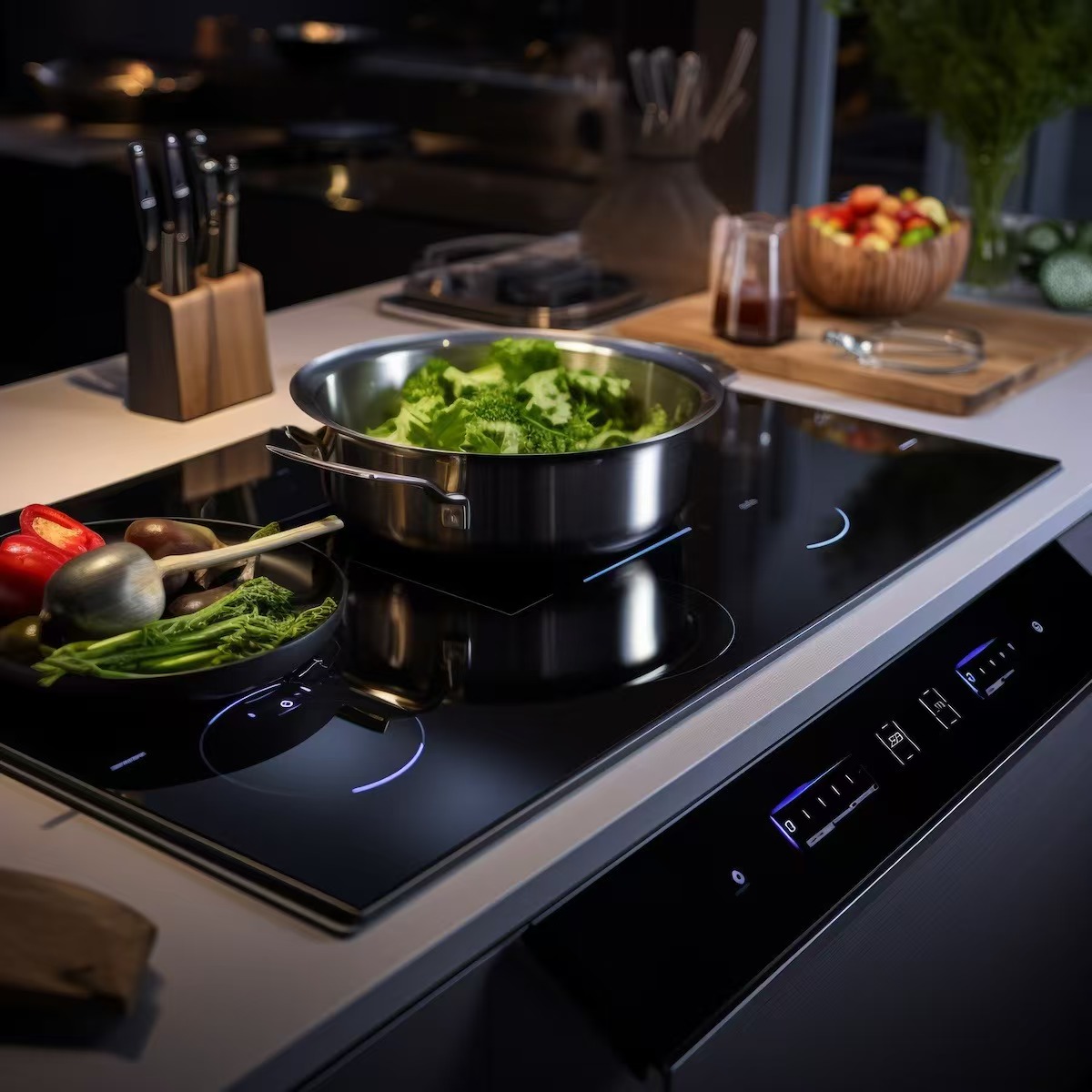
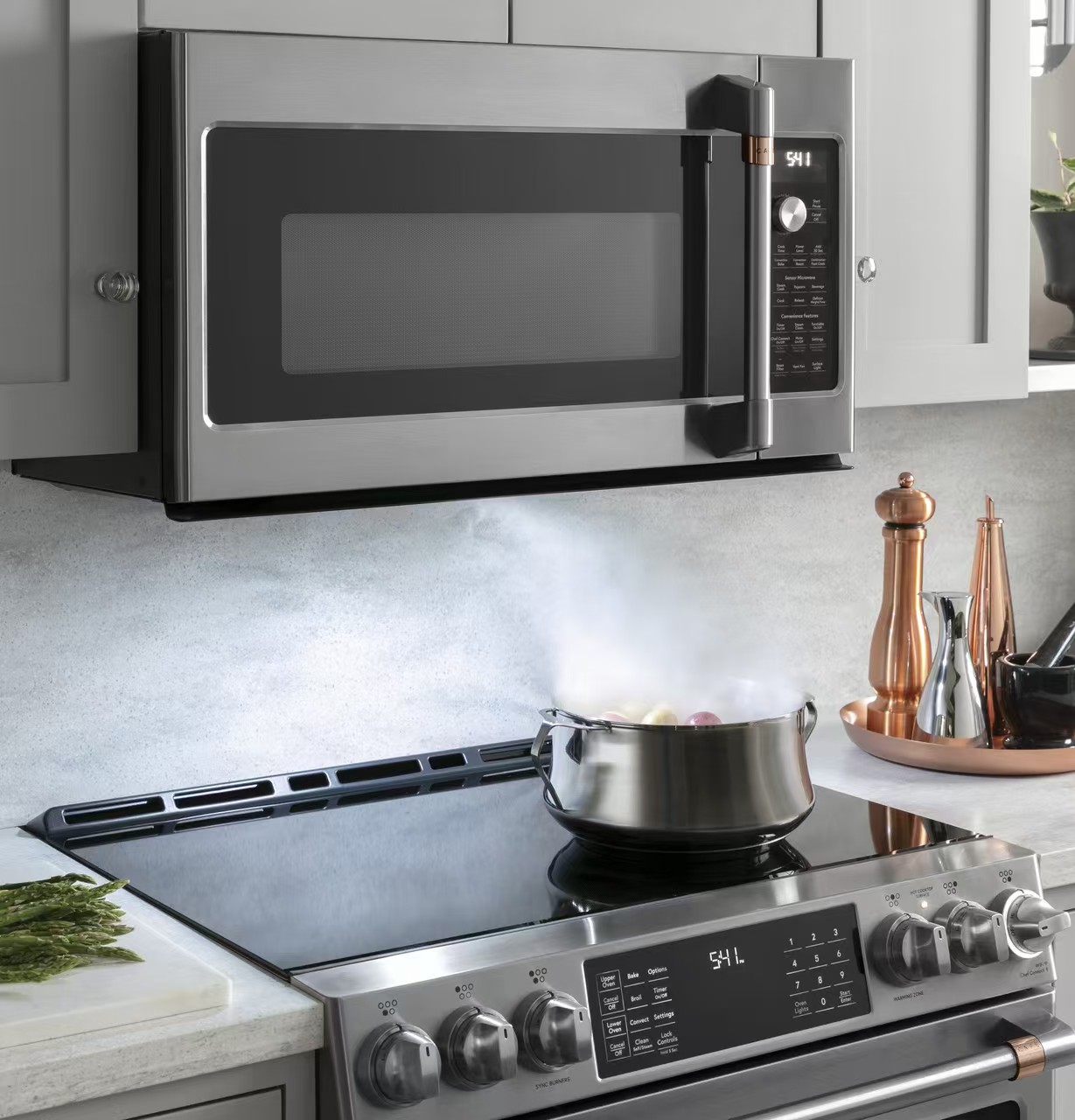
An induction hob saucepan should have a base designated for induction, dimensions permitted by the hob instructions and a handle arrangement that allows controlled lifting and pouring. Check the exact saucepan model and size rather than relying on the appearance of stainless steel or a broad cookware-set description. A small usable base, a long projecting handle and a fitted lid each raise a separate practical question. Resolve them while the pan is empty and cold.
This guide focuses on a saucepan used for everyday liquids and sauces. It complements material-specific cookware guides rather than ranking coatings or promising heating speed. The result should be a documented choice and a workable route from the hob to the receiving container. It supplies no universal maximum fill, handle temperature or power setting; those depend on the actual equipment and intended task.
Obtain the model designation and instructions for the selected size. A cookware collection can include different bases, lids and handle constructions. A statement about one frying pan does not automatically identify every saucepan in the range. If purchasing a replacement, match the new product rather than assuming that a familiar brand name preserves the old dimensions and instructions.
ENERGY STAR guidance on electric cooking products explains that induction heats appropriate cookware through magnetic interaction. That supports checking the actual base designation. A magnetic screening check may help where recommended by the supplier, but it does not establish all aspects of suitability. Retain the manufacturer’s information and compare it with the hob guidance before attempting to use a newly purchased pan.
The diameter in a product title may describe the upper opening. The bottom relevant to cookware recognition can be smaller, particularly where the wall curves into the base. Obtain that usable base measurement and compare it with the appliance instructions. Our guide to measuring the usable pan base explains this distinction without treating the printed zone outline as a universal pan-sizing rule.
Inspect a cool, empty pan on a stable surface. The base should be clean and sit as its manufacturer intends. Do not press down on a rocking pan or repeatedly raise power to force recognition. If a small saucepan falls outside the appliance’s documented requirements, choose a permitted alternative or seek the manufacturer’s advice. A convenient volume does not override a base-fit problem.
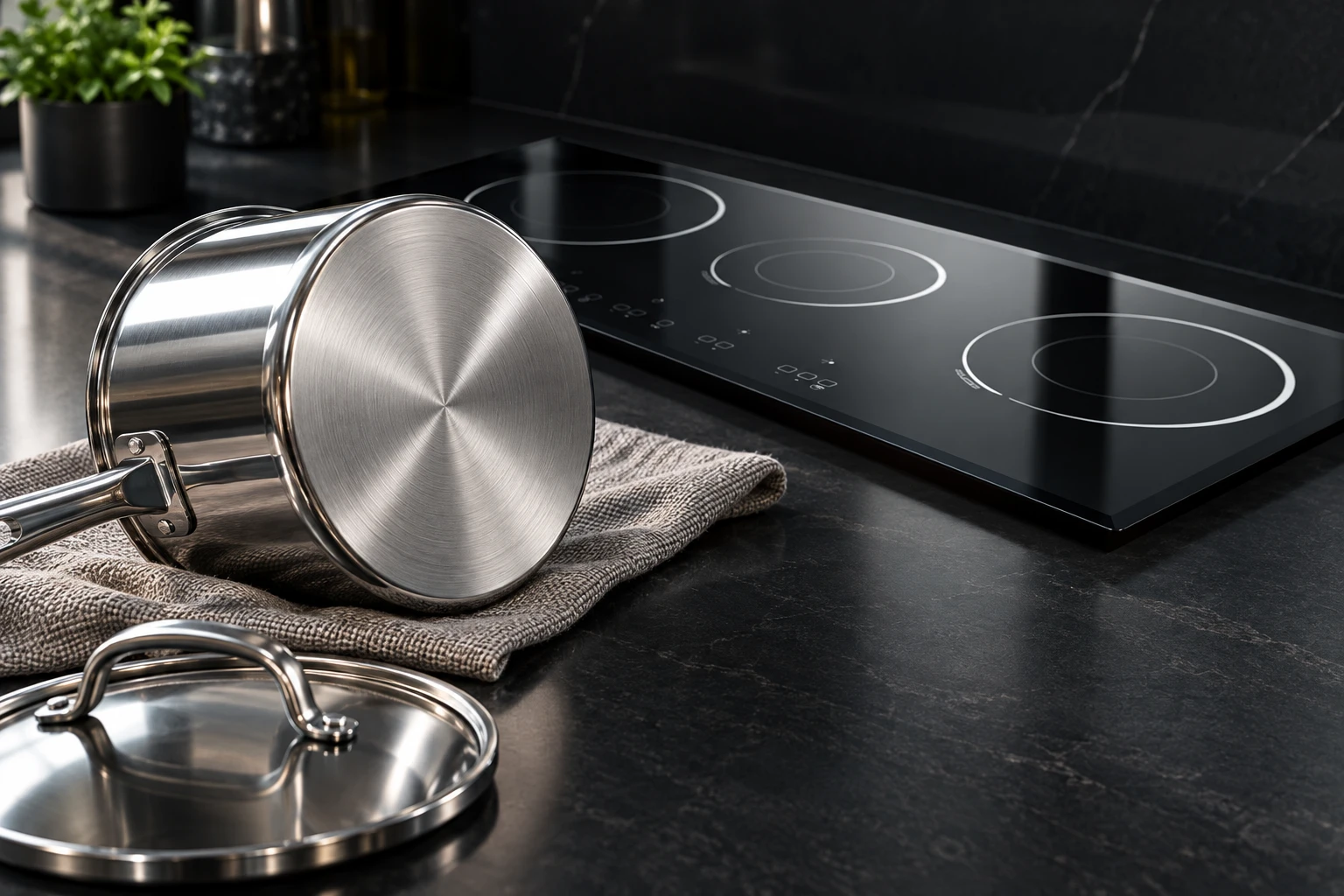
A saucepan may occupy little zone space while its handle projects far beyond the vessel. Rehearse the position with the hob off. Check that you can reach the grip without crossing another cooking position, obstructing the controls or leaving the handle in a walkway. Do not shift the base partly away from its required position simply to make the handle point in a convenient direction.
Our guide to keeping cookware handles clear of controls addresses access around glass touch controls. Include the user’s approach and the next task, such as lifting a lid or adding an ingredient. A handle that is easy to reach from one standing position may be awkward from another. If the permitted arrangement remains inconvenient, a different suitable pan or appliance position is a better purchasing decision than an improvised operating habit.
Check which lid belongs to the exact saucepan and how the maker intends it to be handled. A straining lid or pouring lip is a feature with its own instructions, not permission to hold every lid in place while tipping. Confirm the grip, any lid-retention method and the intended receiving container. Do not infer these details from a marketing photograph.
Set the lid on a stable designated resting surface when that is the instructed method. Keep the lid and its resting place away from the controls and walking route. An alternative lid of the same nominal diameter may fit differently at the rim or handle. Use the specified combination, and resolve missing product information before a hot liquid makes the consequences of poor fit harder to manage.
The induction principle in this table follows ENERGY STAR guidance on electric cooking products. Dimensions, filling limits and grip instructions must come from the exact saucepan and hob documentation. The table helps identify missing information; it does not assign generic numerical limits to all cookware.
| Decision | Information needed | Cold check before use |
|---|---|---|
| Base suitability | Exact induction designation and usable diameter | Compare with the selected hob zone requirements |
| Handle access | Permitted grip and pan position | Keep controls and lifting route clear |
| Lid fit | Matching lid and handling instructions | Plan a stable resting place |
| Pouring | Instructions for lip, lid and receiving container | Rehearse empty without reaching across the hob |
| Working fill | Maker’s filling guidance for intended task | Distinguish usable fill from advertised capacity |
Place an empty receiving bowl or container on a stable work surface and rehearse the movement with the saucepan empty. Include the space needed to turn your wrist and return the pan to a suitable resting place. Keep the route clear of another pan’s handle, a tap or a cupboard edge. Do not make the first rehearsal while carrying a hot, filled vessel.
Assess the weight and grip in the context of the user’s ability and the intended quantity. A pan that is comfortable empty may become difficult when filled. Follow any instructions for an assisting grip or protective equipment. If you cannot manage the intended arrangement confidently, select a more suitable documented option or a different appropriate process rather than improvising support under the hot pan.
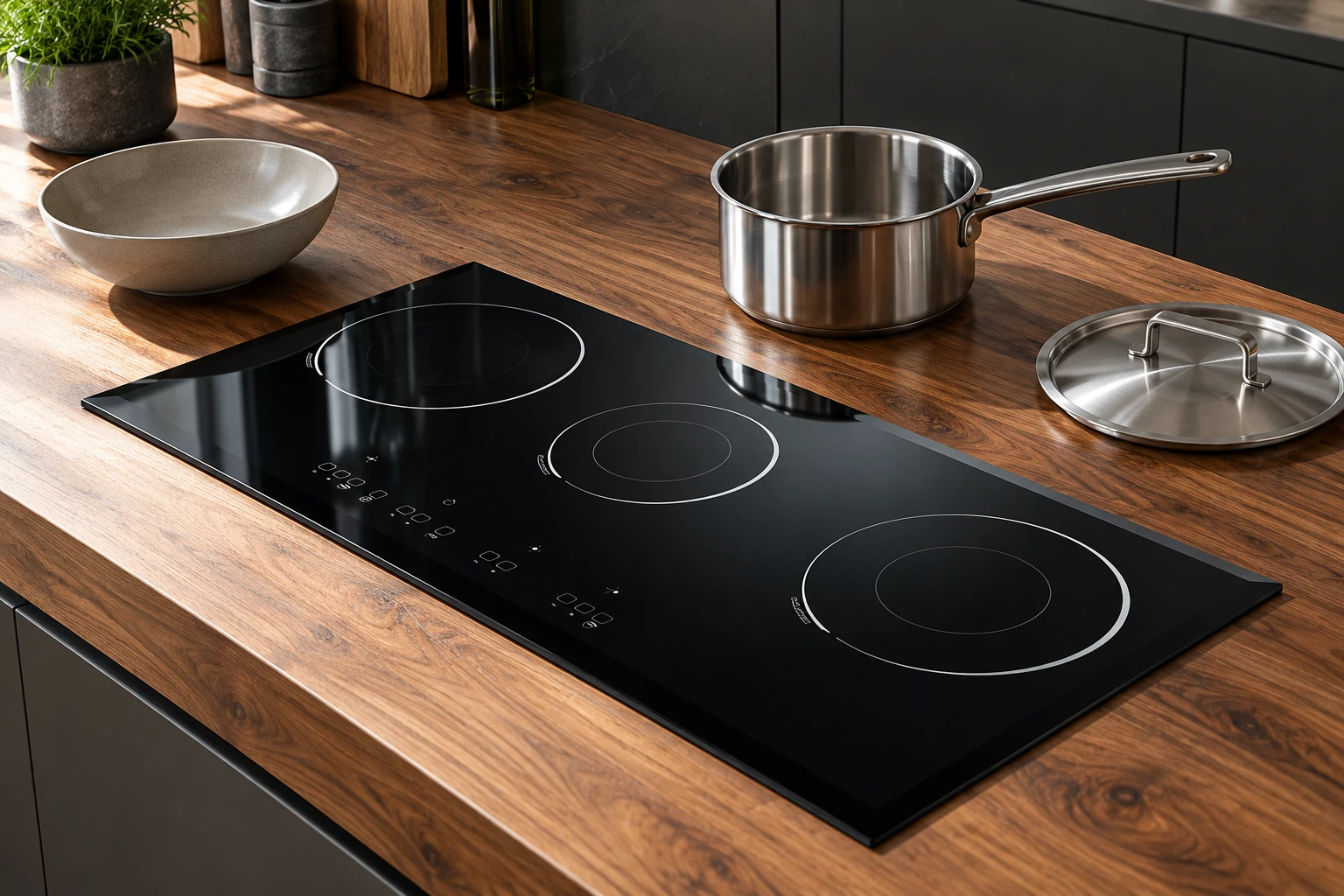
A capacity label helps compare products but does not automatically describe the working level for every task. Read the pan instructions and recipe together. Allow the space required by that documented combination, without inventing a universal fraction. Consider how stirring, lid removal and later pouring will be performed before choosing a size solely because it fits the smallest zone.
A saucepan is not interchangeable with a kettle or stockpot simply because all can hold liquid. The spout, depth, lid and grip can change the task. Our guide to the usable base remains relevant across those vessels, but their handling instructions stay separate. Purchase the form suited to the actual process instead of trying to stretch one favorable compatibility statement to cover every kitchen operation.
Follow the saucepan and hob guidance for initial heating and later adjustment. Do not copy a numbered setting from another appliance or assume boost is appropriate for every liquid. This article does not prescribe a recipe temperature or a heating time. Resolve any conflict between the intended task and the equipment instructions before operation rather than compensating through repeated high-power trials.
U.S. Fire Administration cooking-safety guidance advises attending cooking and keeping combustible items away from the stovetop. Prepare ingredients and utensils before switching on. A lid, countdown display or small volume does not make an operating saucepan self-supervising. Maintain access to the controls throughout the task and follow the relevant stop procedure when there is an abnormal condition.
If the hob does not recognize the saucepan, note the exact displayed message and check the appliance’s cookware guidance. Verify the pan designation, clean base and permitted zone arrangement first. Do not insert an unapproved adapter or repeatedly slide the pan across the glass. A vessel working on another hob does not establish that its usable base meets this model’s requirements.
If the complaint concerns dripping or awkward handling, record the saucepan and lid model and describe the pouring arrangement. That is a different question from magnetic recognition. Ask the responsible supplier about the specific feature instead of claiming that slow heating or a spill proves a glass defect. Keeping observations separate makes the support request more useful and avoids unsupported diagnosis.
Follow the maker’s cleaning and drying instructions for the base, body, handle and lid. Do not assume one cleaning chemical or abrasive is permitted on every finish. Remove residue with the specified method before the pan returns to the hob. Inspect a loose handle or damaged lid attachment before use rather than relying on a previously satisfactory cooking experience.
Lift the pan instead of dragging it across the glass. Our guide to understanding glass surface marks distinguishes surface residue from concerns that require service advice. Cleaning is not proof that distorted cookware or visibly damaged glass is suitable to use. Stop when the condition falls outside ordinary maintenance guidance, and obtain the appropriate product-specific advice.
Record the saucepan model, size, usable base, matching lid and hob model. Retain written supplier answers about any unclear feature. Shared kitchens benefit from keeping the correct lid with its pan and passing the instructions to the person who uses it. Recheck a replacement even if the nominal capacity and outer appearance look familiar.
Kanger’s Kanger black glass-ceramic cooktop panel and black glass-ceramic material overview provide context for sourcing the glass component in this cooking environment. They do not approve individual saucepans or establish a finished appliance’s operating limits. OEM buyers should define panel and integration requirements in their project documentation and validate cookware suitability through the responsible appliance process. This keeps component information accurate while giving purchasers a clear, repeatable saucepan-selection record.
This neutral explanation covers induction heating and cookware geometry. It helps explain the lower base, but does not approve a particular saucepan, casserole, tagine, accessory or installation.
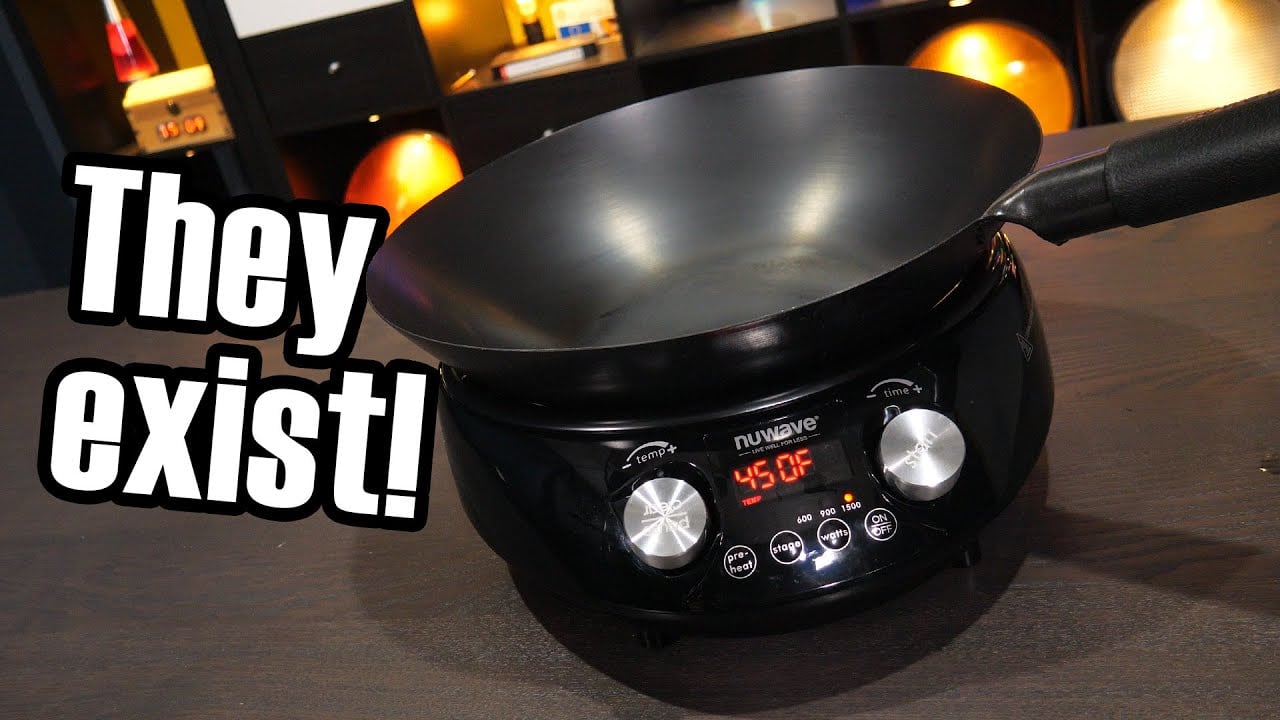
Video: Induction cooking – but what about woks?, Technology Connections. Open the educational video on YouTube.
No. Compare the usable bottom dimensions with the exact hob cookware requirements.
Use the matching lid and the maker’s handling instructions. Similar diameters do not establish a permitted pouring method.
Follow the actual hob guidance for usable base size and permitted placement rather than assuming a zone from the vessel capacity.
Check handle access, lid resting space, the empty pouring route and the receiving container on a stable surface.