An induction hob grill press is normally a separate food-contact weight used within suitable cookware, rather than the vessel that sits on the cooking zone. Check the pan’s induction suitability independently, then confirm whether the pan and appliance instructions permit the proposed accessory and handling method. A magnetic press is not automatically suitable for direct contact with the glass, and a heavy accessory does not establish an approved complete arrangement.
This guide addresses selection and preparation: identifying the press, checking its fit within the pan and arranging its removal and receiving surface. It does not approve a particular pan, press and hob combination. If those permissions remain unclear, resolve them with the responsible suppliers before use. The article provides no load limit, food-temperature instruction or searing guarantee.
A grill press may be described as a food weight, bacon press or burger press. It is different from a grill pan, flat griddle and powered sandwich appliance. Confirm the exact purpose, model, contact face and handle arrangement. Search results often mix these categories, making a photograph of the complete item more useful than an ambiguous title.
Some accessories are intended to shape food, while others provide weight during a documented cooking method. Do not assume that every device serves both purposes or tolerates the same treatment. Record its instructions and supplied parts. A solid iron appearance does not establish an operating method, and an appealing cooking photograph does not validate use on a particular appliance.
ENERGY STAR electric-cooking guidance explains induction’s interaction with suitable magnetic cookware. In the proposed arrangement, the lower pan is the vessel associated with the zone. Check its exact designation and actual base dimensions against the appliance guidance. The press above it does not repair an unsuitable bottom or enlarge the permitted heating footprint.
Our guide to measuring the usable pan base explains why upper dimensions are insufficient for base selection. Verify the lower vessel before discussing the accessory. Keep any pan instructions about intended use and permitted accessories with that comparison. If the chosen combination is not documented, obtain clarification rather than deciding that several individually magnetic pieces must work together safely.
A food press is not automatically a cookware base or an induction adapter. Do not put it on a cooking zone to test whether it heats, and do not place it between the panel and a pan. Its material may interact with a magnetic field without meeting the appliance’s cookware requirements. The accessory’s name does not supply permission for direct-on-panel heating.
Any preparation or preheating method must come from the actual equipment instructions and be compatible with the complete setup. This article supplies no independent preheating method for the press. Avoid transferring advice from an outdoor grill or commercial flat top to a domestic glass-surface appliance. Those are different arrangements with different support and handling conditions.
Read the pan and appliance instructions for relevant restrictions and ask the responsible supplier if the proposed press use is unclear. Neither the glass material name nor the weight listed for the accessory establishes a complete-system carrying allowance. Do not calculate a load limit from dimensions, thickness or a general claim about glass-ceramic strength.
Consider the cookware, contents, accessory and handling as one proposed task. Do not add weights, stack presses or use the accessory as a lever. If a supplier has not approved the intended method, leave the arrangement unused while seeking clarification. A cold fit check can identify obvious interference; it cannot certify structural capacity or replace validation by the equipment provider.
With all equipment cold and only where the instructions permit the combination, inspect how the press fits inside the lower vessel. Compare the usable interior with the actual contact face, including any raised edge or surface pattern. The pan’s advertised rim diameter does not establish clear movement at the bottom or between sloping walls.
Check surface compatibility as well as geometry. A metal food press should not be presumed suitable for every coating. Do not grind edges, remove a finish or add an improvised liner to force compatibility. Ask the cookware supplier about unresolved surface restrictions. Exclude a setup that catches on the walls, obstructs the grip or depends on scraping the pan during removal.
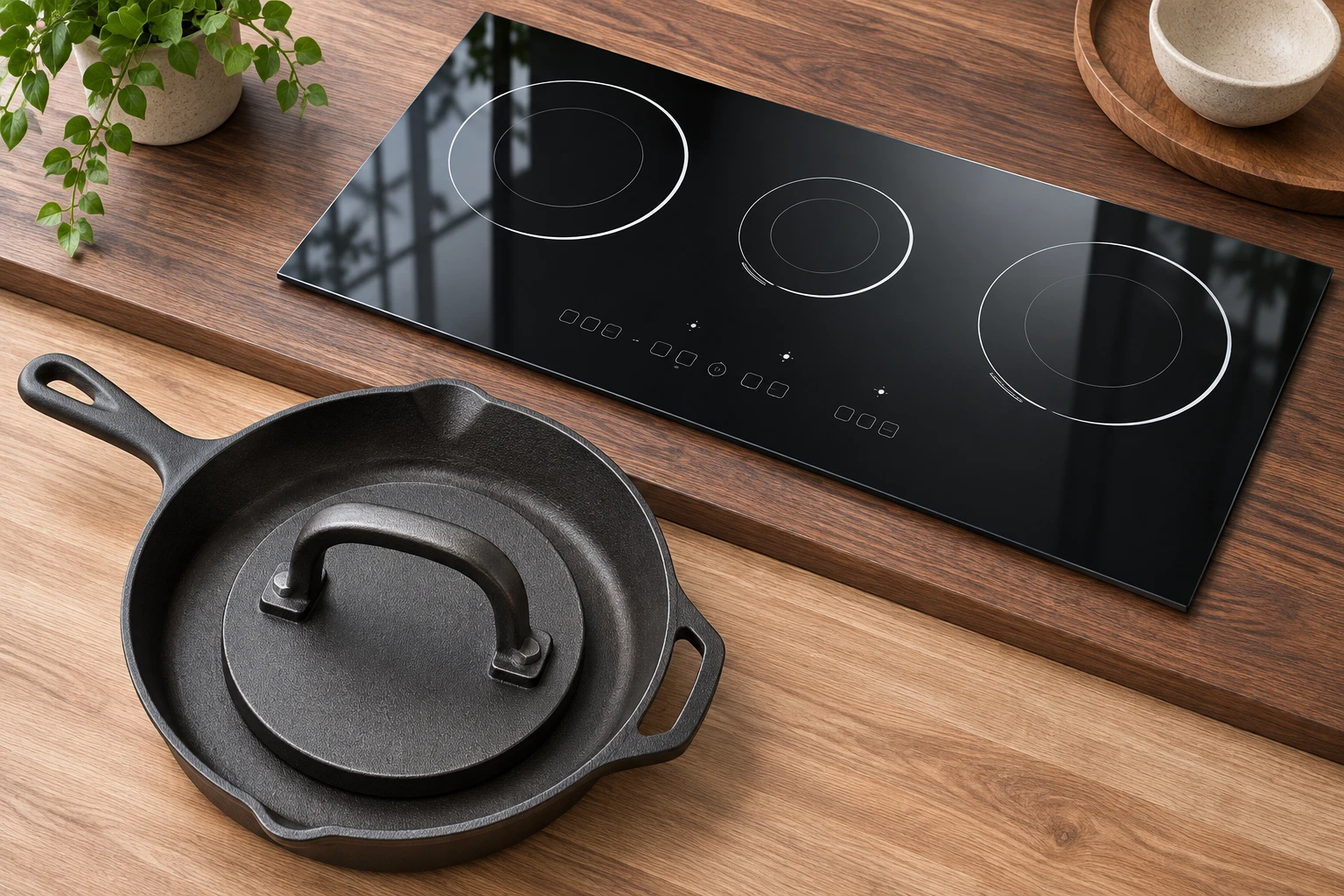
The general induction principle follows ENERGY STAR electric-cooking guidance. The press, pan and appliance instructions must establish the permitted arrangement and handling method. This table keeps each question with the evidence that can actually answer it, without inventing temperatures or load ratings.
| Component or task | Evidence required | Decision before use |
|---|---|---|
| Heating pan | Exact induction designation and base dimensions | Match the appliance cookware requirements |
| Food press | Purpose, contact face and handling instructions | Exclude adapters and powered appliances |
| Complete arrangement | Permitted accessory use and applicable restrictions | Resolve unclear compatibility with suppliers |
| Interior fit | Clear movement and surface compatibility | Do not force or modify components |
| Receiving surface | Suitable stable rest and accessible route | Prepare it separately from the glass panel |
Identify the press grip and the documented handling protection. Do not assume a handle remains cool because it stands above the pan, has a coating or looks like a familiar product. Check the actual directions for prolonged use and contact with hot equipment. Resolve loose or damaged parts before considering the arrangement for cooking.
Rehearse the permitted removal route cold and empty. Check clearance above the press and around the pan handle. Our guide to planning clearance around cookware handles covers surrounding control access and nearby cookware. Avoid a method that requires reaching over another active zone, lifting from an unstable angle or pulling the lower pan out of its permitted placement to release the accessory.
Choose a stable receiving surface appropriate for the press under its actual instructions. Place it within a practical route before starting. A food press may carry residue as well as heat, so consider both when arranging the receiving area. Do not assume that an unused zone or the appliance controls provide a suitable landing place.
The receiving rest must be intended for the task rather than chosen solely for its appearance. Check its stability and support for the actual accessory. Keep towels, packaging and unrelated tools away. If the route cannot be completed according to the instructions, change the layout or equipment beforehand. Avoid discovering the missing rest while holding the accessory above a hot vessel.
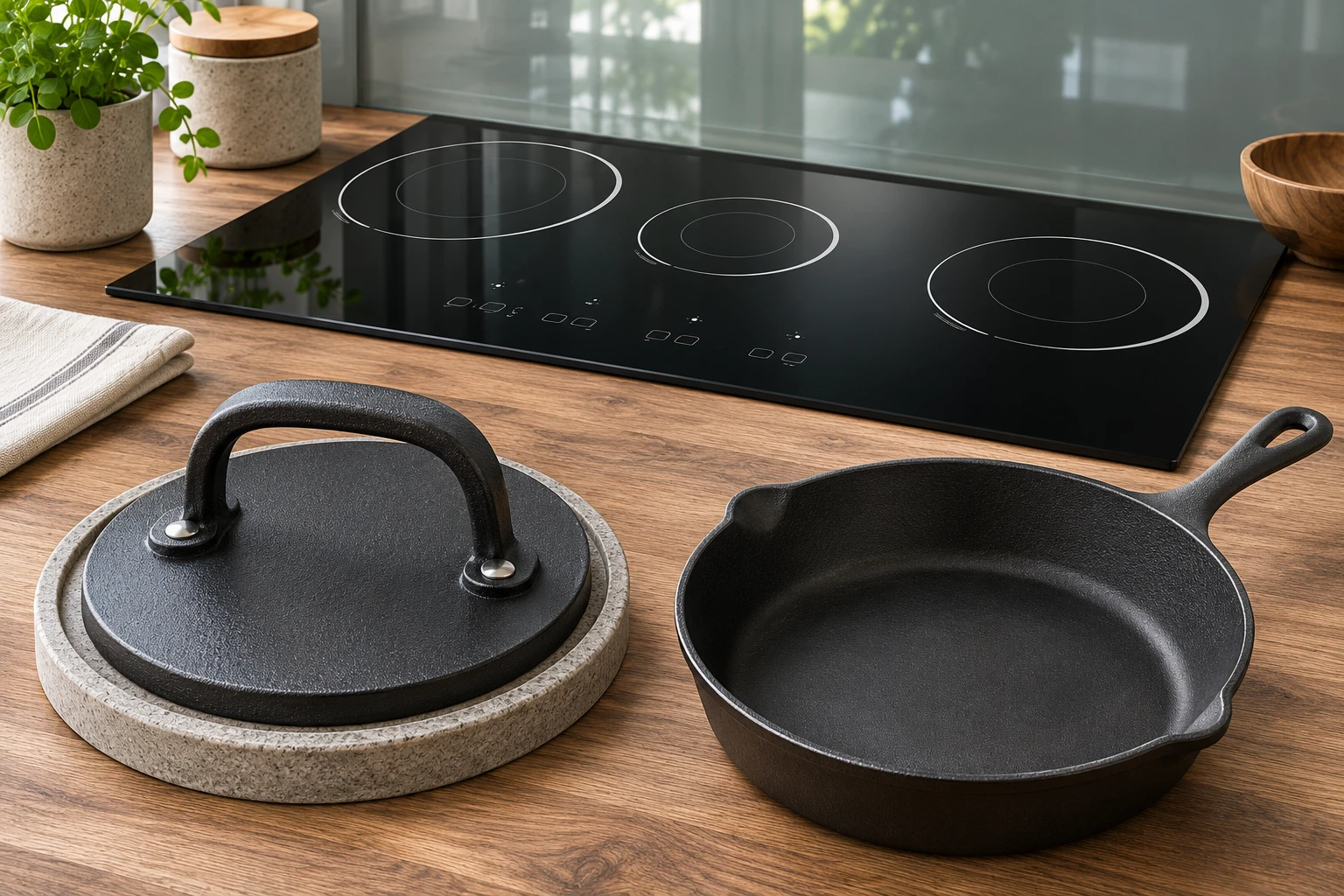
The press may change food contact with the pan, but this article makes no claim about searing speed, uniform browning or internal temperature. Use appropriate recipe and food-safety guidance for the food. A flattened shape or visible surface colour does not establish doneness, and a successful-looking sales demonstration is not a validated cooking process for another setup.
Likewise, avoid copying an outdoor-grill method into a domestic induction arrangement. The lower surface, handle exposure and receiving area differ. Use the actual instructions rather than a general video to decide whether the method is permitted. If the task depends on an unsupported heating step or improvised accessory placement, choose a documented alternative before cooking.
U.S. Fire Administration cooking-safety guidance advises attending cooking and keeping combustible items away from the stovetop. Arrange the rest, tools and receiver in advance. An accessory does not replace supervision or the appliance operating directions. Follow the relevant stopping process if a component shifts, catches or behaves abnormally instead of applying more force or repeating the same trial.
Do not use the press to hold a distorted pan down against the glass. An unstable or damaged vessel needs the appropriate support process, not an extra weight. Record observations factually: identify whether the concern is base placement, interior interference, surface condition or handle access. Those distinctions help the responsible supplier assess the actual issue without assuming a panel defect.
Follow the press maker’s instructions for cooling, washing, drying and any required maintenance. A seasoned iron item may have different care requirements from stainless steel or a coated accessory. Do not transfer a dishwasher statement from the lower pan to the press. Keep instructions with the exact model and avoid chemical or abrasive treatments borrowed from another product.
Inspect the contact face and handle as directed before returning the accessory to storage. Food residue removal does not resolve damage or a loose attachment. Do not heat-test a questionable part to decide whether it remains usable. Retain replacement references so an apparently similar press does not silently change the fit, surface contact or handling requirements.
Lift cookware instead of dragging it across the panel. Our guide to understanding marks on the glass surface addresses glass-surface deposits separately from press maintenance. Use appliance-specific care instructions and keep the accessory on its separate suitable rest. Do not place a heavy or wet press on the glass as a convenient storage step during cleanup.
Kanger’s Kanger black glass-ceramic cooktop panel and black glass-ceramic material overview provide cooking-surface material context. They do not approve a food press, certify added load or establish compatibility of a finished pan-and-accessory arrangement. OEM buyers should separate panel integration records from complete-appliance validation. Retain the actual component references and supplier responses so each claim remains tied to the evidence and responsibility that support it.
This independent educational explanation covers magnetic heating and cookware geometry. It provides background on the vessel base, not approval of a particular pouring pan, rectangular omelette pan, food press or completed glass-panel appliance.
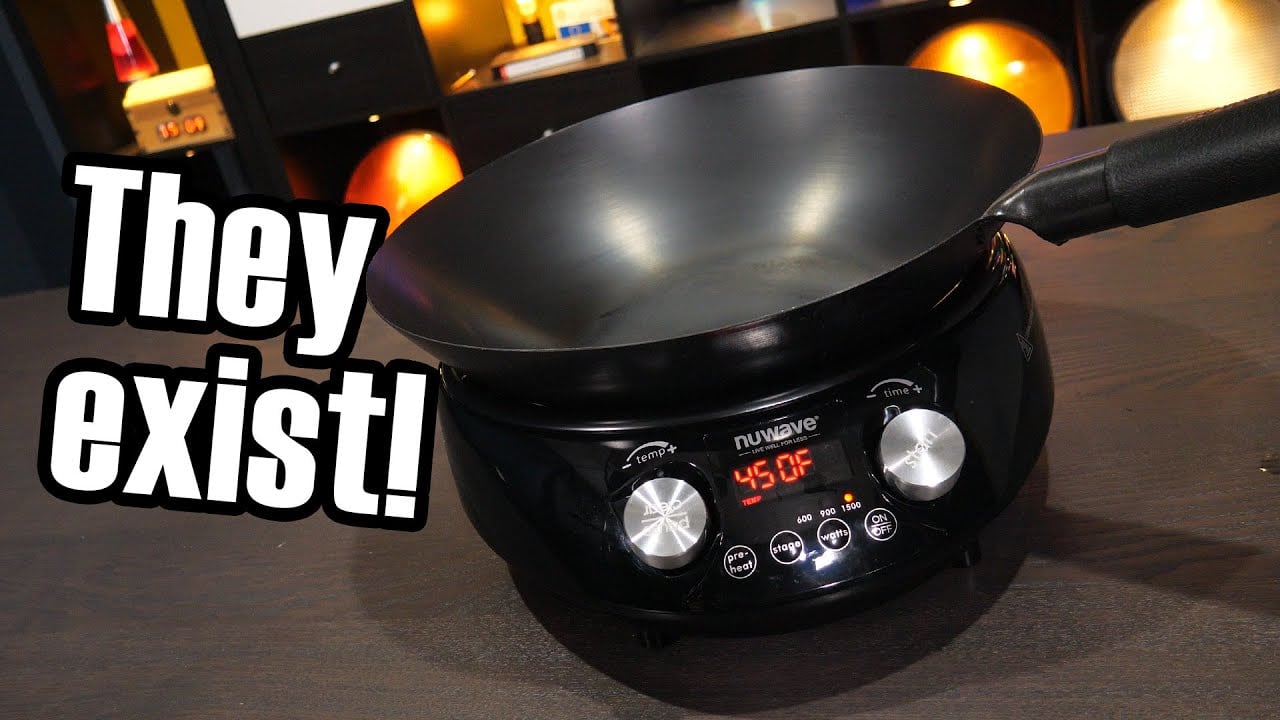
Video: Induction cooking – but what about woks?, Technology Connections. Open the educational video on YouTube.
No. Check the lower pan base and the permitted appliance arrangement separately.
Do not assume so. A food-contact accessory is not automatically approved cookware or an adapter.
No. It can reveal interference but cannot establish load capacity, surface compatibility or operating approval.
Prepare a separate stable receiving rest suitable under the actual accessory instructions; do not assume the cooktop is suitable.



