After an induction hob power cut, do not assume that restoring electricity also restores the previous cooking state. Keep the cooking area supervised, use the appliance instructions to establish the control state and check the cookware before restarting. A dark display does not prove that the glass or pan is cool. If there is damage, water exposure, an unusual smell or repeated loss of power, stop and obtain appropriate professional support instead of trying repeated resets.
This guide covers an external interruption to the electricity supply and the checks around returning to use. It does not diagnose internal electrical faults or provide wiring instructions. Interrupted food needs a separate decision based on reliable food-safety guidance; restarting the hob cannot by itself establish that a partly prepared meal is safe.
Note whether the event affected the wider home or only the appliance. Where it is safe to do so, use ordinary information such as other household equipment, a utility notice or a confirmed neighborhood outage. Do not open covers, test conductors or touch exposed connections. An apparently isolated appliance fault should not automatically be treated as the same event as a confirmed supply interruption.
Record the approximate time and what was happening when the power stopped. A pan that was heating, a timer that was running and a hob that was already off present different follow-up questions. Preserve any visible message once power returns. Do not reconstruct an error code from memory or assume that a code discussed online belongs to your exact model.
An unlit display is a loss of information, not a temperature measurement. The pan, its contents and the surface beneath it may retain heat after electrical input stops. Keep people and combustible materials clear. Do not test the glass with a hand or place a towel over the zone because the residual-heat indicator is no longer visible.
Use the actual equipment handling instructions for any necessary movement of cookware. Avoid lifting a hot full vessel simply to tidy the area during an interruption. If safe placement cannot be maintained, follow the appliance emergency guidance and obtain appropriate help. This article supplies no universal cooling time: material descriptions and panel appearance cannot establish when a particular cooking area is safe to touch.
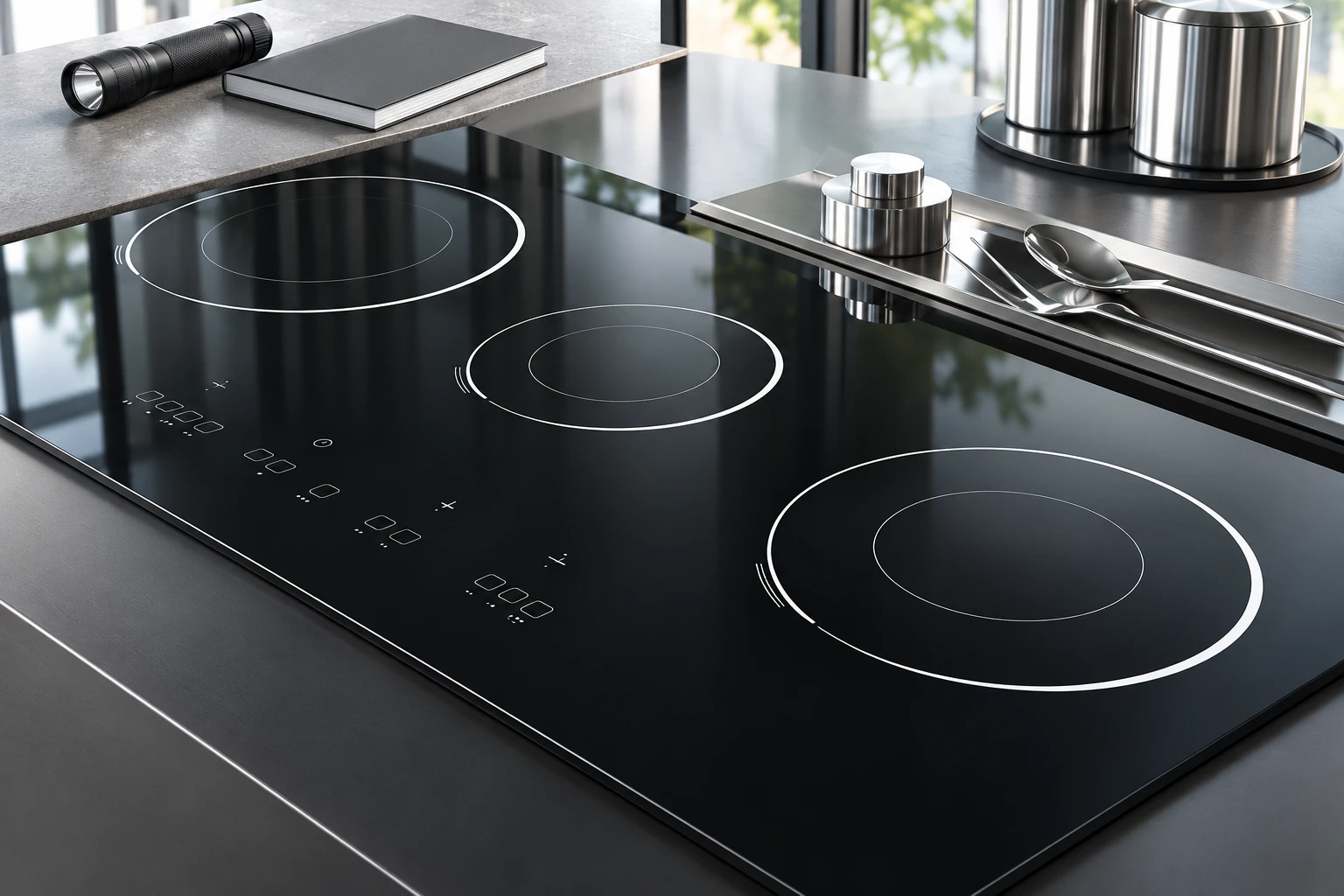
Consult the instructions for what happens after loss and restoration of supply. A control can require reinitialization, confirmation or another model-specific action; do not assume the previous setting remains active or has been cancelled. Use the documented method to establish a safe off state where available. Do not rely on an online button sequence for a visually similar appliance.
Keep the area attended when electricity returns. Check the displayed state before returning cookware to use or leaving the kitchen. A timer display and a heating command can serve different functions. Confirm each relevant function through the manual rather than interpreting any illuminated number as proof that the previous task has resumed correctly. Retain a copy of the instructions that remains accessible without the appliance display.
If the appliance remains unresponsive after the supply is known to be restored, follow its published support process. A permitted user check is different from electrical repair. Do not remove the panel, bypass protection, bridge connections or repeatedly operate a protective device that continues to trip. Those actions do not resolve uncertainty about the underlying condition.
Ask the responsible service provider about persistent faults and provide the actual model reference and observations. Do not assign a universal reset delay or prescribe a breaker sequence from another appliance. Installation configuration and local electrical requirements can differ. If the event involved flooding, visible damage or a suspected electrical hazard, leave the equipment unused and obtain qualified assessment before considering another cooking attempt.
When the instructions permit inspection and the equipment can be handled safely, check that the intended cookware is in its documented position and condition. A vessel may have been moved during the interruption. Keep controls clear of objects and resolve spills according to the appliance directions. Do not perform a hands-on inspection of a surface that may still be hot.
Our guide to measuring the usable pan base explains the separate question of usable cookware-base dimensions. Losing power does not turn unsuitable cookware into a compatible vessel, and a restart does not validate an adapter. Use the same documented cookware requirements as before. If a pan appears unstable or damaged, resolve that concern through the appropriate supplier instead of placing extra weight on it.
UK government food-safety advice during a power cut confirms that electric and induction cooking equipment cannot operate without its required electricity supply. The appliance manual governs the return-to-use procedure, while food-safety authorities address interrupted storage and preparation. This table separates those decisions without supplying universal reset intervals or food-holding limits.
| Question | Information needed | Action |
|---|---|---|
| What failed? | Confirmed supply event or isolated appliance condition | Do not assume every dark display is a utility outage |
| Is the area safe? | Actual condition and handling instructions | Treat pan and glass as potentially hot |
| What is the control state? | Model-specific restoration procedure | Verify settings instead of assuming automatic recovery |
| Can cooking resume? | Permitted appliance state and suitable cookware | Begin only under the actual instructions |
| Can the food be retained? | Food type, time, temperature and relevant guidance | Make a separate food-safety decision |
Restored power tells you about the electricity supply, not the food’s history. Record the interruption time and any reliable temperature information already available. Use appropriate public-health guidance for the actual food and process. Avoid inventing a rule that every partly cooked meal can be kept simply by reheating it, or that a warm pan proves a safe holding condition.
CDC guidance on food after a power outage advises against tasting food to determine whether it is safe after an emergency. Consult its food-specific guidance and relevant local advice rather than relying on smell, appearance or the hob display. Storage guidance for a closed refrigerator does not automatically describe a pan interrupted midway through cooking. If the history is uncertain, seek the appropriate food-safety advice and do not treat restart as validation.
A commercial kitchen may have procedures and regulatory responsibilities beyond domestic appliance use. Loss of ventilation, refrigeration, water or lighting can affect whether preparation may continue even if another heat source is available. Follow the establishment’s approved emergency plan and local authority guidance. Do not transfer a household suggestion into a business process without checking those requirements.
Likewise, appliance restoration and food disposition should be recorded separately. A service technician can assess the equipment without certifying the food, and a food-safety decision does not authorize electrical work. Keep responsibility clear when several people are responding to the interruption. A concise record of time, equipment condition and actions is more useful than a guess that everything returned to normal together.
Do not improvise a new heat source on top of the glass panel. A barbecue, camping stove, fuel burner or heated accessory is not a substitute component for the induction system. Follow the alternative equipment’s instructions and public safety guidance, including where it may be used. A clear countertop or an open window does not establish permission to use outdoor combustion equipment indoors.
UK government food-safety advice during a power cut specifically points users to the instructions for alternative cooking equipment and notes that many such products are intended for outdoor use. Keep the appliance surface clear of that equipment. Avoid improvised wiring, backfeeding or connecting a generator directly to household circuits. Obtain qualified advice for power arrangements rather than treating the hob article as an electrical installation guide.
Once the equipment is cleared for use and the food decision has been made, follow the appliance’s normal documented operating sequence. Verify the intended zone, cookware and settings. Do not assume that an earlier timer, boost command or linked-zone arrangement has survived unchanged. Begin a new task only with a clear understanding of the displayed state and the applicable instructions.
Our guide to planning clearance around cookware handles covers access around cookware and controls. Recheck that layout if items were moved during the interruption. Keep the route and receiving area clear before heating. U.S. Fire Administration cooking-safety guidance advises attending cooking and keeping combustibles away; restored power does not remove those requirements. Remain present rather than assuming an automatic function will safely reconstruct the interrupted process.
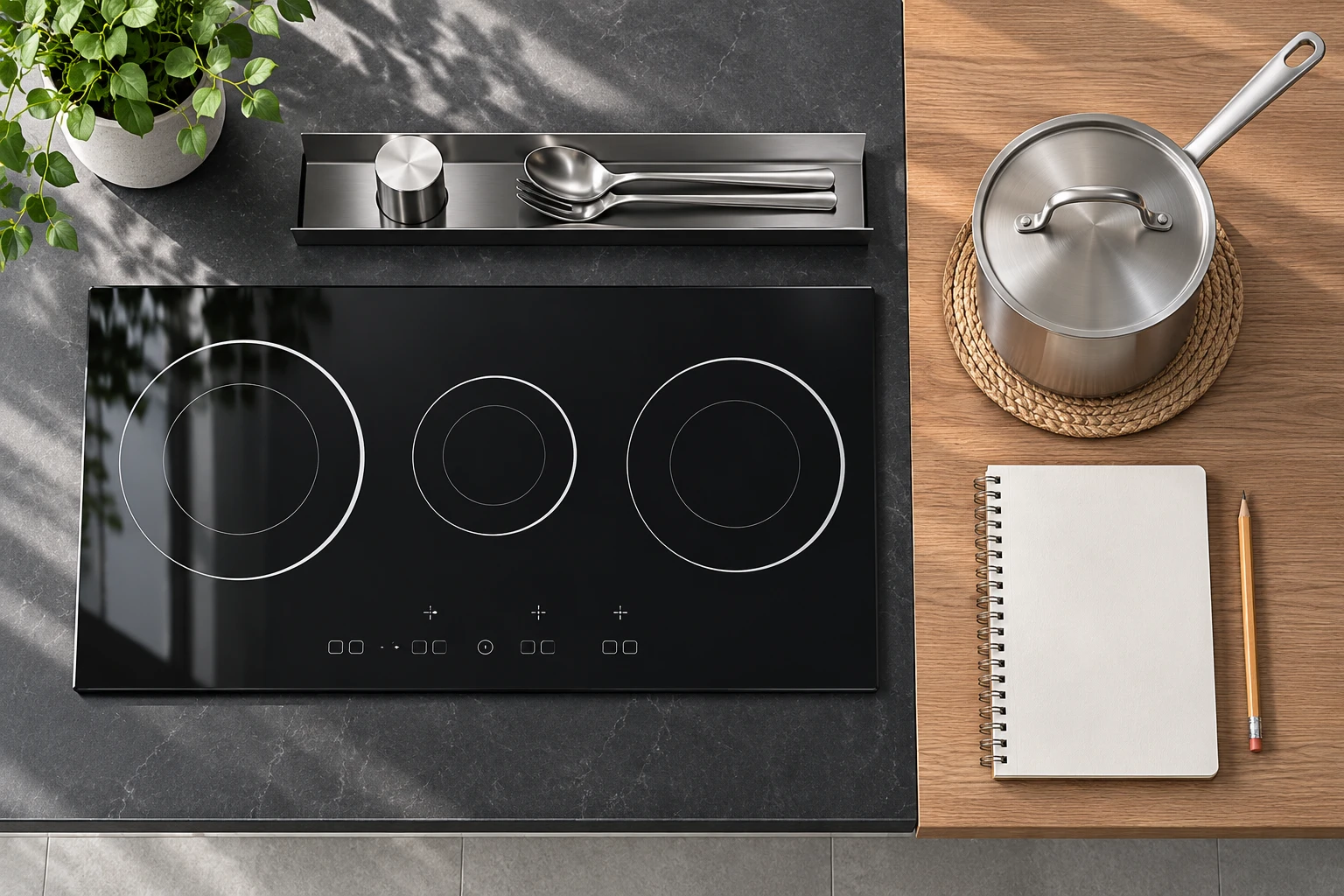
If the appliance still shows an abnormal state, stop according to its instructions and contact the appropriate support provider. Record whether the wider supply is stable, the displayed message, which function was attempted and any visible damage. Do not continue trials merely to produce a longer fault history. A recurring protective trip or unusual condition needs the responsible assessment process.
Avoid diagnosing the glass panel from a supply event alone. A loss of display, an unavailable zone and a visible surface mark are different observations. Our guide to understanding marks on the glass surface addresses deposits and care separately; it does not authorize operation of damaged equipment. Accurate descriptions help distinguish cleaning questions, appliance service and supply concerns without assigning an unsupported cause.
Kanger’s Kanger black glass-ceramic cooktop panel and black glass-ceramic material overview concern the glass cooking-surface supply context. They do not define firmware behavior, recovery settings or an appliance’s electrical protection. OEM buyers should document panel integration separately from the finished system’s power-interruption behavior and service instructions. A glass material statement cannot establish how the complete appliance will restart.
Keep the manual, model details and support route available before the next outage. A useful household record distinguishes safe off-state checks, appliance return to use and food-safety decisions. This preparation supports an orderly response while leaving electrical repairs, equipment approval and food disposition with the instructions and authorities qualified to decide them.
This independent educational explanation covers magnetic heating and cookware geometry. It provides background on the vessel base, not approval of a particular pouring pan, rectangular omelette pan, food press or completed glass-panel appliance.
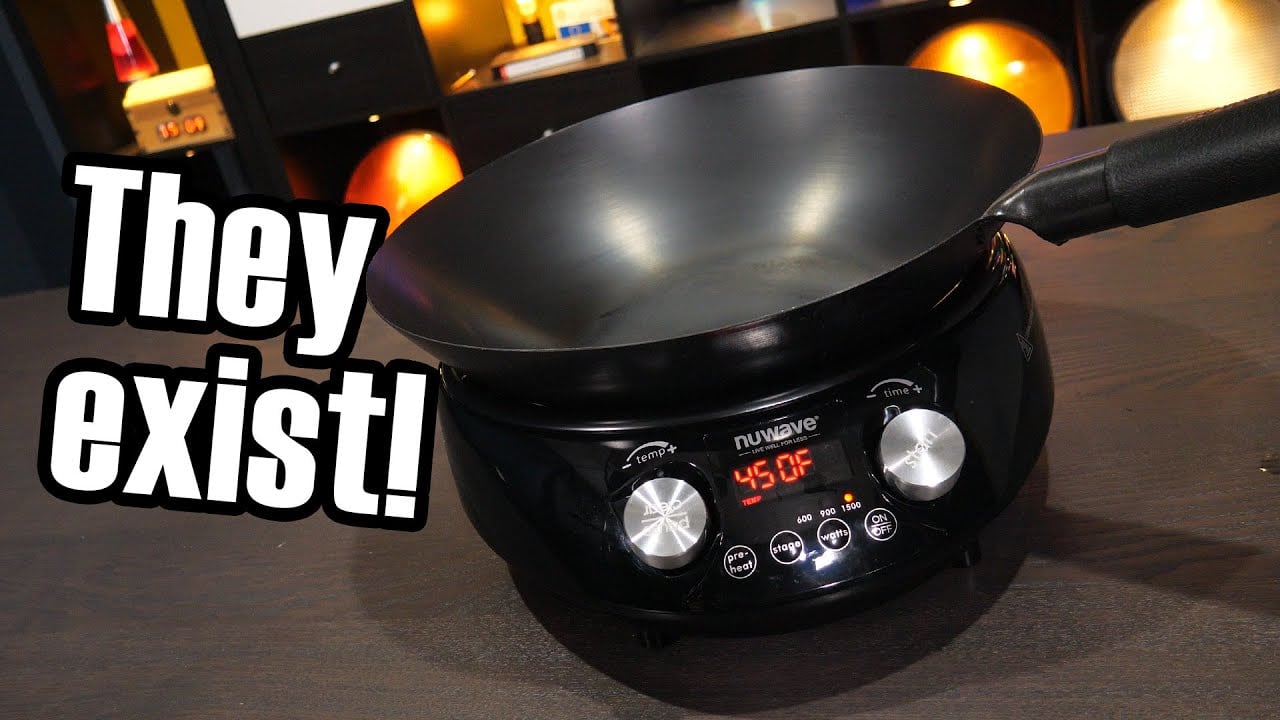
Video: Induction cooking – but what about woks?, Technology Connections. Open the educational video on YouTube.
No. Loss of display does not establish the temperature of the glass, cookware or contents.
Do not assume so. Follow the exact model instructions and verify the actual control state.
No. Food needs a separate decision based on its history and appropriate food-safety guidance.
Do not repeat electrical reset experiments. Stop and follow the appropriate qualified support process.



