An induction hob egg poacher should be evaluated as a complete cookware assembly: the lower pan must be designated for induction, while the rack, cups and lid must fit that exact pan. A set of poaching cups does not make an unsuitable lower vessel induction compatible. Check the model, usable base dimensions, specified water arrangement and cup-removal method before buying or heating the equipment.
This guide concerns the equipment with individual cups held over a lower water vessel. It does not prescribe egg cooking times, doneness or food-safety temperatures. Those decisions require appropriate food-safety and recipe guidance. It also differs from an ordinary vegetable steamer: the position of each cup, its grip and the sequence for removing it are separate purchasing and handling questions.
Searches for egg poachers include electric appliances, microwave containers, floating cups and pans with fitted racks. Identify which category the product belongs to before using any compatibility claim. A standalone electric poacher has its own heat source and must not be placed on the hob merely because its bowl resembles cookware. The intended operating method should be clear from the actual product instructions.
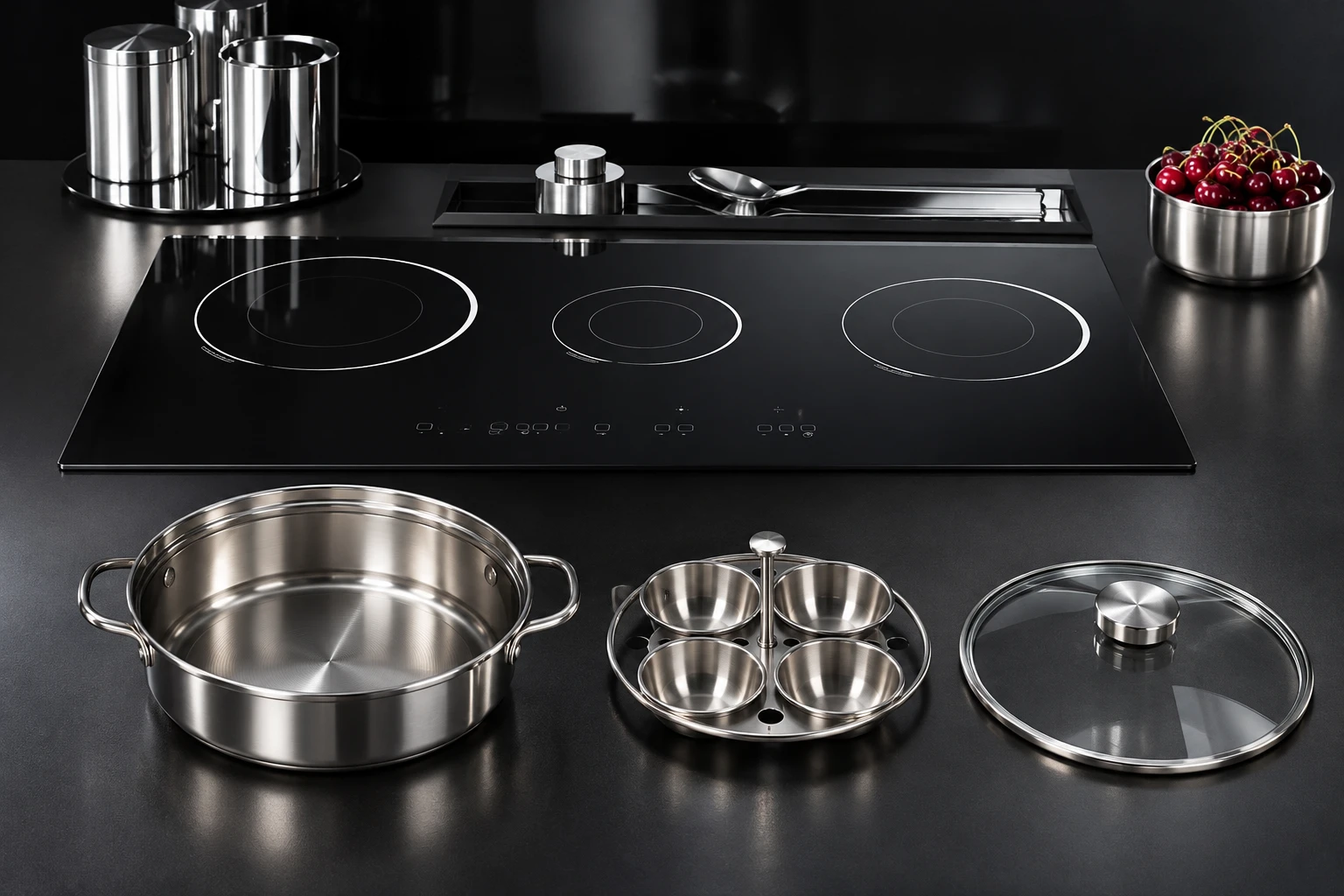
For a hob set, record the lower vessel, rack and cup references together. Confirm what the package contains and whether the glass lid shown is included. An accessory-only listing may require a particular matching pan. Do not assemble a set by choosing pieces that appear similar in a photograph, and do not treat the number of cups as evidence that the entire system suits your appliance.
ENERGY STAR guidance on electric cooking products describes induction heating through interaction with suitable magnetic cookware. In this assembly, the lower vessel is the component to investigate for that heating interaction. Verify the exact model and size, rather than assuming that a stainless appearance or a metal cup establishes suitability. A nonmagnetic accessory above the pan does not answer the lower-base compatibility question either.
Compare the usable bottom dimensions with the hob instructions. Our guide to measuring the usable pan base explains why the upper rim diameter is a different measurement. A compact poaching set may have a base that needs particular attention when checking a cooking position. Do not introduce an unapproved adapter or use repeated maximum-power attempts to overcome a recognition problem whose cause has not been resolved.
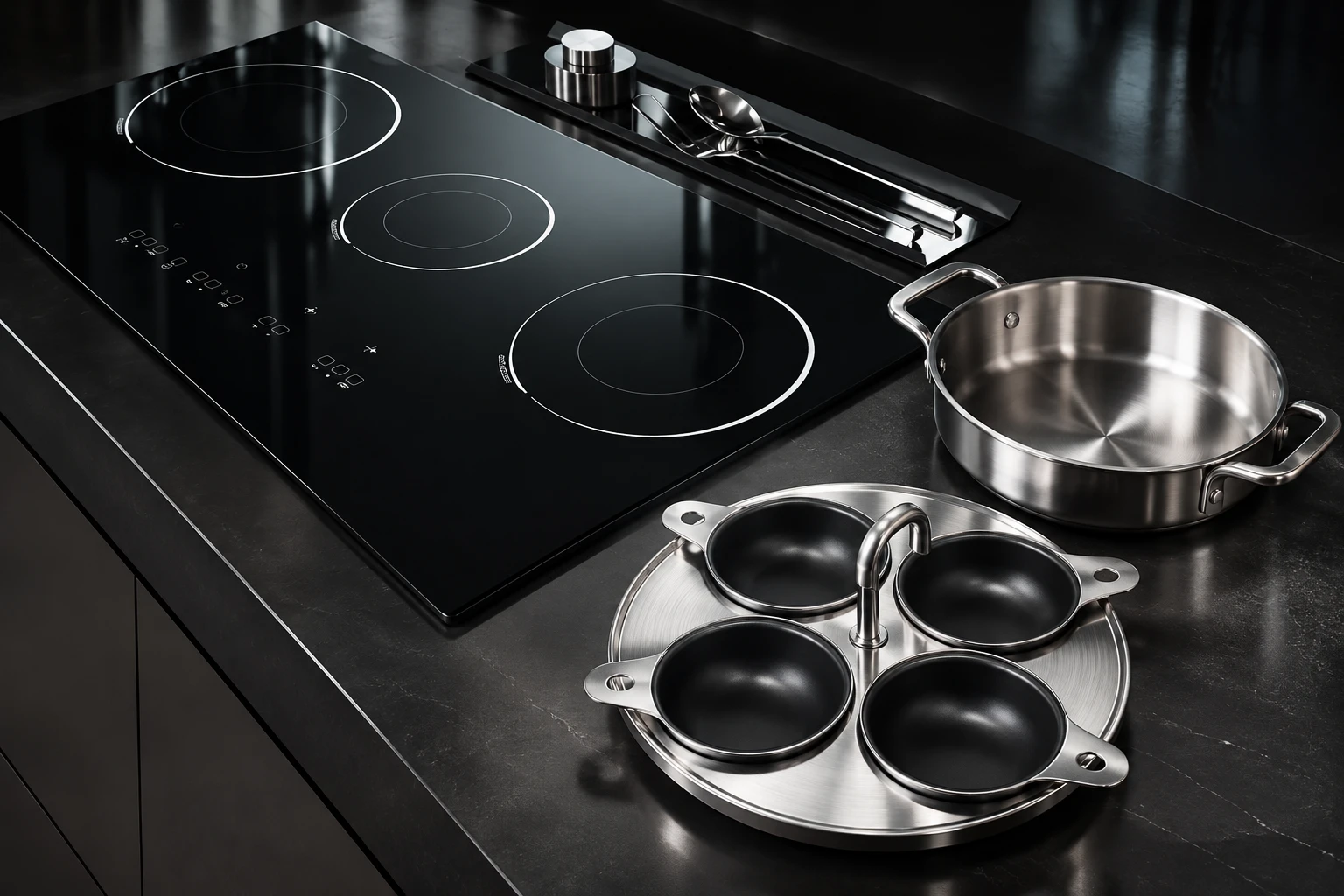
With everything cold, empty and off the appliance, use the documented assembly sequence to examine how the rack is supported. It should be the actual matching component, with the correct cups and any specified supports in place. Check the supplied instructions for orientation and seating rather than inventing a universal clearance measurement. Avoid forcing an insert into a vessel of approximately the same diameter.
A rack that catches on a handle attachment or sits at an unexpected angle needs clarification before use. Do not bend the frame, remove a support or rest it on improvised spacers. Keep observations factual when contacting support: identify the models and describe the position where the mismatch occurs. A different pan accepting the rack physically does not establish a documented replacement combination.
Read how the maker describes adding water and assembling the cups. Use any stated fill guidance for that actual set. This article supplies no universal water depth, refill interval or operating time, because the correct arrangement depends on the equipment and instructions. Do not infer the required level solely from the rack’s height or a recipe photograph.
Resolve how the intended sequence deals with inspection or replenishment before starting. Do not improvise around hot cups or reach through an assembled rack to add water. If the instructions are unclear or the task cannot be followed safely in your layout, seek clarification or select another documented product. Keep the equipment method distinct from a recipe’s directions for preparing the eggs themselves.
The general induction principle follows ENERGY STAR guidance on electric cooking products. Water, cup, lid and handling requirements must come from the selected set’s instructions. This table is a selection record and deliberately gives no cooking-time or food-temperature recommendation.
| Component | Evidence to check | Decision before heating |
|---|---|---|
| Lower pan | Exact induction designation and usable base | Match the appliance cookware guidance |
| Rack | Model match, seating and orientation | Exclude forced or improvised supports |
| Cups | Supplied grips and permitted removal tools | Learn the documented removal sequence |
| Lid | Matched rim, knob and use instructions | Keep the intended arrangement unobstructed |
| Water setup | Actual fill and operating guidance | Resolve missing instructions before use |
Identify how each cup is meant to be lifted or removed. Some designs provide their own grips or require a particular tool; do not assume every cup can be handled in the same way. Practise only the documented sequence with the empty equipment cold. Check that reaching a far cup does not depend on leaning across another cooking position or catching the rack with a utensil.
A small grip should not be presumed cool during use. Follow the maker’s directions for handling and protection, and keep the receiving plate ready. Do not substitute an improvised hook or use ordinary tongs as a replacement unless the actual instructions permit that tool. If a cup or grip is damaged, resolve its condition rather than adapting the removal technique around it.
Check that the supplied lid belongs to the lower pan and that its knob and fittings are complete. A lid borrowed from another vessel may sit differently against the rack or cup handles. Nominal diameter alone is insufficient to establish this assembly. Follow the actual opening and handling method, including any directions relevant to steam, instead of relying on visibility through the glass.
An ordinary poacher is not made into a pressure vessel by holding the lid down or blocking an opening. Do not alter vents, add weights or restrain the lid to change the process. If the instructions require a particular vent arrangement, keep it as documented. This article does not authorize modifications or provide troubleshooting for pressure equipment.
Place the cold assembled set in the permitted position and check the grip, controls and nearby cookware. Our article on keeping cookware handles clear of controls covers the surrounding layout. A long handle can move the set into a convenient reach while still pointing toward a walkway; solve that conflict without shifting the base out of its approved position. Check lid-removal space as well as pan placement.
Set out the receiving plate and permitted tools on a suitable stable surface away from active zones. Think through whether the task calls for removing cups individually, moving the rack or moving the complete vessel. Follow the actual method rather than combining steps from different products. Rehearsal should identify poor access while everything is empty, not attempt to validate a hot-load manoeuvre.
Use the appliance and poacher instructions for placement, heating and stopping. A tutorial’s numbered hob setting does not establish equivalent output on every appliance. This article provides no boost recommendation or universal start condition for the water. If a recipe’s equipment assumption differs from the selected set, obtain appropriate guidance instead of silently substituting a new arrangement.
For food safety and desired doneness, consult suitable recipe and public-health guidance separately. The fact that the vessel is recognized by the hob says nothing about the temperature reached inside an egg. A successful-looking result in a sales photograph is not a validated process. Do not infer a food-safety assurance from a component supplier’s material description or from this equipment-selection checklist.
U.S. Fire Administration cooking-safety guidance advises staying with cooking and keeping combustibles away from the stovetop. Prepare the cups, tools and receiving space before starting. A short cooking task still requires attention, and an induction hob’s functions do not replace the operating directions for the poacher. Follow the relevant stopping procedure if the equipment behaves abnormally.
When seeking support, distinguish a pan-recognition message from a rack-fit or cup-removal problem. Record the actual model references and the observed condition. Avoid concluding that an awkward insert demonstrates a glass-panel defect. Do not repeat heating trials to compensate for missing parts, unclear water instructions or a damaged grip; those issues should be resolved before another use.
Follow the maker’s cleaning directions for each component. A dishwasher statement for the lower stainless pan does not automatically apply to a coated cup, knob or accessory. Keep the correct rack and cups together after drying, and check replacements against the original reference. A missing cup should not be filled with an unrelated container merely because it fits the opening.
Lift the vessel rather than dragging it over the glass. Our guide to understanding glass surface marks deals with surface-care questions separately from the poaching assembly. Kanger’s Kanger black glass-ceramic cooktop panel and black glass-ceramic material overview provide material-sourcing context for the glass surface, not approval of an egg-poaching set. OEM buyers should retain panel integration requirements and complete-appliance cookware validation as separate records with clear responsibility.
This independent educational video explains magnetic heating and cookware geometry. It helps distinguish a heating base from accessories above it; it does not approve a particular preserving vessel, poaching rack or glass lid.
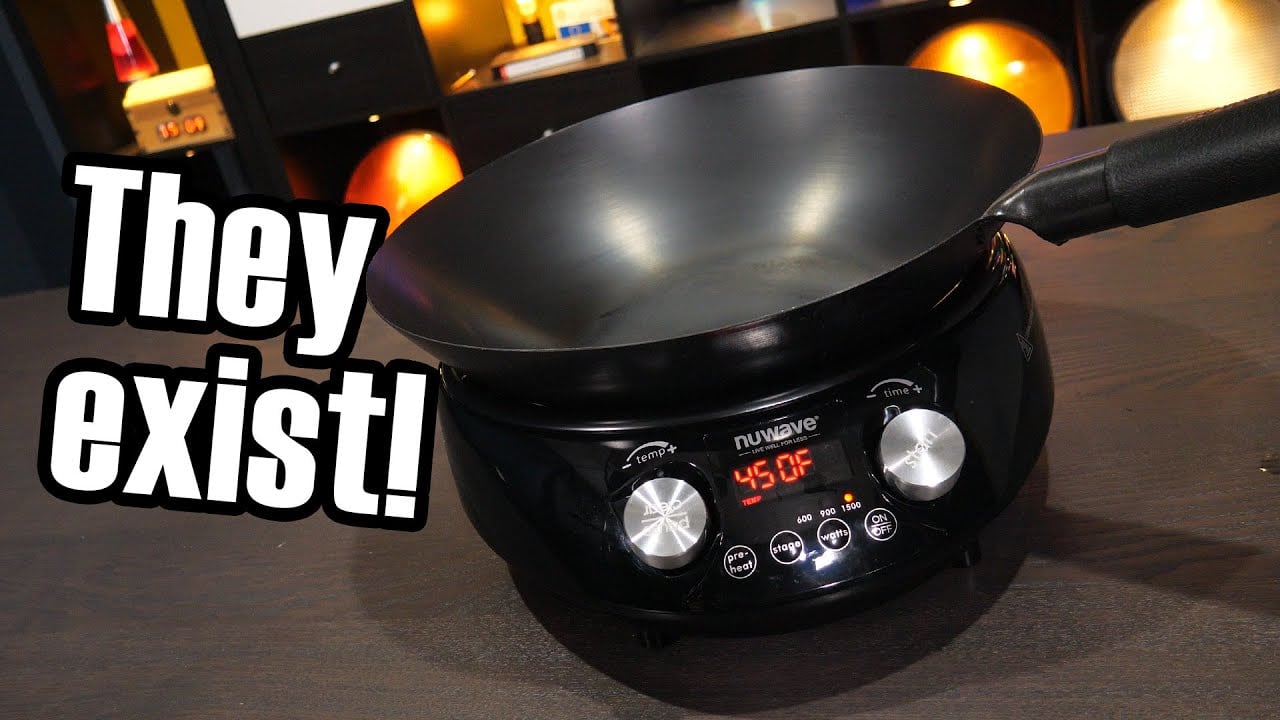
Video: Induction cooking – but what about woks?, Technology Connections. Open the educational video on YouTube.
No. Check the lower vessel model, induction designation and base dimensions separately.
Do not assume so. Use the documented matching assembly, including supports, cups and lid.
No. Use the actual set instructions and resolve missing guidance before use.
No. Equipment compatibility and food-safety guidance are separate questions.



