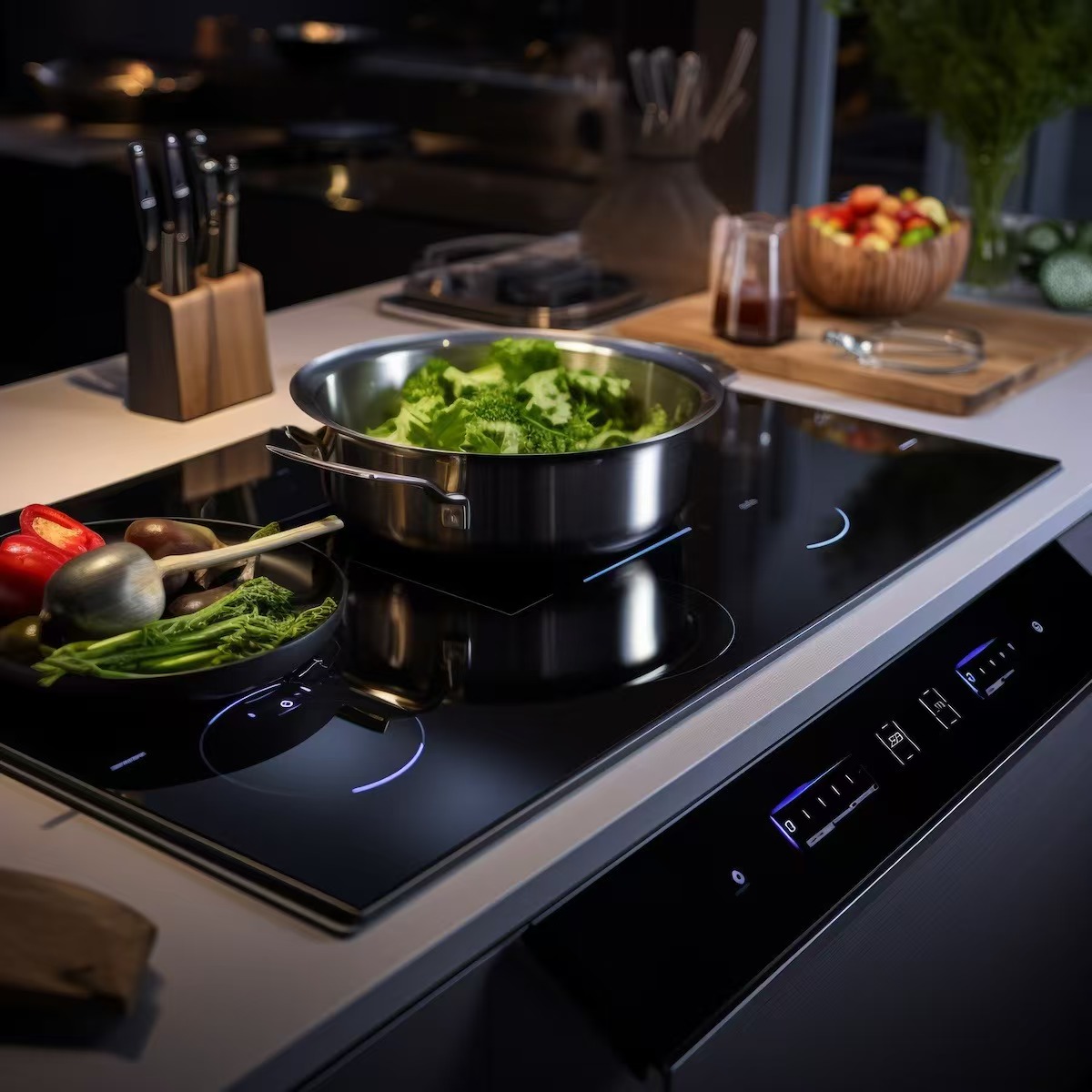
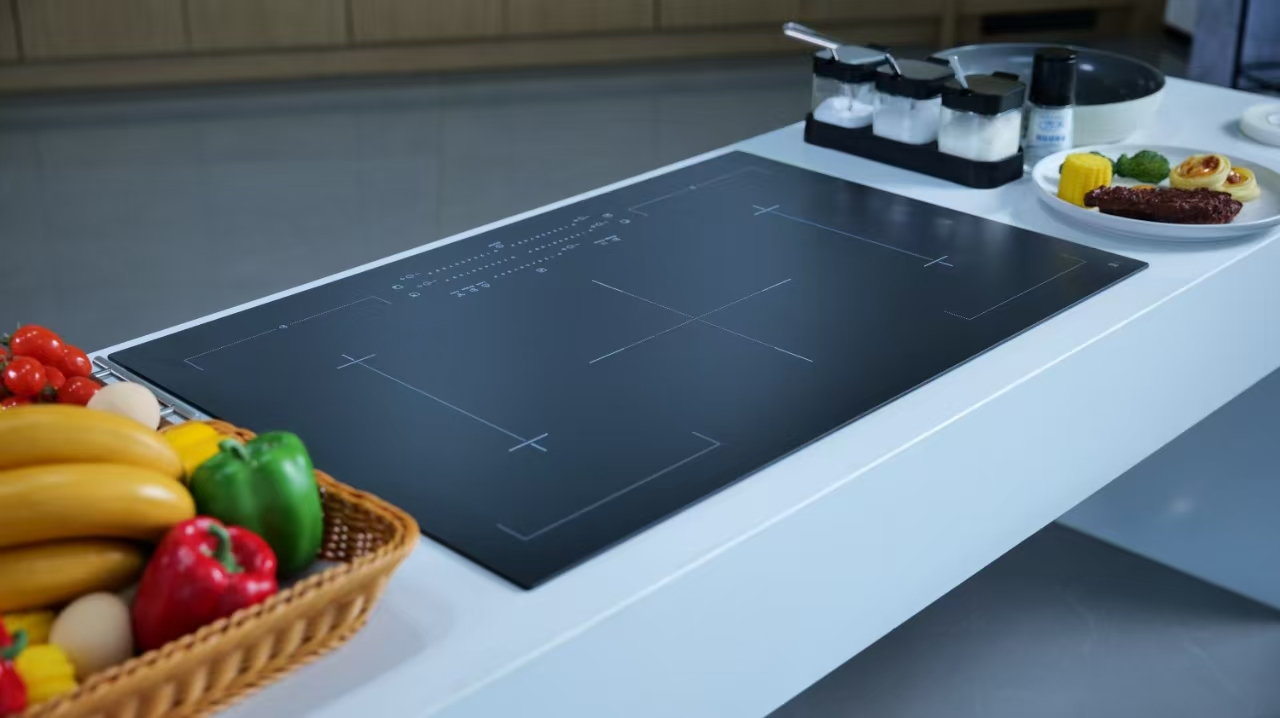
An induction cookware drying rack should support the actual cold vessel securely, let water drain without pooling and stand in a suitable washing area away from the hob. Induction compatibility does not give a pan permission to sit on any rack, and a dish rack is not a hot-pan support. Check the rack instructions, the cookware care guide and the available counter space before loading. Do not place a rack, wet mat or draining pan across the glass cooktop to gain space, even when the appliance is switched off.
This guide concerns the interval between washing and dry storage. It does not cover resting a hot lid, nesting pans with protectors or using a dishwasher. Those are separate questions with different supports and care requirements. Keep used items apart from washed items so that moving a pan through the kitchen does not undo the cleaning step.
Wait for cookware to cool as its care guide requires before washing it. Then plan where the washed vessel will stand while it drains. If your sink area cannot accommodate a large stockpot safely, do not balance it on a rack intended for small plates. Use a suitable manufacturer-approved alternative or reduce the number of items handled at once.
Look beyond the advertised overall rack width. Identify where the vessel will actually make contact, where its handle projects and whether a lid or rim creates an unstable resting position. A rack may have room around a pan yet lack a suitable place to support its weight. Check the stated use and load information rather than judging strength from a photograph.
Try the arrangement with a cold empty pan in a clear area before starting a full washing session. Do not deliberately overload or shake the rack. The aim is to notice an obviously poor fit, blocked drain or projecting handle, not to perform an improvised strength test. If the intended cookware is not covered by the instructions, obtain confirmation from the rack supplier.
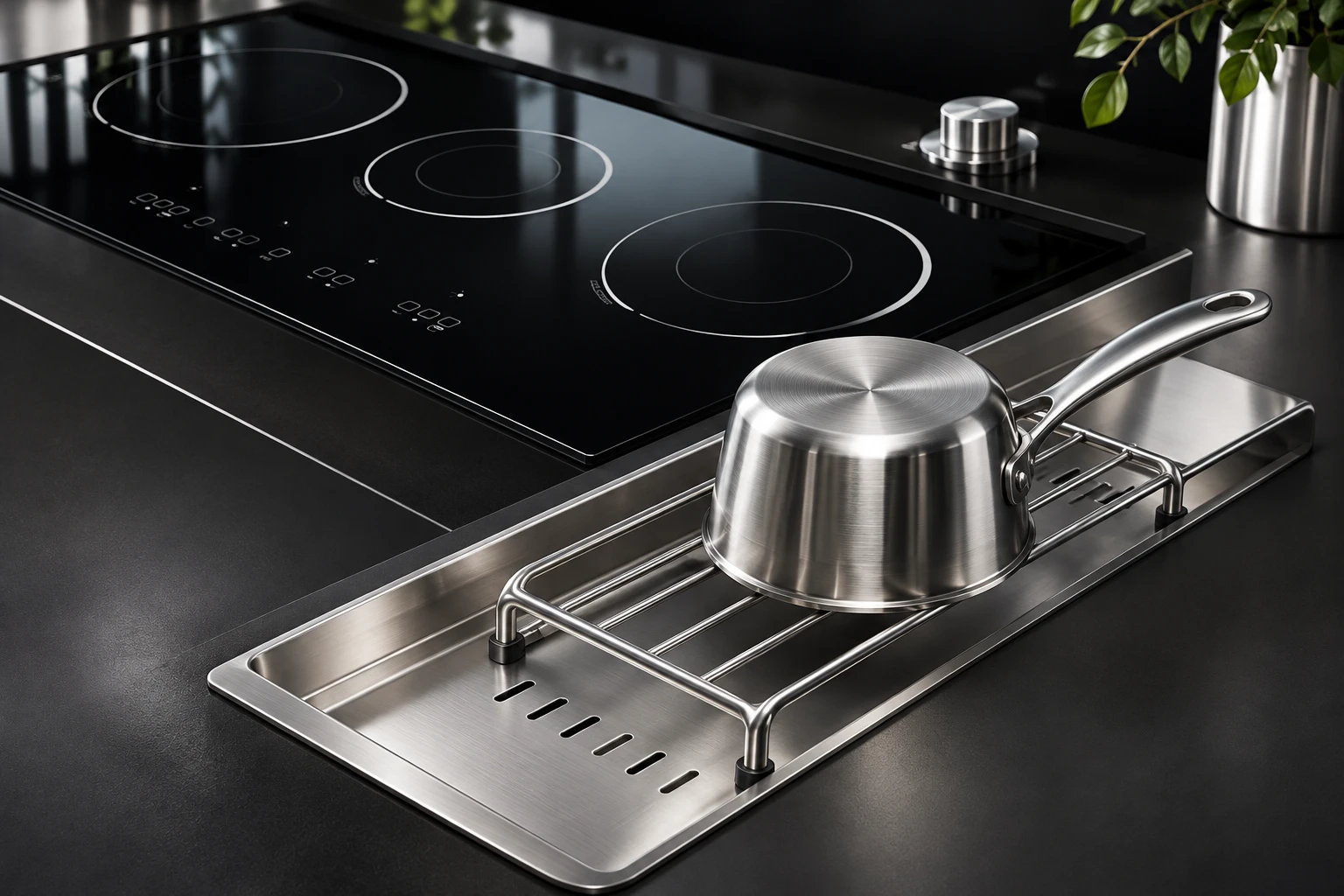
A useful drying setup directs drainage to its intended tray or sink without sending water over the counter edge. Read the tray, spout and orientation instructions for the actual rack. Check that the sink lip, backsplash or countertop slope does not prevent the arrangement from working as designed.
Look for water trapped beneath an inverted pot rim or in a lid knob. The appropriate orientation depends on the shape and the permitted support points. Do not force a delicate coated rim into narrow metal slots to achieve a steeper angle. If an item cannot drain while remaining stable, use another suitable drying arrangement for that item.
Pima County cleaning and sanitizing guidance distinguishes cleaning from sanitizing and includes air drying after the sanitizing step. FDA Food Code framework explains that its Food Code is a model used by jurisdictions to develop food-service rules. These sources provide useful hygiene context, but a household rack does not become approved commercial equipment merely because it permits air movement.
For a food business, follow the current rules that apply locally and the establishment’s documented procedure. Do not substitute this article for an inspector’s requirements or a sanitizer label. For a home kitchen, keep the practical distinction clear: draining is a stage after the appropriate cleaning process, not a method of making a dirty pan clean.
| Arrangement | Confirm before use | Reason to change the setup |
|---|---|---|
| Freestanding rack with tray | Stable support and an unobstructed drainage route | Pot rocks or water collects outside the tray |
| Rack designed to bridge a sink | Permitted sink fit and secure supports | Supports slide or the model does not fit |
| Drying mat on separate counter | Suitable pan support and a clean maintained mat | Water pools or material care is unknown |
| Large vessel outside rack capacity | An alternative intended for that item | Only the handle or a fragile rim carries the load |
| Glass hob used as extra counter | Move the drying task elsewhere | Wet items cover controls or cooking zones |
These are observation and planning checks, not load ratings. The correct arrangement depends on the actual equipment and on the hygiene procedure in use. A supplier’s capacity claim should be read with its conditions, not converted into permission for a different shape of cookware.
A long handle can create a collision point even when the vessel itself appears stable. Position the setup so that someone walking past cannot catch the handle with clothing or a bag. Keep the route to the sink, tap and controls clear. Avoid putting the rack where it must be moved while fully loaded to reach something used frequently.
Check the space needed to remove one item without disturbing its neighbors. A large pan should not require lifting several fragile lids first. If the arrangement feels crowded with the first vessel, adding more objects will not improve it. Washing in smaller groups is often a more controllable workflow than stacking everything into a rack designed for a different mix of items.
Read the rack and tray care guide, including any removable parts. A product described as rust-resistant or easy-clean still needs its specified maintenance. Do not assume that feet, coatings and drain components are all dishwasher-safe because the metal frame looks robust. Keep a record of the actual model if the instructions are easily lost.
Inspect visible contact areas when the rack is empty. Food residue, damaged coatings or a drain obstruction deserve attention before another washed pan is loaded. Do not pour an unapproved chemical over the assembled rack and let it drain onto the counter. Use the prescribed cleaning method and return the equipment to service only in the condition required by its instructions.
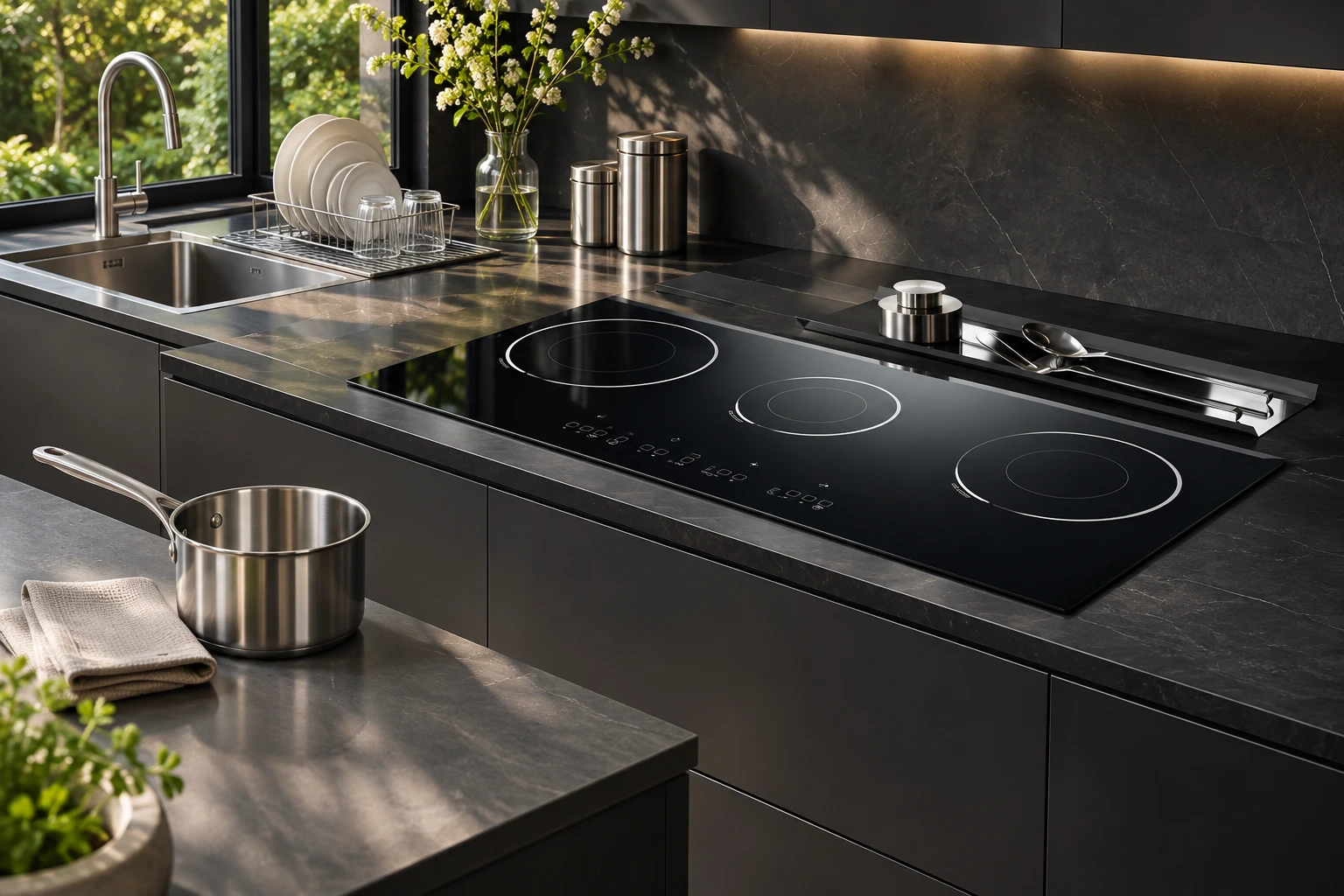
Inspect rims, handle joints and the underside rather than looking only at the broad interior surface. A vessel may look dry from above while holding water elsewhere. Follow the cookware’s material-specific finishing instructions, particularly for materials that need a defined drying or care method. Do not add a heat-drying step unless the maker permits it.
Move the vessel to a clean storage location with a clear handling route. If it will be nested, address the protection and compatibility of that arrangement separately. A soft storage protector is not automatically a drying mat; placing it between wet pans may defeat the purpose of leaving them to drain. Keep each accessory assigned to its intended stage.
A glass-ceramic panel is part of an appliance assembly, not a drainboard. Do not drape a wet cloth over its controls or leave an inverted pot there while clearing the sink. The appliance may still require residual-heat precautions even after cooking has stopped. Treat a visibly clear hob as a cooking area that needs its own care instructions.
For a kitchen layout or appliance project, specify a real drying area in the worktop plan instead of assuming the cooking surface will provide overflow space. That design decision connects everyday cookware handling to protection of the glass panel without claiming that a particular Kanger panel has been tested with a rack or drying mat.
Give the supplier the largest intended vessel’s dimensions, mass when empty, handle projection and the available sink or counter geometry. Ask which support points and orientations are permitted. Request care instructions, replacement-part information and any stated restrictions. Do not ask only whether the rack is suitable for induction pans, because that describes heating compatibility rather than rack support.
If no documented arrangement fits, choose a different rack or change the workflow. A precise constraint such as a narrow counter beside the sink is easier to solve than a vague request for a heavy-duty accessory. Keep any supplier confirmation with the product record so that another person using the kitchen can follow the same arrangement.
The cooking surface and the vessel need separate documentation. Kanger black glass-ceramic cooktop panels describes the relevant glass-ceramic product family, while black glass-ceramic material guide explains the material context. A photograph of a panel does not establish accessory compatibility, load capacity or a finished appliance rating. For adjacent questions, see cold cookware storage with pan protectors, checking cookware dishwasher permission, dry oven gloves and secure grip. Keep the current question separate from those topics when choosing a remedy or requesting a quotation.
This neutral educational video explains induction operation and the relationship between cookware and the appliance. It is background for the cookware and glass distinction discussed above; it does not certify this accessory, prescribe cleaning chemicals or approve a Kanger installation.
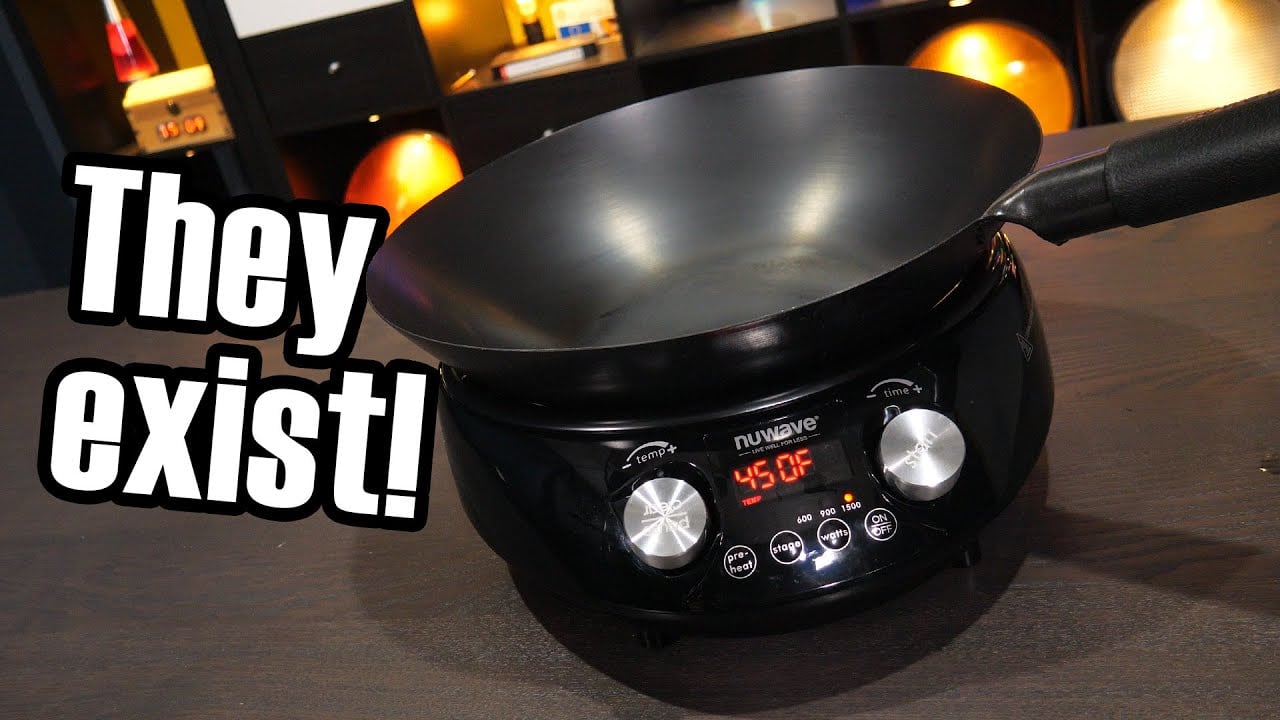
Video: Induction cooking – but what about woks?, Technology Connections. Open the educational video on YouTube.
Induction compatibility alone does not define drying requirements. Choose a rack by the vessel geometry, intended support, documented capacity and care needs. A steel base that works on a hob does not prove that a rack can carry the pan.
Use a separate washing area. Covering controls and cooking zones with a rack or wet mat creates a poor workflow and is not authorized by the glass product description. Follow the actual appliance instructions.
No. Confirm each accessory’s intended use. A protector designed for dry cabinet nesting is not automatically suitable for absorbing drainage or supporting a washed vessel beside the sink.
No. Drying follows the appropriate cleaning process. Food businesses must also follow their applicable sanitation procedure and local requirements; a rack alone does not establish compliance.