An induction cookware product recall check starts with the exact product identity and the official notice for the relevant market. Record the maker, model and any stated date or batch code, then compare them with the recall’s affected-product description and instructions. A similar photograph or the word induction is not enough to decide that a pan is included. If the identifiers match, follow the notice’s current directions and remedy route. If identity remains uncertain, contact the responsible company or authority before use or resale.
This is a checking workflow, not a list of cookware declared safe. It makes no claim that Kanger products or any unnamed cookware are recalled. A search result with no obvious match also cannot certify that a product has no safety issue.
Let the cookware cool before examining it. Photograph the whole vessel and its permanent identifying information without dismantling the assembly. Look for a model, product family, date code or batch reference where the manufacturer indicates it should be found. Keep a receipt or original manual if available, but do not assume the purchase date is the manufacturing date.
A cookware set can include several pieces with different identifiers. Record the affected-looking item separately from its lid and accessories. If a removable handle came from another purchase, note that too. The task is to describe the actual assembly, not to produce one approximate name that seems likely to match a recall headline.
For the United States, begin with CPSC recalls and product safety warnings and search using the brand and product type, then refine the query with known identifiers. Open the complete notice rather than relying on a social-media summary or search excerpt. The official notice is the place to check the affected scope and available remedy.
The CPSC recall handbook explains the importance of product identification and an organized recall response. For equipment obtained overseas, confirm the relevant market and authority separately. Model naming, distribution and remedies can differ, so do not automatically transfer one country’s instructions to a superficially similar item elsewhere.
Read the product description, photographs, code location and any production or sale window together. Match the fields that the notice actually specifies. A model family can contain both affected and unaffected variants, so a partial match needs clarification. Do not replace missing information with a guess based on the pan’s color, handle shape or diameter.
Keep the comparison visible in a short note: your observed identifier, the notice’s stated identifier and whether they match. This avoids losing the distinction between unknown and not affected. Where a code is worn or illegible, send clear photographs to the named contact instead of polishing, scraping or remarking the surface to make it look clearer.
A recall notice addresses a defined product-safety issue and gives its own instructions. General cleaning advice, induction compatibility or a successful cooking history does not override it. A pan can still heat normally while being subject to an issue elsewhere in the assembly. Do not run another cooking test to see whether the reported event happens to your item.
Conversely, finding a care warning in a manual does not mean the entire product range has been recalled. Describe the evidence accurately when asking support. Say that a model may match a particular notice, rather than announcing that every pan carrying the brand is dangerous. That makes the enquiry useful without creating an unsupported allegation.
| Record field | What to save | Decision value |
|---|---|---|
| Product identity | Observed brand, model and component photographs | Defines the item being checked |
| Additional code | Date or batch code where the notice requires one | Distinguishes affected variants |
| Official notice | Authority URL, notice date and recall reference | Preserves the source of instructions |
| Match status | Confirmed match, confirmed difference or unresolved field | Prevents uncertainty becoming a false clearance |
| Action and remedy | Current instruction, contact and response record | Tracks what remains to be completed |
The table organizes a check against official notices; it is not an approval document. Use the instructions in the actual notice for return, repair, refund or disposal. No generic action in this article replaces those product-specific directions.
If the notice directs consumers to stop using the product, do so and follow its next steps. Keep the item from being returned accidentally to ordinary kitchen use while the remedy is being arranged. Record the notice reference and contact date so a second household member or staff member can understand why the cookware has been set aside.
Do not drill, tighten, glue or replace a component as a presumed recall remedy unless the responsible notice or company explicitly directs that process. An ordinary spare part is not proof that a recalled assembly has been corrected. Keep any remedy confirmation with the item’s identity record and follow further instructions if the company requests additional evidence.
Find the contact details on the full authority notice and compare them with the company’s official recall information. Avoid sending payment or personal information through an unsolicited message claiming to arrange a remedy. Collect only the details requested through the verified process, and preserve a copy of the submission and response.
Do not assume a retailer return desk offers the same route described in the notice. If the document directs consumers to a dedicated program, use that route or ask the company how to proceed. Remedy arrangements can differ, and an old screenshot may omit an update. Check the live notice again before completing an action that cannot easily be reversed.
Before buying, selling or accepting a used vessel, ask for enough information to identify it properly. A listing photograph showing a clean interior is not a recall check. Request the markings and relevant component details before committing, and be cautious about a set assembled from mismatched replacement pieces.
The CPSC reseller safety guide provides U.S. guidance for resale safety and checking recalled products. Consult its current applicable guidance and the official notice before any transaction. This article does not determine a particular seller’s legal obligations or approve a product for resale; the practical purpose is to avoid passing an unresolved safety issue to another user.
When the label, receipt or manual is absent, record the uncertainty rather than describing the cookware as cleared. Ask the maker whether photographs and construction details can establish the model. A retailer’s generic listing title may be useful background, but it should not replace permanent identifiers when a notice requires them.
For newly acquired cookware, new cookware identification and unpacking explains how to preserve identity information during unpacking. Retaining that information makes a later check easier. Keep separate records for a replacement lid or handle, because a matching appearance does not necessarily establish that it belongs to the original product generation or is covered by the same remedy.
A product with no matching notice can still have loose, cracked or missing parts. Inspect the cookware according to its own instructions and address observed damage separately. loose cookware handle assessment covers a handle-condition enquiry, while matching a removable handle to its vessel covers matching a detachable grip. Neither process is replaced by an online database search.
Likewise, a physically sound appearance does not cancel a confirmed recall match. Keep the two records distinct: what you observed about the item’s condition and what the authority notice says about its identity. This prevents the reassuring statement it looks fine from displacing a specific instruction that applies to the model.
Assign each vessel a simple internal reference linked to its actual model record. Keep the official notice URL and any company response together. Tell other users which item is awaiting clarification and where it is stored, so it is not unknowingly washed and returned to the hob. An inventory spreadsheet is useful only when the physical item can be identified reliably.
For purchasing teams, request model and traceability information from the supplier and define who receives safety updates. Check replacement components through the same process. Do not claim a recall-free certification based on a search performed once; record the date, sources and unresolved fields so the check can be repeated with a consistent scope.
Kanger black glass-ceramic cooktop panels relate to the glass-ceramic appliance surface, while this guide concerns removable cookware identification. The black glass-ceramic material guide explains the material context. A cookware notice does not automatically apply to a Kanger panel, and a panel supplier’s material information does not clear another manufacturer’s pan or finished appliance.
The reliable outcome is a traceable decision: the identified item, the official notice checked, the relevant market, the match result and any required next action. When the match is unclear, obtain clarification. When a notice applies, follow it. Neither a familiar brand nor ordinary induction performance can stand in for that record.
This CPSC alert illustrates the need to identify a specific product when reviewing a recall. Its subject is a bottle, not induction cookware. Use it as an official example of recall communication, not as evidence that any cookware or Kanger panel is affected.
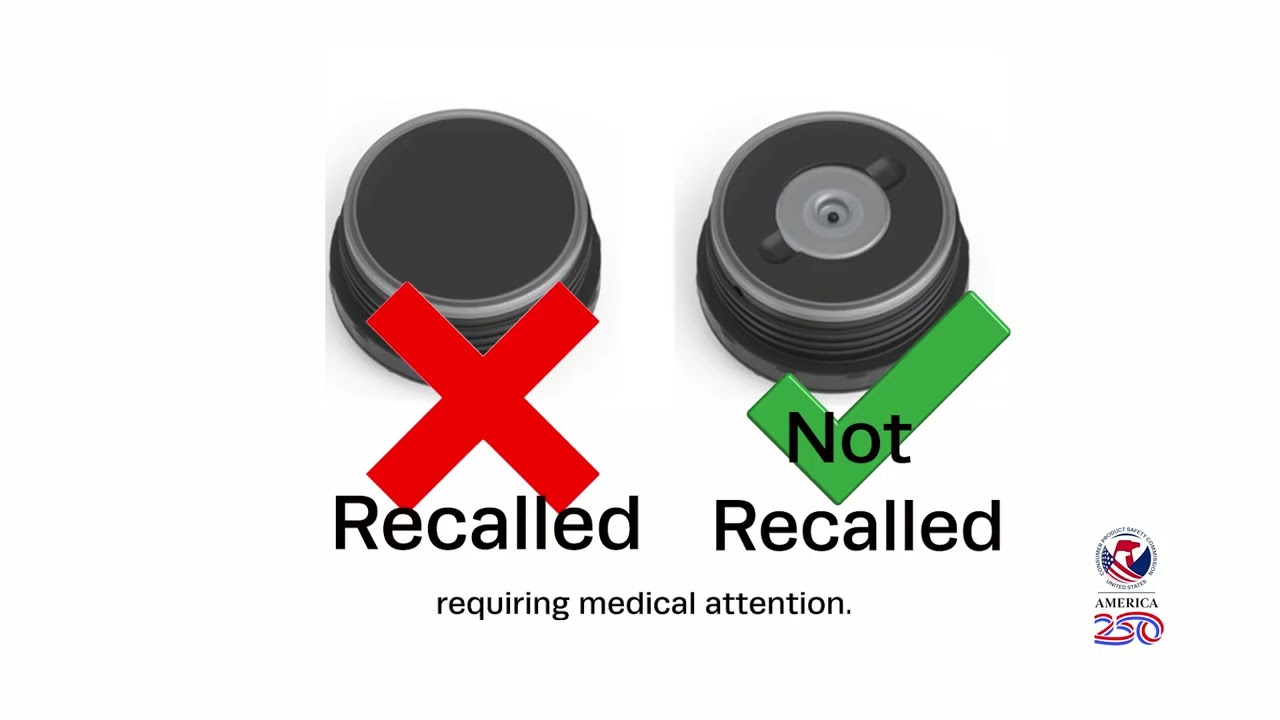
Video: Thermos Recall Alert: Check Your Bottle Now, U.S. Consumer Product Safety Commission. Open the educational video on YouTube.
Not by itself. Compare the model and any date or batch identifiers specified in the full official notice.
No. Record the search scope and inspect the actual product separately. Missing identification or an unresolved safety concern needs clarification.
Only follow the remedy directed by the responsible notice or company. An unrelated spare part does not establish completion.
No. It explains how to check removable cookware against official records and makes no recall allegation about Kanger or an unspecified product.