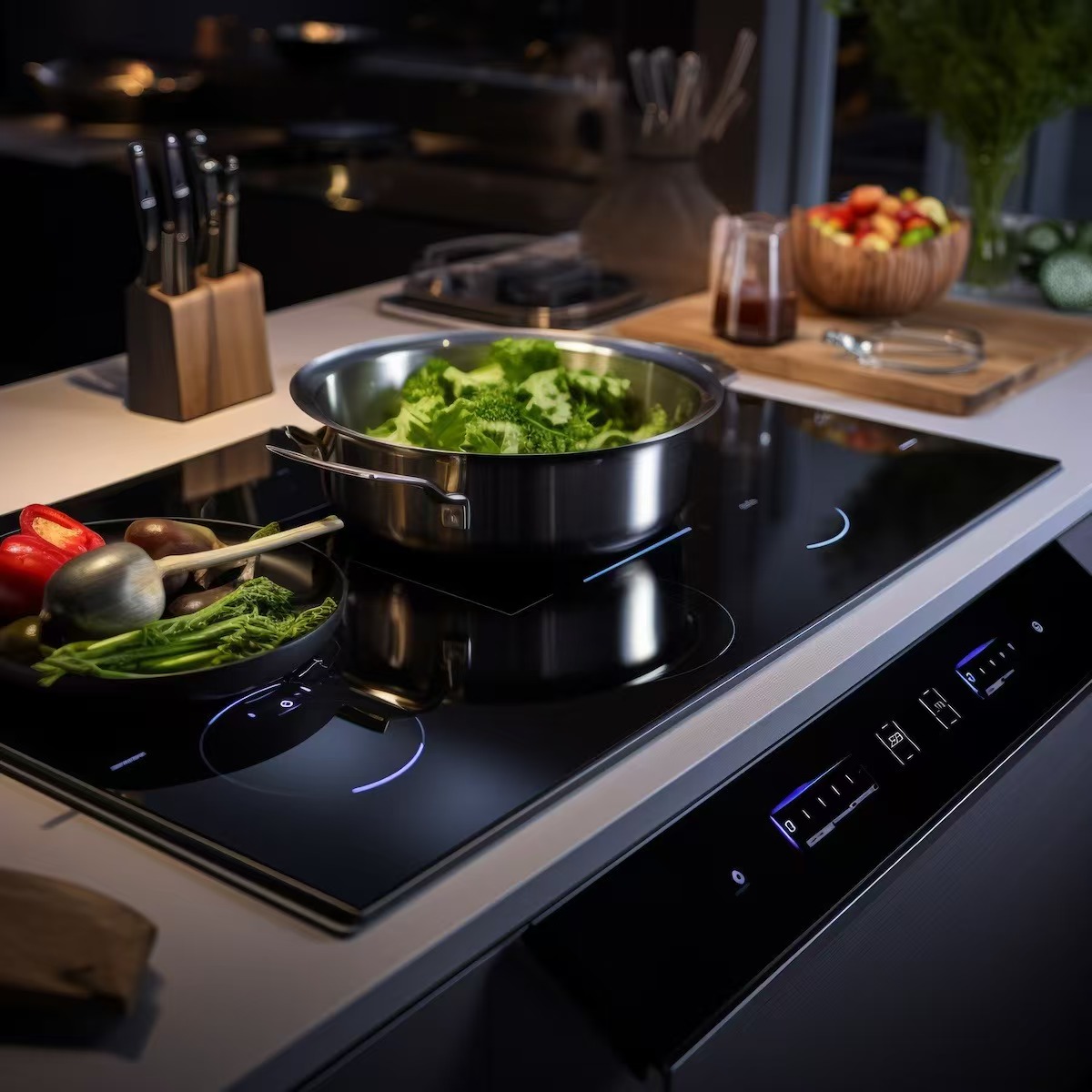
Induction stainless steel pan rainbow discoloration is often an appearance change on the metal surface, but the color alone cannot identify its cause or prove that a pan is safe. Let the vessel cool, establish whether the mark is on uncoated steel or on the glass cooktop, and read the care instructions for the exact cookware. Do not apply a stainless cleaner to the appliance glass just because both surfaces look shiny. Inspect any reported overheating, roughness, deformation or loose handle separately before using the pan again.
Lift a cool empty pan rather than sliding it across the glass. Look at the cooking interior, outside wall and underside separately under ordinary light. A colored reflection can move when the viewing angle changes; a deposit may have a visible edge. These observations are useful descriptions, not a laboratory identification of the surface chemistry.
Place the pan on a suitable separate support and inspect the glass where it stood. If the mark remains on the glass, use the appliance’s care route and the separate guide to glass films. If it travels with the vessel, begin with the cookware instructions. Photograph each location so that a supplier can understand which component needs attention.
KitchenAid stainless cookware care instructions identifies overheating and boil-dry events as possible causes of colored tints on its stainless cookware. Wahei Freiz stainless cookware discoloration explanation describes rainbow appearance associated with substances in water adhering to the surface. Those examples support a cautious conclusion: similar-looking colors can have different explanations. Neither page establishes the history or condition of an unidentified pan.
Avoid diagnosing alloy grade, corrosion resistance or induction performance from a photograph. The important first decision is whether you are dealing with a smooth appearance change, a removable deposit or a damaged surface. If the pan has been used outside its instructions, disclose that history rather than treating a general reassurance about rainbow tint as approval to continue.
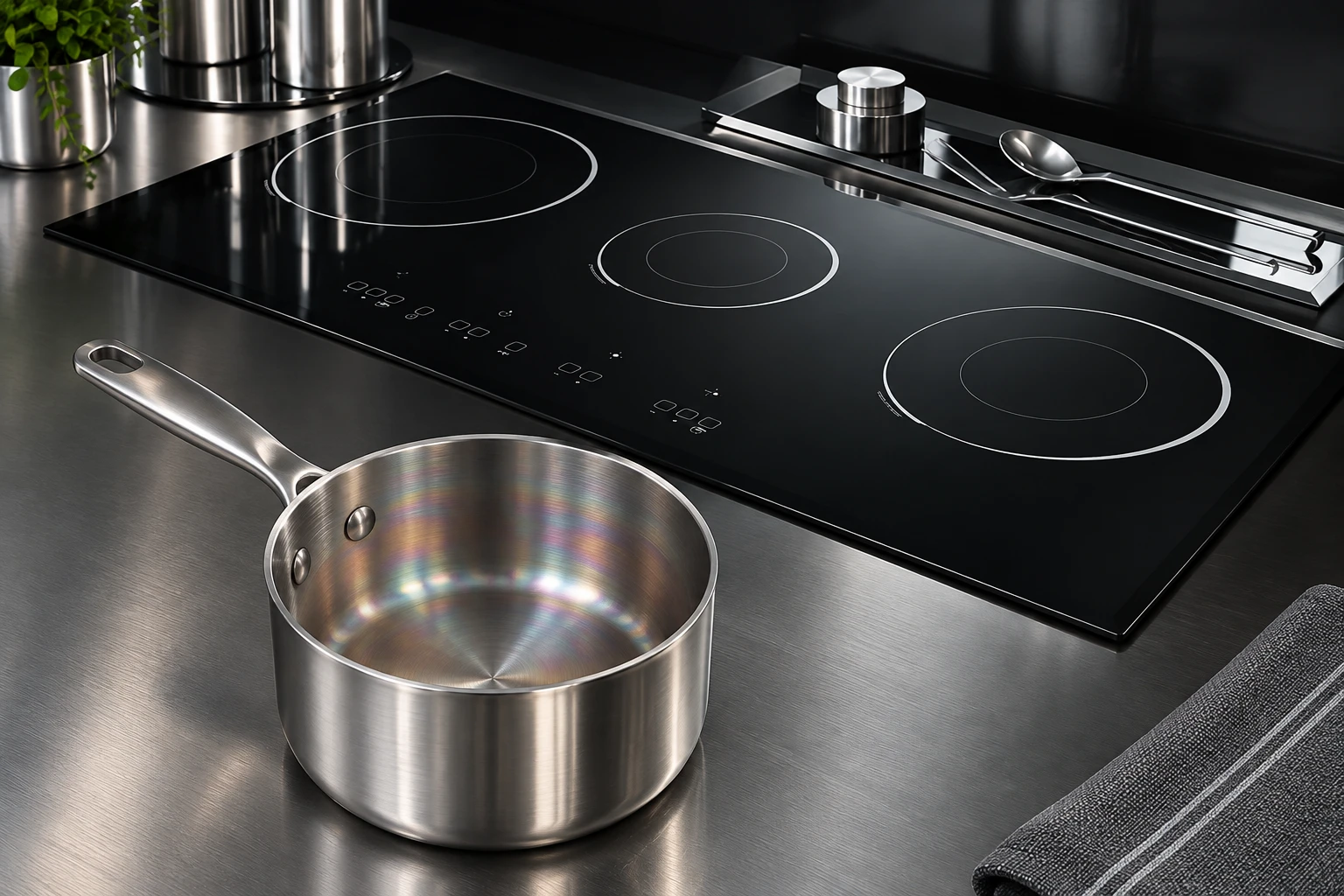
Examine the cool, clean surface without scraping it with a sharp object. Describe a smooth sheen, raised brown residue, white deposit or visible cavity in plain terms. If you are uncertain, send a clear photograph to the cookware maker. A color word such as blue does not tell support whether there is a coating, a scratch or residue on the pan.
Do not group all marks into one cleaning process. Pitting concerns a change in the surface, while a layer of burnt food sits on it. A colored stainless interior can coexist with another problem. Treat the problems separately, and do not keep polishing a depression in the hope that it will disappear like a superficial film.
| Observation after cooling | Useful next check | Avoid |
|---|---|---|
| Smooth rainbow sheen on bare steel | Read the model’s discoloration care section | Assuming a coating has failed |
| White or cloudy deposits | Review water-spot instructions for that finish | Copying an unrelated acid mixture |
| Raised dark food residue | Use the maker’s burnt-food procedure | Scraping with a blade |
| Rough cavities or flaking | Request condition assessment | Calling damage a harmless tint |
| Color remains on appliance glass | Follow glass-surface guidance | Transferring metal cleaner to glass |
This is a practical sorting checklist, not a materials test. The manufacturer care sources above explain why surface identification matters; they do not authorize a universal cleaning recipe for every finish.
Find the product label, receipt or model page. A steel-colored exterior does not establish the material of the food-contact interior. Some vessels combine different materials, finishes and coatings. Read the restrictions for each area and for handles, decorative trim and the underside before selecting a cleaner.
When the model cannot be identified, begin by asking the seller for documentation. Do not test a strong product on the whole interior to discover what it is. An unknown secondhand vessel is a reason to obtain better information, particularly if its surface is peeling or visibly altered. Cosmetic restoration should not erase evidence needed for a condition enquiry.
Start with the permitted ordinary washing method after cooling. If discoloration remains, use only a treatment listed for that vessel and finish, following the cleaner’s own label as well. Different published instructions specify different products and methods; combining the strongest parts of several recipes creates an unverified new process.
This guide intentionally gives no universal acid concentration, boiling time or abrasive grade. A procedure suitable for one bare stainless interior may be unsuitable for a coated area, handle attachment or decorative exterior. Work at a separate cleaning area, rinse and finish as the instructions require, and keep cleaning materials away from food preparation during the job.
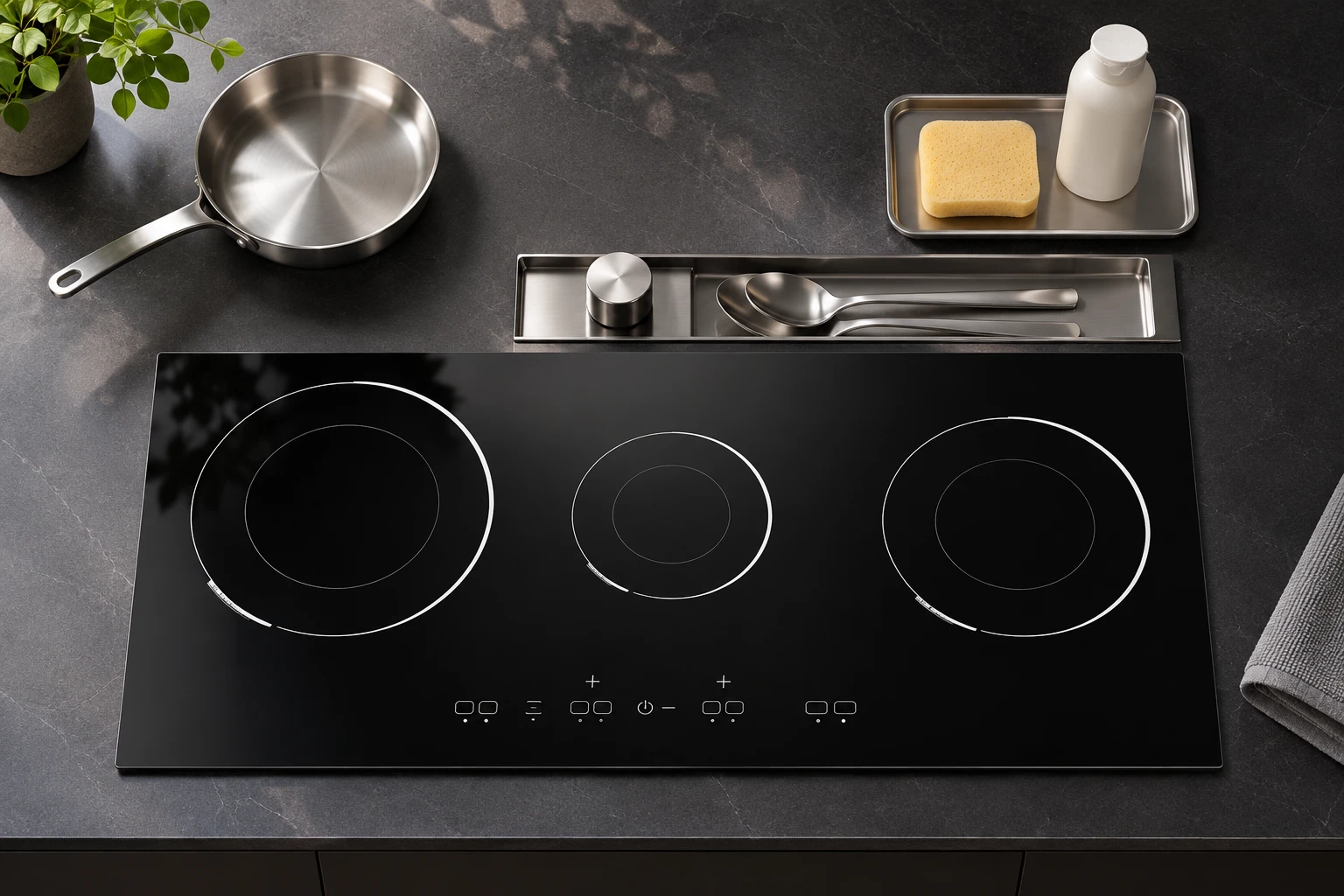
The pan and the appliance are separate products. Do not leave a wet or chemical-covered vessel on the hob while deciding what to do next. A cleaning residue on the underside could be transferred back to the glass on the next use. Include the pan base in the final inspection and follow both products’ care requirements.
Never heat an empty pan to see whether a tint changes or disappears. Do not use a boost setting as a cleaning method, and do not try to burn off an unknown residue. An appearance issue does not justify creating an uncontrolled heating event. If the glass itself is cracked or chipped, follow appliance service guidance rather than continuing the cookware experiment.
Write down whether the vessel was empty, what was cooked, which setting was used and whether it was left unattended. Record observations that actually occurred, including a boil-dry event if known. Do not convert a color into a precise peak temperature or claim a particular steel grade has been damaged without supporting evidence.
If there was an unusual smell, deformation or a handle problem, include it in the enquiry. Those facts may change the next step even if the color itself looks familiar. Photographs taken in consistent light before and after a permitted cleaning attempt can help support distinguish an appearance concern from a physical condition that needs separate assessment.
For a new cookware order, ask how the supplier distinguishes expected appearance changes from reportable defects. Request finish-specific care instructions and the route for assessment, rather than an unsupported promise that induction cookware will never discolor. If appearance is commercially important, discuss a documented inspection method before accepting delivery.
For an existing pan, provide the model, purchase information, affected location, cooking history and the cleaning products already used. Do not send only a heavily filtered close-up. A wider photograph showing the vessel and a second image showing the affected surface give context without claiming a diagnosis. Keep any response tied to that item rather than applying it to every pan in the kitchen.
A rainbow sheen is not a test of magnetic base compatibility. If a hob fails to recognize the vessel, investigate the base and appliance requirements through their own instructions. Likewise, a shiny interior does not establish food readiness or verify a thermometer reading. Each question needs evidence relevant to the actual function.
Once the maker’s permitted cleaning and condition checks are complete, keep a short record of the chosen care route. If the appearance returns, compare the same location and use history before escalating. That approach is more useful than repeatedly changing cleaners or replacing a glass panel because an unrelated metal surface has changed color.
The cooking surface and the vessel need separate documentation. Kanger black glass-ceramic cooktop panels describes the relevant glass-ceramic product family, while black glass-ceramic material guide explains the material context. A photograph of a panel does not establish accessory compatibility, load capacity or a finished appliance rating. For adjacent questions, see salt pitting in stainless cookware, burnt food removal from cookware, rainbow marks on the glass cooktop. Keep the current question separate from those topics when choosing a remedy or requesting a quotation.
This neutral educational video explains induction operation and the relationship between cookware and the appliance. It is background for the cookware and glass distinction discussed above; it does not certify this accessory, prescribe cleaning chemicals or approve a Kanger installation.
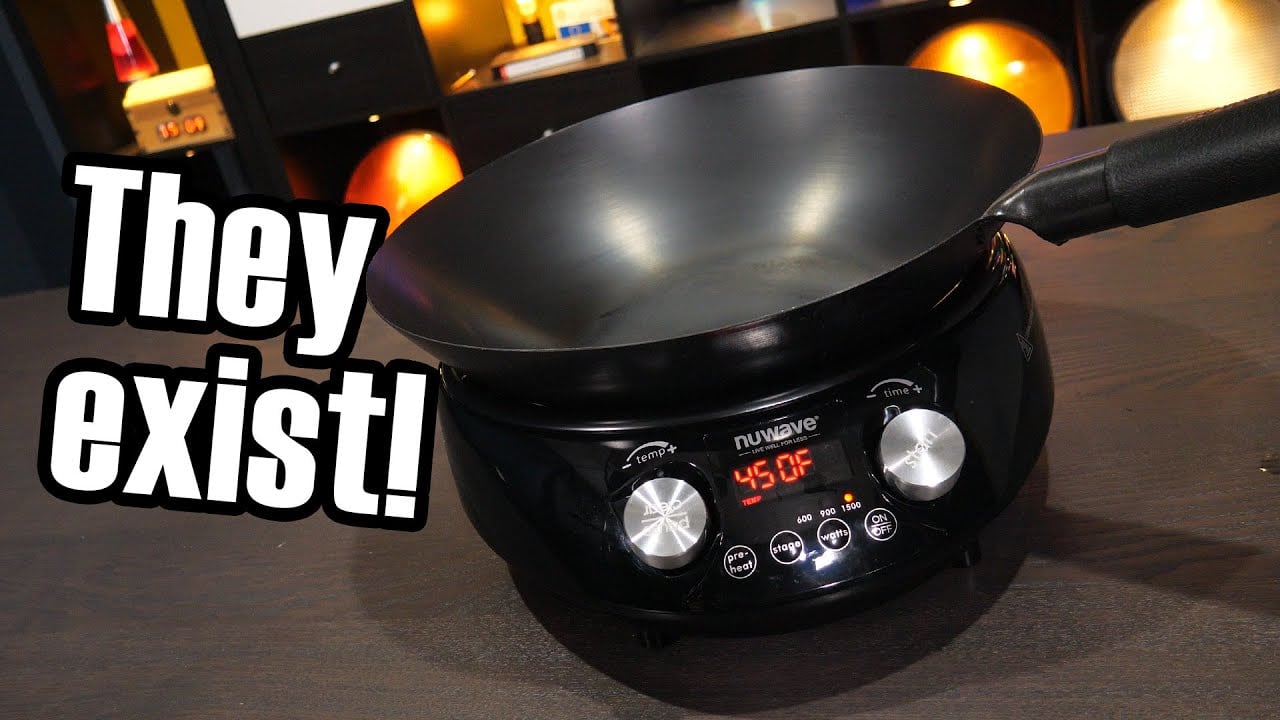
Video: Induction cooking – but what about woks?, Technology Connections. Open the educational video on YouTube.
Not by itself. Manufacturer guidance describes several appearance-related causes, but a photograph cannot exclude damage. Check the exact vessel instructions and assess overheating, roughness, flaking or deformation separately.
Only if both manufacturers explicitly permit it for the relevant surfaces. Bare stainless steel and glass-ceramic are different cleaning tasks. Do not transfer an abrasive or chemical treatment between them by assumption.
A household visual inspection cannot provide a reliable peak temperature from a rainbow color. Report the actual cooking event and any documented readings instead of estimating a temperature from appearance.
A pan appearance change alone does not identify a defective hob or glass panel. Keep the cookware condition enquiry separate from appliance faults and obtain model-specific support where required.