Induction cookware dry oven glove grip begins before the pan moves: use suitable dry, intact protection, check that the handle is secure, and prepare a stable heat-resistant landing place. Induction heating does not make a cookware handle safe to touch. Follow the cookware and glove instructions, and do not attempt a lift when the grip, load or route is uncertain. Damp protection, damaged seams or an awkward hold are reasons to stop and change the arrangement rather than hurry through the transfer.
This guide focuses on preparing and completing an ordinary lift of cookware with fixed handles. It does not rate gloves, establish a safe holding time or explain repairs. Removable mechanisms, damaged handles and pressure equipment need their own instructions in addition to this basic planning routine.
A cooking zone’s technology is not a handling permission for every part of the vessel. Consider what the cookware has been used for, including any oven stage, and read its directions for handles and knobs. Do not test a handle by touching it with a bare finger or assume it has cooled because the zone display has changed.
The Groupe SEB cookware safety instructions recommend dry protection for handling cookware in their stated product context. That is a useful reason to inspect the protection before cooking finishes, but it does not approve an arbitrary glove or establish a universal temperature limit. Match the actual vessel, protective item and handling task using their own documentation.
Choose a mitt or potholder intended for hot cookware handling and suitable for the expected task. Read any stated care, condition and contact restrictions. A bulky item that prevents you from closing your hand securely around a small handle may not be the right arrangement, even when it has an impressive marketing description.
Check both sides, the grip area and the seams before use. Look for holes, thin worn areas, retained moisture or contamination. Do not turn a damaged mitt around and assume the other surface makes it serviceable. Replace an unsuitable item or use another approved handling arrangement before approaching hot cookware; this is preparation rather than a last-second correction.
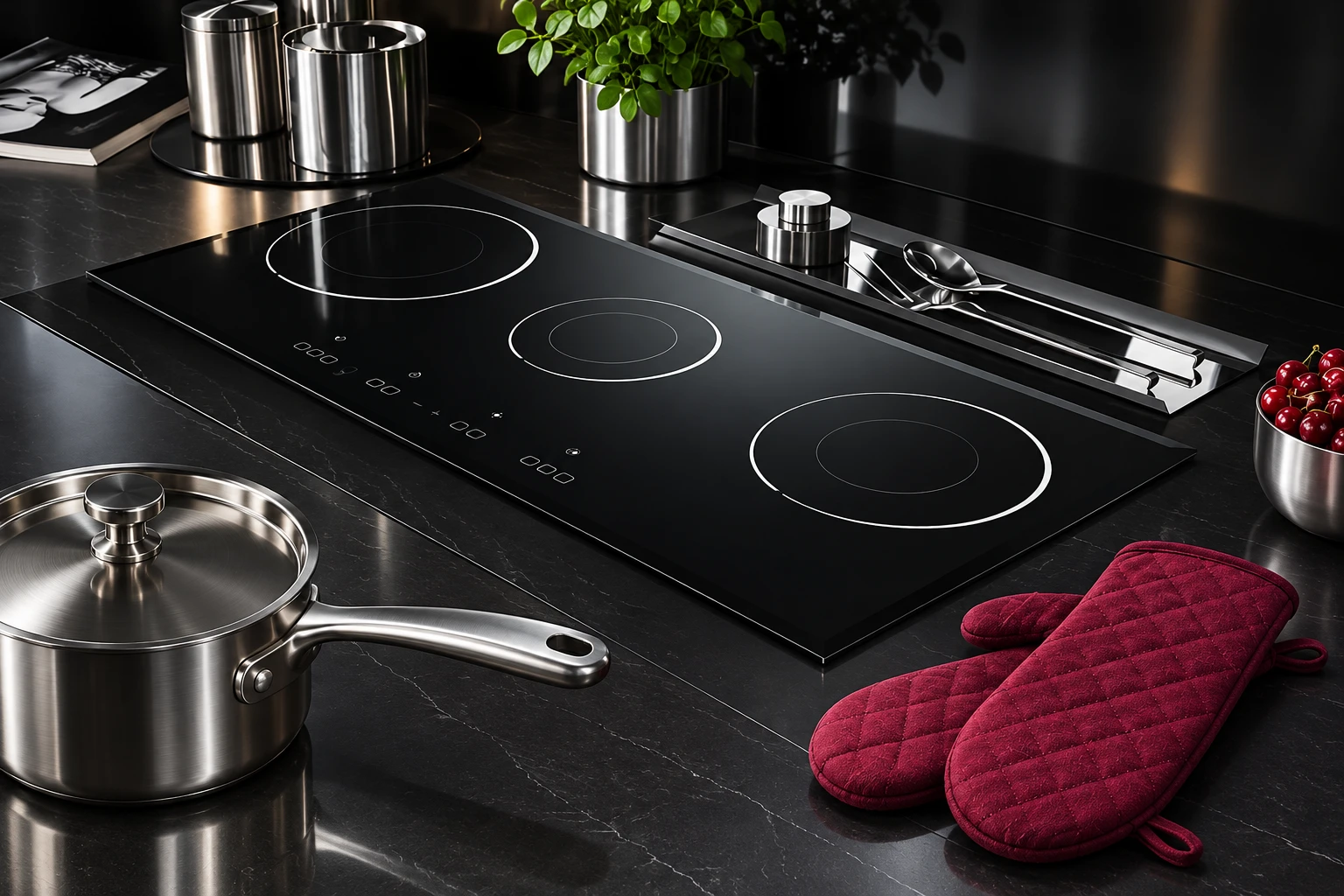
University of Illinois kitchen fire and food safety guide advises dry oven mitts or potholders and warns about wet protection. Keep the pair away from sink splashes and dishwashing tasks so a cooking tool is ready when needed. If a mitt has become damp, put it aside and use suitable dry protection rather than deciding that the wet area is too small to matter.
Do not assign a drying time by guesswork or try to dry a mitt on an active cooking zone. Follow its care instructions and verify its condition before reuse. A quick touch of the outer fabric does not establish that all layers are dry. Keep washing and drying routines separate from the immediate need to lift a hot vessel.
Check the cookware when it is cold and empty so that obvious looseness, cracks or missing parts can be addressed before cooking. Read the directions for any special handle arrangement. A glove protects the hand only within its intended use; it does not restore strength to a damaged joint or secure a mechanism that is not properly attached.
If a handle feels loose or changes during cooking, avoid improvising a hot repair. loose cookware handle assessment addresses the stop-use and service decision, while matching a removable handle to its vessel addresses detachable component matching. Do not use a lid knob, rim, probe clip or storage cover as an alternative lifting point unless the cookware maker explicitly designed it for that purpose.
| Check before lifting | Ready condition | If the condition is missing |
|---|---|---|
| Hand protection | Suitable, intact and dry | Choose appropriate dry protection |
| Handle assembly | Secure and used as its maker directs | Stop and resolve the handling problem |
| Load and balance | Within the user’s ability and vessel instructions | Plan a safer method rather than forcing a lift |
| Landing area | Stable suitable heat-resistant support ready | Prepare the destination before moving |
| Route and nearby people | Clear space and an understood movement | Pause and clear the area |
The dry-protection requirement is supported by the cited university and cookware safety documents. The table is an operational checklist, not a certified glove specification or load test. It supplies no invented temperature rating, protection duration or maximum pan weight.
Choose a support suitable for the hot cookware and the worktop underneath. Place it where the vessel can rest fully and stably, away from an edge or frequently used passage. Remove paperwork, packaging and other loose items from that area. A clear destination prevents the common problem of holding a pan while looking for somewhere to put it.
Avoid treating the glass hob as a general landing area for unrelated hot items. Follow the appliance’s instructions for cookware placement and protect its controls from accidental contact. Do not place a cloth over the glass to create an improvised protective surface. The panel and nearby worktop need their own approved use arrangements.
Stand in a stable position with a clear view of the vessel and its destination. Consider the contents and whether both handles are intended to be used. Do not reach across an operating zone or carry a heavy load with an uncertain grip merely because the final distance is short. Ask for appropriate help or change the planned task before moving.
Follow the cookware instructions for its intended lift. Avoid jerking, tilting or catching the vessel by a second part once it is already moving. If the load cannot be controlled comfortably, stop before lifting and plan another permitted process. This guide cannot determine an individual’s lifting capacity or certify a route through a crowded kitchen.
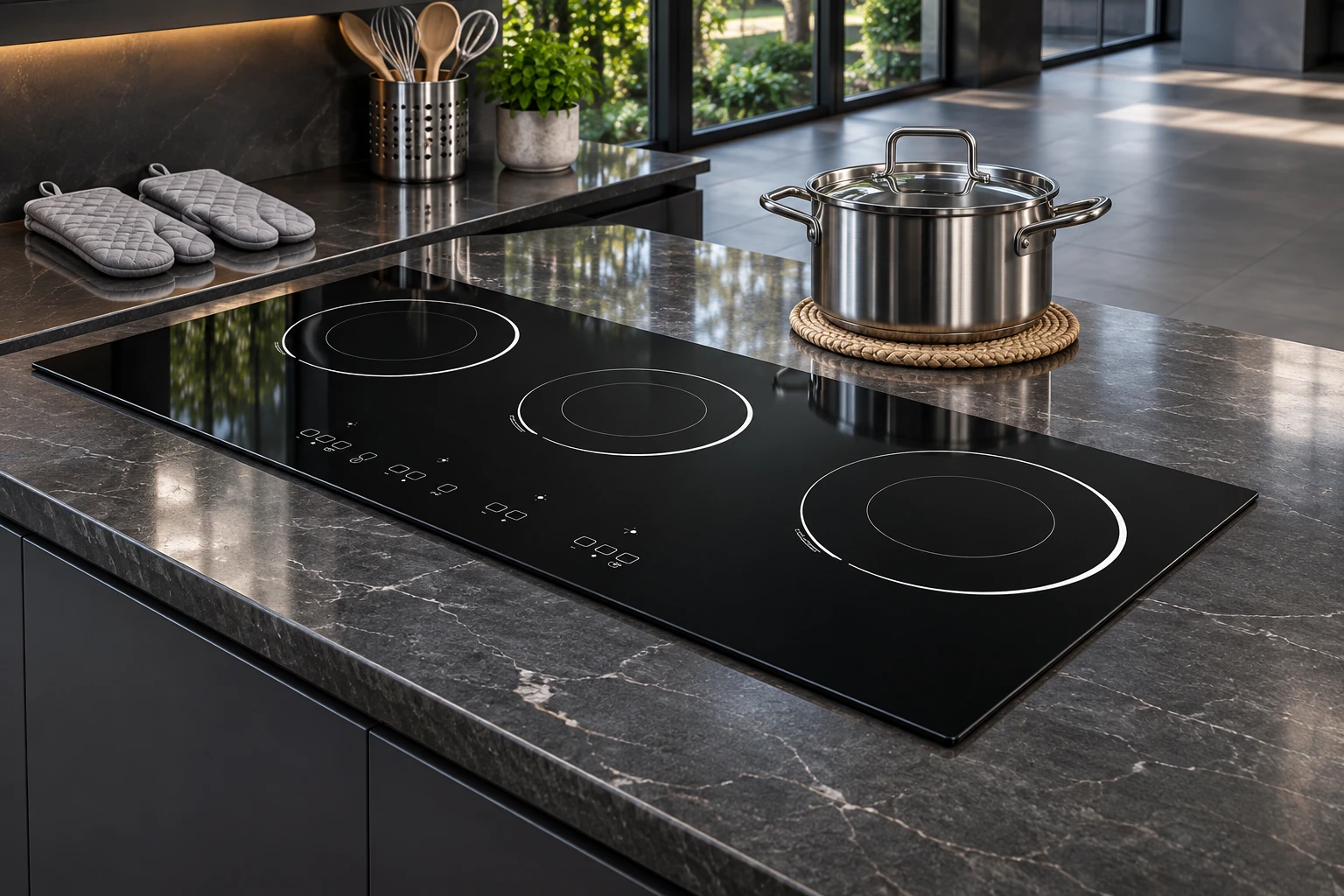
A lid can introduce a separate handling task. Follow the vessel instructions for opening, drainage and any pressure-related sequence. Do not loosen a lid while simultaneously carrying the pan, and do not assume a mitt makes steam harmless. Plan those steps separately so you are not adjusting a lid with one hand while balancing the vessel with the other.
Keep the lid’s own knob and fastening condition in the cold inspection routine. If a lid does not belong to the vessel or is damaged, resolve that before cooking. A glove is not a reason to continue with an uncertain assembly. For equipment that operates under pressure, use its specific manual rather than adapting an ordinary pan-handling checklist.
Choose a clean dry storage position that can be reached without leaning across the hob. Keep the pair together and return them only after their condition is suitable. Avoid hanging protection where it can fall onto a cooking area or be splashed from a sink. Make the storage location part of the kitchen setup rather than an afterthought.
U.S. Fire Administration cooking safety guidance provides broader cooking-area safety guidance. Keep combustible items away from the cooking task and maintain attention while cooking. This article is about planned handling, not emergency firefighting. If a fire or another immediate hazard occurs, follow the applicable emergency guidance rather than trying to complete a normal cookware transfer.
Before several people cook together, agree where dry protection and the landing support are kept. Tell another user when cookware remains hot and avoid leaving a vessel in a place that invites a bare-handed grab. Use the kitchen’s established procedures for communicating a hot item rather than relying on an ambiguous visual cue.
For purchasing teams, ask for care documents and replacement availability as well as advertised thermal properties. Consider whether the users can grip the actual handles while wearing the selected protection. Keep any evaluation within the supplier’s instructions; a photograph of someone holding a pan is not evidence of a tested glove and cookware combination.
Pause when you discover wet protection, a loose handle, an unstable support or someone entering the route. Address the condition while the vessel remains stably supported. Do not interpret this as permission to leave active cooking unattended. Maintain control of the cooking task and follow the appliance’s normal operating instructions while reorganizing the movement.
If equipment has been dropped, damaged or exposed to an event that makes its safe use uncertain, seek the responsible manufacturer’s assessment. Do not hide a torn mitt or loose joint in storage for the next person to discover. A short note about the specific problem helps prevent the same issue recurring during a later meal.
Kanger black glass-ceramic cooktop panels concern the glass-ceramic panel used as an appliance surface, and the black glass-ceramic material guide explains that material context. They do not establish a cookware handle temperature, a glove rating or a finished kitchen’s handling procedure. Each component’s instructions remain relevant to its own function.
A practical arrangement therefore combines a suitable vessel, appropriate dry protection, a clear supported destination and an achievable movement. Check these before cooking reaches the point where a transfer is needed. That preparation protects both the user and the appliance surface without making unsupported performance claims about either.
The U.S. Fire Administration video places cookware handling in the wider cooking-area safety routine. Use it to review the surroundings before cooking; it does not rate oven gloves or demonstrate a certified hot-pan lifting method.
Video: 360-degree Kitchen Fire-safety, U.S. Fire Administration. Open the educational video on YouTube.
Do not assume that. Follow the cookware instructions and use suitable protection for the task rather than testing a handle with a bare hand.
Use suitable dry protection. Put damp protection aside and follow its care instructions before reuse.
No. Protection does not repair a joint or secure an unmatched component. Resolve the cookware condition separately.
No. Use the actual protective item’s instructions and limits. A general article cannot certify a glove and hot-pan combination.



