A wooden cutting board should serve as an induction cookware trivet only when its own instructions permit contact with the hot vessel under the intended conditions. A board approved for chopping food is not automatically approved as a heat-resistant landing surface. Choose a suitable purpose-made trivet when permission is unclear, place it on a separate stable surface, and keep boards and loose supports away from the cooking zone. Do not insert a board between an induction pan and the hob or use it to cover a hot cooking surface.
A cutting board provides a food-preparation surface. A trivet supports a hot vessel while protecting the surface underneath within its stated use conditions. An induction pan must meet the appliance and cookware instructions for cooking. These are three different tasks, even when the objects share similar materials or occupy the same kitchen counter. Permission for one task does not establish permission for the others.
Some cookware instructions recommend a wooden board, a trivet or another protective support when setting down a hot pan. That advice still needs to be matched with a support suitable for the task. It should not be read as a statement that every laminated, finished, thin or unknown wooden cutting board will tolerate every vessel and exposure. Read both products' instructions rather than relying on material names alone.
Kanger's black glass-ceramic cooktop panels illustrate the glass-component context. The glass panel is not a universal stand for every hot object or kitchen accessory. A clear separate landing area makes the intended use easier to control. This article focuses on identifying a permitted support and planning the transfer; it does not assign temperature limits to Kanger glass or certify an illustrated kitchen arrangement.
Find the maker and exact board type if possible. Check whether the item is described only as a cutting board or is also explicitly intended for hot cookware. Look for restrictions involving heat, moisture, finishes and cleaning. If the board came without identifiable instructions, do not infer a rating from its thickness, wood color, weight or apparent quality.
All-Clad's care guidance includes product-specific instructions for its wooden accessories, while Le Creuset's cookware care information discusses protective surfaces for hot pans. Reading those sources together demonstrates the need to distinguish advice about the cookware from permission for the support itself. Neither source gives a universal safe temperature or duration for every board in a kitchen.
Do not use an online photograph as proof of a heat rating. A staged pan may be cold, the board may be a dedicated serving accessory, or the arrangement may simply be unsuitable. The editorial images here show cold preparation scenes. They are not heat tests, performance data or evidence that an unidentified board has been approved for hot cookware.
| Question | Evidence needed | If unresolved |
|---|---|---|
| Board use | Exact instructions permit hot cookware | Choose suitable documented trivet |
| Vessel support | Stable footprint under actual cold vessel | Change support or layout |
| Worktop | Surface and support instructions agree | Find suitable separate surface |
| Location | Clear space away from cooking zone | Rearrange before cooking |
| Transfer | Cold route and grip rehearsal | Clear obstacles before heat |
| Condition | No visible instability or damage | Replace or ask maker |
This qualitative workflow organizes the official product guidance linked below; it supplies no universal rating, guarantee or measured result.
A useful trivet must suit the vessel's footprint and the surface below it. Check the manufacturer's stated use and any restrictions before selecting one. A small support can leave a large vessel unstable, while a raised design may interact poorly with a particular bottom shape. Rehearse the arrangement using cold equipment so any wobble or awkward handle position is discovered before cooking.
Consider where the pan and lid will go separately. A lid is not always safe to balance on top of another pan, and a wet or slippery support can complicate handling. Leave enough room for the entire vessel and its handles without forcing it close to the edge. If there is no clear supported position, rearrange the workspace before applying heat.
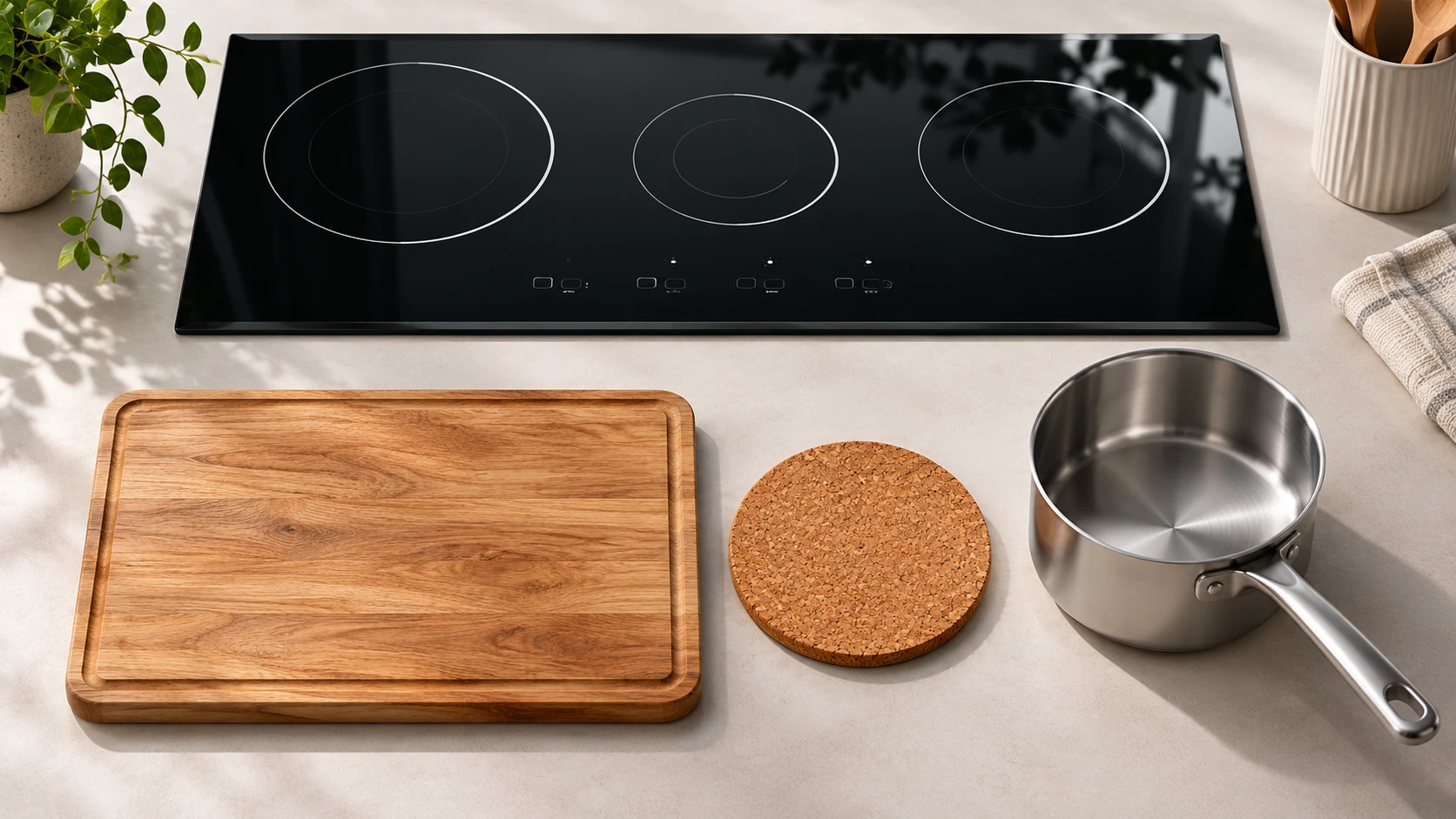
Do not invent a universal thickness, temperature or time limit to simplify the choice. Different boards and trivets use different constructions, coatings and feet, and the worktop beneath also has instructions. If the relevant limits or intended use are missing, choose an identifiable suitable alternative rather than conducting a trial with a hot heavy pan.
Plan the trivet position on a stable separate counter or table, following its instructions and those of the surface underneath. Keep the cooking zone and appliance controls clear. A board laid over the hob may conceal a hot area, obscure controls or encourage someone to treat the appliance as storage. A convenient flat surface is not sufficient evidence of permission.
Never put a wooden board between the induction pan and the cooking glass. It changes the arrangement for which the cookware and appliance are intended and is not a way to protect glass during cooking. Likewise, a trivet intended for a table does not automatically become an approved under-pan cooking accessory. Only an explicitly approved appliance arrangement should be used on an operating zone.
For the broader material distinction, see the stainless cookware and base guidance. The usable pan-base measurement guide addresses the usable pan base and cooking-zone requirements; it does not approve intervening objects. Keep that sizing decision separate from choosing a place to land a vessel after cooking. Combining the two questions can lead to a kitchen support being mistaken for a cooking accessory.
Before cooking, place the cold vessel in its intended starting position and identify the separate landing support. Check grip access, handle clearance and the route between them. A cold rehearsal can reveal a cupboard door, a drying rack or another pan that would obstruct the movement. It cannot establish heat resistance, but it can identify a layout that is awkward before heat is involved.
Prepare suitable dry hand protection according to the cookware and protective item's instructions. Our dry oven-glove grip preparation guide treats grip preparation separately. Do not treat a cloth used for holding a handle as an automatically suitable long-term landing pad. Its intended use may differ from a purpose-made trivet, and folding it under a pan can create an unstable arrangement.
For a heavy covered vessel, decide whether the lid will remain in place during the permitted transfer and where it will rest if removed. Use the exact cookware instructions and your ability to handle the load safely. Do not reach across an active zone or carry a vessel farther than necessary just because the intended support was not prepared nearby.
Look for visible splits, loosened parts, detached feet, distortion or a surface that no longer sits steadily. Keep the support clean according to its own care instructions and let it dry as directed. A familiar item can change with use, so an old arrangement should not be assumed sound without checking. If its condition makes support uncertain, choose another suitable item.
A scorched or damaged board is not evidence of a successful heat test. Do not repeat the exposure to see whether the mark grows or sand away damage merely to preserve the original plan. Contact the maker if you need to understand whether the item remains appropriate for its intended use. Avoid diagnosing structural integrity from appearance alone.
Keep food-preparation hygiene separate from the hot-pan task. A board used for ingredients needs its own cleaning and storage routine. Selecting a dedicated suitable trivet can simplify the workflow because it avoids having to clear and repurpose a preparation surface at the moment a hot vessel needs somewhere to go. That is an organizational advantage, not a quantified performance claim.
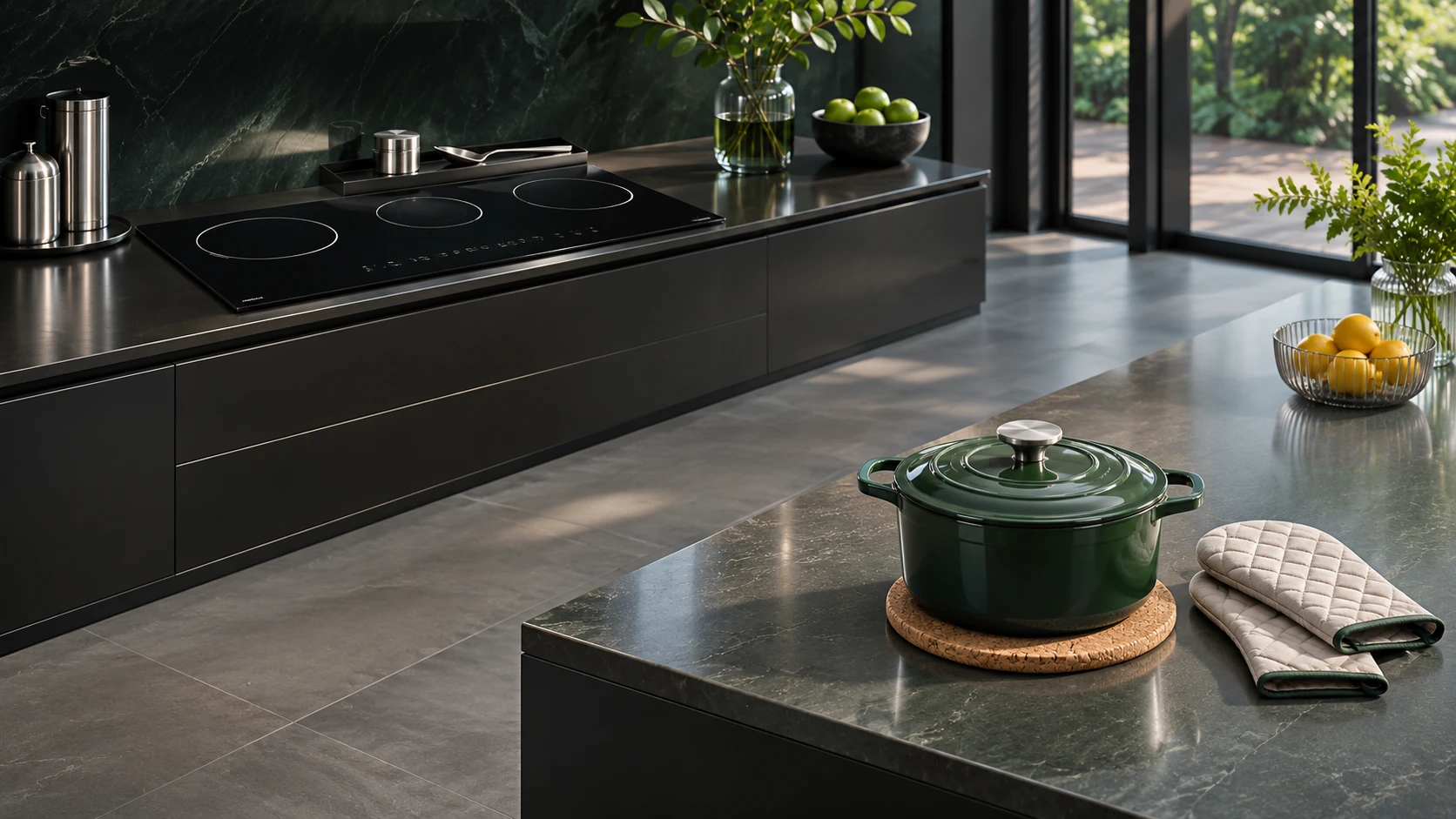
For a home kitchen, record the vessel shape, the intended landing location and the support's stated use before buying. Ask the supplier whether the exact support is intended for that job, including any limits. Do not substitute generic claims such as “natural,” “professional” or “heavy duty” for usable instructions. If the answer remains unclear, select a documented alternative.
For hospitality or equipment projects, specify the task in the purchasing inquiry: hot-vessel landing, food preparation or appliance cooking. Include the relevant vessel and worktop information, and obtain the appropriate product documentation. A consumer board recommendation should not be copied into a commercial specification without checking its applicability. Kanger's glass-component information does not certify third-party boards or trivets.
If several people use the kitchen, keep the intended landing area consistently clear and make the chosen support recognizable. This reduces the temptation to grab whatever flat object is nearest. It does not remove the need to follow product instructions or supervise cooking. A tidy layout supports the task; it is not a substitute for the equipment's permitted use.
The educational video below explains how induction interacts with cookware. Direct heating of a compatible pan does not make a just-used vessel harmless to a worktop, board or hand. Choose the landing support from its own instructions, not from an assumption that an induction kitchen has no hot objects. The video supplies background rather than a heat rating for accessories.
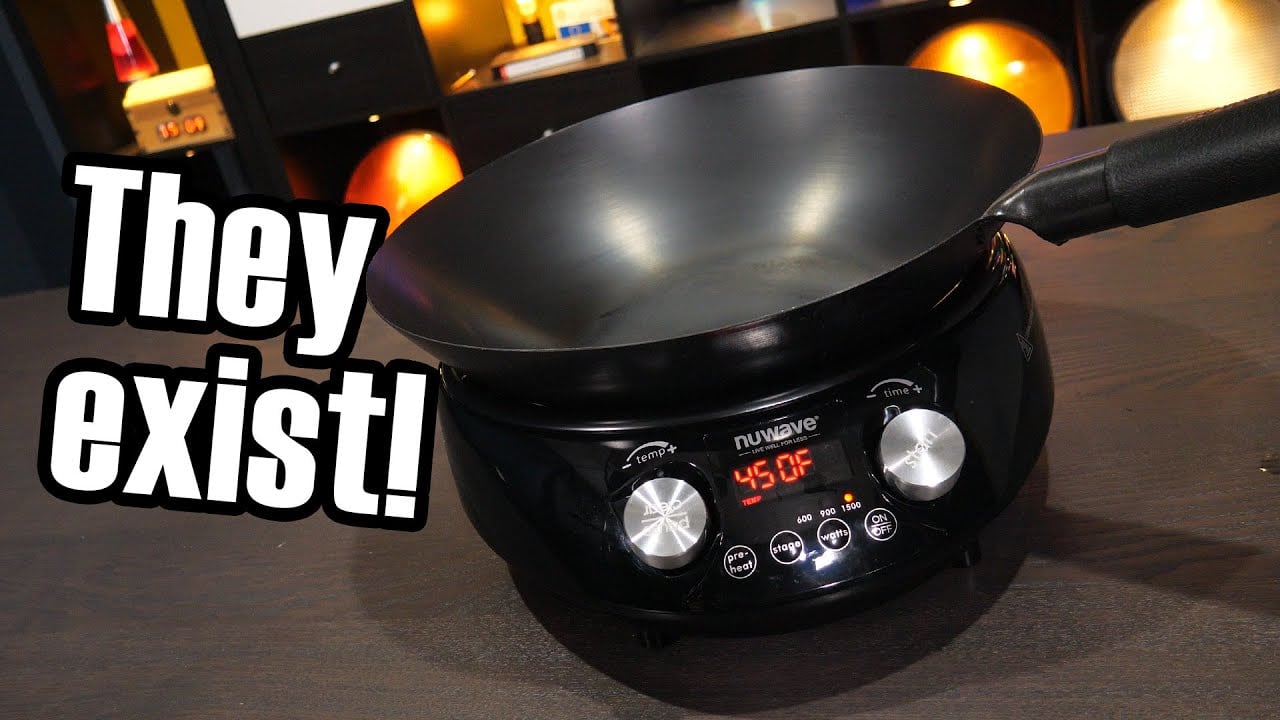
Video: Induction cooking – but what about woks?, Technology Connections. Open the educational video on YouTube.
The U.S. Fire Administration's cooking guidance also emphasizes keeping combustible items away from cooking equipment. Apply that general separation principle alongside the specific appliance instructions. A wooden object stored near the hob should not be allowed to drift into the operating area because it has sometimes been used as a serving support elsewhere.
No. Thickness alone does not establish the intended use, construction limits or permitted exposure. Check the exact board's instructions and the cookware and worktop requirements. If hot-vessel use is not established, use an identifiable suitable trivet on a separate stable surface rather than testing the board with a hot pan.
Do not put a wooden board between the pan and the cooking glass. A cutting or serving accessory is not automatically an approved cooking interface. Follow the appliance's exact requirements and use only expressly permitted arrangements; a separate landing support should remain separate from the operating zone.
No. It can reveal poor balance, obstructed handles and an awkward route, but it cannot establish heat resistance or product permission. Confirm the support's intended use first. Then use a cold rehearsal to improve the layout within those documented conditions, without treating it as a substitute for testing or certification.
Stop treating it as a known suitable hot-pan support and consult the maker's guidance. Do not repeat the exposure or assume that a superficial repair restores its performance. Choose another documented support for the cookware and assess any continued food-preparation use separately under the board's care instructions.
Cookware makers are referenced for their own instructions, not as glass suppliers or endorsements of Kanger. Country-specific terms are examples for the stated market and do not establish universal rights or product approval.



