Gas fireplace glass is part of the appliance safety and combustion system, not a generic decorative pane. Depending on the design, it may be tempered glass or transparent glass-ceramic and may form a sealed front. Replacement must match the appliance model, material, thickness, dimensions, edgework, coating, gasket, and retention system.
This guide explains the main decisions buyers, engineers, and service teams should document before selecting or ordering gas fireplace glass.
Some gas appliances use tempered glass where the validated temperature and gradient stay within that system’s limits. Higher-temperature viewing areas may use transparent glass-ceramic because of its low thermal expansion and thermal-shock performance.
The two materials are not interchangeable. Use the appliance listing, service manual, and supplier documentation.
Radiation from the flame and hot firebox can heat the front to burn-causing temperatures even when the room feels comfortable. A protective screen helps reduce accidental contact but does not make the surface cool.
Keep children and vulnerable people away and follow the appliance manufacturer’s operating instructions.
Direct-vent and other sealed-combustion fireplaces rely on the glass, gasket, frame, and latches to maintain the designed air and exhaust path. An open decorative gas fireplace may use a different enclosure concept.
Never remove or operate a sealed front unless the manufacturer explicitly provides that procedure.
Stop using the appliance and arrange qualified service when the panel or retention system is damaged.
Record the make, model, serial number, original part number, visible opening, actual glass dimensions, thickness, corner radii, holes, edge finish, coating, printing, and gasket arrangement.
A photograph alone is not enough. Small differences in material or geometry can affect fit and performance.
Let the appliance cool completely and use only approved cleaners and non-abrasive cloths. Do not scrape coatings or apply cold liquid to warm glass. Inspect edges, gasket seating, clips, and frame condition during service.
Kanger’s transparent glass-ceramic can support drawing-led OEM and replacement-panel programs after the appliance specification is verified.
For a drawing-led project, review Kanger’s transparent fireplace glass-ceramic and send the application, dimensions, material requirement, annual quantity, and validation criteria with the enquiry.
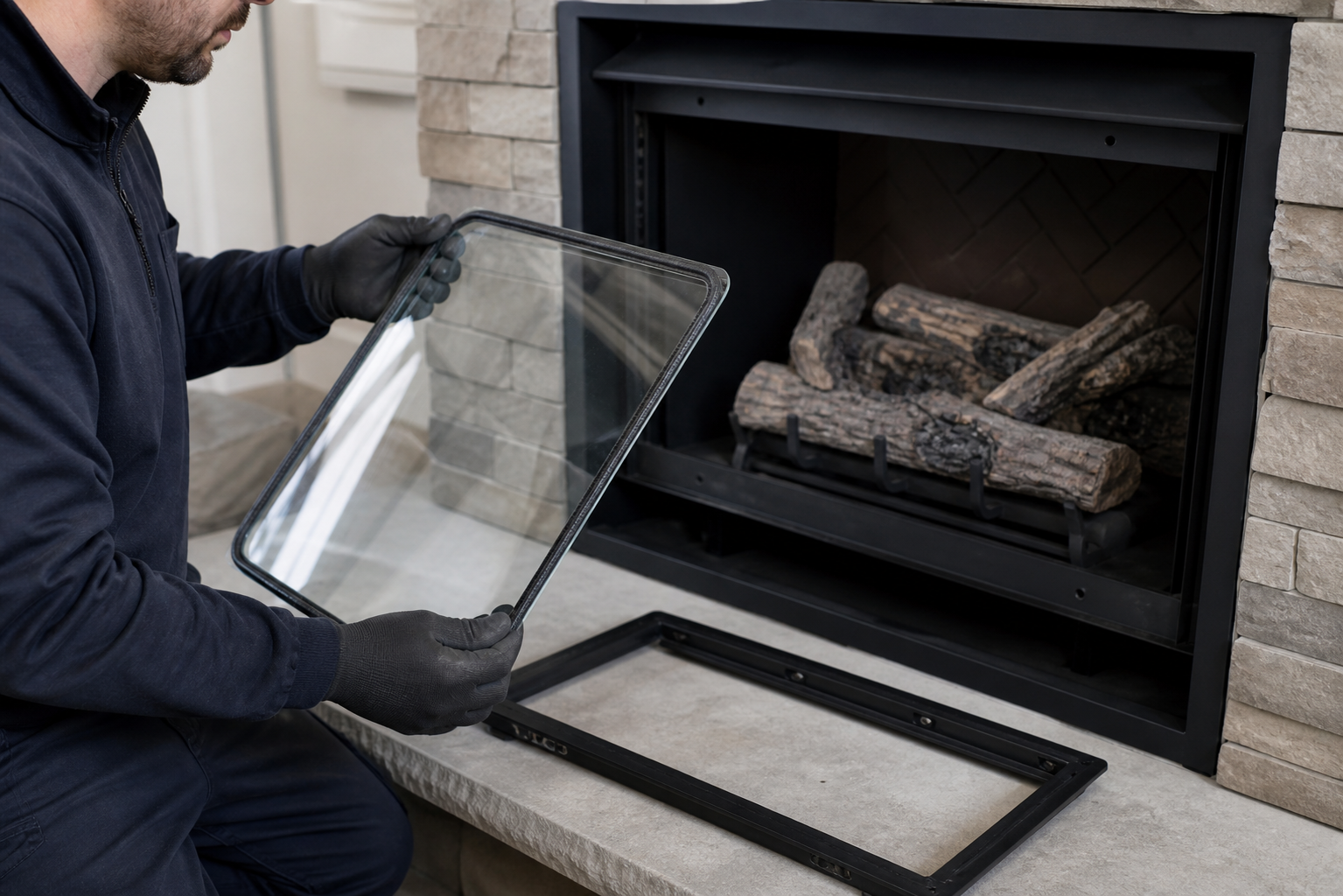
Identify the manufacturer, model, serial number, and exact panel position before ordering. Some gas fireplaces use a sealed glass front that is part of the combustion-air and venting system; others use a different listed configuration. Changing glass type, thickness, gasket compression, coatings, or retention can alter sealing, heat transfer, flame behavior, and clearances.
Tempered soda-lime glass and transparent glass-ceramic respond differently to heat. The correct choice is established by the appliance design and listing, not by a generic temperature claim. A visual match is insufficient. The replacement drawing should include dimensions, thickness, edgework, holes or notches, curvature, printing or coating, orientation, gasket, and retention details.
Stop using the appliance if the viewing panel is cracked, displaced, improperly retained, or unable to seal as intended. Do not cover a crack, substitute window glass, or operate with the glass removed unless the manufacturer explicitly designed and instructs that mode. Installation and first operation should follow the appliance manual, with attention to gasket seating, fastener sequence, clearances, and signs of abnormal combustion.
For an OEM project, qualification should use the complete door or front assembly rather than a loose coupon. Confirm fit, gasket compression, retention, thermal cycling, visual quality, and appliance-level safety tests for the target market. Packaging should protect finished edges and coated faces through final assembly.
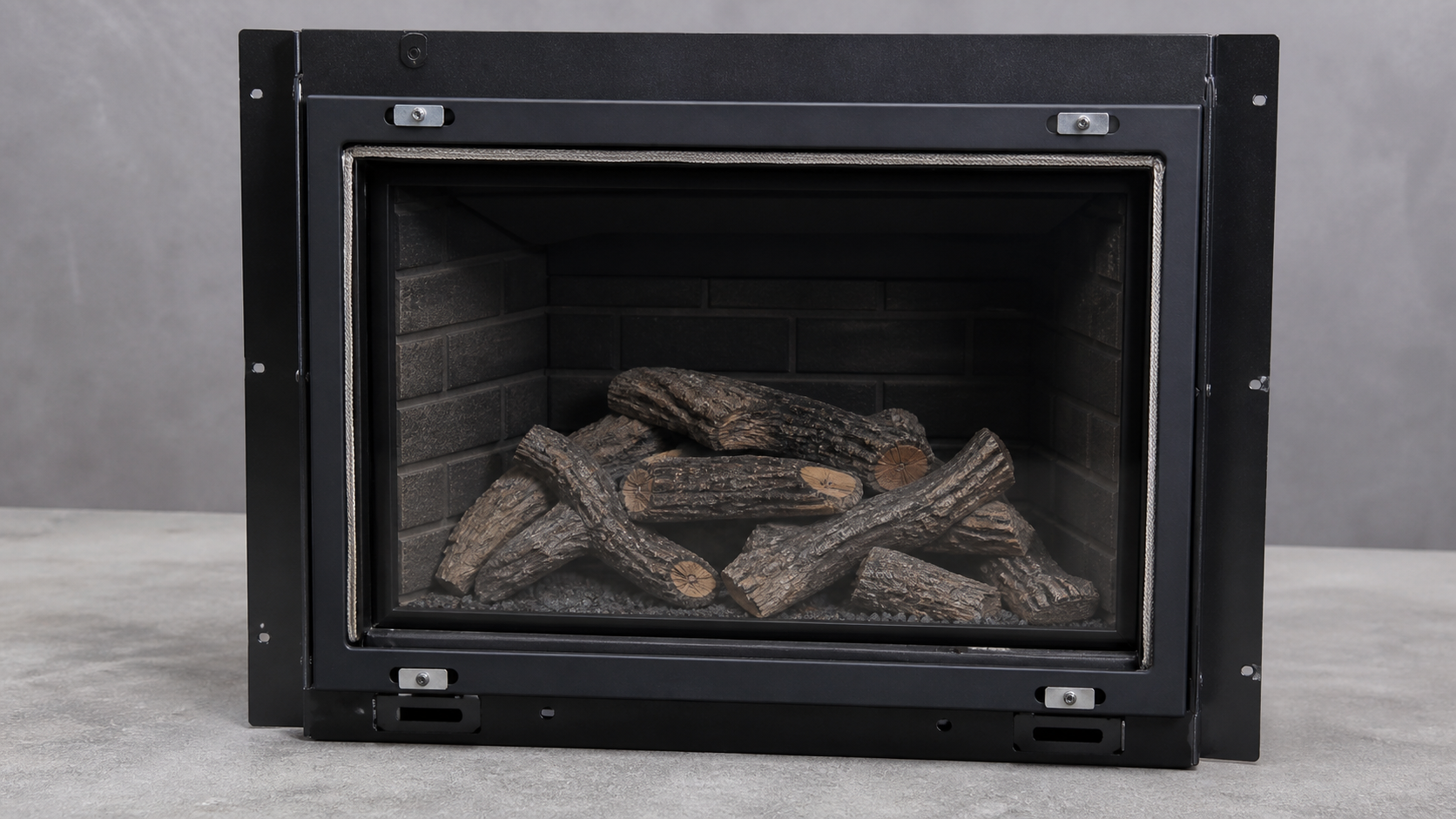
A reliable answer to this topic begins with a decision statement: whether a replacement panel exactly preserves the appliance’s tested combustion, sealing, heat-transfer, and retention design. That statement prevents a broad material claim from replacing an application-specific requirement. The team should identify the complete manufacturer-specified front or door assembly with correct glass, gasket, frame, clips, coating, orientation, and fastener sequence as the qualification unit. Testing only a convenient coupon can miss interfaces, edge conditions, supports, coatings, seals, or process history that determine whether the finished product works. The approved drawing, revision, test sample, and operating assumptions should therefore use the same configuration.
Build the validation sequence around the damage and variation that the part will actually experience: ignition and shutdown cycles, flame and radiant heat, gasket compression, frame expansion, cleaning, handling, and abnormal-operation checks required by the appliance design. These exposures should not be selected as impressive numbers without context. Their severity, order, dwell, recovery period, and sample orientation need to be written down. Combined exposure is often more revealing than isolated tests because cleaning can weaken a hot surface, a thermal cycle can change a seal, and handling damage can become critical only after the assembly is loaded.
Record evidence that can be compared before and after exposure. For gas fireplace glass selection, the useful evidence includes material identity, dimensions, curvature, edgework, fit, seal, retention, hottest-panel behavior, visual quality, and stable appliance operation. Define the instrument or inspection condition, sample count, acceptance limit, and treatment of borderline results before testing begins. Photographs help with traceability, but they do not replace measurements where a specification calls for a number. Conversely, a single numeric result does not replace a whole-part visual and functional inspection.
The failure review should remain tied to plausible mechanisms. In this case, window glass can fail; wrong gasket compression changes sealing; overtightening creates edge stress; operating with removed glass can alter combustion. When a result fails, preserve the sample and process record, identify where the change began, and decide whether the cause lies in material, geometry, processing, assembly, operation, or the test itself. Repeating the same test without correcting an uncontrolled variable can produce a reassuring result without resolving the underlying risk.
Use staged approval. First confirm material identity and drawing completeness. Next approve a representative first article. Then run the defined durability or service simulation. Finally, verify that production controls can reproduce the qualified part. Use the appliance maker’s specified part and instructions; OEM changes require complete assembly and applicable listing evaluation. Any later change to material source, geometry, surface treatment, thermal recipe, support, seal, or test method should trigger a documented review rather than an automatic carry-over of the old approval.
For purchasing, request a concise evidence package instead of a generic claim. It should contain the controlled drawing, material designation, critical-process statement, inspection method, acceptance criteria, sample or lot identification, and nonconformance path. For engineering, keep a signed master sample where appearance matters and store raw measurements with the report. This makes supplier comparisons fairer, shortens root-cause work, and prevents a marketing phrase from becoming an undocumented safety or lifetime promise.
| Stage | Control | Evidence | Why it matters |
|---|---|---|---|
| Identification | Manufacturer, model, serial and panel position | Manual and parts record | Prevents look-alike substitution |
| Glass specification | Material, thickness, shape, edgework and coating | Drawing and supplier certificate | Preserves thermal behavior |
| Assembly | Gasket, clips, frame and tightening order | Cold fit and seal inspection | Avoids contact and leakage |
| Commissioning | Manufacturer-directed first operation | Observe seal, flame and abnormal heating | Confirms correct installation |
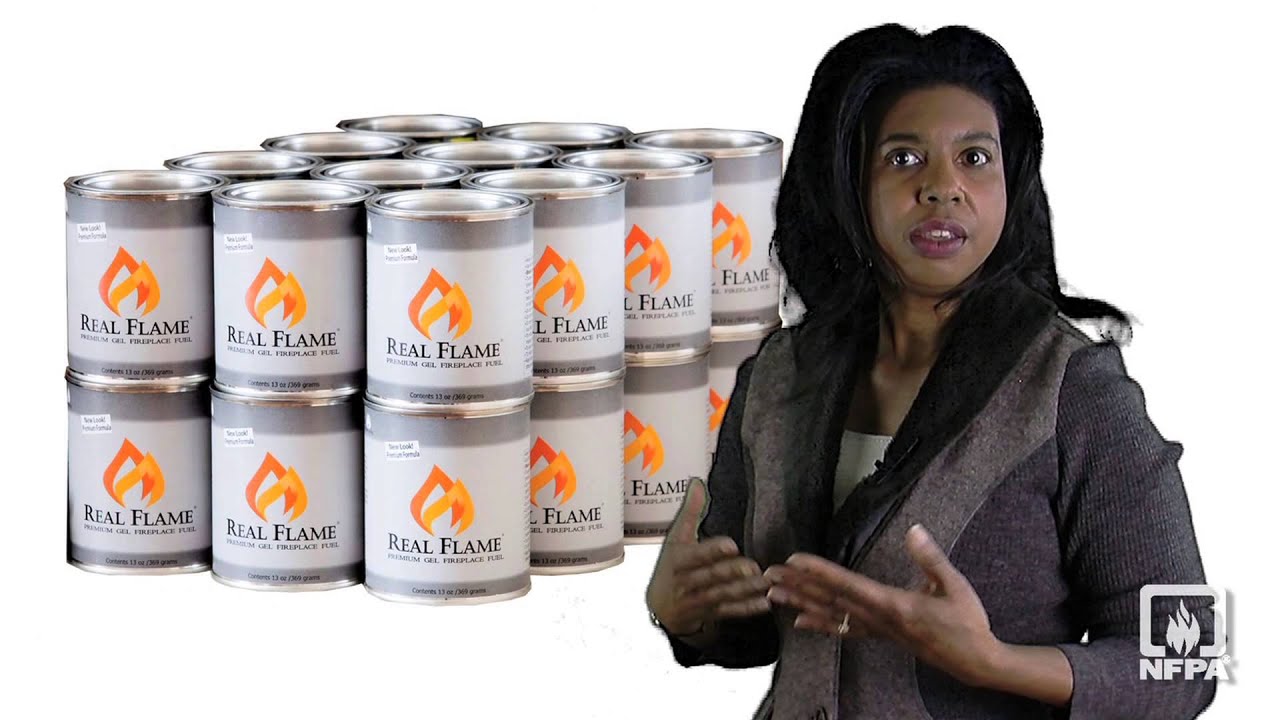
Educational video: Portable Fireplace Safety by National Fire Protection Association. This neutral explainer supports the material or safety principle discussed above; it is not a substitute for the product drawing, appliance manual, or qualification test. Watch on YouTube.
Approval is not the end of the gas fireplace glass replacement process. Record the approved supplier, material designation, drawing revision, manufacturing route, inspection method, reference sample, and test-report identifier in one controlled release file. Purchasing should require advance notice when any of those inputs changes. Engineering can then decide whether the change needs document review, limited confirmation testing, or full requalification. This is especially important when two parts have the same nominal dimensions but differ in glass composition, edgework, coating, thermal history, support, gasket, or packaging.
Incoming inspection should verify the characteristics that can drift or be damaged before assembly, while periodic audits should confirm the properties that cannot be checked economically on every part. Keep nonconforming samples long enough to support root-cause analysis, and link corrective actions to the affected lots and assemblies. A clear deviation process allows a temporary concession only when the responsible engineer has reviewed function, safety, appearance, and traceability. Verbal approval or a supplier’s general datasheet should never silently replace the controlled product requirement.
No. Use the exact heat-resistant material and geometry specified for the appliance.
The screen helps reduce accidental contact with a very hot surface; it does not replace the sealed glass front.
No. Turn it off and obtain qualified service.
Use the appliance make, model, serial number, service documentation, and a controlled drawing or original part number.