Kanger Glass-ceramic Co., Ltd.
Infrared cooker glass screen printing durability depends on the glass surface, print system, printed side, firing or curing route, coverage, registration, thermal gradients, cleaning chemicals, abrasion, and the visual and functional role of each graphic. “Durable print” is not a measurable drawing requirement. An OEM should control artwork, color and opacity masters, process compatibility, adhesion and wear methods, appliance exposure, inspection, and revision records.
This OEM guide addresses infrared cooker glass screen printing durability without inventing a universal limit, product claim, certification, or guarantee. Released drawings, approved supplier data, applicable standards, and representative appliance validation remain controlling.
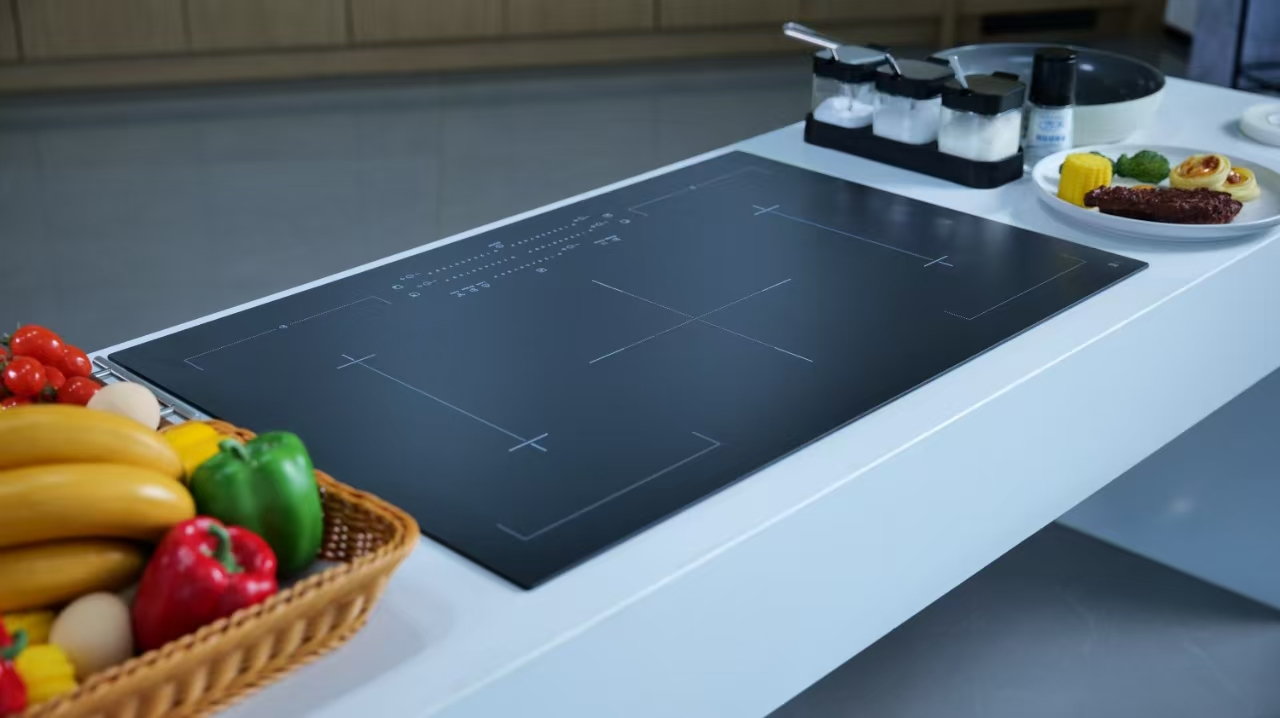
Infrared cooker graphics can sit near visibly glowing radiant zones, control icons, warning marks, and masked areas. Artwork release must identify surface, color target, opacity, registration to the heater and controls, and the cleaning and thermal exposures that the finished appliance will see.
Classify every printed feature by function
Separate cooking-zone rings, control icons, backlit windows, safety marks, decorative areas, hidden masks, and assembly references. A small registration shift can be cosmetic in one zone but affect touch sensing, display visibility, or coil alignment in another. Assign each feature a function, critical zone, color or opacity requirement, and inspection method.
Record the owner, input source, method, acceptance evidence, and reaction to missing information. Review this item with engineering, quality, manufacturing, purchasing, service, and the glass supplier. Use production-intent parts and tolerance extremes when nominal samples cannot resolve risk, and keep evidence linked to the controlled lot and revision.
Freeze artwork and orientation
Release vector artwork with dimensions, datums, line widths, registration targets, layer order, printed face, and viewing orientation. Identify the controlling file and revision. Avoid screenshots and uncontrolled scaling. Coordinate the artwork with glass geometry, edge exclusion, frame shadow, displays, sensors, and the appliance coordinate system.
Record the owner, input source, method, acceptance evidence, and reaction to missing information. Review this item with engineering, quality, manufacturing, purchasing, service, and the glass supplier. Use production-intent parts and tolerance extremes when nominal samples cannot resolve risk, and keep evidence linked to the controlled lot and revision.
Select a compatible print process
Review the ink or ceramic frit, glass surface, pretreatment, mesh, deposit, drying, firing or cure, and any overprint. The supplier must confirm compatibility with the specific glass-ceramic and production thermal history. Do not substitute materials or routes without written review, because color, adhesion, stress, opacity, and electrical or optical behavior can change.
Record the owner, input source, method, acceptance evidence, and reaction to missing information. Review this item with engineering, quality, manufacturing, purchasing, service, and the glass supplier. Use production-intent parts and tolerance extremes when nominal samples cannot resolve risk, and keep evidence linked to the controlled lot and revision.
Define appearance under controlled viewing
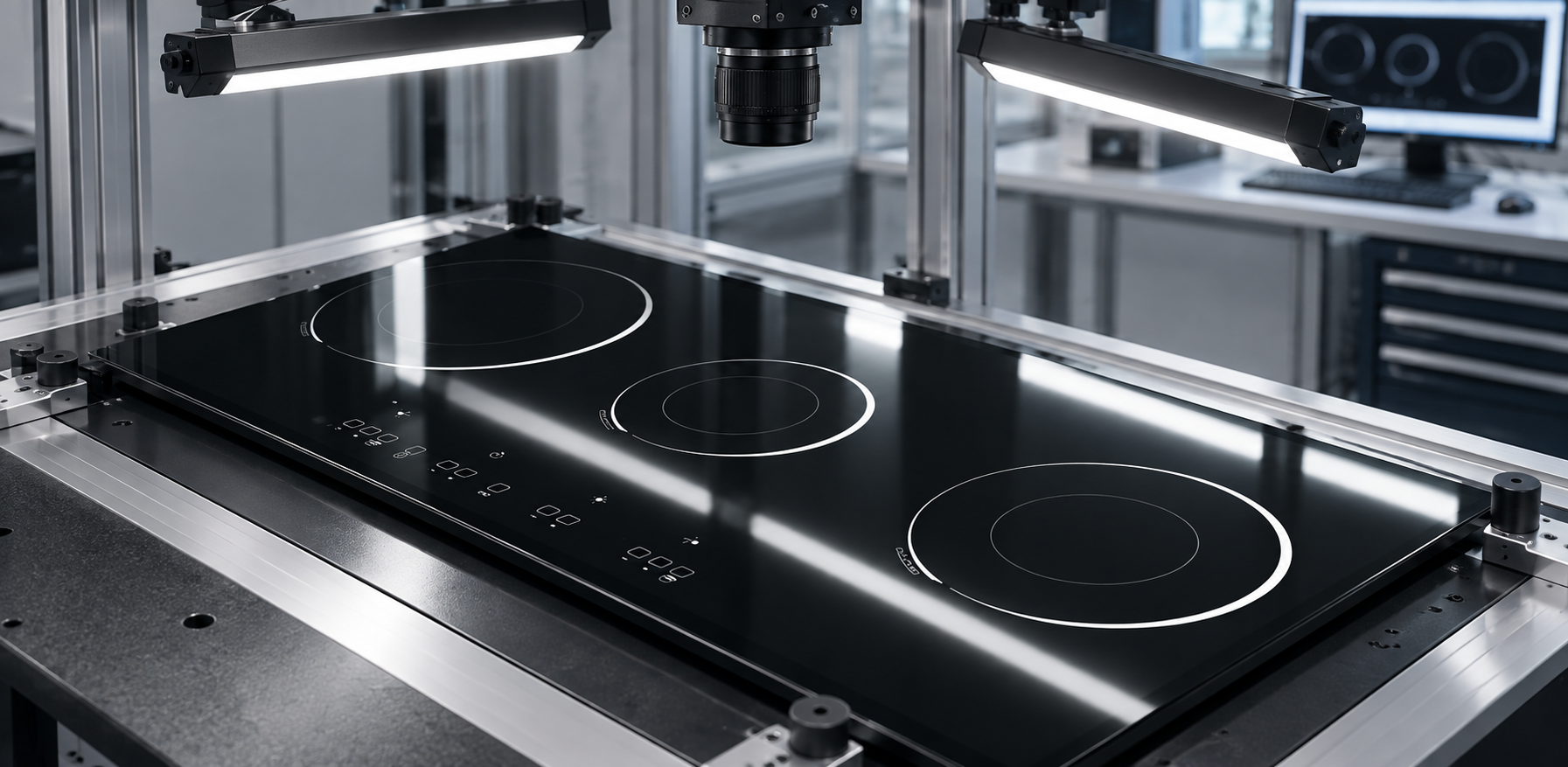
Use an approved physical master for color, gloss, opacity, edge definition, pinholes, voids, contamination, and registration. Specify lighting, background, distance, angle, and whether inspection occurs before or after assembly. For backlit symbols, define the representative light source and evaluate lit and unlit states. Instrument data should include geometry, backing, aperture, calibration, and locations.
Record the owner, input source, method, acceptance evidence, and reaction to missing information. Review this item with engineering, quality, manufacturing, purchasing, service, and the glass supplier. Use production-intent parts and tolerance extremes when nominal samples cannot resolve risk, and keep evidence linked to the controlled lot and revision.
Build a layered durability test plan
Use tests that represent actual risks: controlled adhesion, dry and wet rubbing, approved cleaners, heat, thermal cycling, cookware contamination, and handling. Fix sample preparation, load, tool, stroke, speed, cycles, dwell, temperature, cleaning, and evaluation. Do not combine unrelated exposures without understanding whether the sequence reflects service or creates an artificial failure.
Record the owner, input source, method, acceptance evidence, and reaction to missing information. Review this item with engineering, quality, manufacturing, purchasing, service, and the glass supplier. Use production-intent parts and tolerance extremes when nominal samples cannot resolve risk, and keep evidence linked to the controlled lot and revision.
Protect sensor and display performance
Printing near capacitive controls, optical displays, indicator lights, or antennas can affect signal and visibility. Validate the production stack with the real electronics, adhesive, frame, and lighting. Check registration, opacity, transmission, contrast, touch response, false activation, and temperature. A print that looks correct on a bare panel may behave differently in the assembled cooker.
Record the owner, input source, method, acceptance evidence, and reaction to missing information. Review this item with engineering, quality, manufacturing, purchasing, service, and the glass supplier. Use production-intent parts and tolerance extremes when nominal samples cannot resolve risk, and keep evidence linked to the controlled lot and revision.
Control production and first articles
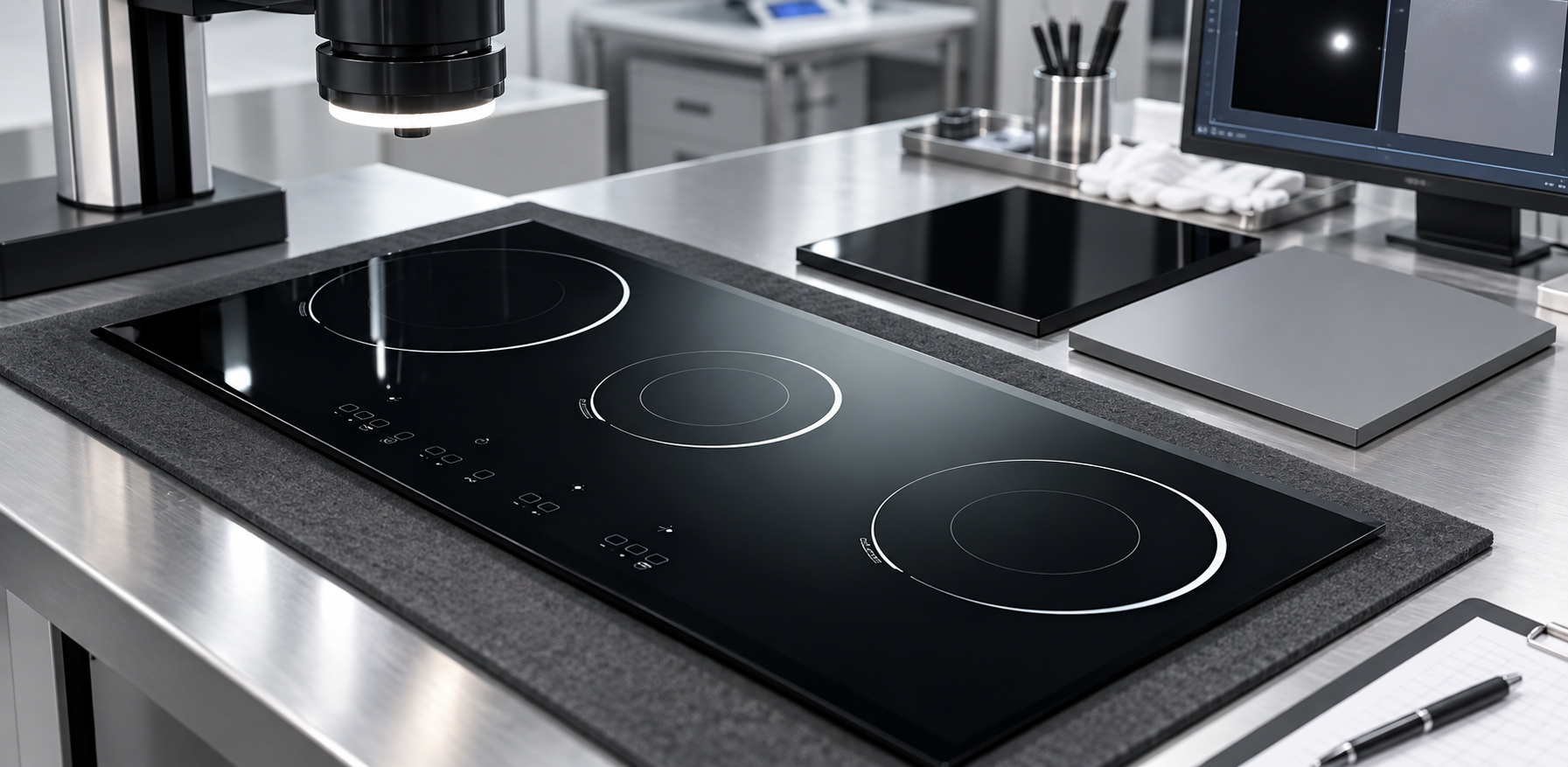
Record glass lot, print material lot, screen, artwork revision, process route, firing or cure, operator, and inspection results. First articles should include dimensional registration, visual comparison, adhesion or wear evidence, and appliance checks. Trend defects such as pinholes, edge raggedness, color shift, poor opacity, smears, and misregistration by lot and screen life.
Record the owner, input source, method, acceptance evidence, and reaction to missing information. Review this item with engineering, quality, manufacturing, purchasing, service, and the glass supplier. Use production-intent parts and tolerance extremes when nominal samples cannot resolve risk, and keep evidence linked to the controlled lot and revision.
Manage cleaning claims and changes
Only approve cleaners and procedures represented in validation. State whether concentrated chemicals, abrasive pads, scrapers, or prolonged soaking are outside the design. Revalidate changes to glass source, print system, artwork, screen, firing or cure, cleaning chemistry, assembly, display, sensor, or supplier. Preserve masters and retained samples under revision control.
Record the owner, input source, method, acceptance evidence, and reaction to missing information. Review this item with engineering, quality, manufacturing, purchasing, service, and the glass supplier. Use production-intent parts and tolerance extremes when nominal samples cannot resolve risk, and keep evidence linked to the controlled lot and revision.
Engineering table
| Print requirement | Control | Evidence |
|---|---|---|
| Artwork | Datums, layers, line widths and printed side | Released vector file |
| Appearance | Color, opacity, defects and registration | Physical master and inspection method |
| Durability | Adhesion, abrasion, cleaners and thermal duty | Controlled test records |
| Function | Touch, display and alignment | Assembled appliance validation |
| Production | Lots, screen, process and reaction plan | First-article and serial records |
RFQ, first-article, and serial-production workflow
At RFQ, provide controlled files, application, panel dimensions, edge and surface details, graphics, quantities, packaging, and validation conditions. Ask the supplier to identify feasibility limits, assumptions, and deviations in writing. The quotation, traveler, purchase order, and inspection instruction should reference the same released package.
Before approving a first article, verify identity, geometry, edges, surface, artwork, packaging, and the topic-specific evidence in this guide. Assemble production-intent samples with the real frame, supports, seal, coils, controls, and fixtures when those interfaces influence the result. Record equipment, setup, sample lot, measurements, photographs, exposure, and disposition.
For serial production, translate the release into measurable checks with named methods, sample identity, and reaction plans. Trend results by lot, tool, material batch, print screen, package position, and supplier. When a nonconformity appears, contain related material, preserve original evidence before rework, compare it with the approved setup, and verify corrective action on later lots.
Educational video
This neutral Corning Museum of Glass video provides useful background on glass processing and stress. It does not replace calculations, drawings, appliance instructions, or qualification.

Related Kanger resources
- Black glass-ceramic product page
- Glass-ceramic material overview
- Optical inspection criteria for infrared cooker glass
- Durable screen printing on infrared cooker glass
For a drawing-led quotation, send Kanger the application, controlled files, quantities, validation requirements, and schedule. Technical review can identify missing information without turning this general guidance into an unsupported guarantee.
Frequently asked questions
Is a tape test enough to qualify printed graphics?
No. Adhesion is only one risk; the plan may also need abrasion, cleaners, heat, thermal cycling, appearance, and appliance function.
Should backlit symbols be inspected unlit only?
No. Evaluate both unlit appearance and representative backlit contrast, uniformity, and registration.
Can ink or frit be substituted without approval?
No. A material or process substitution can change color, opacity, adhesion, stress, and functional behavior.
What belongs in the artwork release?
Include dimensions, datums, line widths, layers, printed side, orientation, registration targets, controlling file, and revision.