Induction stainless steel pan salt pitting is a cookware-surface concern, not a diagnosis of the glass hob or its electronics. Let the pan cool, identify its actual interior finish, and follow its manufacturer’s permitted cleaning method before assessing a remaining mark. A photograph alone cannot distinguish every deposit, scratch or cavity. If a mark remains and its condition is uncertain, send the cookware maker clear evidence rather than polishing away material or assuming the pan is approved for continued use.
This guide provides a practical observation and support workflow. It does not assign a corrosion depth limit, certify food-contact suitability or apply one brand’s guarantee to another. The first useful distinction is where the mark is: inside the vessel, on its exterior base, or on the separate glass cooking panel.
A stainless exterior does not establish that the cooking surface is uncoated stainless steel. Read the model description and care leaflet, checking the exact piece rather than the name of the whole set. Sets can contain different interiors. If a dark finish or damaged area is difficult to identify, ask the manufacturer what that surface is before choosing a cleaner.
Keep interior corrosion questions separate from induction recognition. A pan’s magnetic base and suitable size concern how the appliance works with it; they do not identify the condition of the cooking surface. Use checking stainless cookware for induction for the base-selection question, then return to the identified interior and its specific care instructions for the marks under discussion.
Empty the vessel only when handling is safe. Place it on a stable protected worktop, away from the glass panel and appliance controls. Photograph the whole interior, then a closer view of the affected area under ordinary light. Include a separate photograph of the model identification. Do not dismantle a bonded base or remove a coating to improve visibility.
Describe observable features: a pale ring, a dark speck, a raised deposit or an apparent depression. Record whether it appeared after a particular meal or cleaning event, if known. Calling every dark speck a salt pit makes the service enquiry less precise. Equally, a shiny appearance after wiping does not prove that the surface has no damage.
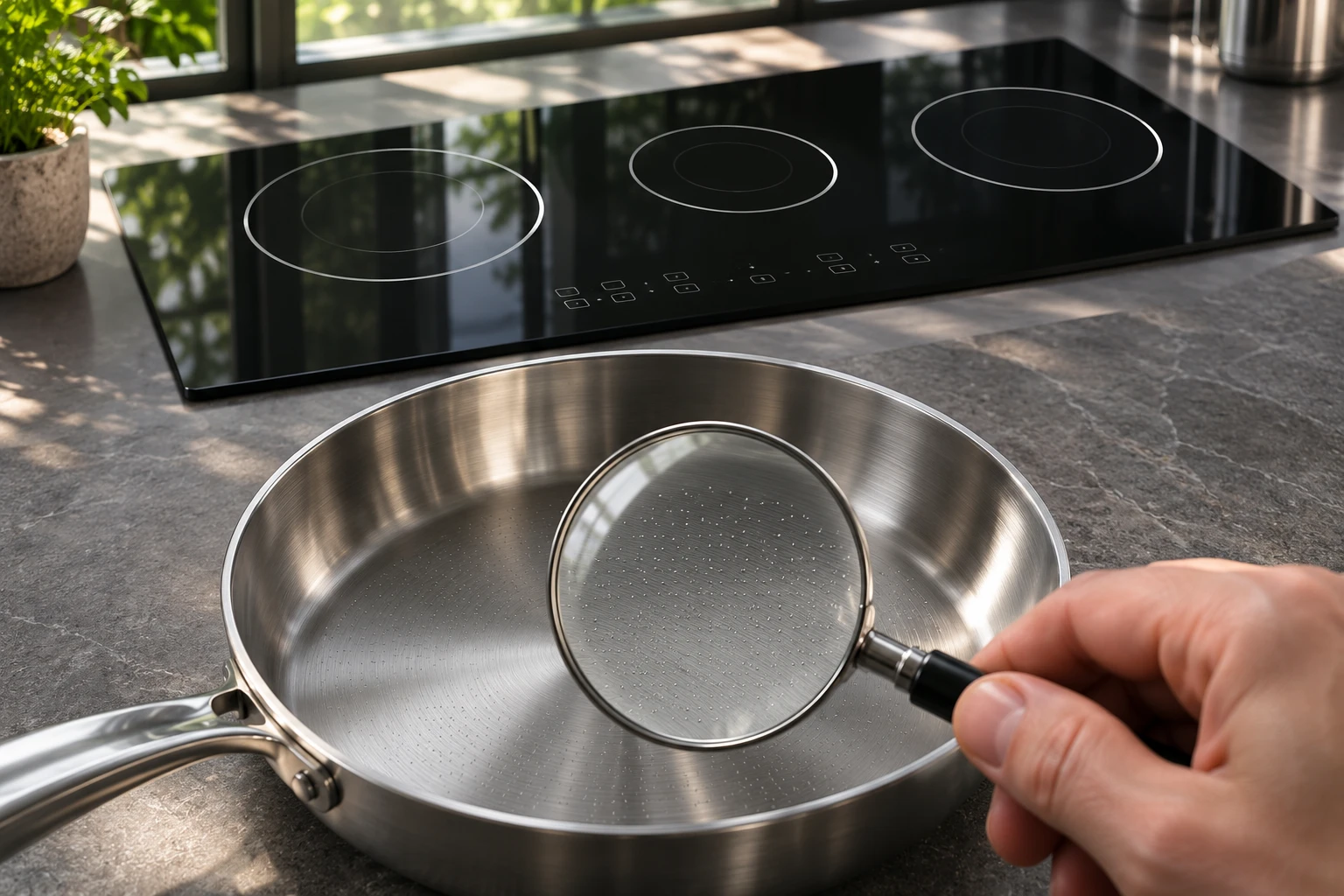
The Tefal care FAQ for the identified Ingenio set discusses salt-related pitting and distinguishes it from other stainless-surface marks. Its advice belongs to the products and surfaces described there. It is useful evidence that appearance and cleaning history matter, not permission to use the same chemistry on every vessel.
Find the actual cleaner restrictions in your own instructions. Follow the stated application, rinsing and drying directions. Never combine household cleaning chemicals to intensify the effect. If the first permitted process leaves an unexplained mark, pause and ask support. Repeated abrasion can erase evidence while creating a second condition that is harder to assess.
Take the second photograph in similar lighting and at a similar angle. Note whether the visible material came away, the color changed, or the same localized feature remains. This simple before-and-after record helps support distinguish a cleaning question from a surface-condition enquiry without requiring you to make a technical diagnosis at home.
Avoid improvised depth measurements with a knife, pin or drill bit. A tool can scratch the finish, and a household measurement cannot substitute for the manufacturer’s assessment method. If support requests additional observations, ask for a safe written procedure appropriate to that product. Do not heat the vessel merely to see whether a remaining spot changes.
| Cold observation | Useful record | Next action |
|---|---|---|
| Visible film disappears with permitted care | Before and after photographs and cleaning product used | Follow routine care; ask support if it repeatedly returns |
| Localized mark remains after permitted cleaning | Whole interior and close view, exact model | Ask the cookware maker to assess the condition |
| Unknown interior finish | Model reference and product description | Identify the finish before further cleaning |
| Flaking, sharp damage or opening in an assembly | Photograph without dismantling | Leave the affected vessel out of use pending advice |
| Mark is on the hob rather than inside the pan | Separate panel photograph | Use the appliance’s surface-care or service process |
This is an enquiry checklist, not a damage grading scale. The actual product’s care instructions and the responsible manufacturer’s assessment govern the decision. No row establishes a universal acceptable pit size or a warranty outcome.
Some cookware instructions address when to add salt to cooking water and how to dissolve it. Follow the sequence specified for the exact vessel and recipe. Do not infer that every stain after salted cooking must have the same cause. Cleaning agents, residues and pre-existing surface conditions are separate facts that support may need to consider.
A useful household record names what was cooked, how the vessel was cleaned and when the mark was first noticed. It need not include a speculative explanation. If the pan changed owners or its history is unknown, say so. An honest incomplete history is more useful than an invented account designed to fit a familiar diagnosis.
Send the model, approximate purchase date, interior finish if confirmed, and clear photographs. List the cleaner actually used and the relevant care instructions you followed. Ask whether the condition requires an in-person inspection and whether use should stop while the enquiry is open. Keep the receipt and the manufacturer’s reply with the vessel’s record.
Separate a condition assessment from a guarantee claim. Warranty terms can depend on product, territory, age and documented use. An example in another company’s document does not establish coverage for your pan. Request the applicable terms directly and avoid promising a replacement to a customer before the responsible seller or manufacturer has confirmed it.
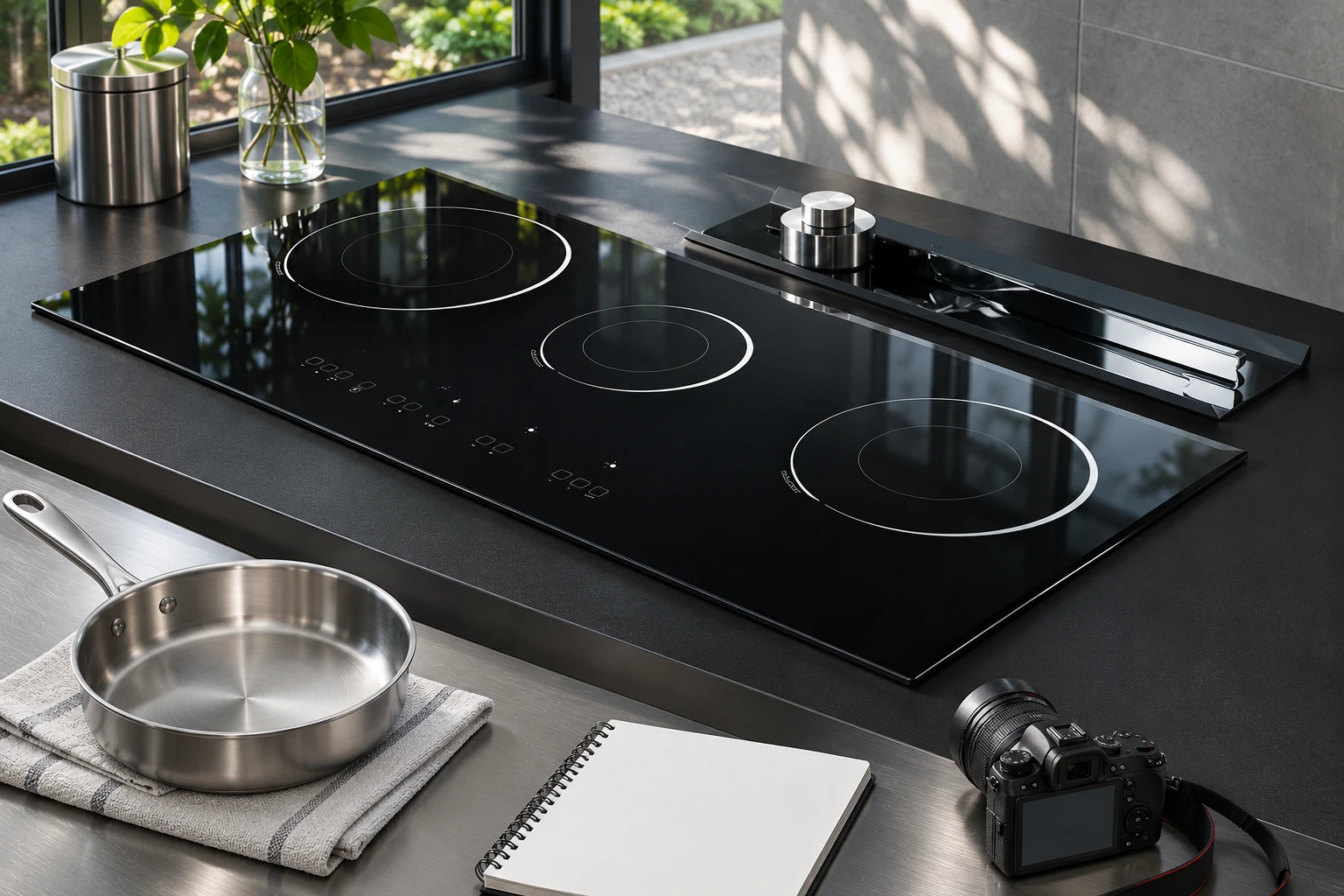
A cleaner suitable for one stainless interior is not automatically suitable for the appliance panel, its printed markings, trim or seals. Carry out the pan-care process in the location and manner permitted by its instructions. Rinse and dry the vessel as directed before it returns to the cooking position. Check that loose residue is not carried onto the base.
For marks on the appliance itself, consult pitting concerns on the glass cooktop and separating films and marks on hob glass as separate observation guides. Do not transfer their glass-care procedures into a coated pan either. The two surfaces meet during cooking, but they remain different products with different care requirements and different organisations responsible for assessing damage.
The T-fal care and use resource also organizes guidance by cookware type. Locate the matching product section rather than treating a shared brand name as permission for a cleaning method.
Once the manufacturer has clarified the condition, keep its written advice alongside the care leaflet. Make any agreed routine easy for the next user to follow: which cleaner is permitted, where it is stored, and which surface it applies to. Remove unlabeled mixtures and ambiguous instructions from the workflow rather than relying on memory.
If multiple pans show similar marks, document each model separately. Shared water or cleaning practices may be relevant information, but they do not establish that every vessel has the same fault. Compare the records before changing the whole kitchen routine. A targeted correction supported by the relevant makers is more useful than treating all cookware as interchangeable.
Kanger black glass-ceramic cooktop panels describes the relevant Kanger panel product, while the black glass-ceramic material guide explains the material context. Neither page certifies a third-party pan’s corrosion condition. For an appliance project, keep panel requirements, cookware guidance and after-sales responsibilities in separate sections of the handover information so a user knows where to send each question.
Provide an example enquiry route for a cookware mark and another for a panel mark. Avoid a combined instruction such as “polish any spot” that obscures the substrate. This separation helps a distributor collect better evidence and avoids claiming that a replacement glass panel can repair a condition located inside the vessel.
This independent explanation covers induction heating and vessel geometry. It provides background for separating the heating system from the cooking surface; it does not demonstrate corrosion diagnosis, cleaning chemicals or utensil durability.
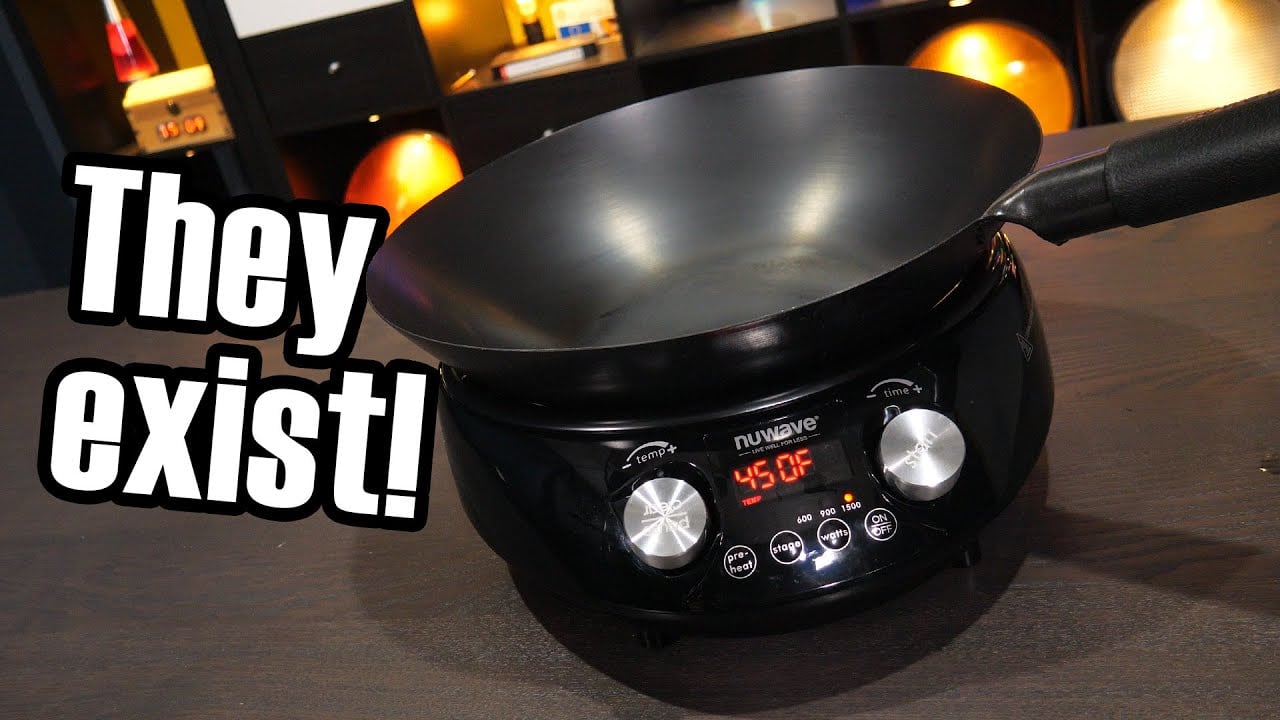
Video: Induction cooking – but what about woks?, Technology Connections. Open the educational video on YouTube.
No. Identify the actual interior surface and inspect it cold after permitted care. Heating method alone does not diagnose the mark.
Do not remove material as a diagnostic method. Follow the care leaflet and ask the maker about a remaining mark before attempting further treatment.
No. Confirm the exact model and interior finish; a stainless-bodied pan can have a different cooking surface.
No. The vessel interior and the appliance panel are separate surfaces. Ask the responsible manufacturer about the affected product.



