Induction cookware first use label removal should happen before heating, following the exact product’s unpacking and care instructions. Remove the packaging and labels the maker identifies as removable, preserve the model information, then wash and dry the vessel as directed. Do not scrape an unknown marking or use heat, blades or improvised solvents to release adhesive. If you cannot tell a temporary sticker from a permanent product marking, ask the manufacturer before proceeding.
This guide is an unpacking and readiness workflow for a new vessel. It does not prescribe a universal adhesive remover or seasoning process. Induction suitability, surface preparation and appliance operation remain separate checks, even when the cookware was sold as ready for an induction kitchen.
Choose a clear preparation area large enough for the carton, pan and loose parts. Keep the appliance off and avoid balancing packaging across its controls. A new pan can still have heavy lids, sharp packaging staples or small accessories that need to be accounted for. Open the package in the sequence its instructions describe and place pieces where they cannot roll or fall.
Inspect the contents before discarding anything. Find the instruction leaflet, model reference and included accessories. Check for transit damage without dismantling the base or handle assembly. If the item arrived damaged or a part is missing, record the condition and contact the seller before washing or using it; a first-use routine cannot make an incomplete assembly ready.
Temporary cardboard inserts, transport pads and removable stickers differ from etched base markings, printed care symbols and fixed identification plates. Do not assume everything carrying a brand name is removable. Photograph the base and the packaging reference so that you can retrieve the correct instructions later, then remove only what the product’s unpacking guidance identifies.
The Le Creuset first-use preparation guide describes packaging and sticker removal for the products it covers, including checking more than one location. Its storage-spacer advice is also product-specific. This is evidence for a thorough unpacking check, not a reason to retain every piece of transport plastic or to remove a permanent mark from unrelated cookware.
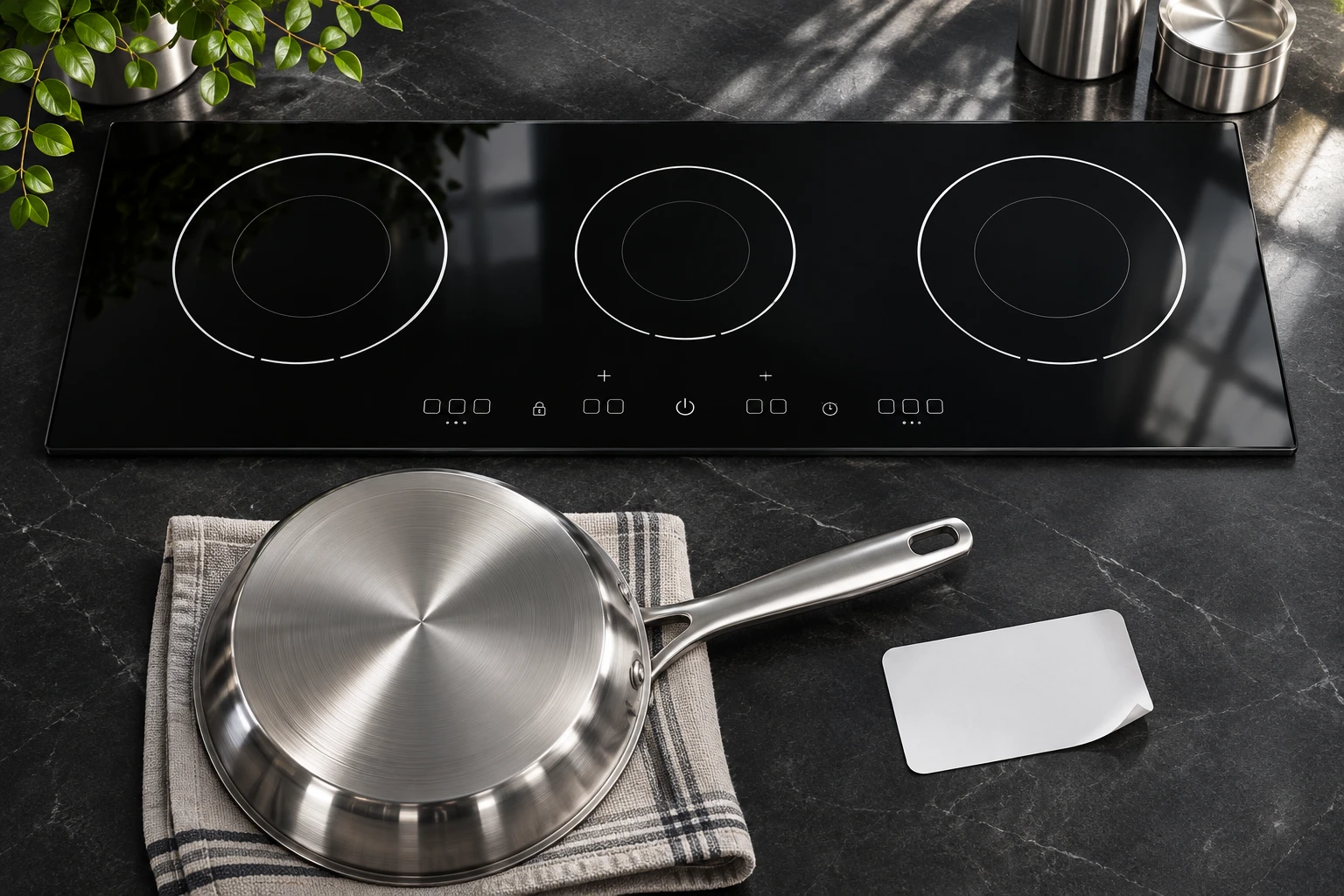
Look at the cold pan’s underside, interior, side wall and rim. Lift the lid and examine it separately, including any protection between lid and vessel. Check handles and accessories for packaging that might otherwise be missed. Keep each removed item away from the hob so it cannot later be trapped under a pan or blown onto the cooking area.
Do not use a metal scraper or knife to investigate a resistant sticker unless the manufacturer explicitly supplies that method for the exact surface. The tool may damage a coating or create a sharp scratch. If adhesive remains, send the maker a photograph and identify the surface. A cleaner suitable for bare stainless steel is not automatically suitable for a coated exterior or printed marking.
| Item found | Question to resolve | Action before heating |
|---|---|---|
| Loose cardboard or transport insert | Is it packaging named in the unpacking instructions? | Remove and account for it as directed |
| Sticker on the side or base | Is it removable and what method is permitted? | Follow the product-specific removal advice |
| Etched symbol or fixed identification | Is it permanent product information? | Preserve it; ask if uncertain |
| Unexplained residue | What surface and cleaner restrictions apply? | Pause and request a compatible cleaning method |
| Missing, loose or damaged component | Is the assembly complete and suitable for use? | Resolve with the seller or maker before cooking |
The checklist turns the cited first-use guidance into an inspection sequence. It is not a list of approved solvents or a substitute for the product’s assembly instructions. No row establishes permission to alter a fixed part or remove a safety marking.
Read the care document before selecting a sponge, cleaner or machine cycle. Use the specified washing process, rinse and dry as directed, and keep incompatible chemicals away from the vessel. The relevant sections in Le Creuset material-specific care instructions show that first-use and later cleaning advice can vary across cookware constructions. Select the actual range rather than a paragraph that happens to mention a familiar material.
Do not transfer instructions for uncoated cast iron to an enamel or nonstick interior. Equally, an induction-compatible stainless exterior does not identify the interior finish. If the box and the pan seem inconsistent, ask the maker to confirm the model. A simple identification question is preferable to changing an unknown surface with an irreversible preparation method.
Some products include a conditioning step, while others have different preparation requirements. Follow only the sequence, materials and heat guidance given for the actual vessel. Do not interpret a generic first-use checklist as an instruction to heat every empty pan with oil. Empty heating can conflict with the product or appliance directions and is not a sticker-removal method.
If a conditioning instruction appears to conflict with a general care warning, ask the manufacturer to clarify how it applies to the exact item. Keep the reply with the model record. There is no universal amount of oil, heating duration or temperature that this guide can responsibly assign to all cookware sold for induction.
Wipe the preparation area and collect the loose packaging before moving the vessel. Check that no sticker backing, cardboard edge or small plastic spacer remains on the pan base. Move the pan by lifting it rather than dragging it across a glass surface. Follow the appliance instructions for a clean, dry contact area and safe placement.
The cooktop glass has its own cleaning limits. A solvent permitted on a particular pan does not establish compatibility with appliance printing, trim or seals. Use separate cloths and keep chemical containers away from the cooking area. Do not use the hob as a workbench for scraping adhesive, trimming packaging or assembling a heavy cookware set.
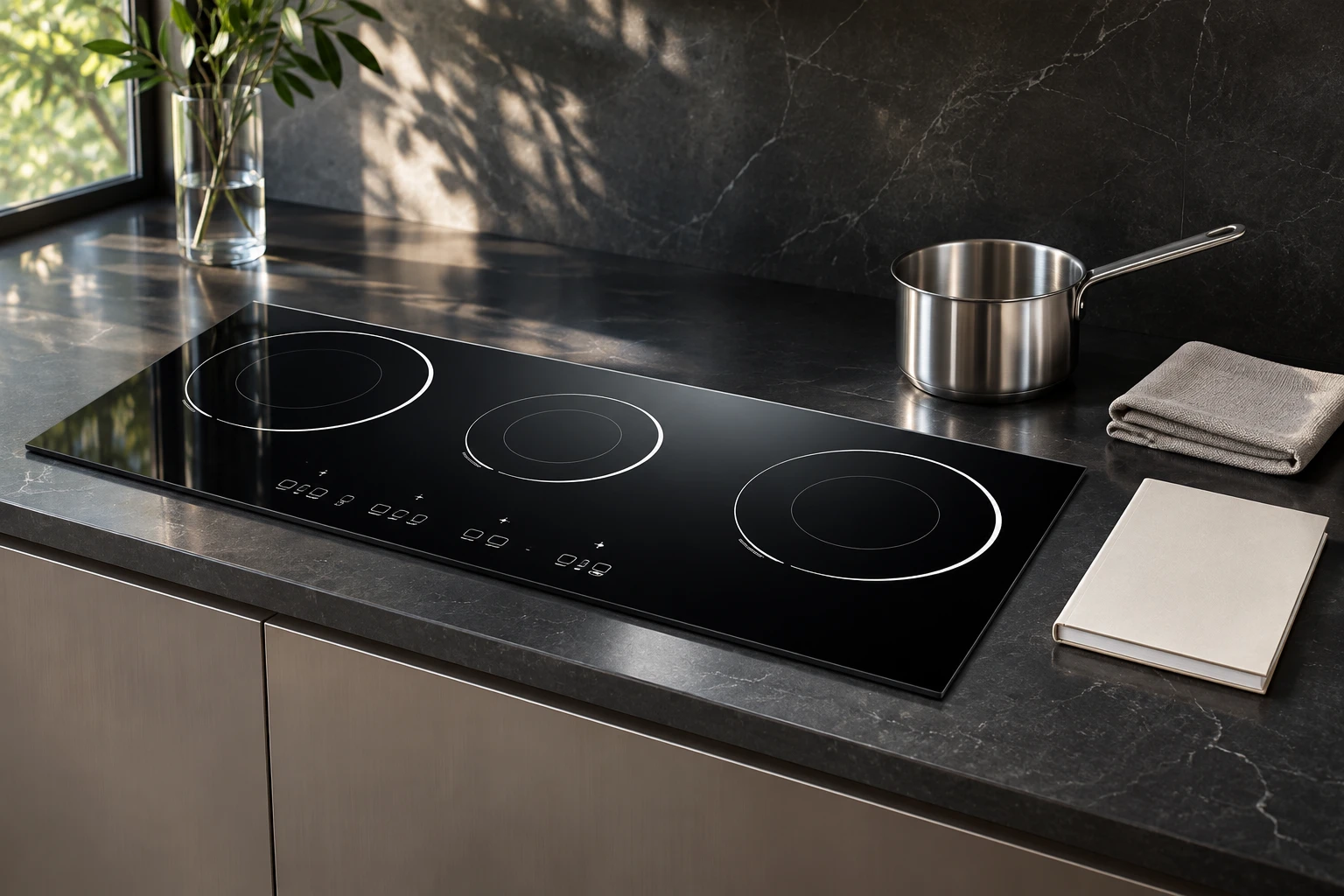
Locate the manufacturer’s induction information and compare the vessel base with the appliance’s permitted zone sizes and placement guidance. Consult stainless cookware induction-base checks for the separate base-selection question. Removing a sticker does not convert an unsuitable base into a suitable one, and a magnetic response alone does not resolve every size or construction requirement in the appliance manual.
Use the appliance’s normal operating procedure for the first cooking session, with the prepared vessel and appropriate contents. Do not bypass pan detection, add an unapproved adapter or deliberately overheat the cookware to test it. If the appliance does not recognize the pan, stop and investigate that problem separately rather than assuming more aggressive cleaning is needed.
Read the directions for any removable handle, lid, steaming insert or storage cover supplied in the box. Confirm that it belongs to the exact vessel and is installed as required. A set can contain pieces with different heating, oven or cleaning permissions. A lid that fits the rim does not automatically carry every permission of the pan body.
For surface contact during cooking, matching utensils to the cooking surface helps separate utensil choice from packaging preparation. Decide which tools are permitted before food is in the pan, and put incompatible tools elsewhere. This avoids discovering mid-recipe that the available utensil or lid is unsuitable for the new surface or assembly.
If packaging was accidentally heated, switch off the appliance and manage the immediate situation according to its instructions. Avoid touching hot material or scraping the glass while trying to recover a sticker. Once handling is safe, document the vessel, appliance surface and packaging condition separately. Ask the responsible manufacturer for a safe assessment and cleaning method.
Do not assume that the disappearance of a visible mark proves that every affected surface is undamaged. Likewise, a stubborn mark is not by itself evidence of a failed glass-ceramic panel. Provide photographs and the known sequence of events without inventing a diagnosis. Keep the affected item out of use when the maker says assessment is required or safe use remains unresolved.
Store the care leaflet, receipt and model photograph together. Record any manufacturer clarification about residue, assembly or first-use preparation. In a shared kitchen, a brief note about which handle and lid belong to the pan is often more useful than keeping a carton with no readable model reference. Preserve the information needed to buy the correct replacement part later.
For equipment purchasers, request the first-use and cleaning documents with the order. Confirm what must be done before staff begin cooking and whether any accessories have separate instructions. These practical questions support a clean handover without claiming that a generic preparation routine replaces the supplier’s product documentation or the operator’s appliance training.
Kanger black glass-ceramic cooktop panels are part of the appliance surface, while this guide concerns preparing removable cookware. The black glass-ceramic material guide supplies material context for the glass-ceramic side. Neither a cookware care example nor an induction symbol establishes a finished Kanger appliance specification, a solvent approval or a compatibility guarantee.
The useful sequence is straightforward: identify, unpack, preserve permanent information, prepare by the correct care instructions, then check the vessel against the actual appliance. Complete each step before heating. That keeps a packaging question from turning into unnecessary surface damage or an avoidable pan-recognition enquiry.
This independent educational explanation shows the relationship between induction heating and vessel geometry. It helps explain why a base that heats on induction says nothing about dishwasher permission, packaging removal or food-storage suitability. It does not demonstrate those care processes or approve any cookware model.
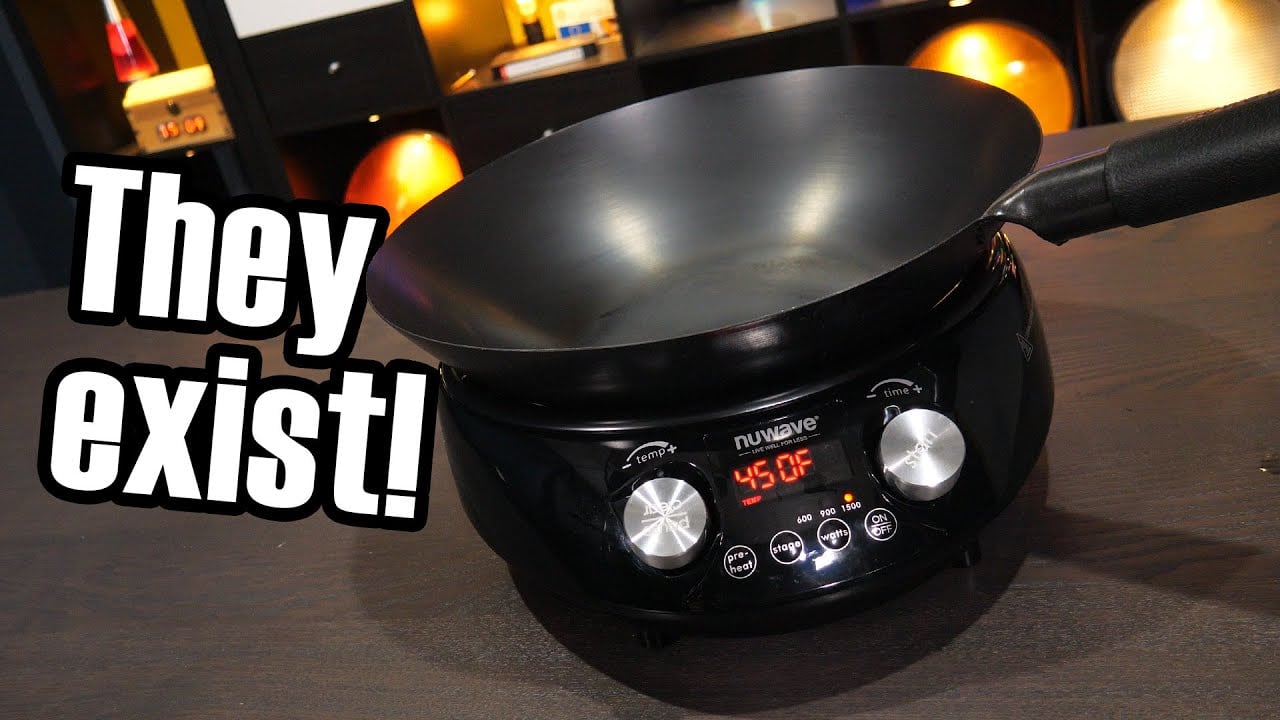
Video: Induction cooking – but what about woks?, Technology Connections. Open the educational video on YouTube.
No. Distinguish removable packaging from etched symbols and permanent identification. Ask the maker before removing an uncertain marking.
Do not improvise with heat. Follow the exact product’s removal instructions and request a compatible method if residue remains.
No universal preparation applies. Follow the actual finish and model instructions, including any specified conditioning step.
Keep the model information, care leaflet, receipt and relevant manufacturer advice. Retain any product-specific storage accessories only as instructed.



