An induction hob jam pan needs an induction-designated bottom that meets the hob instructions, together with a manageable handle and pouring arrangement. A broad maslin pan can have a much narrower base than its upper opening. Check the actual bottom, the selected model and the intended working quantity before heating. Capacity printed on a listing is not permission to fill the pan to the rim or to carry that amount while hot.
This guide addresses preserving-pan equipment selection and handling preparation. It does not supply jam recipes, processing times or instructions for shelf-stable food preservation. Those require a tested recipe and appropriate food-preservation guidance. Here the useful distinction is between a flared preserving vessel with a pouring feature and an ordinary straight-sided stockpot: they may share a heat source while presenting different access and transfer tasks.
A jam pan is cookware used during preparation, whereas a preserving jar is a separate container. Check that the product information describes the actual vessel you intend to heat. Search results also include decorative bowls, electrically heated equipment and recipe photographs. Record the model and supplied parts before comparing apparent capacity, material or price across products with different purposes.
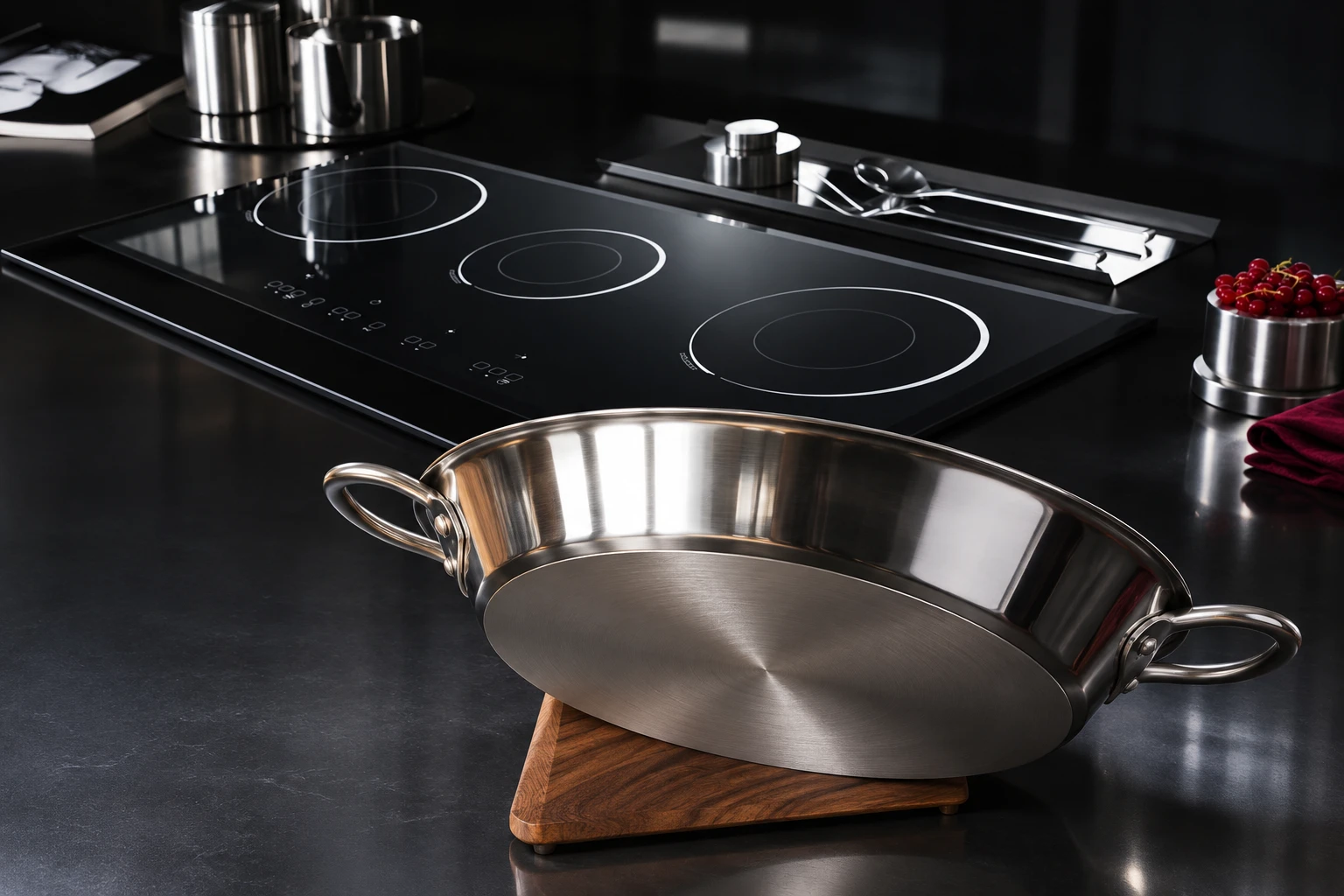
A maslin-style pan commonly has a wide opening and may use a bail handle, a side grip or a pouring lip. Treat these as features to verify on the chosen item, rather than a universal specification. Ask for a photograph of the actual handle arrangement and readable care instructions. A promising outline does not establish an induction base or a safe method for moving the complete load.
ENERGY STAR guidance on electric cooking products explains induction’s interaction with suitable magnetic cookware. That supports checking the designated construction of the selected pan. It does not make every stainless preserving vessel compatible. A material name describes less than a complete base assembly. Confirm the exact size and induction designation, and obtain the bottom dimensions relevant to the appliance’s cookware guidance.
Our article on measuring the usable pan base explains why the widest opening should not substitute for the usable base. This distinction matters particularly with flared walls. With the pan cold and empty, compare its approved placement with the hob layout and available controls. Do not assume that a wide upper body authorizes spanning several zones or using an unapproved adapter underneath it.
A capacity stated for a vessel describes a product characteristic, while a recipe and equipment instructions determine the permitted working arrangement. Do not invent a universal fraction of the stated volume. Retain the actual fill guidance, where supplied, and resolve unclear instructions with the responsible supplier. A large pan does not mean that every batch size is suitable for that pan and hob combination.
Consider the complete task rather than heating alone. The vessel, ingredients and tools form a load the user must manage during stirring and transfer. If the intended quantity cannot be controlled using the documented method, choose another suitable arrangement before starting. Dividing a recipe or changing a preserving process also needs appropriate recipe guidance; an equipment article cannot validate those food-processing changes.
Check how the bail moves and where it is intended to sit during use. Establish whether a second grip forms part of the maker’s lifting or pouring method. A freely moving handle in an empty product photograph does not demonstrate control with hot contents. Learn the permitted handling sequence cold and empty, without inventing a loaded stress test or changing the fittings.
Inspect attachment points and any handle coverings as the instructions direct. Do not infer that a grip remains cool from its appearance or from induction’s lack of an open flame. If the handle is loose, unidentified or damaged, resolve that condition through the supplier before use. Do not bend a wire bail or add an improvised extension to make a large vessel easier to reach.
The general heating principle comes from ENERGY STAR guidance on electric cooking products. Exact fill, handling and care requirements belong to the selected equipment instructions. This table records the questions that matter for preserving-pan selection without inventing temperatures, batch volumes or performance claims.
| Decision | Evidence to collect | Action before use |
|---|---|---|
| Correct vessel | Model, purpose and supplied components | Distinguish cookware from jars and powered equipment |
| Induction fit | Exact designation and bottom dimensions | Compare with the hob instructions |
| Working quantity | Pan instructions and tested recipe requirements | Do not substitute nominal capacity for fill guidance |
| Grip sequence | Bail and helper-handle instructions | Rehearse movement cold and empty |
| Transfer route | Stable receiving area and permitted tools | Keep the route separate from active zones |
A broad rim can make stirring seem straightforward while placing the far side beyond a comfortable reach. Rehearse access to the empty vessel and controls with the appliance off. Choose utensils suitable for the actual pan finish and intended recipe. Do not drag the vessel toward the counter edge to solve a reach problem if that moves its base outside the permitted position.
Our guide to keeping cookware handles clear of controls discusses clear space around controls and nearby cookware. A bail in its parked position can present a different obstruction from a long saucepan grip. Check that position as well as the lifting position. Keep the utensil rest on a separate suitable surface, and do not leave tools balanced across the cooking zone as a workaround for limited space.
Set out the receiving equipment according to the actual recipe and handling directions before turning the hob on. Decide whether the documented method calls for ladling, pouring or another permitted transfer. A pouring lip does not mean that lifting the full pan is required or appropriate for every user. Cold rehearsal should reveal awkward reaches and inadequate support, not prove hot-load capability.
Keep the receiving area stable and appropriate for the equipment involved. Do not balance a pan on a jar rim, an unused hob control area or an improvised stack. If the task cannot be completed under the instructions, choose a different vessel or documented method. Avoid preparing a batch first and discovering only afterward that its transfer route depends on unsupported lifting.
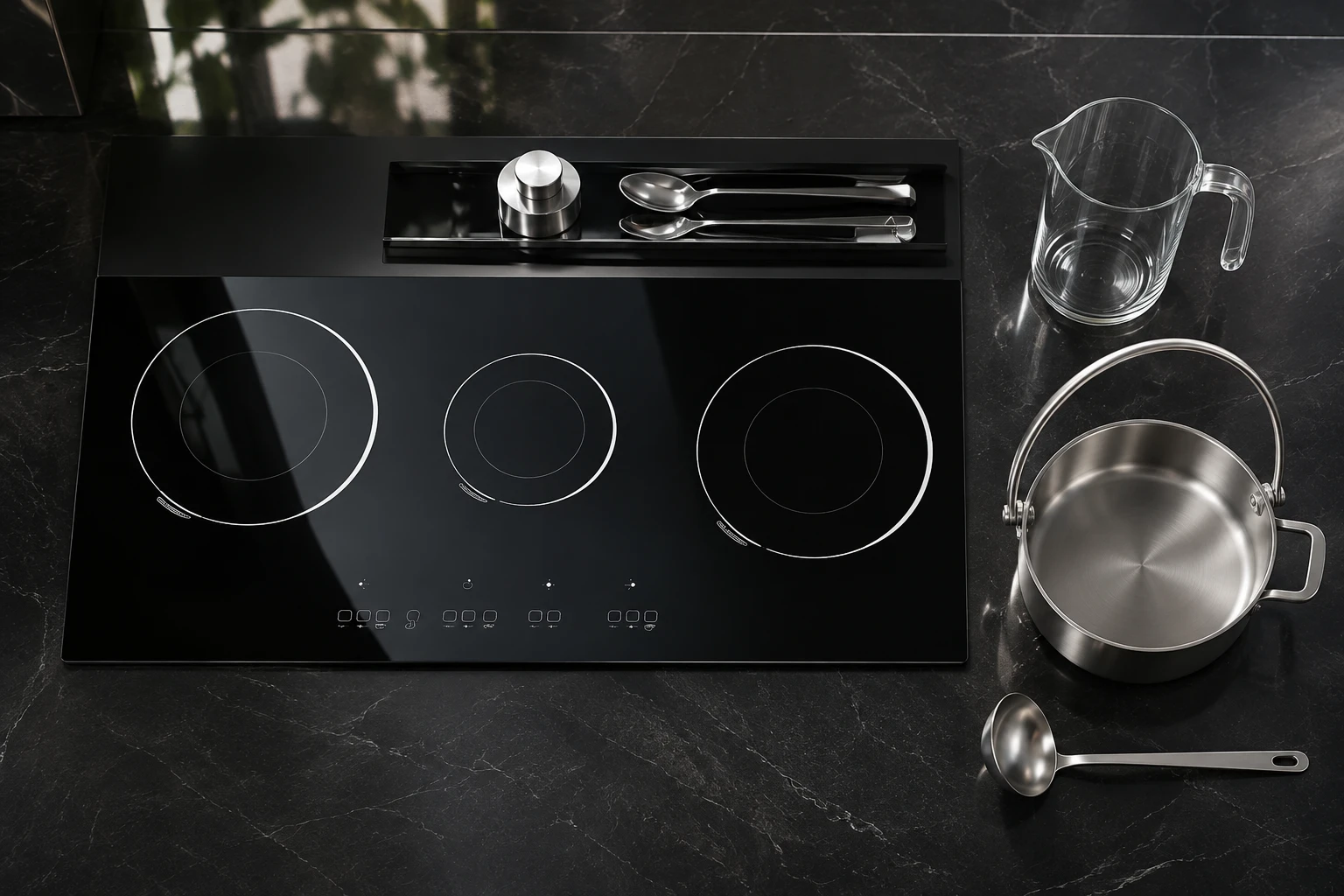
Use the actual pan and hob instructions together with the selected tested recipe. A numbered setting from another appliance is not a universal temperature or power instruction. This guide does not prescribe boost, an empty-preheat duration or a boiling time. If the equipment directions and intended recipe conflict, resolve that conflict before use rather than overriding one with a social-media demonstration.
U.S. Fire Administration cooking-safety guidance advises attending cooking and keeping combustible materials clear of the stovetop. Prepare ingredients and tools so that a preserving session remains supervised. A wide vessel can hide part of the work area; keep packaging and towels away from it. If an abnormal condition arises, use the appliance’s stopping and support process rather than repeated high-power experiments.
An induction designation identifies a heat-source category to check, not a validated food-preservation process. It does not establish acidity, processing time, jar treatment or shelf stability. Obtain tested instructions appropriate to the recipe and preservation method from a reliable food-preservation authority. Do not use this pan-selection guide to decide whether a jar can be stored at room temperature.
Likewise, boiling a mixture in a preserving pan is different from using a pressure canner or another processing appliance. Avoid transferring instructions between those equipment categories. A retailer’s photograph of finished jars is not evidence that every recipe made in the pan is suitable for long-term storage. Keep equipment suitability and food-process validation as separate records.
Follow the cookware maker’s guidance for residue, cooling, washing and drying. Do not prescribe an abrasive, chemical concentration or thermal-shock method from another material. A clean appearance does not resolve a distorted base or loose fitting. Refer those conditions to the supplier rather than trying to restore shape by hammering or grinding the bottom.
Lift the pan instead of dragging it across the glass. Our article on understanding glass surface marks covers the separate question of marks on the cooking surface. Follow the appliance’s specific spill and cleaning instructions, including any special directions for sugary spills and the required tools. Do not assume that a generic wait-until-cold rule replaces those model-specific instructions, and do not improvise around hot equipment.
Kanger’s Kanger black glass-ceramic cooktop panel and black glass-ceramic material overview explain the glass-surface sourcing context. They do not approve a preserving pan or certify a finished appliance’s carrying load, heating distribution or recipe performance. OEM buyers should retain panel geometry and integration records separately from complete-appliance cookware validation. Keep each statement tied to the component and evidence it actually describes.
For the user, a useful purchase record identifies the exact pan, base dimensions, grip arrangement, documented working method and suitable receiving area. Recheck those details if the pan size or appliance changes. That turns a broad preserving-pan search into a concrete equipment decision without converting nominal capacity or an attractive product photograph into an unsupported guarantee.
This independent educational video explains magnetic heating and cookware geometry. It helps distinguish a heating base from accessories above it; it does not approve a particular preserving vessel, poaching rack or glass lid.
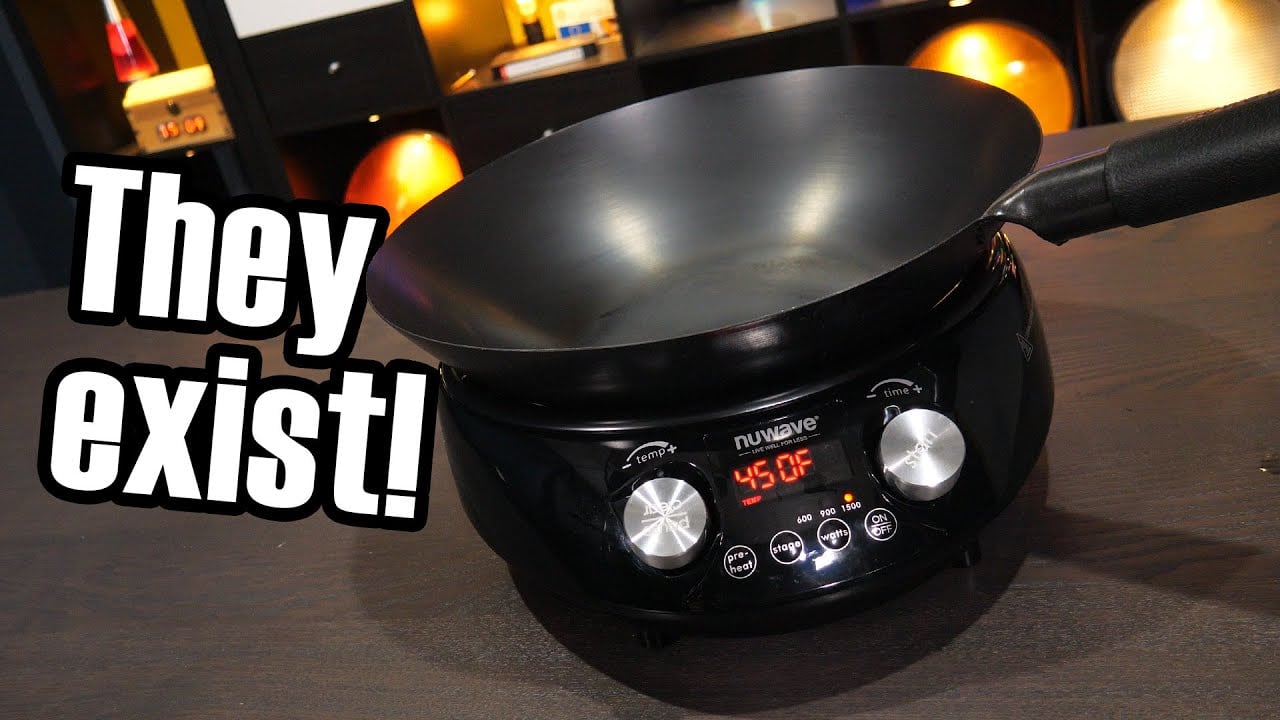
Video: Induction cooking – but what about woks?, Technology Connections. Open the educational video on YouTube.
No. Check the actual model designation and base dimensions against the hob instructions.
No. Use the actual equipment and tested recipe guidance; nominal capacity alone is insufficient.
No. Follow the documented transfer method and choose a quantity and arrangement the user can manage.
No. Food-preservation safety requires separate tested recipe and processing guidance.