An induction hob frying pan should match the appliance’s cookware requirements, provide enough usable cooking floor for the intended task, and leave room for safe handle and utensil movement. Start with the actual bottom rather than the diameter printed beside the product name. A pan can have a wide rim and a much smaller base. An induction symbol is useful evidence, but it does not answer every question about zone fit, condition or handling.
This guide compares the geometry and purchase evidence for an everyday skillet. It does not rank brands or prescribe one coating, temperature or power setting. Material-specific care belongs to the chosen pan’s instructions, while appliance-specific restrictions belong to the hob manual.
List what the skillet must do in the kitchen: turn delicate portions, brown separate pieces, slide food onto a plate or hold a shallow sauce. Those tasks place different demands on the flat interior floor and sidewall. A tall vessel with a narrow floor might carry a large nominal diameter while leaving little space for a turner. A shallow flared pan may provide easier access but less containment for liquid.
Compare the useful interior dimensions with the food portions you normally prepare. Do not use an advertised serving count as a measured floor area. If a shop gives only an outside diameter, ask for an interior drawing or measurement. This prevents buying a larger-looking pan that cannot accommodate the intended arrangement without crowding or awkward utensil movement.
ENERGY STAR electric cooking guidance explains that induction uses a magnetic field to heat suitable cookware. Confirm the manufacturer’s induction designation and the construction of the actual base. Stainless steel is a broad family, and a description of the upper body alone cannot establish that the underside meets the appliance requirements. A magnet is a preliminary check rather than a complete equipment approval.
Use measuring the usable cookware base to distinguish rim diameter, outside bottom diameter and the usable induction base. Compare the relevant measurement with the exact zone instructions. A flexible cooking area may have different placement rules from a fixed circular position. Do not assume that every ring printed on glass is a universal cookware limit or a precise drawing of the coil underneath.
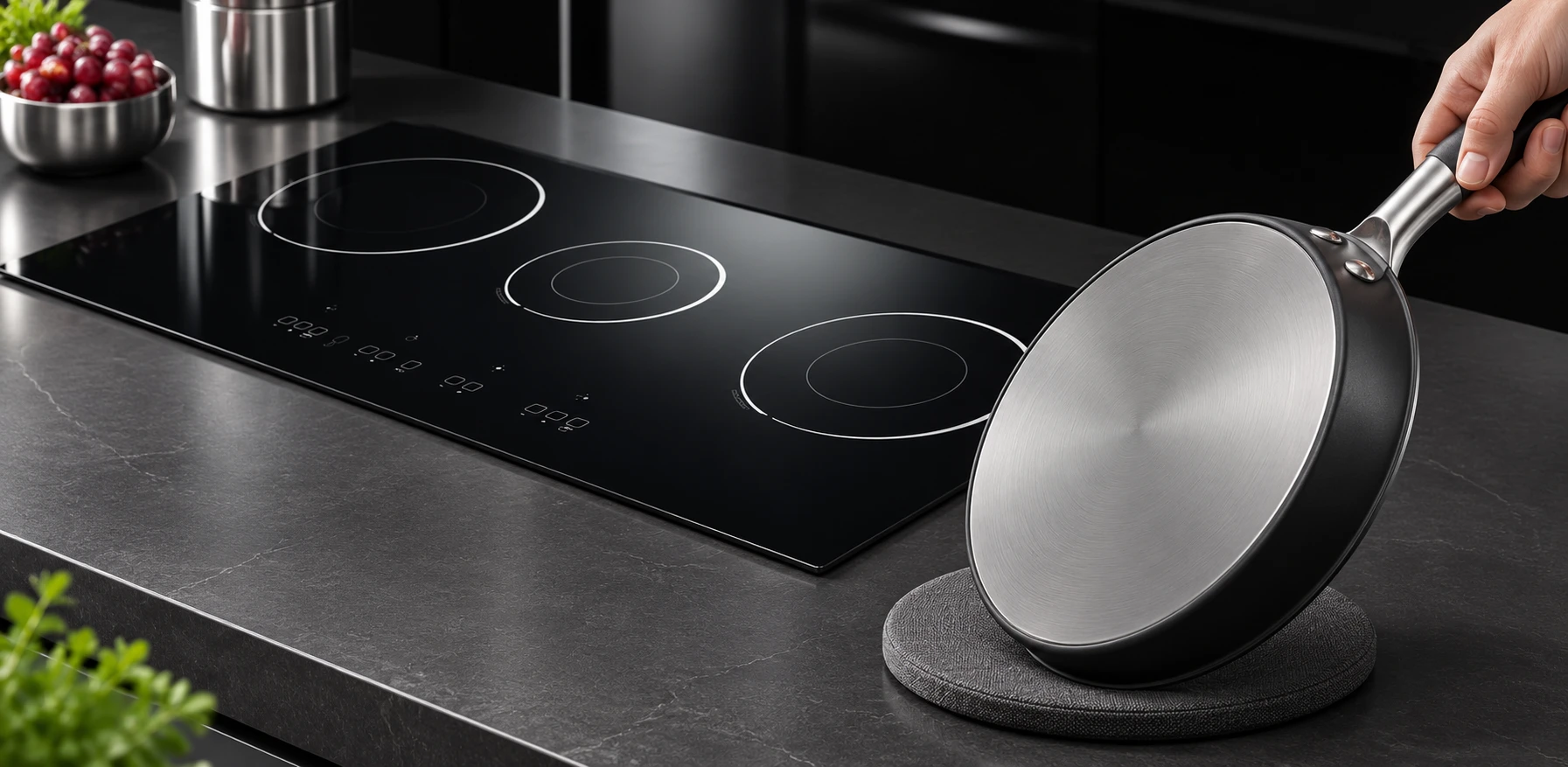
The flat interior area controls how food can be arranged, while the outside base and complete pan outline affect appliance placement. Record both rather than treating one measurement as a substitute for the other. A broad sloping wall can account for much of the advertised diameter. A thick rim or pouring lip can add further width without adding useful floor space.
For a purchase comparison, ask each supplier for the same measurement definitions. Record whether the floor measurement excludes the curved transition into the wall. A consistent comparison is more helpful than choosing whichever listing uses the biggest number. Where no drawing is available, regard the dimension as unresolved rather than estimating it from a perspective photograph.
A flared edge can make it easier to approach food with a turner, while a more upright wall can contain a shallow liquid preparation. Neither shape is automatically superior. With a cold empty pan, consider whether the intended utensil can reach the edge without striking the rim or requiring an awkward wrist position. Check the utensil against the surface-care instructions as well.
Keep this decision distinct from buying a saute pan or a deep casserole. Those vessels can serve different purposes even when they share the same nominal diameter. If the main task requires substantial liquid capacity or a fitted lid, compare the appropriate vessel category instead of forcing a shallow skillet to replace every other pan in the kitchen.
The magnetic heating principle follows ENERGY STAR electric cooking guidance. The table below organizes information rather than assigning universal safe dimensions. All limits still come from the selected cookware and appliance documentation.
| Feature | Evidence to compare | Why it matters |
|---|---|---|
| Induction base | Construction and actual usable diameter | Compare with the intended zone requirements |
| Cooking floor | Flat interior area excluding curved walls | Plan the intended portions and utensil access |
| Sidewall | Height, slope and pouring features | Match turning, sliding or liquid tasks |
| Complete outline | Handle, helper grip and rim projection | Check controls, adjacent pans and walkways |
| Care restrictions | Model instructions for heat, utensils and cleaning | Avoid transferring rules from another material |
Consider the whole vessel, including the main handle and any helper grip. A wide skillet may extend into the neighboring cooking position even when its bottom is centered correctly. Our guide to planning handle clearance covers access around controls and adjacent vessels. Perform the arrangement check with equipment cold and empty, using the dimensions and placement rules in the manuals.
Do not lift a hot filled pan as an experiment to find out whether a handle feels secure. Inspect attachment condition before use and resolve looseness or damage through the responsible manufacturer. A helper grip is useful only within the cookware’s intended handling method. It does not permit overloading the pan or moving it in a way the instructions prohibit.
Uncoated stainless steel, seasoned iron and coated cookware can require different preparation and cleaning routines. Choose a surface for the cooking task, then verify the actual model’s induction suitability. Do not infer an entire care routine from a dark interior, a metallic finish or a broad marketing term such as ceramic. Obtain the supplied material description and instructions.
This article supplies no common seasoning process or empty preheating duration. A routine suitable for one uncoated pan can be inappropriate for a coated product. Keep the model-specific limits accessible to everyone who uses the kitchen. A change of cookware should trigger a fresh check rather than inheriting the settings and habits associated with the previous skillet.
A hob recognizing a vessel is useful feedback, but it does not establish that the cooking floor heats evenly, the rim fits the workspace or the complete assembly is in good condition. Conversely, failure to recognize a pan does not prove that a glass panel needs replacement. Check position, base requirements and the appliance’s documented troubleshooting process before drawing that conclusion.
The glass surface is one component of the finished appliance. Electronics, sensing, cookware construction and integration also affect operation. Avoid repeated high-power experiments with questionable equipment. Record the model and observed message for support. A documented compatibility decision is more useful than a video showing an unidentified skillet briefly heating on an unrelated cooktop.
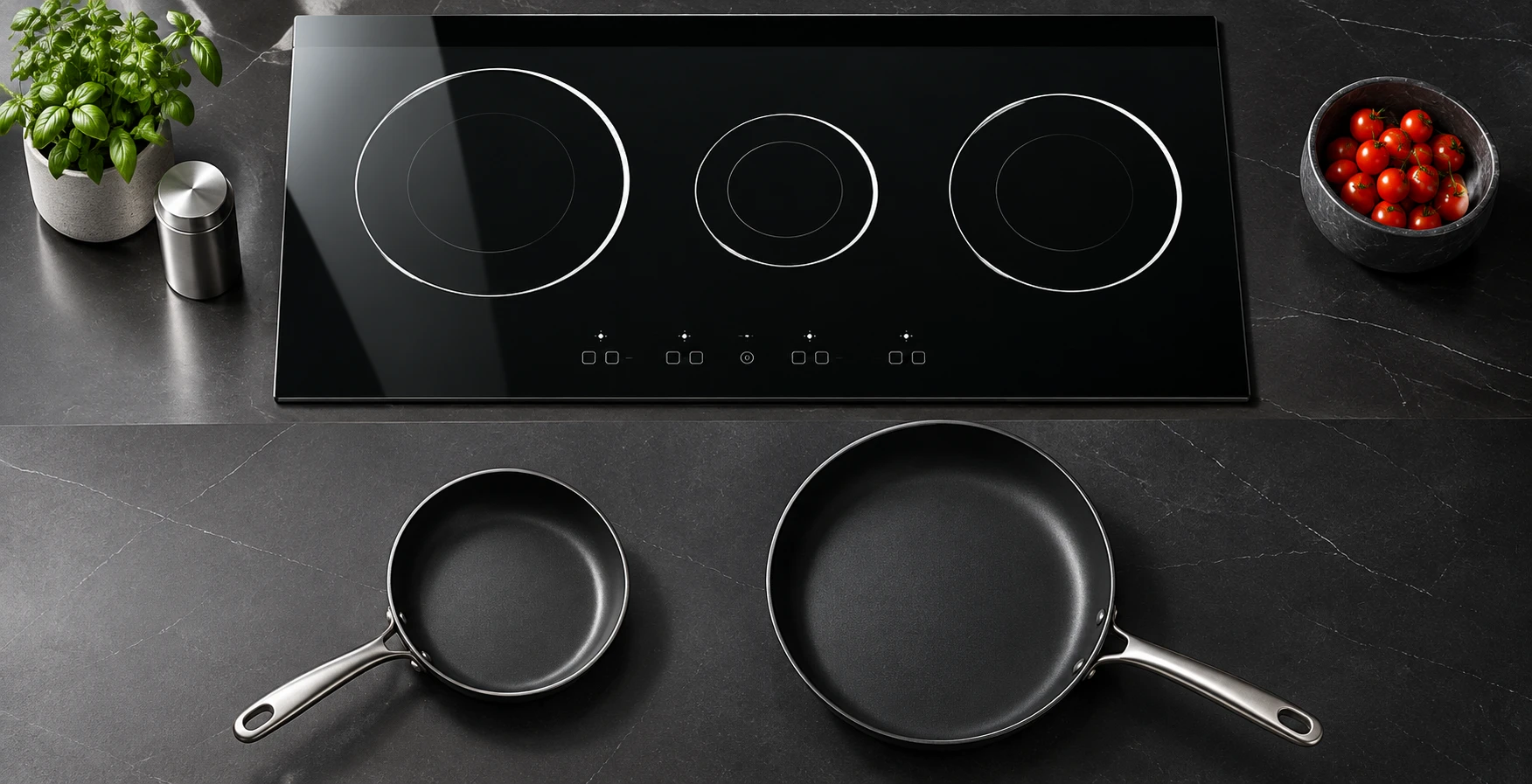
Before placing the pan, follow the cookware and appliance directions for cleaning and drying its bottom. Remove loose particles by a permitted method. Lift the vessel rather than dragging it across the glass. If a mark appears, use checking marks on the glass surface to distinguish cleaning questions from damage or service concerns. Do not assume that every visible line is either harmless residue or a scratch.
Do not grind the base, hammer a distorted pan or add an unapproved layer under it to obtain a better response. An accessory marketed as protective does not automatically belong between cookware and an active hob. Resolve base damage through the cookware supplier and suspected panel damage through the appliance supplier before returning the combination to service.
U.S. Fire Administration cooking safety guidance emphasizes attention to cooking and keeping combustible materials away from the stovetop. Keep packaging, cloth protectors and spare utensils in their proper storage locations before heating. Arrange the intended landing place for cookware using the equipment’s handling guidance. A clear glass surface is not a general-purpose shelf for lids, paperwork or storage accessories.
Do not treat a timer or pan-detection feature as a substitute for supervision. Learn the exact appliance’s stopping procedure and residual-heat indications. The surface can receive heat from cookware even though induction heats the vessel directly. A dark display or silent pan does not by itself establish that every part is cool enough to touch or clean.
Record the hob model, intended zone, pan model, usable base, cooking-floor dimensions, handle outline and relevant care restrictions. Retain the supplier drawing and manual with the purchase record. When buying a replacement, compare those fields instead of assuming that a pan with the same advertised diameter will behave or fit in the same way.
Kanger supplies Kanger black glass-ceramic cooktop panels, with material context in the black glass-ceramic material guide. These component descriptions do not approve a particular skillet or establish finished-appliance cookware limits. OEM buyers should maintain their panel integration requirements separately from the cookware selection record. Keeping both records clear supports a practical purchase without inventing a universal pairing or performance promise.
This independent educational video explains induction heating and cookware geometry. It provides background on the cooking system, not a demonstration or approval of storage protectors, handle repair or any specific cookware model.
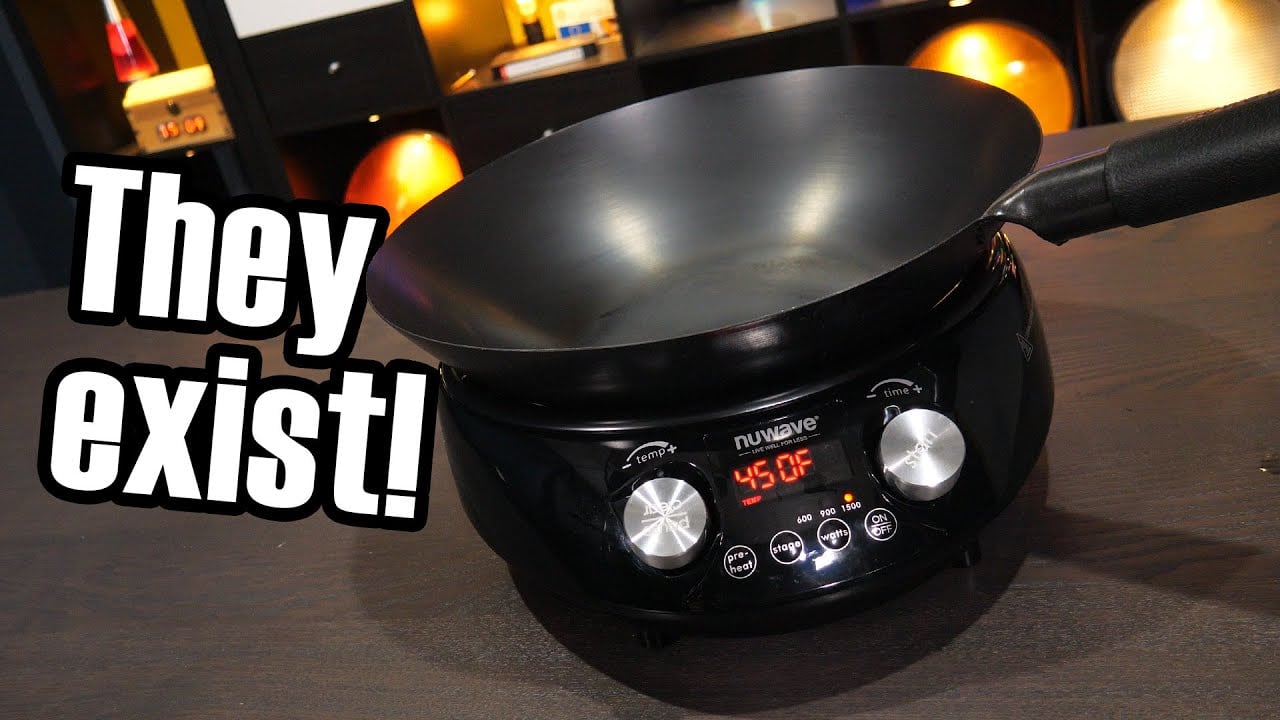
Video: Induction cooking – but what about woks?, Technology Connections. Open the educational video on YouTube.
No. Ask for the actual usable underside and compare it with the appliance requirements.
No. It is a preliminary check; dimensions, condition and model instructions still matter.
No. Choose the intended task and follow the exact material and care instructions.
No. Check the complete outline, handle access and documented equipment requirements.