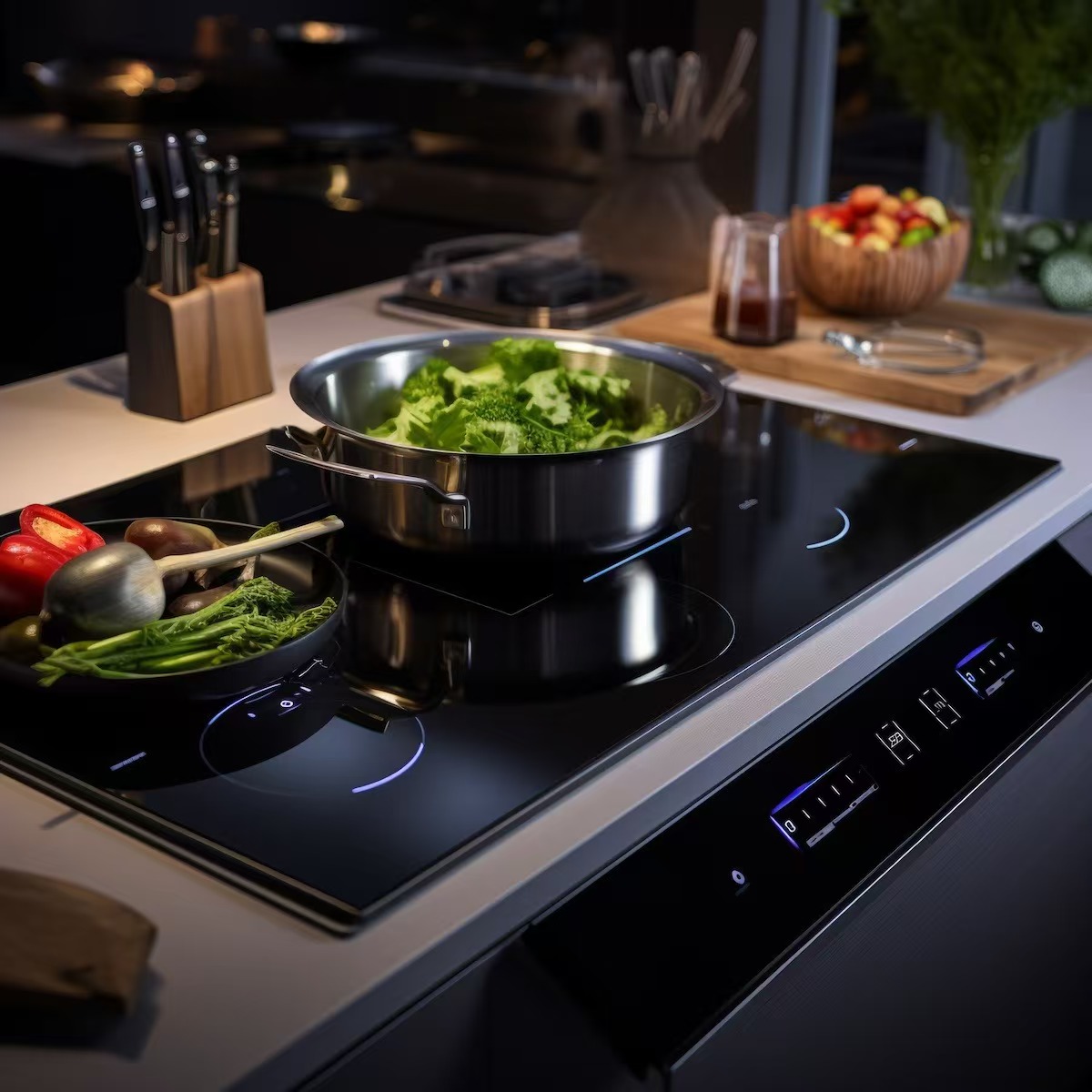
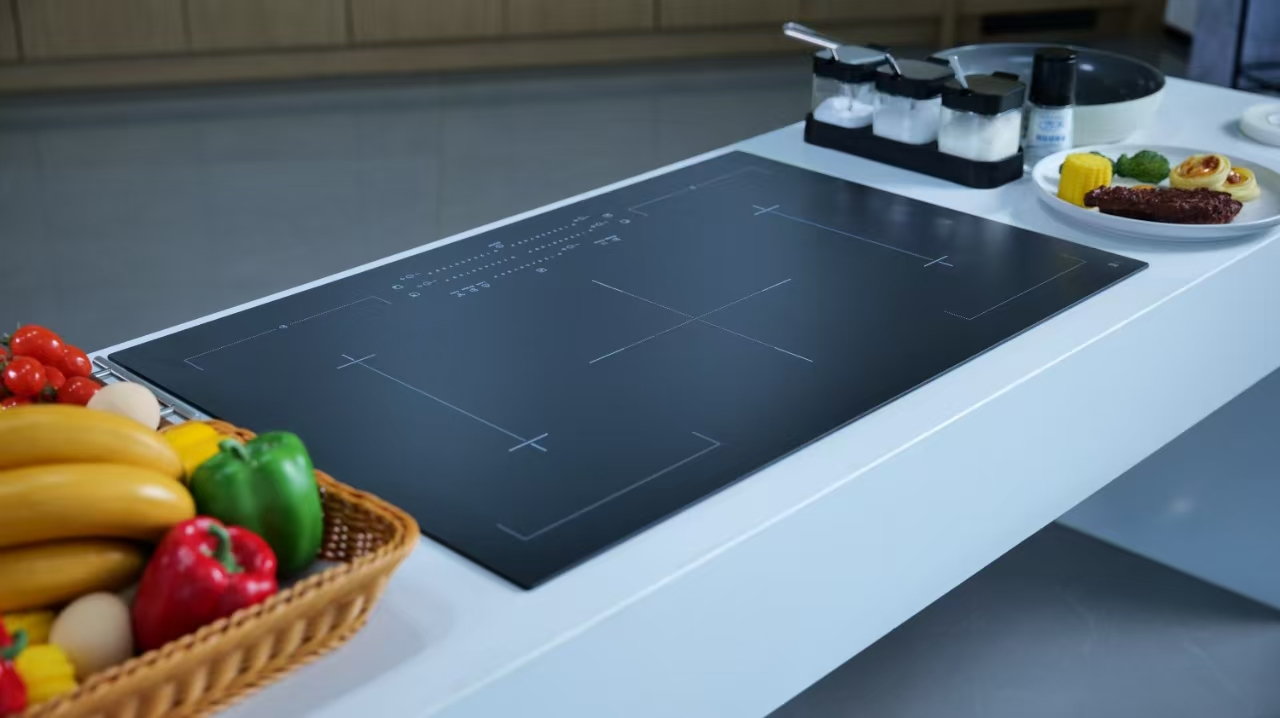
Choose a flat glass-ceramic cooker plate when burner zones are level and the platform does not require wok seating. Choose concave when wok-burner geometry or recessed commercial layouts need a defined contour—then document radius, depth, and tolerances on the RFQ drawing.
Platform engineers, commercial range OEMs, and importers often receive marketplace quotes labeled “concave glass ceramic plate” without contour data. That gap causes flat panels to be substituted into wok-centric designs.
For concave-only selection depth, see the concave panel selection guide. For general cooktop context, see the ceramic cooktop glass overview.
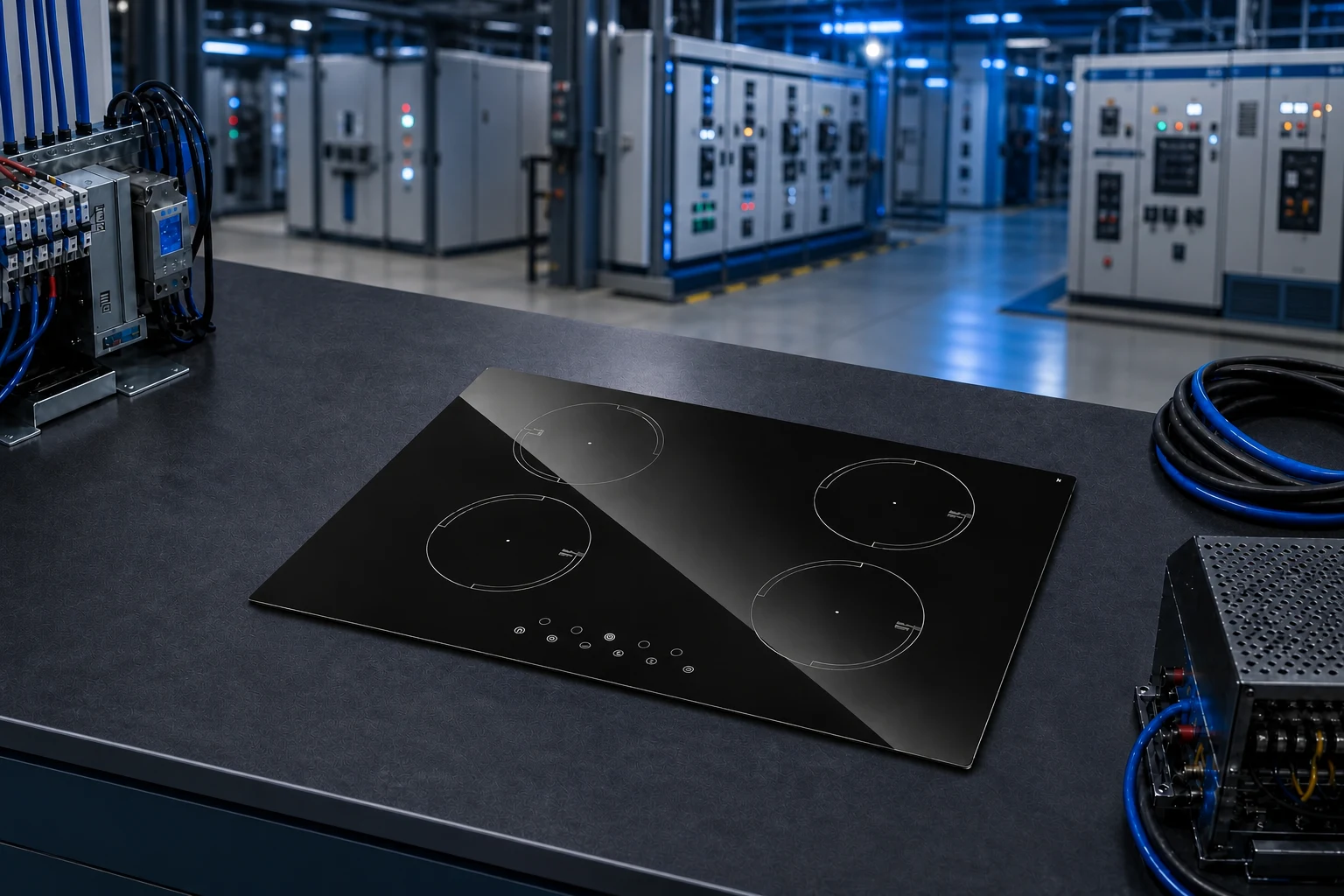
A flat glass-ceramic cooker plate presents a level cooking surface aligned with standard burner zones, control openings, and trim rails. A concave plate adds a recessed or curved zone—often to seat a wok foot, align with a wok burner, or match a commercial range top geometry.
Both forms use the glass-ceramic material class described in SCHOTT’s glass-ceramic materials overview. The procurement difference is geometry and tolerance, not a separate consumer marketing label.
| Attribute | Flat cooker plate | Concave cooker plate |
|---|---|---|
| Primary surface | Level across burner zones | Recessed or curved zone |
| Typical platform | Standard domestic/commercial flat layouts | Wok-burner or recessed commercial tops |
| RFQ driver | Outline, thickness, hole pattern | Contour section + flat zone transitions |
| Quote risk | Wrong thickness or edge finish | Wrong radius or seating depth |
| Supplier question | Zone layout and heating type | Top view + section with dimensions |
Wok-centric platforms introduce a foot ring that must sit stable over high heat. On a purely flat panel, wok contact can be limited to a small ring area unless the buyer adds separate supports or uses flat-compatible wok designs. Concave panels are specified when the burner, wok foot, and panel contour are designed together.
Triggers that push OEM teams toward concave RFQs include:
Conversely, flat panels remain the default for standard four-zone layouts without wok seating requirements.
Important: “Wok compatible” marketing copy does not replace contour dimensions. Require section views with radius or sagitta before accepting a concave quote. — Source: SCHOTT glass-ceramic materials overview
Concave forming adds process variables: local thickness distribution, stress at the bowl transition, and alignment with the metal subframe. Without tolerances, two suppliers may quote visually similar “concave” panels that differ in seat depth by millimeters—enough to affect wok stability and heating coupling.
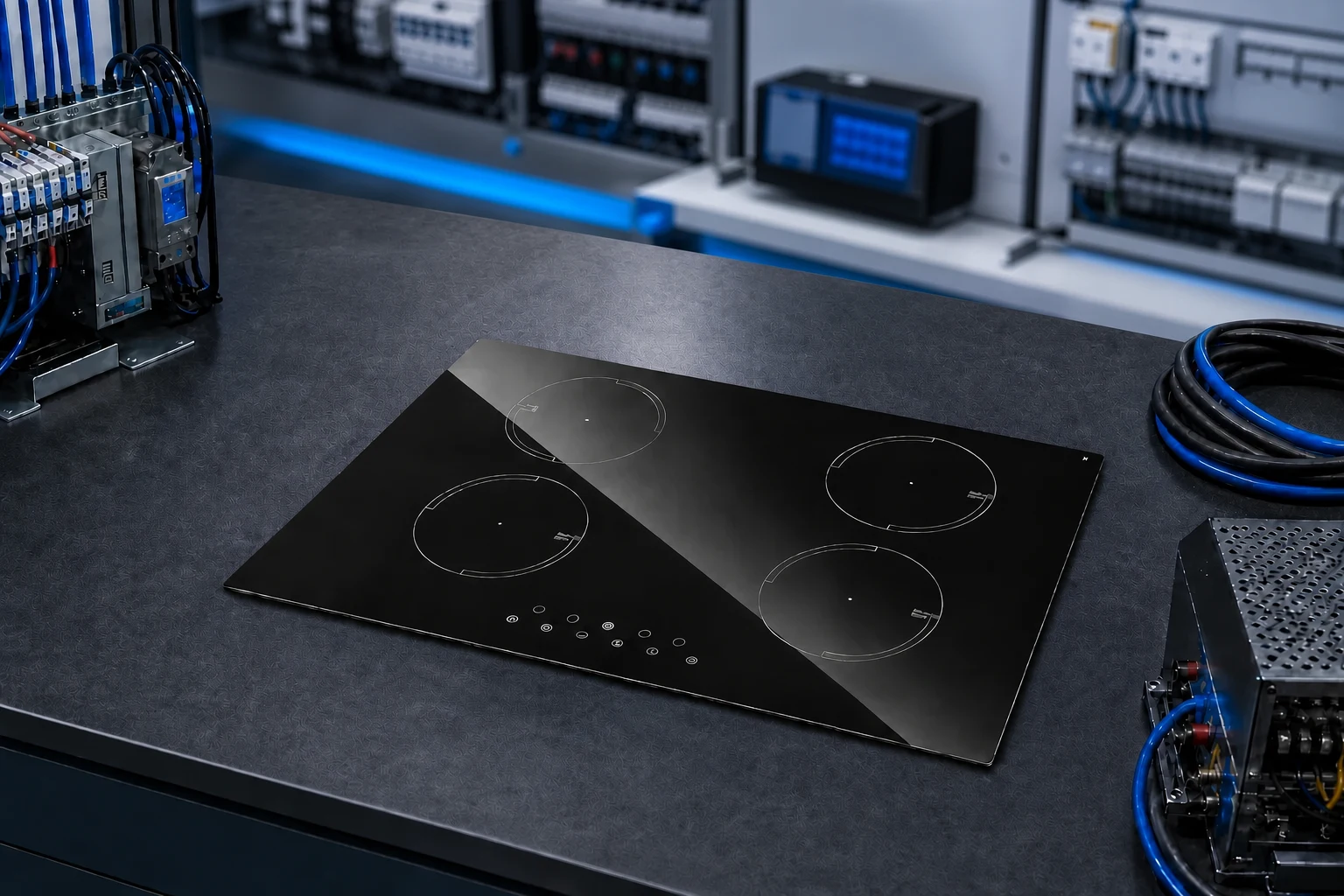
| Field | Definition | Example note |
|---|---|---|
| Crown height / sagitta | Depth of dish from flat reference | State at center of wok zone |
| Radius of curvature | Spherical or toroidal segment | Include R value and direction |
| Seating diameter | Opening where wok foot contacts | Match wok SKU range if known |
| Flat border width | Level zone around concave area | Needed for seal and frame capture |
| Profile tolerance | ± band on depth or radius | Prevents silent design drift |
| Transition fillet | Bowl-to-flat corner radius | Reduces stress concentration |
Flat panels mainly challenge edge finish, hole spacing, and thermal expansion matching with the frame. Shaped panels add forming-related stress and thickness variation in the concave region while still requiring cooktop-grade thermal evidence.
Industry datasheets such as Eurokera Keralite transparent glass-ceramic sheets show how suppliers document CTE, ΔT, and continuous-use temperature. Concave cooktop plates need the same thermal block as flat plates—plus mechanical review of the contour section.
| Risk area | Flat panel | Concave panel |
|---|---|---|
| Thermal shock evidence | Required | Required |
| Edge / hole stress | Primary mechanical focus | Still critical at flat border |
| Local thickness | Usually uniform | Must be reviewed in bowl zone |
| Frame fit | Planar gasket paths | Bowl may affect seal geometry |
| Quote substitution | Soda-lime or wrong thickness | Flat panel substituted for concave |
SCHOTT CERAN® technical documentation remains a reference pattern for RTD/RTS language on cooktop-grade glass-ceramic—apply it to shaped RFQs without assuming published numbers transfer to Kanger SKUs.
Supply top view and section view on the same revision. Mark the concave zone boundary, seating diameter, and either radius or sagitta—not both ambiguously. If the platform allows multiple wok sizes, state the design wok foot diameter range or attach the wok drawing.
| Drawing element | Required for concave RFQ |
|---|---|
| Finished outer outline | Yes |
| Burner center locations | Yes |
| Control and display cutouts | Yes |
| Section A–A through concave center | Yes |
| Radius or sagitta dimension | Yes |
| Flatness reference datums | Recommended |
| Material header: glass-ceramic cooktop grade | Yes |
Flat RFQs can omit the concave section entirely—explicitly label the plate “flat, level cooktop surface” to block silent substitution.
Add a geometry conformance row to the bid template:
| Scenario | Recommendation |
|---|---|
| Standard flat four-zone cooktop | Flat black or white cooktop line |
| Wok-burner with defined seat | Shaped/concave line + section drawing |
| “Maybe wok later” platform | Decide in design gate before RFQ—do not dual-source ambiguous geometry |
| Cheaper flat bid for concave RFQ | Reject unless engineering change order approved |
| Fireplace or oven observation glass | Not a cooker plate RFQ—route separately |
After confirming concave duty, route RFQs to:
Use this routing table internally:
| Validated geometry | Send to |
|---|---|
| Flat black cooktop plate | Black flat cooktop product line |
| Concave / dished cooktop plate | Shaped customized cooktop product line |
| Multi-contour commercial top | Shaped line + full drawing package |
| Undecided flat vs concave | Complete Part 1–2 decision gate before RFQ release |
For concave-specific selection criteria beyond this flat-vs-concave gate, continue with the concave panel selection guide.
When should an OEM choose a flat glass-ceramic cooker plate?
When burner zones are level, wok seating is out of scope, and the validated drawing shows a planar cooktop surface.
When is a concave cooker plate required instead of flat?
When wok-burner geometry, recessed commercial layouts, or designed wok seats require a defined dish contour.
What contour dimensions belong in a concave RFQ?
Include radius or sagitta, seating diameter, flat border width, and profile tolerances on a section view.
Can a flat panel be substituted if the quote is cheaper?
Only after a formal engineering change. Default concave RFQs should reject flat substitutes without approved revision.
Do concave panels use the same thermal datasheet fields as flat panels?
Yes. Require CTE, RTD/RTS or equivalent, thickness, and thermal test references for both forms.
How does wok-burner geometry affect concave selection?
Burner diameter, flame orientation, and wok foot diameter set the required seat depth and contour zone size.
Which Kanger product line handles concave cooker plate RFQs?
Use the special-shaped customized ceramic glass cookware product line with contour drawings attached.