An induction hob fan that stays on after cooking can be carrying out normal cooling: switching off a cooking zone does not instantly remove heat from the electronics or nearby appliance parts. The expected behavior depends on the exact model, recent cooking and installation. Check the manual before treating fan run-on as a fault, and do not repeatedly disconnect the power to silence an otherwise normal cooling cycle. A new grinding sound, persistent cold-start operation, errors, overheating or an abnormal smell needs model-specific service advice. This guide explains what you can observe safely without opening the hob or diagnosing live electrical components.
Induction transfers energy into compatible cookware, but the appliance still contains electronics that operate within controlled temperature conditions. The saucepan and adjacent oven can also leave heat in the surrounding assembly. A fan may therefore change speed or continue after the heating command has ended. A dark display is not a temperature measurement and does not demonstrate that all internal parts are already cool.
The time needed can vary with the cooking session, room conditions and installation. Do not apply an arbitrary online countdown to every model. An appliance with a documented extended cooling period is different from one that has developed a new continuous noise from a cold start. Compare behavior with its own instructions and previous ordinary use, rather than with a different brand’s video.
The GE explanation of induction cooktop fans describes their role in cooling electronics. It is an example of why a fan can be part of normal operation, not proof that every persistent sound is safe or that a particular Kanger panel includes those components. The completed appliance determines its cooling control strategy.
A kitchen can contain several sources of airflow: the cooker hood, an oven cooling system, an oven convection fan and the induction hob’s internal cooling system. Some installations combine appliances closely enough that sound seems to come from the glass even when the source is elsewhere. Identify which controls were used and where the sound is most apparent without moving the connected appliance or reaching inside cabinetry.
A soft airflow sound differs from cookware buzzing during active induction heating. The latter may change when the pan or power setting changes, while post-cooking cooling can continue after cookware is removed. Do not reproduce a suspicious sound by repeatedly heating an empty pan. Our induction buzzing guide deals with cookware-related noises during cooking.
Also separate a sound from a residual-heat display. The two may respond to different sensors or conditions. A fan stopping does not mean the surface is safe to touch, and a surface warning does not prove the fan should be audible. Read our hot-surface indicator guide for that separate observation.
Make notes after an ordinary cooking session, rather than creating a prolonged stress test. Record the appliance model, which zones were used, whether the oven below was operating and when heating was switched off. Note whether the sound reduces, stops by itself or returns when no cooking has taken place. You do not need to touch the glass or insert an instrument into a ventilation opening.
Compare like situations where possible. A long multi-zone session followed by oven use is not equivalent to briefly warming a small saucepan from a cold start. If the sound has always followed the same documented pattern, that is useful context. If it began immediately after installation work, a spill or a change in stored items, record that sequence without assuming it proves the cause.
| Observation | Useful record | Next step |
|---|---|---|
| Soft run-on after cooking | Recent zones, oven use and whether sound stops naturally | Compare with the model’s cooling description |
| Fan appears active from cold | No preceding cooking and exact repeat pattern | Ask manufacturer support if unexplained |
| New scraping or grinding | Sound location and when it starts | Stop the trial and request service advice |
| Long heating or shutdown accompanies noise | Settings, error message and accessible obstructions | Follow fault instructions; do not run stress tests |
| Smell, smoke or visible damage | Immediate observable condition | Stop use and follow the appliance’s safety instructions |
| Noise only with hood or oven | Which independent appliance is operating | Use that appliance’s support information |
The table organizes observations; it cannot identify a failed fan, sensor or control board. No universal run-on time or noise limit is implied. Keep uncertainty in the report so the service team can select the appropriate inspection rather than inherit an unsupported diagnosis.
Read the installation instructions for the exact appliance and cabinet arrangement. Locate any ventilation paths that the user is allowed to inspect. Ordinary storage items can matter if they obstruct a specified air route, but a generic photograph cannot show the necessary clearance for your model. Do not infer the required distance from the thickness of the visible glass or from a neighboring kitchen.
With the appliance in a safe condition described by its instructions, inspect only accessible storage areas. Remove or reposition ordinary stored objects if the instructions identify them as an obstruction. Do not reach toward internal components, remove protective covers, pull out the hob or dismantle a drawer system to gain access. An installer should resolve structural clearance questions.
KitchenAid’s fan-noise guidance explains temperature-dependent cooling and emphasizes proper ventilation. It also connects poor ventilation with operating problems such as shutdown or longer heating. Use that as a reason to consult your own installation documents, not as a universal clearance specification or permission to cut new vents.
Do not cover a ventilation opening, wedge a moving part, disconnect a fan lead or change a control setting that belongs to installation or service work. These actions can interfere with the appliance’s intended cooling. A quiet appliance after an unauthorized modification has not become a correctly functioning one.
Do not spray cleaner into openings, blow debris deeper into the unit or insert a probe through the cabinet. Cleaning the accessible glass surface is a different task from cleaning electronics. Follow the manufacturer’s permitted cleaning method and keep liquids away from areas it identifies as vulnerable. If a spill may have entered the assembly, explain that to support rather than repeatedly energizing the appliance to check whether it has dried.
Routine power interruption should not become the method for ending ordinary cooling. If there is an actual warning condition, follow the appliance’s safety instructions, including any required isolation and qualified assistance. The distinction is between responding to a fault under the maker’s instructions and repeatedly defeating an unexplained behavior for convenience.
Fan run-on accompanied by normal cooking and no warnings may match the manual’s description. Run-on accompanied by repeated shutdown, new errors or a marked performance change deserves a different response. Stop a comparison if those conditions appear. Do not keep trying increasingly long cooking sessions to discover how hot the unit can become.
For a hob that actually stops heating during use, our unexpected-shutdown guide explains the observation record. A fan noise is only one part of that record. It cannot prove whether the relevant issue is airflow, controls, installation, cookware or an electrical component.
A cracked surface is also a separate service concern. Do not continue operating a damaged hob because the fan still runs or the display appears normal. Follow the complete-appliance instructions for damage and isolation. The apparent condition of one subsystem does not establish the safety of the whole assembly.
The educational video below discusses induction cooking and the interaction between the appliance and cookware. It helps explain why the system includes more than a sheet of glass and why heat delivery differs from a radiant burner. It is not a diagnosis of your fan, a model-specific teardown procedure or a demonstration of Kanger’s completed appliance.
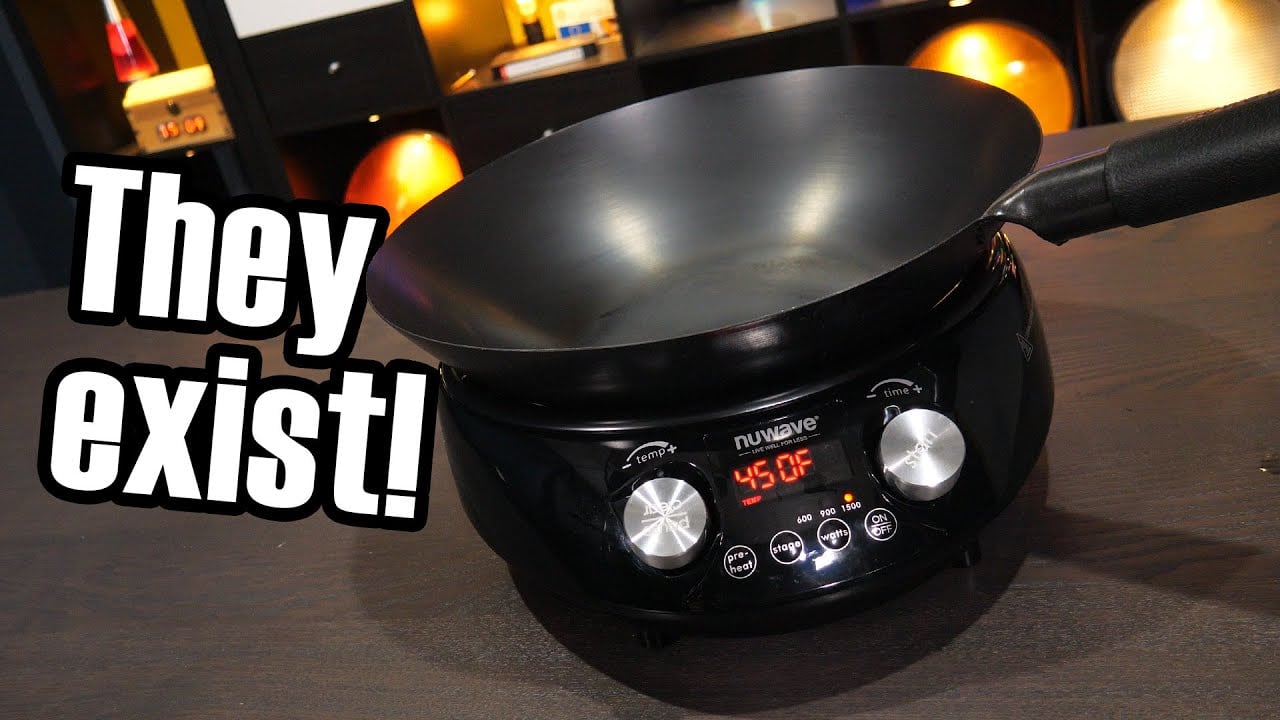
Video: Induction cooking – but what about woks?, Technology Connections. Open the educational video on YouTube.
Keep the video separate from the service decision. Internal parts shown in educational material may differ from your appliance, and apparent access in a demonstration does not make opening a connected hob appropriate. The practical user task is to describe the behavior and consult the correct instructions.
Provide the model, a description of the sound, recent cooking, oven use, visible errors and whether the behavior occurs from cold. A short recording from a safe distance can help if requested. Include any recent installation or service work and accessible storage changes. Do not claim a fan or sensor is defective merely because the noise seems long.
Kanger supplies black glass-ceramic cooktop panels. A fan-control problem does not automatically require new glass. Replacement panels must follow the approved assembly specification, while fan, airflow and electronics questions belong to the responsible appliance and service teams.
For an OEM investigation, keep the panel identification with the installation and operating record. If the panel is undamaged and within its approved specification, changing it without identifying the full-system issue can leave the original symptom unchanged. Separate material inspection from complete-product cooling validation and document the outcome of each.
It can be normal cooling behavior. Check the exact model’s instructions and consider recent cooking and oven use. Unexplained changes, warnings or unusual mechanical noises need service advice.
There is no universal duration. Use the manufacturer’s description for the model and record whether the behavior changes with ordinary operating conditions.
No. Fan control and surface-temperature warnings need not use the same information. Follow the residual-heat indication and handling instructions; do not touch the glass as a test.
Not on that symptom alone. The appliance maker or qualified service team should identify the cause. A replacement panel cannot by itself correct an airflow, control or fan fault.



