Induction cookware handle sleeve fit must be checked against the exact handle and the sleeve maker’s instructions. A sleeve that slides on is not necessarily secure, and a heat-resistance claim does not establish a safe gripping time or permission to leave it on while cooking. Check the cold empty vessel, keep the accessory dry and intact, and plan the landing place before handling hot cookware. A sleeve cannot repair a loose handle or convert an unsuitable vessel into induction cookware. When compatibility is uncertain, obtain confirmation or use an appropriate documented handling method.
A sleeve covers an existing handle to assist handling. A removable handle attaches to a vessel and becomes part of its lifting system. The two products should not be treated as interchangeable. Start by identifying what is fixed to the pan and what can be removed under the maker’s instructions.
If the metal handle itself moves, the issue is not solved by covering it more tightly. Follow the vessel’s condition-assessment route. Likewise, do not use a sleeve to conceal a sharp edge, damaged grip or missing part. The accessory should be selected only after the underlying handle has been confirmed suitable for its intended use.
Record the pan model and photograph the full handle, including its curve, width and end shape. Check which handle family the sleeve is designed to fit. Generic words such as universal or silicone do not establish compatibility with every shape. A sleeve may be too loose around a narrow section or unable to engage fully over a wider end.
Use the maker’s prescribed cold fit procedure. Do not force a sleeve over a sharp projection or cut the accessory to make it slide further. If its position differs from the maker’s illustration or it interferes with another part, stop and ask for confirmation. Altering the accessory creates a combination that its original instructions may not cover.
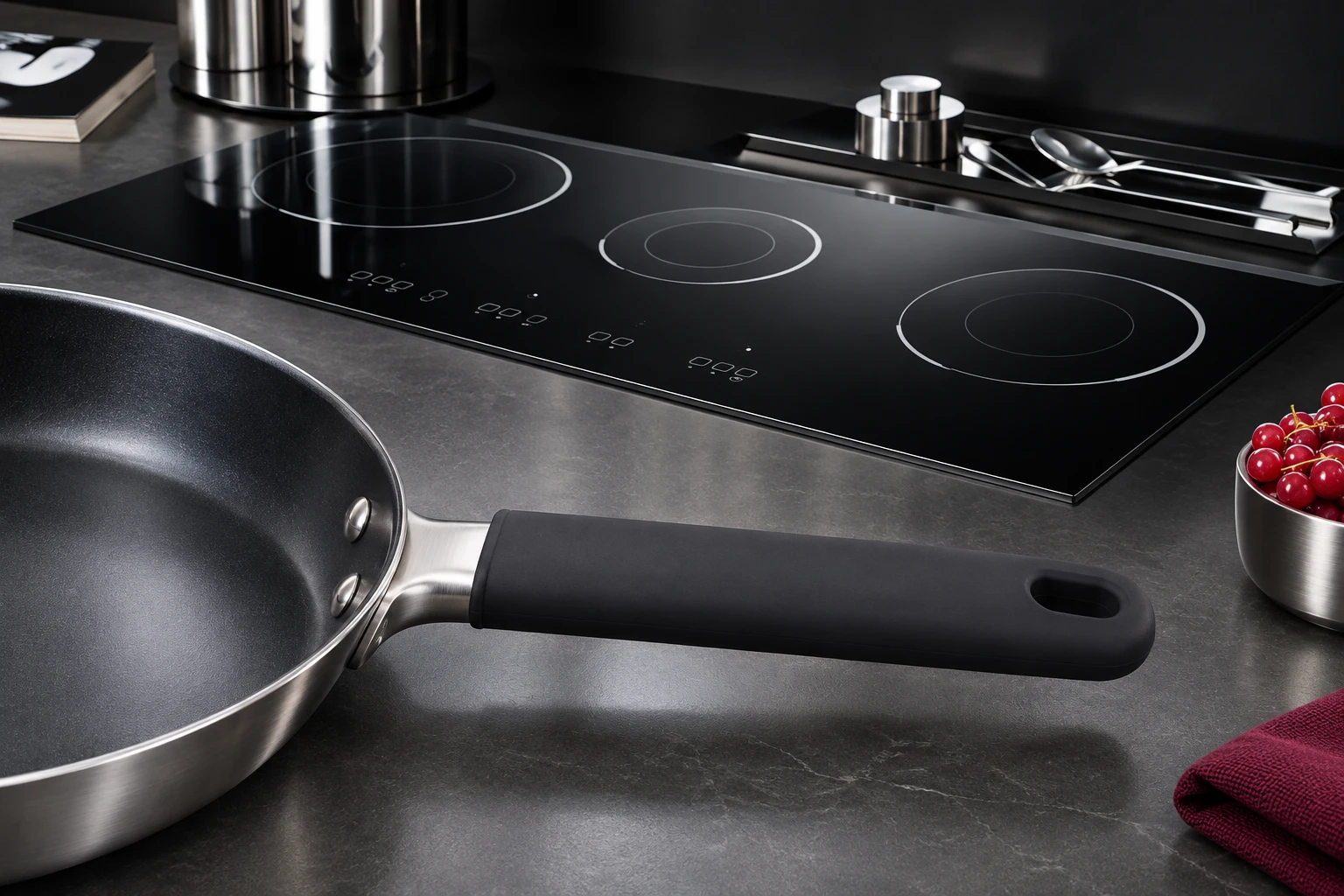
Le Creuset handle holder care instructions describes a particular textile holder with a silicone interior and gives a hand-wash or wipe-clean care route followed by flat drying. This is a useful example of product-specific conditions. It does not establish a rating or care method for every leather holder, a silicone sleeve or a pan from another supplier.
Read all restrictions together. An upper temperature claim, if supplied, is not a promise of indefinite safe contact, and it does not explain every grip or moisture condition. This article assigns no generic temperature, time or load limit. Retain the actual product instructions and contact the maker when the intended task is not clearly covered.
Check the outer surface and, where the instructions allow, the interior for damage or contamination. Food oil, moisture or a tear may affect handling in ways that a product photograph cannot reveal. Follow the maker’s cleaning and drying requirements rather than assuming that any kitchen accessory can go through a dishwasher.
Keep the accessory with its identified vessel or document the permitted combinations. In a shared kitchen, a sleeve moved between several similar-looking pans can lose its connection to the original instructions. If a replacement has no model identification, do not assume it carries the same restrictions as the old one merely because the color is similar.
| Check | What to confirm | Stop condition |
|---|---|---|
| Underlying handle | Intact and suitable for the vessel | Movement, cracks or uncertain attachment |
| Sleeve engagement | Correct model and prescribed position | Partial fit, rotation or interference |
| Accessory condition | Clean, dry and maintained as instructed | Damage or unknown contamination |
| Cooking exposure | Whether it may remain fitted during the task | No clear permission for the proposed use |
| Transfer route | Secure permitted grip and clear landing area | Stretching, obstruction or uncontrolled contents |
This is a practical preparation sequence, not a product test standard. Use it to identify missing information before heating the vessel. Do not turn a cold check into a deliberate overload or a trial with boiling contents.
Decide where the vessel will go and whether the task requires both handles. Clear the route and prepare a support suitable for the hot vessel. The sleeve should not force the wrist into an awkward position or block access to an auxiliary handle. Avoid discovering these constraints while holding a full pan over the glass.
U.S. Fire Administration cooking safety guidance provides the general cooking-safety context for controlling the work area and avoiding preventable handling hazards. It does not certify this sleeve or a particular lifting method. If the intended transfer is difficult within the equipment instructions, change the process rather than relying on a stronger grip or carrying the pan farther to test the accessory.
Induction describes how a compatible vessel is heated; it does not make a metal handle cool or approve a handle cover. Nor does a clean glass-ceramic panel establish that the vessel, handle and accessory have been tested together. Read the appliance and cookware instructions independently.
Keep sleeves, gloves and other loose items off the cooking zones and touch controls. Do not leave a detached sleeve on the hob as a convenient reminder. The surface can require residual-heat precautions after cooking. A separate dry storage place for handling accessories makes it easier to find them without covering the appliance.
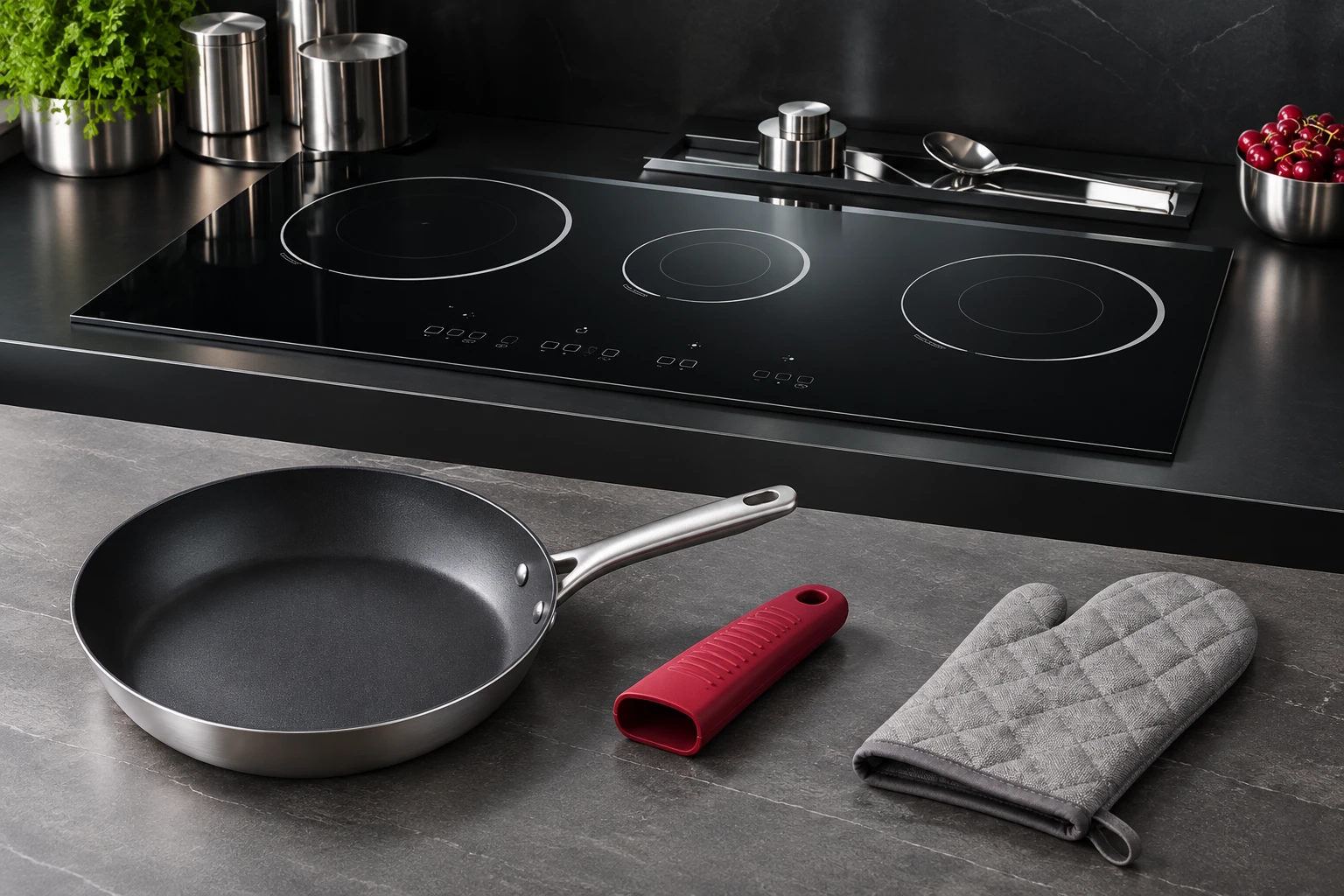
Do not add tape, glue, wire or an extra fabric layer inside a loose sleeve unless the maker specifically provides such a method. These changes can alter engagement and the materials exposed to heat. A makeshift solution that feels firm while cold does not establish appropriate behavior during a hot transfer.
If a sleeve slips or rotates, stop using that combination and contact the supplier. Describe what happened, the model and whether the item was dry, clean and fully engaged. Do not repeatedly try the same uncertain fit with hotter or heavier contents. A controlled support enquiry is more useful than an escalating sequence of kitchen experiments.
Leather, silicone and textile accessories may have different care requirements. Use the instructions supplied with the particular item, including any limits on soaking, detergents or drying. Keep a damp accessory out of service until its required condition has been restored. Do not infer care instructions from the material name alone.
Store the sleeve so that its interior remains clean and it cannot be confused with a replacement of another size. If the item is deteriorating or identification is lost, obtain an appropriate replacement. An accessory intended to improve handling should not become a reason to overlook uncertainty about fit or condition.
Send the handle dimensions or model information requested by the supplier, a photograph and the intended use. Ask whether the sleeve is approved for that combination and whether it must be removed during cooking. Request the current care instructions and any restrictions on oven, grill or other exposure relevant to the kitchen.
For a commercial purchasing specification, record the permitted combination rather than buying by appearance alone. Keep fit, thermal exposure and handling conditions as separate fields. This avoids a situation in which a broad heat-resistant description is mistaken for a complete operating instruction. A documented combination is easier to train users on and easier to replace consistently.
The cooking surface and the vessel need separate documentation. Kanger black glass-ceramic cooktop panels describes the relevant glass-ceramic product family, while black glass-ceramic material guide explains the material context. A photograph of a panel does not establish accessory compatibility, load capacity or a finished appliance rating. For adjacent questions, see dry oven gloves and secure grip, loose handle assessment, matching removable handles. Keep the current question separate from those topics when choosing a remedy or requesting a quotation.
This neutral educational video explains induction operation and the relationship between cookware and the appliance. It is background for the cookware and glass distinction discussed above; it does not certify this accessory, prescribe cleaning chemicals or approve a Kanger installation.
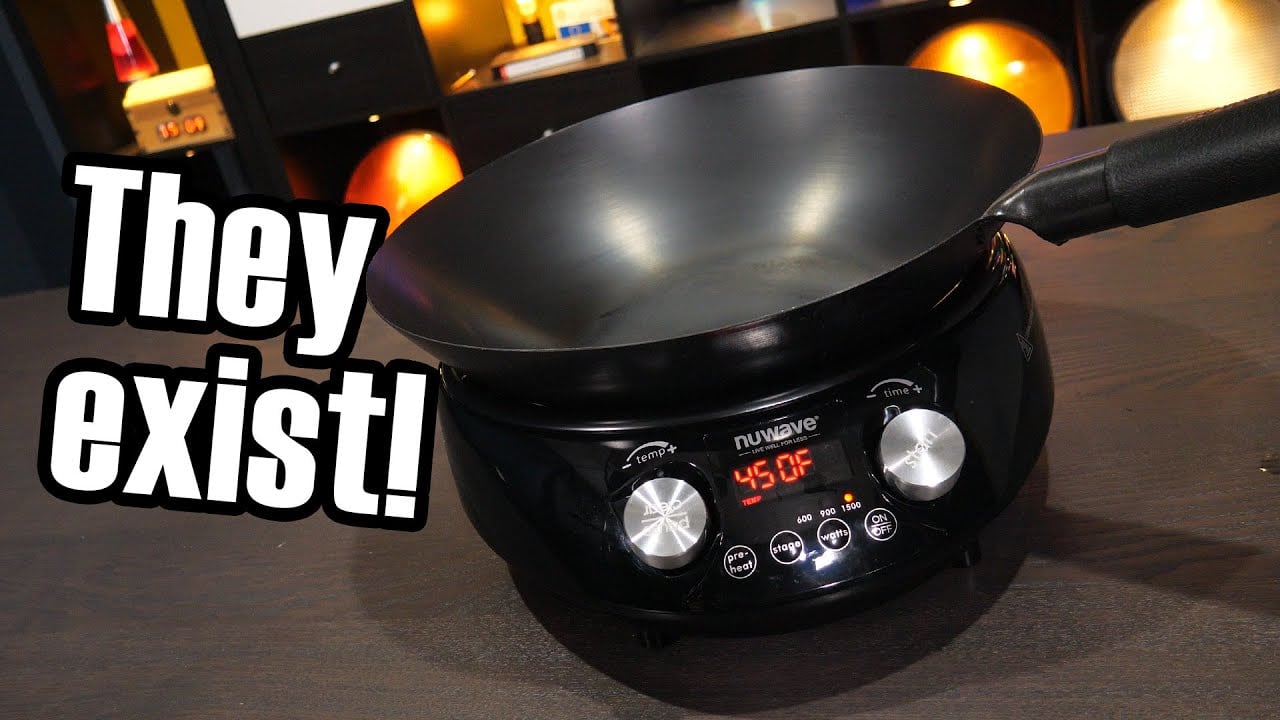
Video: Induction cooking – but what about woks?, Technology Connections. Open the educational video on YouTube.
No. Fit, condition, contact conditions and the maker’s use restrictions all matter. A broad temperature claim does not establish secure grip or permission for every handling task.
Only if the instructions for that sleeve and vessel permit the proposed use. Some accessories have explicit restrictions on remaining fitted during cooking. Do not generalize from the heating method.
Do not improvise a retention system. Stop using an uncertain combination and request the correct accessory or a documented alternative from the responsible supplier.
No. A sleeve covers an existing handle; a detachable handle connects to the vessel as part of the lifting arrangement. Each needs its own compatibility and condition checks.



