Induction cookware hanging rack storage works only when the rack, its mounting, hooks and cookware are suitable for the intended load and use. Induction compatibility says nothing about hanging permission. Store clean, cold, dry vessels, check the exact rack and cookware instructions, and choose a location where removal does not require reaching over an active hob. If the support or handle opening is undocumented, use a suitable cabinet arrangement while obtaining confirmation. Do not improvise structural fixings or hang heavy pans above a glass-ceramic cooking surface.
A wall rail is not automatically a draining rack. Wet items can direct water down handles or onto surfaces below, and washing-related care may differ by material. Finish the vessel’s permitted cleaning and drying process before placing it in its intended storage position. Keep the clean storage area away from splashes and from used cookware waiting to be washed.
Le Creuset cookware storage guidance discusses multiple ways of organizing cookware, including racks and other storage choices. Treat that as evidence that the arrangement should suit the cookware and kitchen, not as a universal structural specification. The mounting instructions supplied with the actual rack remain essential, and a decorative inspiration photograph cannot replace them.
List the rack model, brackets, hooks and the structure to which it will attach. A strong-looking rail does not make an unknown wall suitable. If the installation is existing, find its documentation and ask a competent installer to assess any uncertainty before adding cookware. Avoid copying fastener sizes from a different product or wall type.
The rack’s overall limit and any hook or position limit may be different constraints. Read all stated conditions, including whether a rating refers to a distributed load. This article supplies no generic load figure because the safe arrangement depends on the exact system. When information is missing, the answer is to obtain the documentation, not to estimate capacity by pulling on the rail.
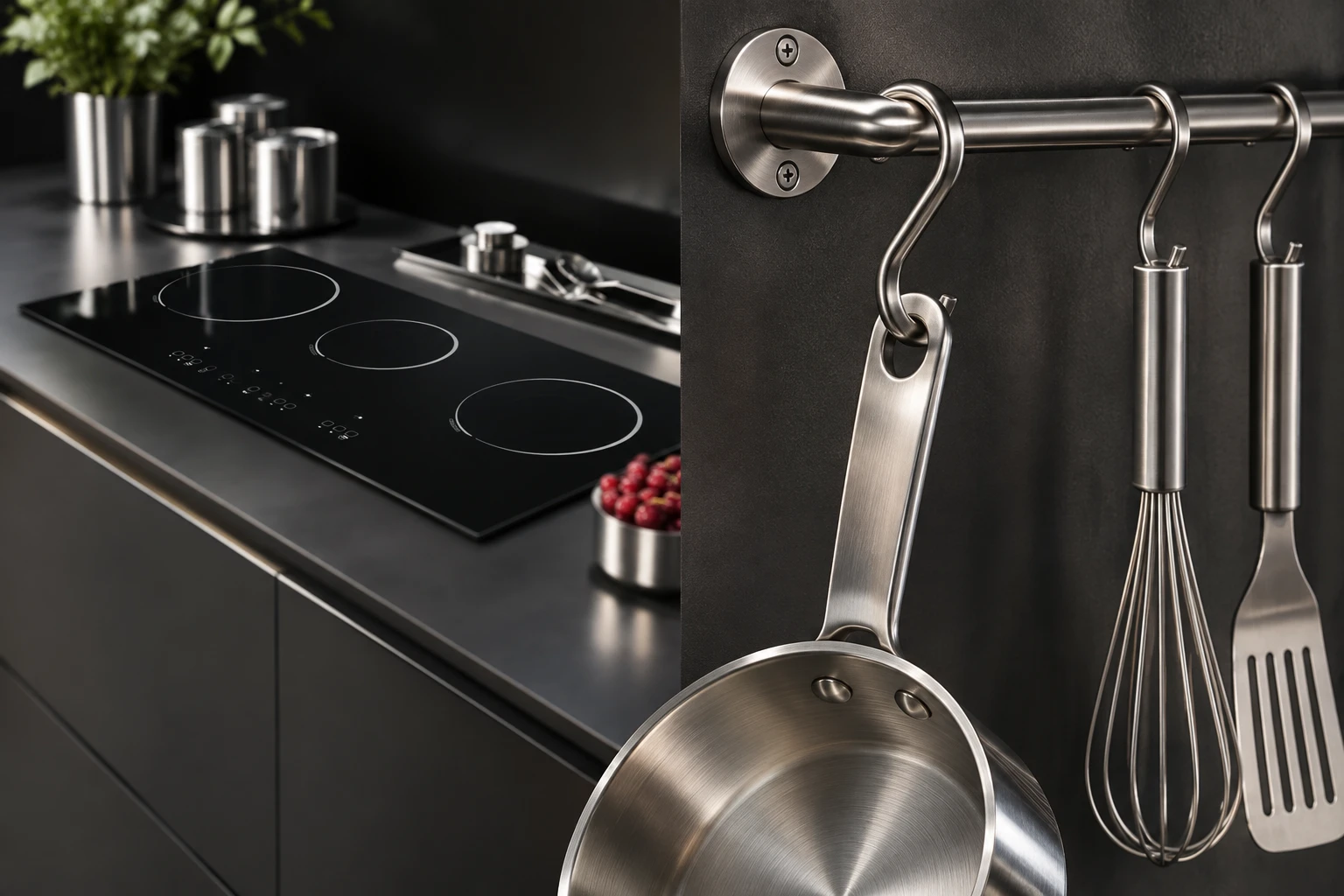
An opening in a handle may be provided for storage, but its suitability must come from the cookware instructions. Check whether the hook seats properly without forcing the opening, scratching a coating or allowing the vessel to slip free. A removable handle and a fixed handle are different assemblies; permission for one does not establish permission for the other.
Do not hang a pan by its lid knob, a loose fastener, a decorative loop of unknown purpose or a worn handle attachment. If a handle moves unexpectedly, stop using that storage position and investigate the vessel condition. A hook is not a repair for a questionable handle, and storage should not conceal a problem that will matter when the pan is lifted for cooking.
Plan a specific location for each vessel instead of filling every available hook. Check the space occupied by pan bodies as well as handles. Two pans that fit when motionless may collide during removal. Keep lids and utensils from becoming obstacles to the hand path or from being trapped behind a heavy vessel.
Place items that are awkward to lift in a more accessible permitted location, which may be a lower cabinet. A hanging display is optional; it does not need to carry the entire cookware collection. The useful measure is whether one person can retrieve and replace each intended item safely within the documented arrangement, not whether the rail looks full.
| Question | Evidence to obtain | Action if unresolved |
|---|---|---|
| Is the installed rack suitable? | Model instructions and mounting assessment | Keep cookware off it pending confirmation |
| Can this vessel hang by its handle? | Cookware maker’s intended storage method | Use suitable shelf storage |
| Does the hook capture the opening? | Permitted hook geometry and cold fit check | Choose an approved compatible hook |
| Can the item be retrieved clearly? | Unobstructed approach and removal path | Reposition the item or change storage |
| Would a fall strike the hob? | Kitchen layout and installer review | Select a separate storage location |
The table is a planning aid, not an installation specification or a proof test. A rack maker or installer may impose additional restrictions that must be included in the final arrangement.
U.S. Fire Administration cooking safety guidance provides cooking-safety guidance that includes attention to the cooking area and material kept near heat. Apply the wider principle by planning storage so that retrieving a pan does not require reaching through a cooking task. Keep handles, hooks and stored utensils out of the operating and ventilation space required by the actual appliance.
No universal clearance in this article can approve a rail over a hob. Consult the appliance and ventilation instructions alongside the rack documentation. Where a cupboard or wall layout forces a choice between a convenient display and a clear cooking area, move the storage. Glass-panel replacement is not a solution to an avoidable falling-object route.
A heavy pot may be easier to manage on a suitable low shelf than on a high hook, even if a rack has adequate documented capacity. Consider both hands, lid handling and the route to the worktop. The location should let a person establish control of the vessel before lifting, without stretching or standing on an improvised step.
For nesting on a shelf, review contact between surfaces and any permitted protectors. Do not assume that the hanging arrangement and the nested arrangement share the same care needs. Keep frequently used items accessible and store rarely used pieces where they will not have to be shifted every time a saucepan is needed.
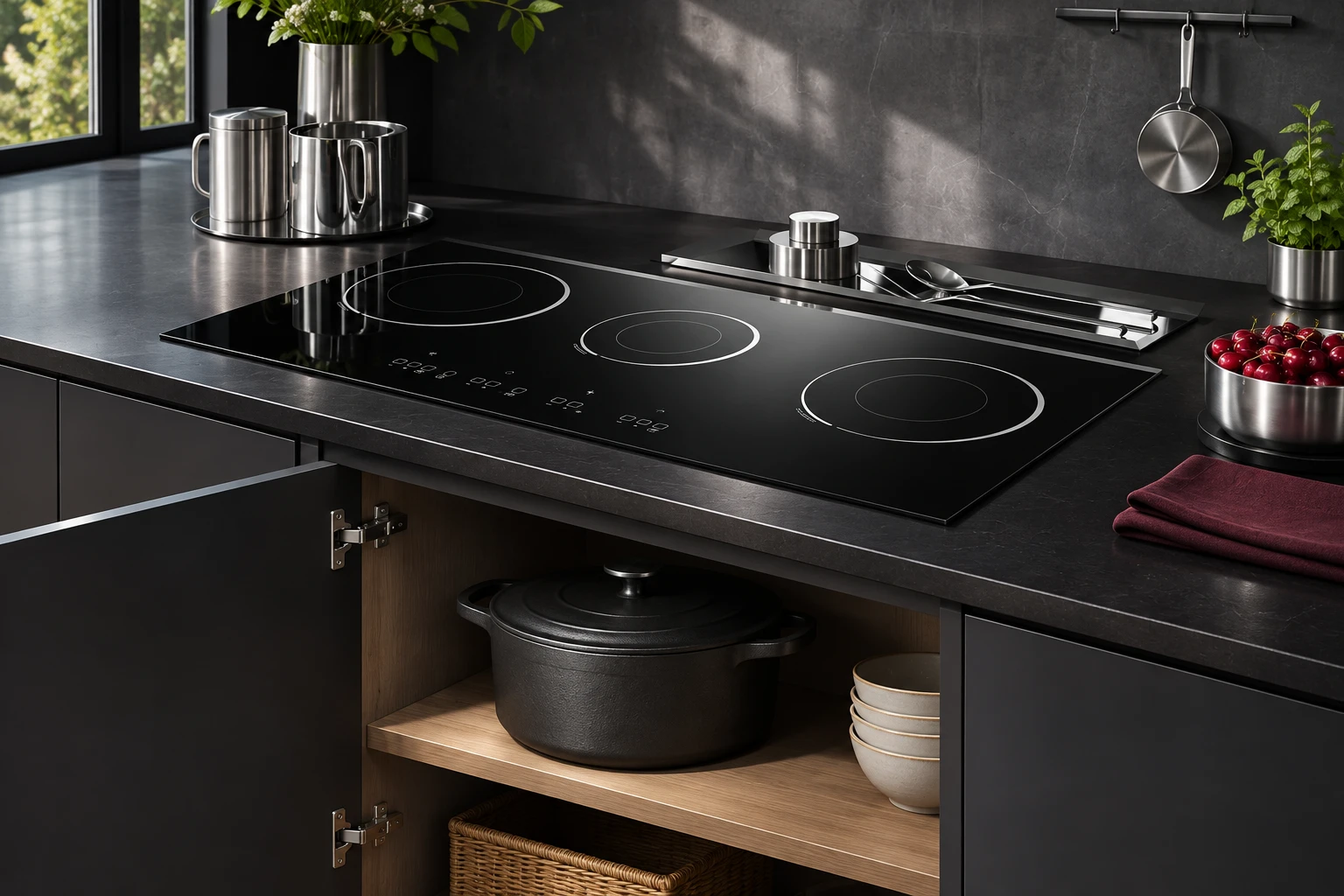
Follow the rack maker’s inspection and cleaning instructions. Notice movement, missing parts, corrosion or distorted hooks when the system is empty, and stop loading any questionable position until it has been assessed. Do not tighten unknown wall hardware blindly; the installer needs to know the structure and original fastening method.
Check the cookware as well. A handle that was secure when the rack was installed may later need attention. Keep storage inspection separate from a cooking trial: heating the pan does not test whether its hanging point is suitable. If a vessel has fallen, assess the cookware, nearby objects and the appliance glass before simply returning everything to its original position.
For a new kitchen or hospitality fit-out, identify the intended cookware schedule and location in the design brief. Ask the responsible supplier and installer to coordinate the rack, wall construction, access and appliance restrictions. Record the confirmed product models rather than describing the requirement only as an industrial-style pot rail.
This is relevant to projects using glass-ceramic panels because the surroundings influence the risk of impacts and the route taken by cookware. It does not establish that Kanger supplies racks, certifies wall mountings or approves a complete kitchen layout. Keep the glass specification and the storage system’s approval with their respective responsible parties.
In a shared kitchen, mark the intended locations in a separate operating note rather than relying on memory. Identify which vessels belong on which hooks and which should remain on shelves. If the collection changes, review the arrangement before adding the new pan. A replacement vessel with a similar name can have a different handle opening, mass and balance.
Keep installation records and maker instructions available to the person responsible for maintenance. A tidy appearance should be the result of a workable system, not a reason to ignore uncertainty. When the evidence for a hanging position is incomplete, an appropriate shelf arrangement allows the kitchen to continue functioning while the support question is resolved.
The cooking surface and the vessel need separate documentation. Kanger black glass-ceramic cooktop panels describes the relevant glass-ceramic product family, while black glass-ceramic material guide explains the material context. A photograph of a panel does not establish accessory compatibility, load capacity or a finished appliance rating. For adjacent questions, see cold cookware storage with pan protectors, loose handle assessment, matching removable handles. Keep the current question separate from those topics when choosing a remedy or requesting a quotation.
This neutral educational video explains induction operation and the relationship between cookware and the appliance. It is background for the cookware and glass distinction discussed above; it does not certify this accessory, prescribe cleaning chemicals or approve a Kanger installation.
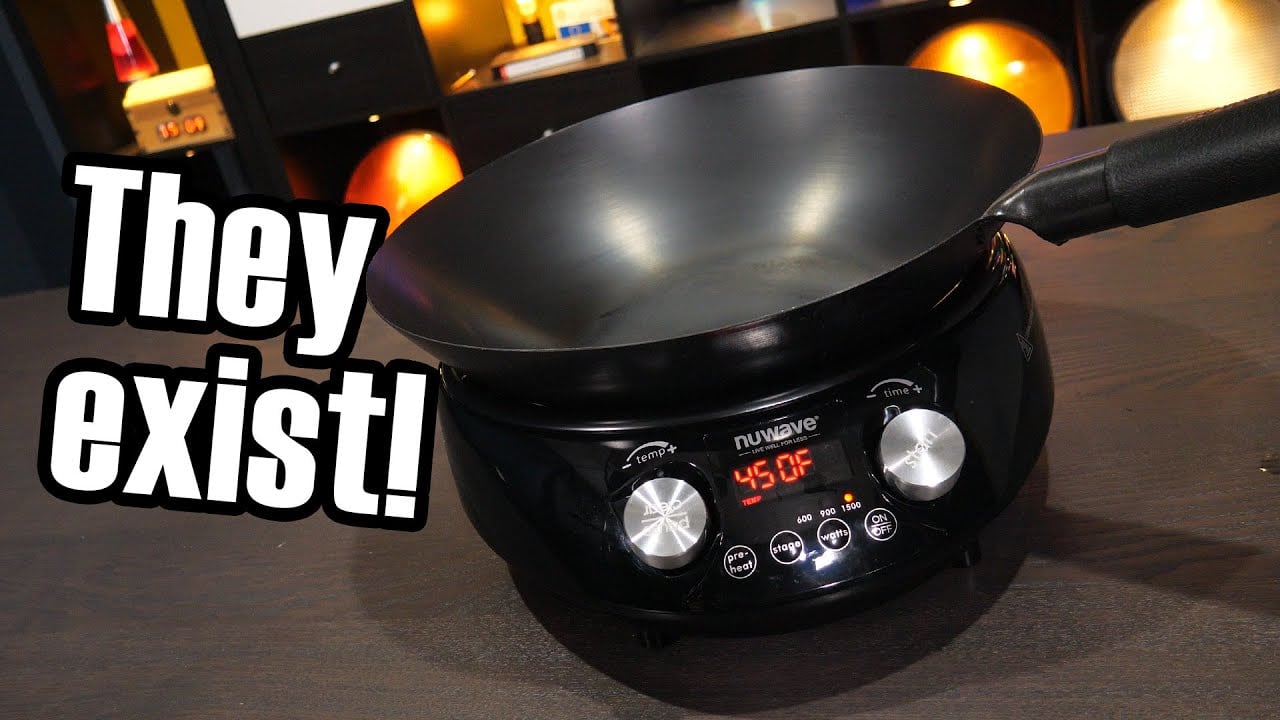
Video: Induction cooking – but what about woks?, Technology Connections. Open the educational video on YouTube.
No. Induction suitability concerns heating, while hanging suitability concerns the vessel construction and the storage system. Obtain the cookware maker’s permission for the intended hanging point and match it to the rack instructions.
Use the exact model and installation documentation, including any hook and load-distribution restrictions. This guide cannot assign a safe weight to an unidentified rail or an unknown wall.
Choose a location that avoids reaching over cooking and avoids a falling-object path onto the glass. Follow the appliance and ventilation restrictions and have the layout assessed where necessary.
Do not use hanging storage to work around an uncertain attachment. Remove the vessel from that position, follow its condition-assessment instructions and use an appropriate alternative only after the condition is resolved.



