For induction cookware, a composite base and a fully clad body describe where the material layers are located, not a guaranteed level of performance. A base-focused construction concentrates the described assembly beneath the vessel; fully clad documentation describes layers extending through the body, typically including the sidewalls. Confirm the exact manufacturer's construction statement and induction designation rather than judging by a visible seam, a ply count or a heavy feel. Either phrase alone cannot establish recognition on your hob, heat distribution in a particular recipe or suitability of the complete cookware. This guide explains how to compare the evidence before buying.
Words such as bonded, sandwich, encapsulated and multi-ply can be used differently across product descriptions. Read the full construction explanation, not just the short title. Ask whether the stated layers are in the base alone or continue through the sidewalls. If the answer is missing, mark the construction unresolved rather than filling the gap with an assumption based on another collection.
All-Clad's construction explanation distinguishes its identified fully bonded cookware from base-only descriptions. These sources support asking a location question, but they do not make every product carrying a similar phrase identical. Keep the exact range and size with the specification. A stockpot, skillet and saucepan sold under one umbrella name may still need individual documentation.
The first decision is construction: what materials and arrangement are actually documented? The second is induction suitability: does the manufacturer designate the exact piece for induction, and does it meet the hob's cookware requirements? The third is task suitability: does its shape, mass, handle arrangement and permitted use suit the work? A favorable answer to one does not settle the others.
Our stainless-steel cookware base guidance explains stainless cookware and the compatible base question. The comparison here is narrower: interpreting base-only and body-wide layer statements without inventing performance. Avoid ranking pans solely by the word fully or the largest layer count. Such labels leave out other construction details, dimensions and use conditions. Ask for a complete specification and evaluate the actual intended task before deciding that a higher-priced description is necessary.
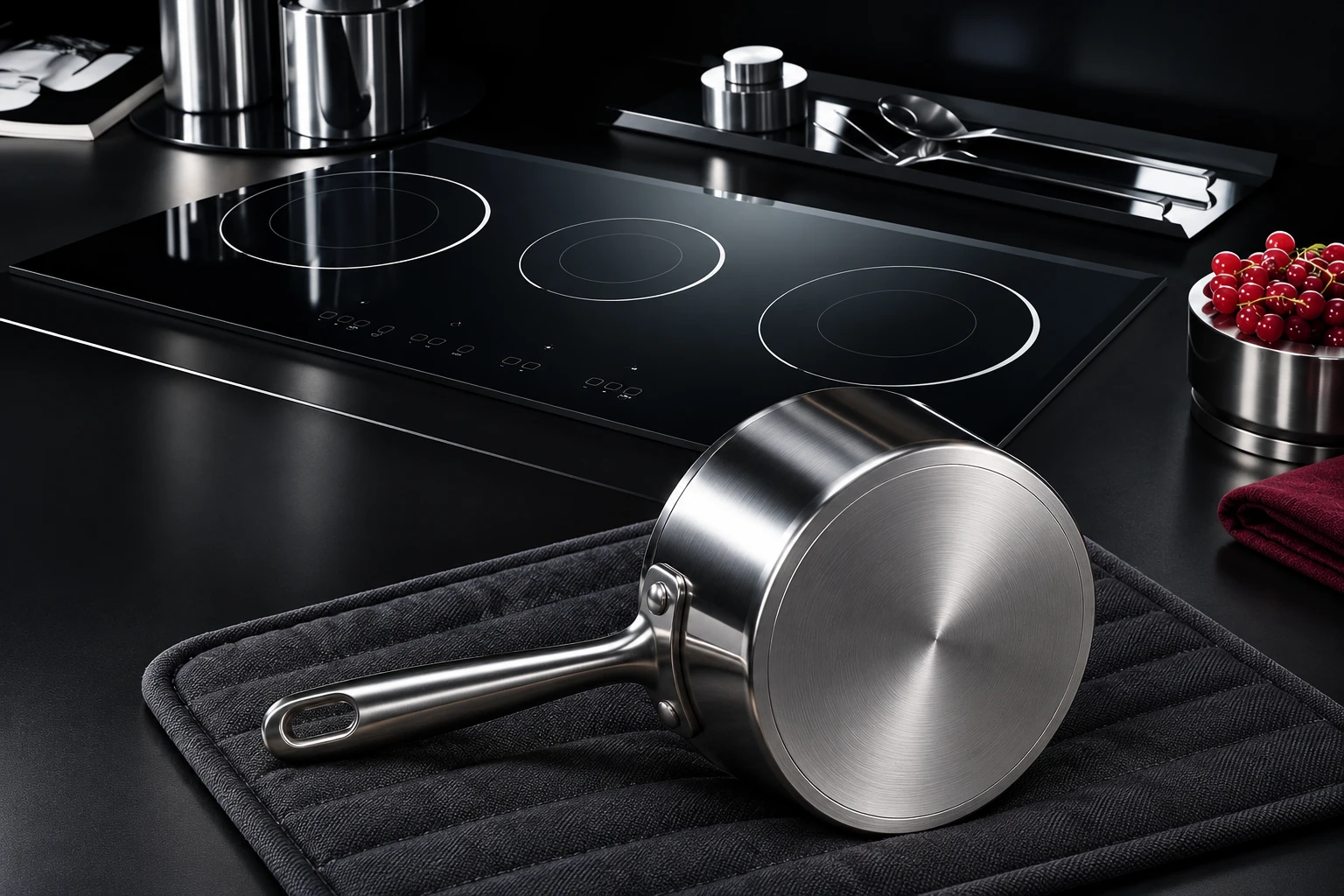
An exterior base seam can be a useful observation to discuss with the supplier, but it does not reveal every internal layer or bonding process. Conversely, a smooth outside does not prove a particular laminate. Photographs cannot reliably establish core thickness, alloy grade, hidden interfaces or manufacturing quality. Avoid annotating a product photograph with invented internal layers to make a comparison look more technical.
Request an authenticated construction diagram or written description for the exact item. If only a general range illustration exists, ask whether it applies to the selected size and revision. Record what remains unknown. Do not cut, grind or otherwise damage a cookware sample to inspect it outside an appropriate agreed evaluation process. Procurement evidence should come from identified documentation and relevant testing, not a destructive improvised demonstration in a kitchen.
Induction designation still needs to be matched to the appliance. Check the actual usable base dimensions, permitted zone arrangement and other cookware requirements in the hob instructions. A wide rim or outward-flared body can exaggerate the size relevant to recognition. Our measuring the usable pan base article explains the difference between a cookware body's advertised diameter and the base dimension used in appliance selection.
ENERGY STAR describes induction as heating compatible cookware electromagnetically. That background does not mean every stainless layer is suitable or every small pan will be recognized. A magnet check, where recommended, is a preliminary observation rather than complete approval. Do not compensate for a recognition mismatch with unapproved adapter plates or repeated high-power attempts. Resolve the combination with the cookware and appliance manufacturers before treating it as usable.
| Question | Base-focused description | Fully clad description |
|---|---|---|
| Layer location | Ask what is incorporated beneath vessel | Ask which layers extend through body |
| Induction | Obtain exact model designation | Obtain exact model designation |
| Dimensions | Compare usable base with hob requirements | Compare usable base with hob requirements |
| Performance | Request relevant product-specific evidence | Request relevant product-specific evidence |
| Care | Follow identified vessel instructions | Follow identified vessel instructions |
| Substitution | Recheck replacement model and size | Recheck replacement model and size |
This qualitative decision checklist uses the identified manufacturer and government sources below. It does not introduce universal operating limits or measured performance.
Layer location can inform the questions you ask about heating, but it cannot produce a universal cooking ranking from a sales description. A comparison of actual performance depends on more than the number of layers. Geometry, dimensions, the documented construction and operating conditions all matter. Do not claim a fixed percentage improvement in efficiency, a guaranteed absence of hot spots or a particular boiling time without appropriate identified measurements.
For a purchasing trial, define the task before selecting a winner. State the appliance, cookware model, permitted setting, contents and observation method in a responsible evaluation plan. Keep the work within manufacturer instructions rather than heating an empty pan to exaggerate a visible effect. If a supplier supplies test results, check which exact product and conditions were tested and whether that evidence answers your intended use. A general marketing chart may not do so.
A saucepan and a broad saute pan present different working arrangements even when both use a documented fully clad construction. Consider usable volume, lid requirements, access for stirring and the ability to lift the loaded vessel. Do not substitute a construction label for those everyday decisions. A purchasing team should specify the cooking task and handling constraints before comparing construction options.
For boiling or simmering, follow the particular cookware and appliance instructions rather than applying a setting borrowed from another vessel. For thick sauces or other demanding tasks, evaluate the documented product under permitted conditions instead of assuming that base-focused construction is automatically inadequate. The purpose of the comparison is to identify the evidence needed for a choice, not to create an unsupported hierarchy in which one manufacturing phrase always wins.
Check the published weight and dimensions where available, and distinguish an empty sample from a vessel carrying food and liquid. A pan that feels reassuringly solid in a showroom may be awkward when full. Consider the handle clearance, lid removal route and suitable landing area around the hob. Do not slide either construction across glass as a substitute for lifting it safely.
Our dry oven glove grip preparation article discusses preparing dry heat protection and a clear handling route. That preparation applies regardless of where layers are located. For shared kitchens, assess whether staff can identify and use each model consistently. Store cookware so bases and rims are protected from impact or trapped debris. A construction comparison that ignores handling can produce a technically impressive specification with poor suitability for the actual kitchen.
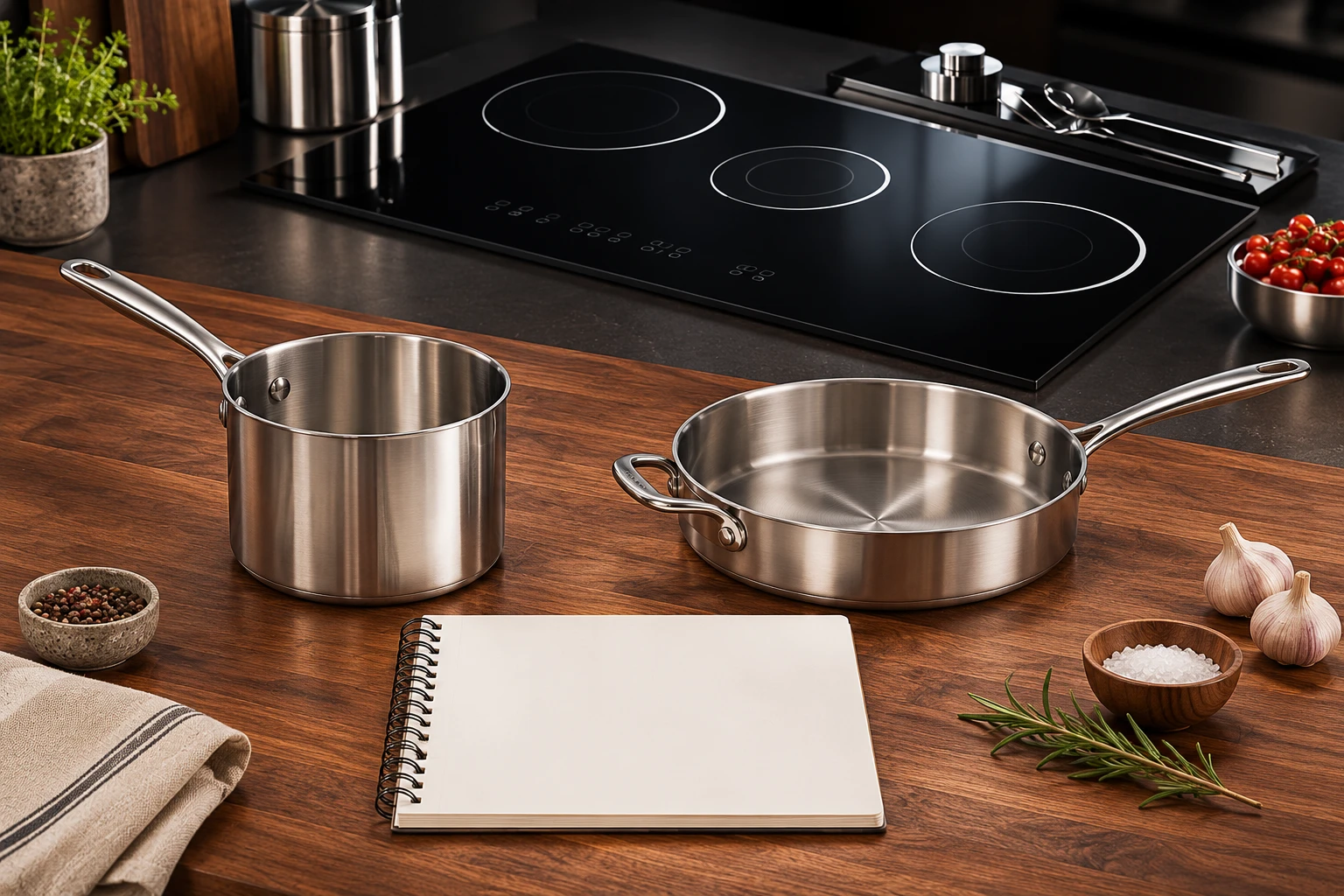
A fully clad description is not automatic permission for a dishwasher, abrasive cleaner or thermal shock. Follow the identified model's instructions for heating, cooling, washing and storage. Keep material appearance separate from diagnosis: a rainbow tint, mineral film and suspected damage can require different responses. Do not treat every mark as proof that a core has separated or that the glass panel is defective.
If the cookware develops rocking, an unusual sound, a visible change or another concern, stop and obtain the appropriate support advice. Preserve the product identity and photographs of the condition. Avoid declaring delamination solely from a seam visible in a listing image or attempting to press a distorted base flat. An article explaining construction does not establish the serviceability of a particular vessel after an abnormal event.
For each candidate, record the exact model, market, size, induction statement, layer location description, base dimensions and current care documentation. Keep unknowns explicit. Ask whether a proposed substitute changes the construction or compatibility information, even if the commercial name is similar. Retain the manufacturer's reply so later buyers can distinguish a confirmed specification from a salesperson's informal shorthand.
Do not copy a fully clad specification into every line of a cookware order unless each item is covered. Ask how production revisions are identified and how instructions are supplied with deliveries. If an approved model becomes unavailable, repeat the relevant checks for its replacement. This is particularly useful when hospitality buyers source cookware and induction appliances through different suppliers, each of whom may assume the other has checked the combination.
Kanger's black glass-ceramic cooktop panels relate to the appliance surface, not to the hidden metal layers of a pan. OEM buyers should define their glass-component requirements separately from the cookware comparison and verify the integrated appliance through the responsible project process. A component product page cannot certify every vessel marketed for induction or replace the finished appliance's instructions.
For the same reason, do not infer that an observed cookware behavior proves a particular glass material specification. Record the appliance, vessel and operating conditions before asking for technical support. Keeping these identities separate makes the inquiry useful and avoids unsupported promises about heating speed, recognition range or complete-system approval. The right purchasing result is a traceable, appropriate combination with understood limits, not simply the longest list of layers.
The neutral educational video below explains induction and cookware interaction. It supports understanding why a material arrangement and the finished appliance must be considered together. It does not measure the two cookware examples in this article or establish a universal winner between construction types.
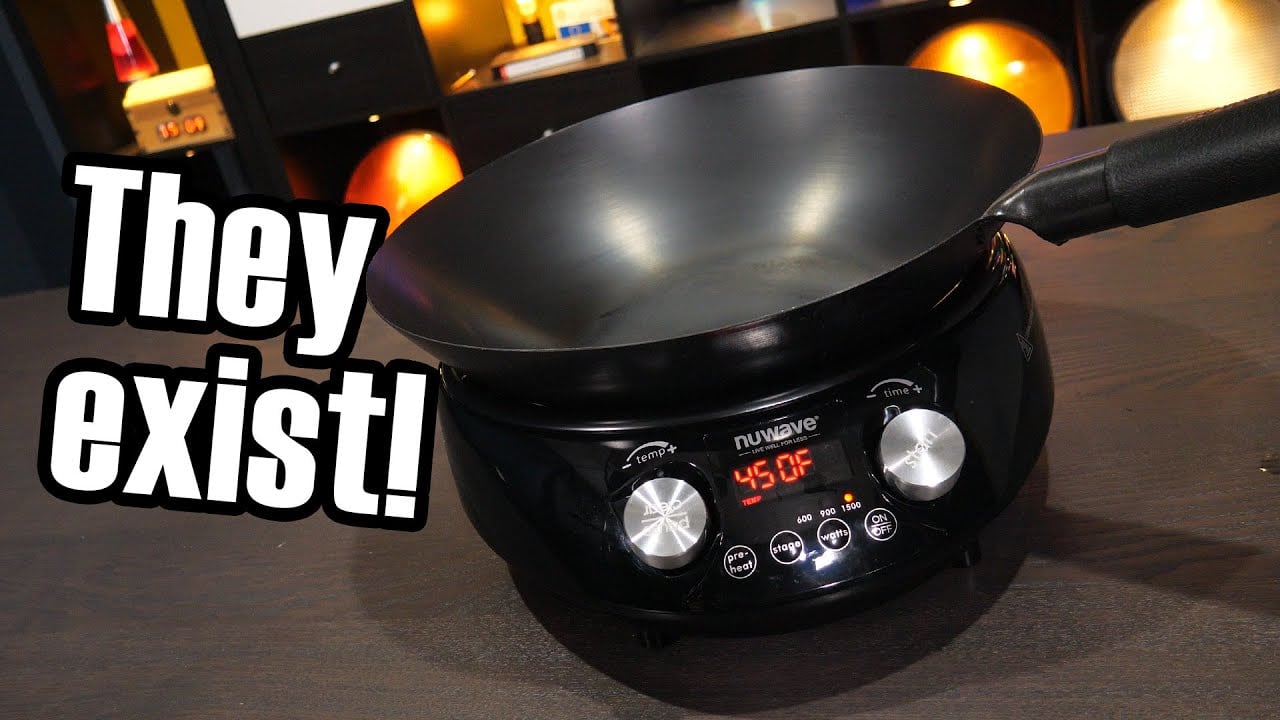
Video: Induction cooking – but what about woks?, Technology Connections. Open the educational video on YouTube.
No universal ranking follows from that phrase. Check the exact construction, induction designation, appliance requirements and intended task.
No. Use the manufacturer's identified construction documentation; an exterior photograph does not establish the full hidden arrangement.
No. A layer count alone does not establish heating time or comparative performance under your conditions.
Follow the appliance and cookware handling instructions, keep bases suitably clean and lift vessels appropriately. Construction terminology alone does not establish scratch protection.
These sources explain their identified equipment or general heating and handling principles. Cookware makers are referenced for their own cookware documentation, not as glass-component suppliers or endorsements of Kanger. Exact model and appliance instructions control each application.



