An induction hob moka pot must be matched by exact model and size to the hob, not selected only because its exterior looks like stainless steel. Check the manufacturer's induction statement, the boiler base against the appliance requirements, and the model's assembly and safety instructions. A moka pot contains a water chamber, coffee funnel, seal and collector; its safe use depends on that complete assembly. If the hob does not recognize it, repeatedly increasing power is not a compatibility test.
Start with the supplied manual and the identification on the actual product. This guide explains what to verify before purchase and use. It does not replace the brewing, filling or valve-care procedure for a particular coffee maker. Those details can change with the design, so a familiar shape is not enough to select operating instructions.
Record the model name, stated capacity, product code and any manual revision. Keep a photograph of the packaging or underside if it helps the manufacturer identify the version. A listing headed simply induction coffee maker is less useful than a specification for the exact size being sold. Ask for clarification before ordering if the page mixes several versions.
Do not confuse the Moka Express, Moka Induction and Venus names. They identify different product families, and a statement about one cannot establish compatibility for another. The Bialetti Moka Induction instructions linked below describe a particular mixed-material construction and require checking the boiler diameter against the hob's technical requirements. That is a more precise starting point than treating all metal moka pots alike.
Capacity descriptions also need care. The word cup on a coffee-maker listing is not automatically equivalent to your household mug or a cookware volume marking. Select a size using the maker's capacity information and intended serving task. Do not buy an oversized model assuming you can invent a different filling procedure to make a smaller batch.
Induction depends on cookware interaction with the appliance. ENERGY STAR describes the role of ferromagnetic cookware and a magnet check. Use that as a material screening clue; then return to the exact hob requirements. A positive magnetic response does not tell you every condition needed for a small coffee-maker base to be recognized.
Compare the actual boiler base with the hob documentation rather than measuring the widest part of the upper collector. Ask which dimensions the appliance manufacturer requires. A printed ring on the glass is not itself a complete technical specification for minimum detection, and a large upper chamber does not enlarge the active base beneath it.
If the appliance displays a pan error, stop and check the manuals. Do not insert random metal objects, nest the maker inside another hot pan or bypass a detection warning. An adapter is a separate accessory decision requiring permission from the relevant manufacturers; this article does not recommend an improvised adapter or transfer permission from one hob to another.
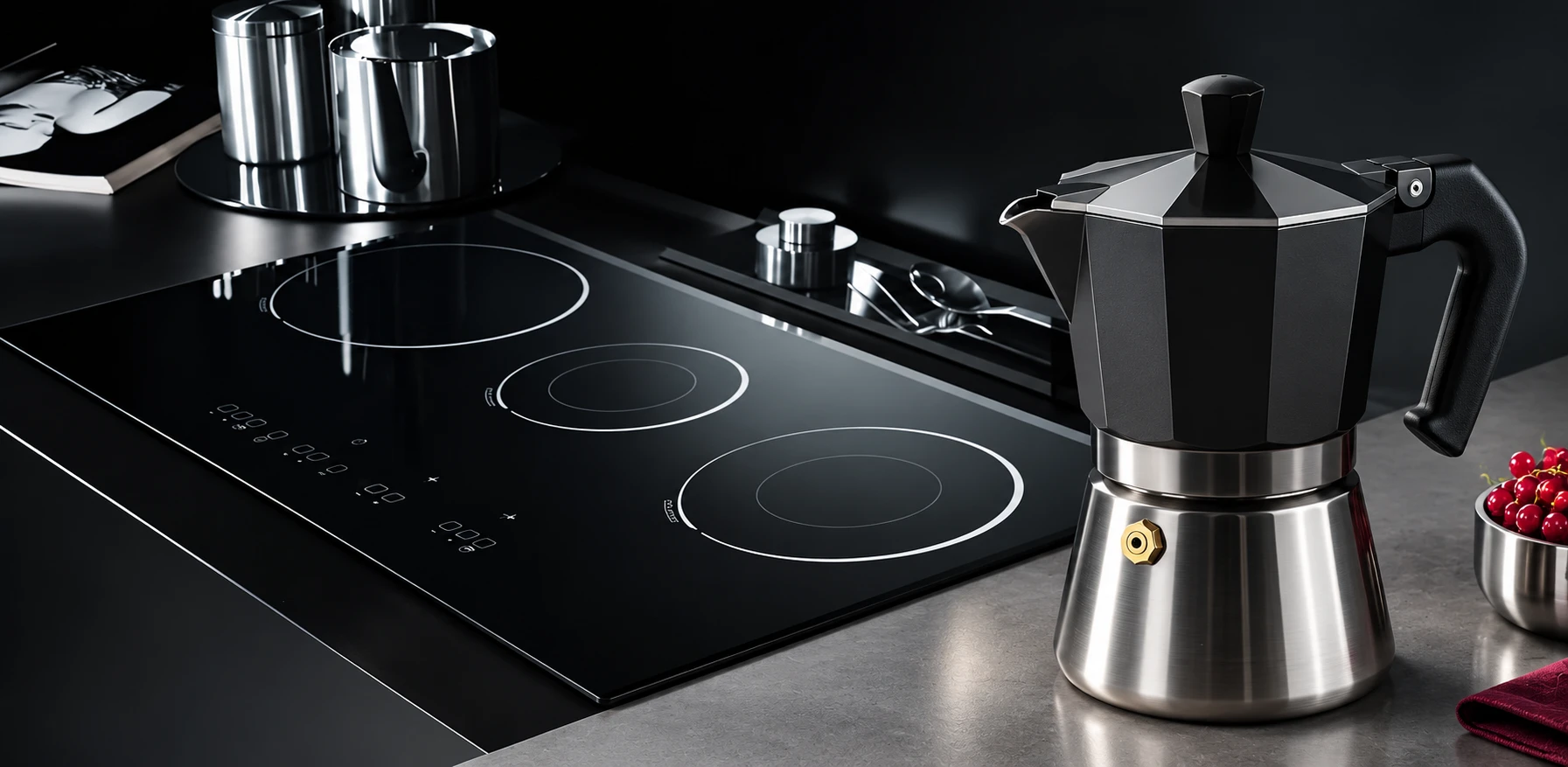
Lay out the cooled, clean components on a separate suitable counter as the instructions describe. Identify the boiler, funnel, seal, filter and collector. Look for missing parts, damage or an incorrect replacement. The objective is to confirm the intended assembly, not to take apart a safety valve or redesign a pressure path.
Check that the documentation matches the parts in front of you. A seal that appears to fit is not enough if it belongs to another model. If the threaded connection cannot be assembled as directed, do not force it or use the handle as a lever. Ask for the correct part or service advice with the product identification and photographs.
Keep the preparation area clear of loose grounds and packaging. Resolve uncertainty before filling or heating. This is particularly useful when a pot has been inherited, bought secondhand or stored with several sets of spare parts. A complete model-specific parts list is more valuable than reassurance based on a similar coffee maker online.
The Bialetti Moka Induction manual sets a water-level boundary relative to its safety valve, prohibits tamping the coffee in its funnel, and excludes boost operation. These are instructions for that named design. Read the full applicable manual rather than copying these brief points into a procedure for another maker. Do not run an empty pot to see whether induction works.
Treat power settings as appliance-specific controls. The number halfway up one hob's scale is not a measured universal brewing temperature. Nor does a fast result establish safe pressure behavior. Follow the coffee-maker and hob instructions together, and ask for clarification if they conflict instead of selecting the instruction that gives the quickest brew.
Stay present while the maker operates. The U.S. Fire Administration's attended-cooking guidance applies to managing the cooking area; it does not certify a coffee-maker assembly. Keep the controls accessible and know how to stop the selected zone. Have a suitable destination ready before lifting the vessel away from the heat.
| Decision | Evidence needed | Action if missing |
|---|---|---|
| Exact model | Product code, size and matching manual | Ask for identified documentation |
| Hob recognition | Boiler base compared with hob requirements | Do not test by increasing power |
| Assembly | Correct funnel, seal, filter and collector | Obtain model-specific parts |
| Valve and heat | Applicable filling and operating instructions | Do not improvise pressure-related changes |
| After use | Permitted cooling, cleaning and storage sequence | Keep the maker out of service until resolved |
This qualitative checklist summarizes the manufacturer instructions cited below; it does not introduce new operating limits.
Locate the safety valve and follow the model's orientation and handling instructions. Keep the intended discharge route away from the user. A valve is not an opening to cover because steam might mark a backsplash, and changing its position is not an ordinary countertop adjustment. If there is an unexplained leak or malfunction, stop using the maker and obtain the manufacturer's advice.
Plan the handle position with the pot cold. It should allow the instructed grip without reaching across another vessel or obstructing the hob controls. Check the full removal path to a heat-suitable support. A small pot can still have a hot base and contents; its compact size does not make every nearby surface an acceptable landing place.
Do not open the maker while it is hot to investigate a weak result. Follow the cooling and opening sequence in the applicable instructions. Keep diagnosis separate from active use. Observations about an error display, a leak location or the assembly history are useful to support; repeatedly trying a faulted setup provides little reliable information.
Cleaning permissions depend on the maker's materials and construction. Do not infer dishwasher, detergent or descaling permission from the general word stainless. An appliance can contain more than one material, and its seal, finish and valve may have different care requirements. Obtain the care guide for the specific version before applying a chemical treatment.
Use approved replacement parts identified for the model. Photograph the product code and the part being replaced before discarding packaging. A generic gasket sold by diameter alone may leave important fit information unanswered. Do not assume a replacement filter, funnel or valve is correct because it can be inserted into the assembly.
After cleaning, follow the storage instructions and keep the matching manual with the maker. For an organized drying area, see cookware drying-rack preparation. If the pan cupboard contains loose lids or mixed spares, label the correct set so that the next use does not begin with an unidentified component substitution.
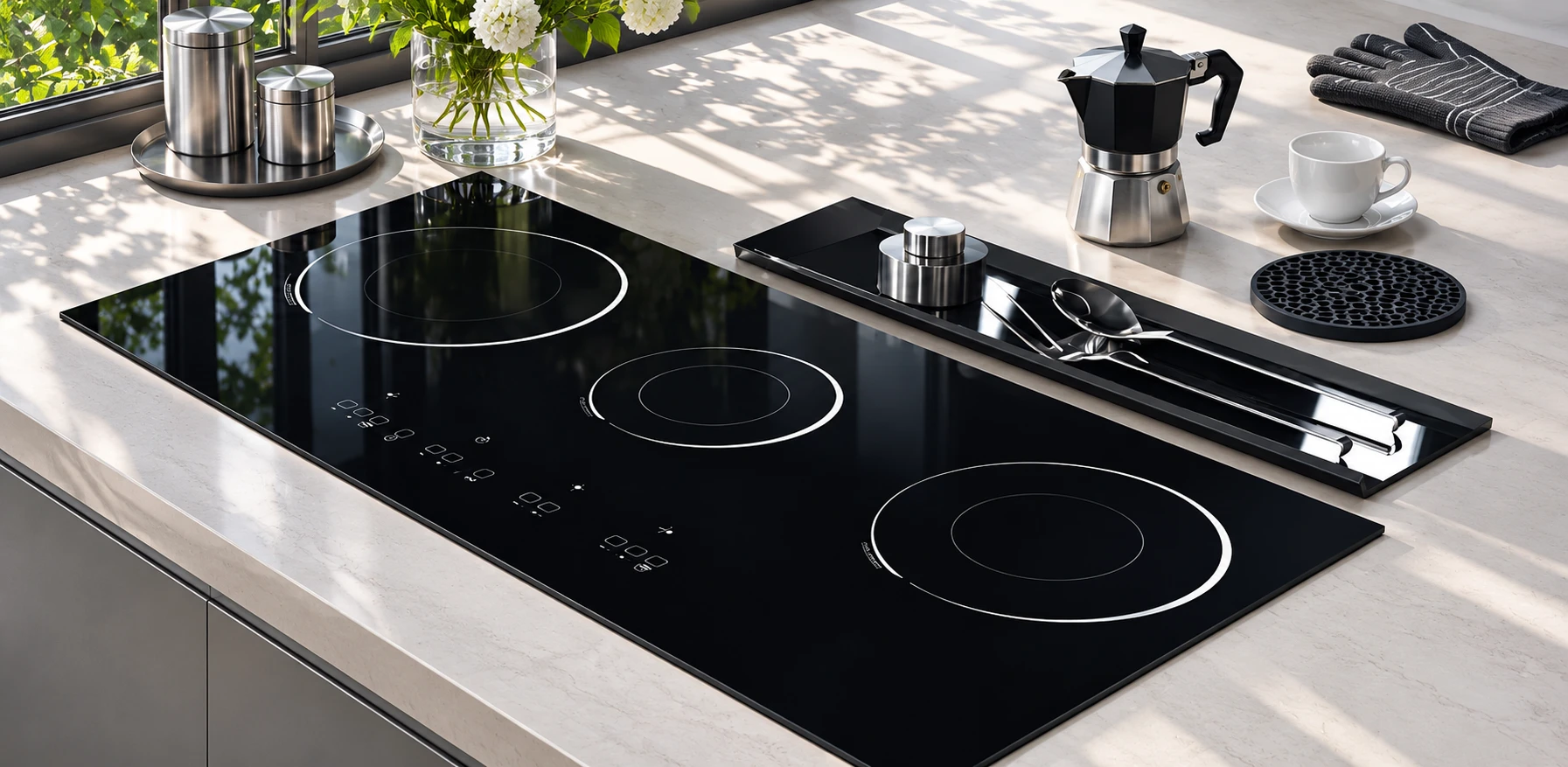
The coffee maker and the glass surface are different products. Use the hob's care instructions for a mark on the panel, and the coffee maker's care instructions for its boiler or collector. A metal-cleaning method is not automatically appropriate for glass. surface-specific burnt food removal explains the importance of identifying the affected surface before attempting residue removal.
Kanger supplies black glass-ceramic cooktop panels for appliance projects. The glass component is part of a complete appliance design; its presence does not establish a moka pot's induction detection or operating approval. When sourcing a panel, share the appliance drawing, required printing and component specification with the supplier. Keep coffee-maker compatibility in the appliance and cookware verification process.
For the wider relationship between cookware and the appliance, consult stainless-steel cookware base guidance. The separate guide to induction hob pan size covers general base-size questions. The added value of this moka guide is the model, assembly, valve and handling checklist, rather than a second generic magnetic-pan buying guide.
The neutral educational video below explains induction and cookware geometry. It supplies background for the base-recognition discussion, not a moka brewing demonstration or a safety-valve inspection procedure. It does not endorse a coffee-maker model or a Kanger installation. The embedded player does not start automatically.
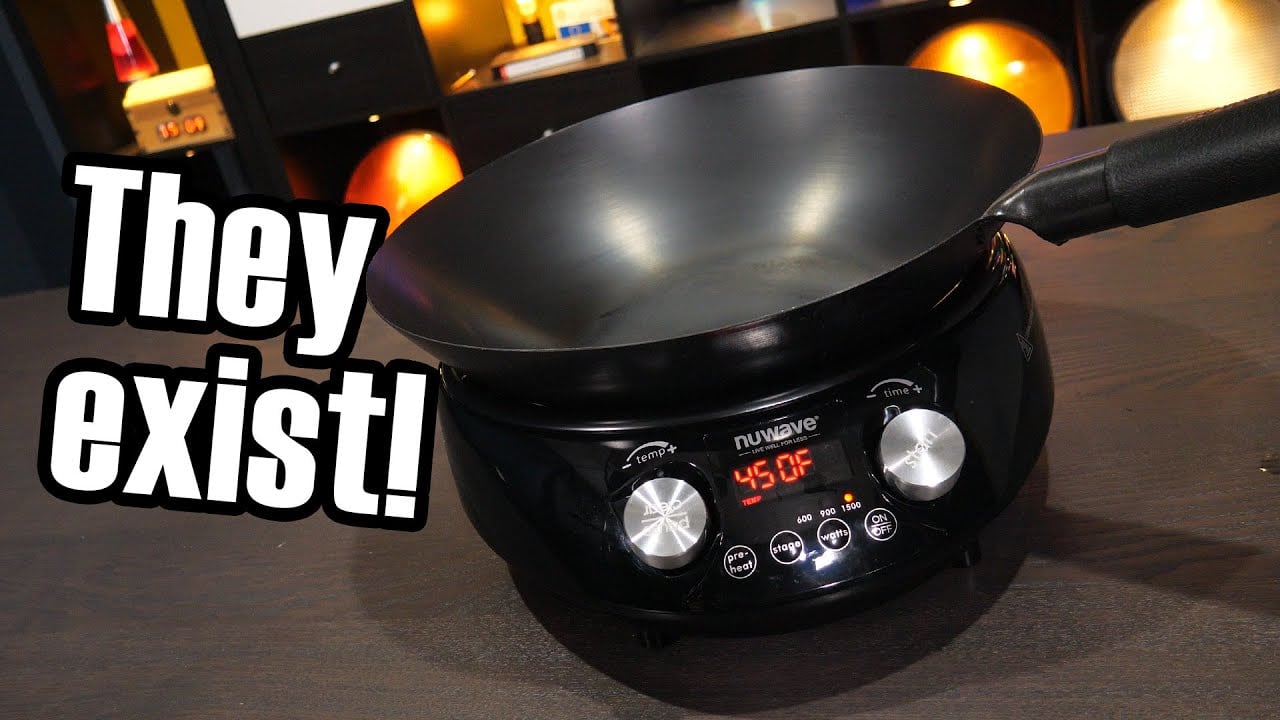
Video: Induction cooking – but what about woks?, Technology Connections. Open the educational video on YouTube.
Give the seller the exact coffee-maker size and your hob model, then ask for the applicable induction and care documentation. Request the relevant base dimension and replacement-part identification if those are missing. This turns a vague question about whether steel works on induction into a concrete document check that the manufacturer can answer.
If the answer remains ambiguous, choose a documented combination rather than treating a return policy as a test plan. Keep the final product sheet with the purchase record. It will help distinguish a compatibility issue from a missing part or a later maintenance question without relying on memory of a changing online listing.
No. Confirm the exact model and size, the manufacturer's induction statement and the hob's base requirements. Appearance alone does not establish material response or appliance recognition.
No. Check compatibility and the error guidance before another attempt. The cited Moka Induction manual specifically excludes boost for that design; other models require their own applicable instructions.
Do not assume so. Match approved replacement parts to the precise model using the manufacturer's documentation, and resolve uncertain fit before heating.
No. The panel specification concerns the appliance component. Coffee-maker suitability also depends on the identified cookware, appliance design and both manufacturers' instructions.
These primary documents support their identified equipment and handling requirements. Distributor-hosted PDFs retain manufacturer authorship. They do not certify other models, Kanger components or complete installations.



