A cast iron bread loaf pan should not go on an induction hob unless its exact manufacturer instructions permit stovetop use. Being made from cast iron, attracting a magnet or fitting across a zone does not provide that permission. Lodge’s identified seasoned cast iron standard loaf pan is explicitly described as not intended for stovetop use. Keep oven bakeware in its permitted application, and use documented hob-approved cookware for a stovetop stage. Check the product identity, current instructions and cooling or handling route before cooking; do not run a heating experiment to decide whether an oven-only pan is suitable.
Cast iron describes a material, not a complete set of permitted uses. A manufacturer may make skillets, loaf pans, griddles and other shapes from related materials while assigning different applications to each. A statement about a skillet does not automatically cover a rectangular bread mold. The exact product instruction is more relevant than a broad description saying that cast iron works with induction.
The Lodge loaf-pan product information provides a concrete example of this distinction. Its stated stovetop restriction applies to the identified loaf pan. It should not be extended into a claim that every cast iron item is oven-only, nor should a general cast iron compatibility statement cancel that restriction. If your pan comes from another range, obtain its own documentation before deciding where it belongs.
Locate the product number on the packaging, receipt, underside or maker’s record. Match it to the current instruction sheet and check that the dimensions and shape agree. A long rectangular baking pan may resemble a shallow roaster in a small photograph, and retailers sometimes use broad category names. A matching material description alone is not a reliable identity check.
If the pan has no readable identifier, send clear photographs of the whole item, underside and handles to the seller or manufacturer. Ask specifically whether the item is permitted on your type of stovetop. Do not phrase the question only as whether cast iron is magnetic. Retain the answer with the model record so that another person using the kitchen does not have to repeat the uncertainty.
ENERGY STAR describes induction heating in terms of compatible ferromagnetic cookware. That explains why material matters, but it does not approve every object with magnetic content as cookware for a particular appliance. Intended use, geometry and the complete equipment instructions still matter. A magnet cannot check whether a baking mold was designed and approved for the proposed stovetop application.
This is especially relevant when online advice starts with a true general statement and ends with an unsupported product conclusion. Cast iron can be suitable for induction in an approved vessel; therefore an unidentified loaf pan is suitable is not a valid buying decision. Treat the magnet as limited material information. An explicit manufacturer restriction remains the deciding evidence for that identified item.
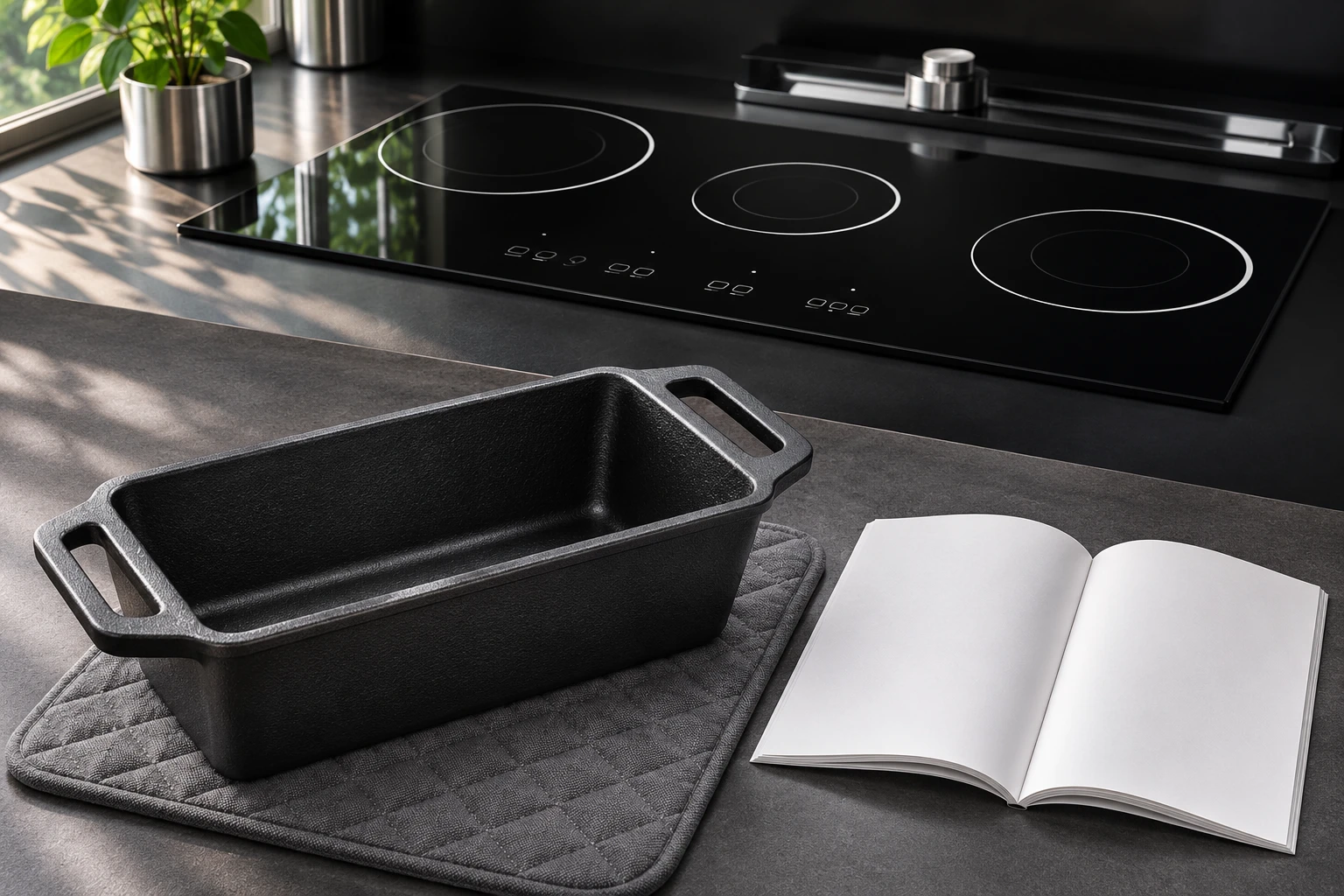
Do not put an uncertain loaf pan across one or several zones and increase power to see what happens. A successful detection signal would only show that the appliance responded in that moment. It would not establish the pan’s intended application or validate the entire cooking arrangement. A heating trial is particularly unhelpful when the maker already states that the pan is not intended for stovetop use.
Likewise, bridging a rectangular shape across painted circles is not permission to use a bridge function. The appliance manual must identify the function and permitted cookware, and the vessel must also be approved for that application. Do not add an adapter plate, loose metal sheet or improvised support to bypass a bakeware restriction. Choose the proper vessel for the planned stage instead.
| Question | Required evidence | Decision |
|---|---|---|
| Identity | Model on item matches document | Resolve mismatch before use |
| Heat source | Exact pan permits proposed application | Keep oven-only pan off hob |
| Magnet result | Material information only | Do not override restriction |
| Recipe stage | Approved vessel for each stage | Separate hob task from baking |
| Handling | Dry grip and unobstructed oven route | Rehearse with cold equipment |
| Cooling | Permitted separate support | Do not assume hob is a rack |
This qualitative checklist organizes the identified manufacturer and government guidance linked below. It does not supply universal limits or measured performance.
Write the cooking sequence as distinct stages. Mixing or resting dough, warming an ingredient in another vessel and baking in a loaf pan are different operations. If a recipe needs an ingredient warmed on the hob, use a documented hob-approved saucepan for that stage. Then follow the recipe and the bakeware instructions for transferring the ingredient or prepared mixture under the specified conditions.
Do not move the entire loaf mold onto the hob simply because part of the recipe involves warming. A small approved vessel may handle that separate task more appropriately. The induction saucepan selection guide can help organize saucepan questions. The general casserole hob and oven checks guide explains why hob and oven permissions must be checked independently for a vessel intended to move between those settings.
A loaf mold can have its own instructions for greasing, preheating, filling and releasing the baked product. Use the identified bakeware documentation and the recipe’s requirements rather than applying a stovetop skillet routine. Lodge’s baking information is an example of a maker treating its baking collection as a distinct category, with specific use questions and care guidance.
This article does not supply a universal oven temperature, preheating sequence or resting time. Those choices depend on the identified pan and recipe. If a recipe contradicts an explicit equipment restriction, change to an appropriate recipe or approved vessel. Do not resolve the conflict by trying a lower stovetop setting; a smaller control number does not change an oven-only designation.
With the oven and bakeware cold, check that the pan fits the permitted oven arrangement and that its handles can be reached using suitable dry protection. Consider the actual route out of the oven and the support on which the pan will land. The dry oven-glove grip preparation guide discusses preparing dry grip protection; it does not establish a rating for a particular mitt or guarantee that any filled pan can be handled easily.
Leave room for both hands where the pan design requires it. Keep nearby doors, cords and loose items out of the route. If the handles cannot be gripped reliably in the planned arrangement, reconsider the setup before baking. U.S. Fire Administration guidance supports keeping cooking areas attended and clear; specific oven handling and bakeware limits remain the equipment makers’ responsibility.
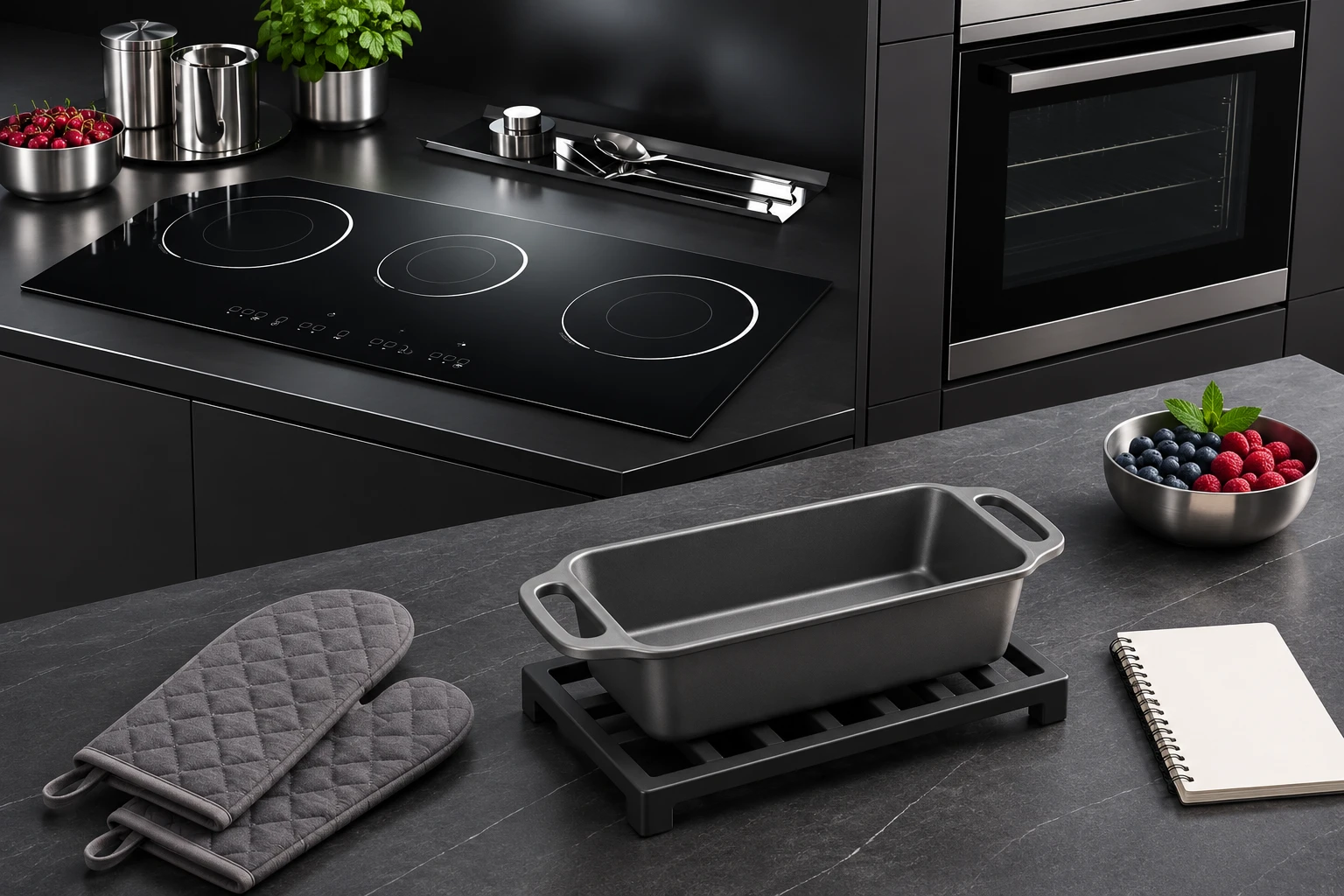
A switched-off induction appliance is still an appliance surface with controls and possible residual heat. It is not automatically an approved landing place for hot bakeware. Follow the hob, worktop and support manufacturers’ instructions, and prepare a separate appropriate support. Do not cover touch controls or put a hot rectangular mold down wherever space happens to appear.
This matters even when no hob cooking is planned. Someone may assume a clear black surface is a convenient counter, or may switch on a zone without noticing the bakeware. A deliberate separate landing area reduces that confusion. Keep the loaf pan’s baking and cooling workflow distinct from the cooking zones, and explain the arrangement to others sharing the kitchen.
Stop the unapproved use and follow the appliance’s shutdown instructions. Avoid handling, moving or cooling hot equipment in an improvised way. Once the equipment has reached the condition specified for inspection, document what happened and contact the relevant manufacturer if there is damage, unusual behavior or uncertainty about continued use. Do not apply cold water as an attempt to make the situation safe quickly.
Record the pan model, appliance model, zone used and any displayed message. Photograph visible changes after safe access is possible. An unchanged appearance does not prove that the unapproved use was acceptable, while a visible mark alone does not identify its cause. Do not scrape, grind or reshape the base to make the pan fit a future stovetop attempt.
Use the exact pan’s washing, drying and storage instructions. Do not borrow a cleaning routine from an enameled casserole or a nonstick tin merely because the shape is similar. Remove permitted food residues in the approved way, inspect accessible surfaces and keep unresolved damage out of the next cooking cycle until the maker has advised on it.
A storage label or retained instruction sheet can help a shared kitchen distinguish oven bakeware from hob cookware. Keep the record factual: model identifier, permitted use and manufacturer source. For purchasing teams, repeat the check when a replacement arrives. A supplier changing the range or finish may also change the relevant care and use information even if the item still looks like a black rectangular pan.
Kanger’s black glass-ceramic cooktop panels relate to the appliance component, while the loaf pan’s use restrictions belong to the identified bakeware. A glass-panel specification cannot grant a pan a use that its maker excludes. Component enquiries should describe the actual panel application and equipment requirements without assuming that magnetic bakeware is a suitable test load.
For a new kitchen or replacement cookware purchase, maintain separate records for oven-only bakeware and approved hob vessels. This makes the decision useful beyond one loaf of bread. The next person can see which equipment is intended for each stage, where to find the supporting instructions and which unresolved questions need an answer before use.
The educational video below explains induction and cookware interaction. It is background for why magnetic material can matter, not a demonstration that a bread loaf pan is approved for the hob. A different cast iron vessel shown in an induction demonstration does not override the specific bakeware restriction discussed here.
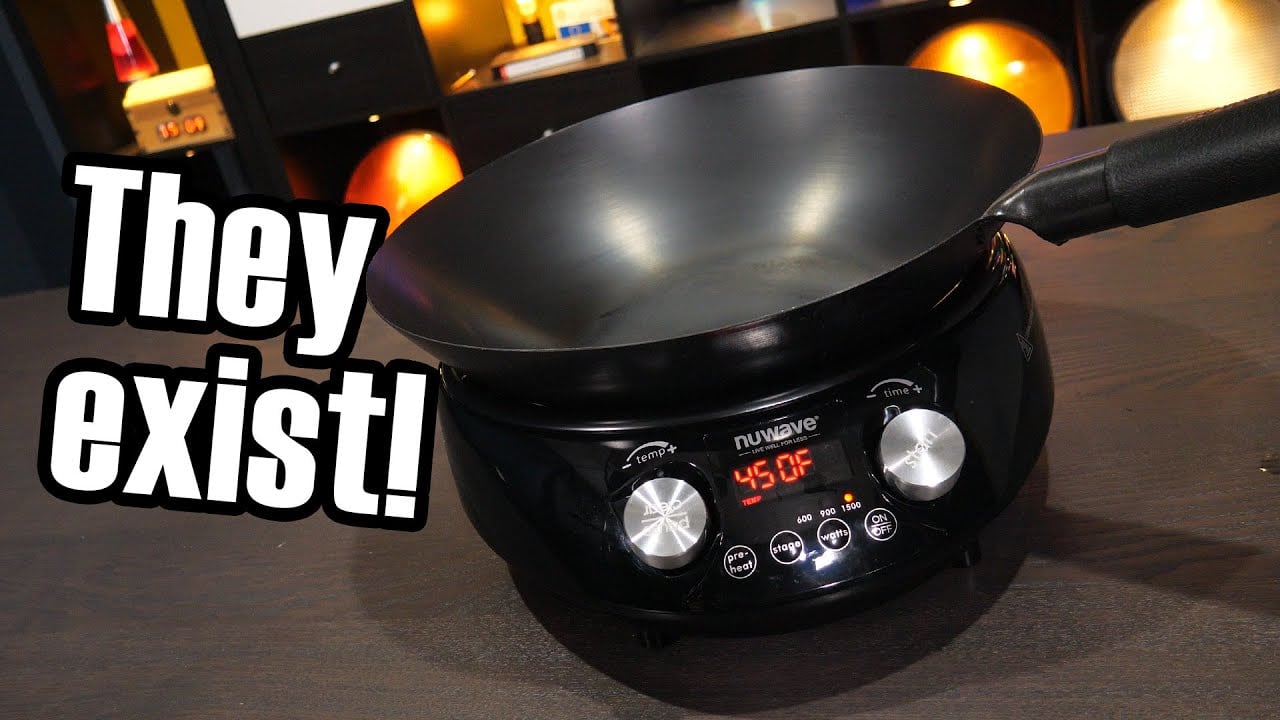
Video: Induction cooking – but what about woks?, Technology Connections. Open the educational video on YouTube.
Not on that evidence alone. Confirm the exact pan’s intended heat sources. An explicit oven-only or no-stovetop instruction controls that product even when its material attracts a magnet.
The current product information states that the identified seasoned cast iron standard loaf pan is not intended for stovetop use. Match your model to the maker’s documentation rather than extending that statement to every cast iron product.
No. An appliance function does not cancel the cookware maker’s use restriction. Both the vessel and appliance instructions must permit the proposed arrangement before any heating begins.
Use a separate support and location permitted by the pan, worktop and support instructions. Do not assume an inactive induction hob or its controls are a suitable cooling rack.
Cookware makers are cited for their own cookware documentation, not as competing glass suppliers or endorsements of Kanger. These sources do not certify the illustrated arrangement. Exact model and appliance instructions control each use.



