Induction cookware delivery damage inspection should happen while the item is cold, before washing, removing permanent identification or trying it on the hob. Match the cookware and accessories to the order, photograph the packaging and any visible concern, and contact the seller through its official channel if something is damaged or incorrect. Keep the packing materials until the seller explains the next step. A delivery inspection records what arrived; it does not prove that a suspect pan is safe or establish who caused the problem.
Unpack cookware on a clear, stable counter or table rather than on the glass cooking surface. Leave room for the box, its protective inserts, the vessel and the lid. Keep cutting tools away from the product finish, and avoid pulling a heavy pan out by a lid knob or an unsecured accessory. If the parcel is difficult to handle, arrange help before lifting it.
Kanger's black glass-ceramic cooktop panels illustrate the glass-panel context in this guide. A hob is not a convenient unpacking bench: staples, packing debris and heavy loose items introduce avoidable contact with its surface. The condition of the delivered cookware should be documented somewhere that lets you see each part clearly. The illustrations are reference-based scenes, not actual customer damage reports.
Before opening the parcel, have the order confirmation available. Check whether the order was split into several deliveries and whether a lid or accessory was sold separately. A missing item in the first carton may be part of another shipment, while an unexpected item may reflect a genuine picking error. Record the facts before deciding which explanation applies.
Photograph the complete package and any obvious crushed corner, tear or wet area. Include enough surrounding detail to show where the concern sits on the box. A parcel photograph does not prove that the cookware inside is damaged, but it preserves useful context. Keep shipping labels private; share identifying details only through the seller or carrier's intended support route.
Open the package in a way that allows the packing arrangement to be recorded. Retain inserts, sleeves and internal cartons instead of flattening everything immediately. If loose fragments or an unstable broken item are visible, avoid handling them unnecessarily. Tell the seller what you can observe without creating a new risk to obtain a better picture.
The delivery terms published by Le Creuset UK provide one seller-specific example of how damaged or faulty goods are handled. The relevant process for your order may be different. Consult the seller and market that actually supplied the cookware, and do not apply a return address, deadline or promise found on an unrelated country's website.
Compare the item name and model reference on the order with the packaging and the cookware itself. Check the material or collection where it is identified. Similar colors and shapes do not make two vessels interchangeable, and an induction symbol on a box should belong to the item inside. A lid, removable handle or knob can also carry a separate reference.
Count the pieces against the listing that was purchased, rather than a photograph from another set. Some listings count lids as pieces; others describe vessels separately. Save a copy of the actual order description if needed. If an accessory looks wrong, set it aside and ask for confirmation rather than forcing it onto a rim or tightening an unfamiliar fitting.
For a buyer receiving multiple units, record each affected unit and its carton reference separately. Keep the identification system simple enough that a photograph can be matched back to the correct item. One damaged carton does not establish a defect in every unit, and one good sample does not replace the receiving procedure agreed for a commercial order.
| Check | Record while cold | If uncertain |
|---|---|---|
| Parcel | Whole package and visible concern | Keep context and contact seller |
| Identity | Order reference versus actual item | Do not substitute or heat-test |
| Contents | Vessel, lid and ordered accessories | Check split shipments first |
| Condition | Interior, rim, base and attachments | Do not repair or force parts |
| Documentation | Whole-item and close photographs | Avoid hazardous handling |
| Return | Seller instructions and retained packing | Confirm before sending |
This qualitative workflow organizes the official product guidance linked below; it supplies no universal rating, guarantee or measured result.
Use good light to look at the interior, exterior, rim, underside, handles and lid. Note visible cracks, chips, distortion or loose connections without trying to diagnose the underlying cause. Reflections, packaging residue and surface texture can be difficult to interpret in a photograph. Record an uncertain area as uncertain and ask the seller whether it needs assessment.
Support the cold cookware securely when photographing the bottom. Do not balance a heavy vessel on a delicate rim, drag it across the cooktop or run a finger along a sharp-looking edge. If a part seems unstable, stop moving it. The inspection is observational; it is not a strength test, a repair procedure or permission to use visibly questionable cookware.
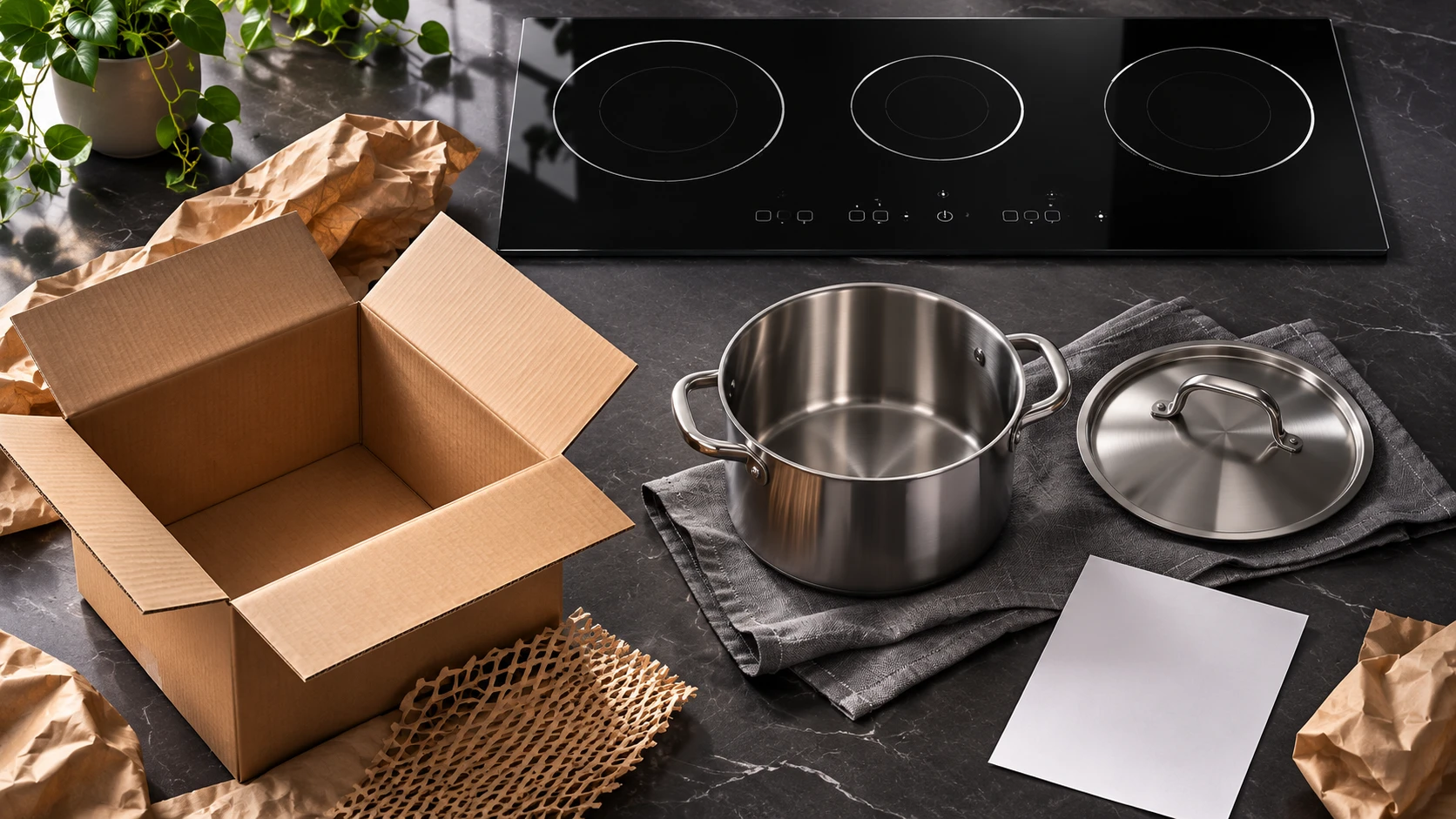
An apparently intact item still needs its own instructions before first use. Confirm the intended heat sources and the appliance's cookware requirements. Our stainless cookware and base guidance explains the broader distinction between cookware construction and the glass surface, while usable pan-base measurement covers usable base measurement. Neither guide overrides the delivered item's manufacturer restrictions or turns a receiving check into certification.
A wrong model, a missing lid or a visible arrival chip is best described as an arrival concern. Pan detection, cooking results and later cleaning marks are different questions. Do not heat a questionable item to decide which category to choose. Starting with a cold record preserves the condition that was present when the package was opened.
If the cookware is correct and no concern is found, move to the normal cookware first-use preparation process. Remove packaging and follow the exact cleaning and preparation instructions only after the receiving check is complete. Keep model information and purchase evidence for later reference. First-use care should be deliberate, not a quick experiment performed while packing materials still surround the hob.
If a problem is noticed after ordinary use, describe when it became visible rather than claiming it was definitely present on delivery. The seller may ask about both arrival condition and subsequent care. Honest chronology helps distinguish the routes available. A later manufacturer warranty assessment is related administration, but it is not identical to reporting a damaged or incorrect delivery.
A useful message identifies the order, the specific item and the observation. State that the cookware has not been used if that is true. Include a whole-item photograph, a contextual view and the clearest detail of the concern, with packaging images where relevant. Avoid sending only a tightly cropped image that could belong to any item.
Ask for the appropriate next step: replacement, return instructions, further photographs or assessment, depending on the seller's process. Do not assume that a response is authorization to repair the item or discard its packaging. Use the case reference in later correspondence and retain a copy of the instructions you receive. Where the order came through a marketplace, use its authenticated order route rather than a contact found in an unsolicited message.
The examples linked here show how a particular cookware seller describes its process; they do not establish universal return rules. Commercial purchases, consumer orders, gifts and cross-border sales can have different arrangements. Follow the terms applicable to your transaction and seek the responsible seller's clarification when they are unclear. This guide supplies an inspection workflow, not a legal assessment.
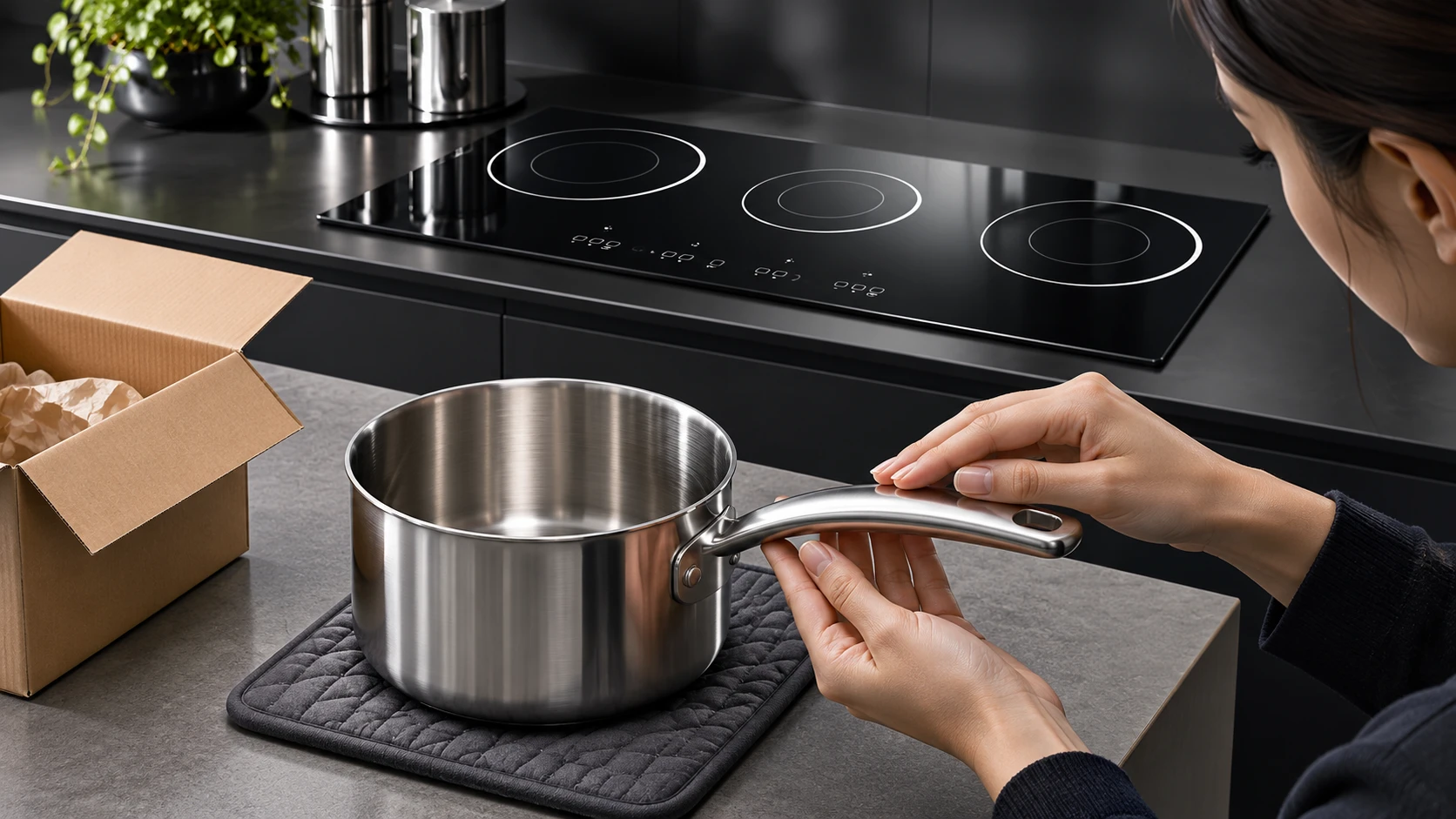
If a return is requested, confirm the address, authorization reference and packaging method. Use retained protective materials when appropriate and follow the seller's directions for damaged or sharp components. Do not send loose pieces that can move freely inside a carton. Photograph the packed arrangement if that helps preserve a record of what you returned.
Keep the dispatch receipt or tracking reference until the case is resolved. If the seller supplies a label, check that it corresponds to the correct case before attaching it. Do not include unrelated cookware, unnecessary personal documents or payment-card details. A tidy return record is easier to reconcile than several overlapping parcels and messages.
When a replacement arrives, inspect that item as a new delivery rather than assuming the earlier case confirms its condition. Check that the replacement matches the agreed model and included parts. Record the resolution with the original order so future support questions have a coherent history, without treating the replacement as proof of a wider manufacturing issue.
The neutral induction video below explains the cookware and appliance relationship. That background becomes useful after a correctly identified, acceptable item is ready for normal preparation. It does not inspect a delivery, diagnose a mark or establish that an affected pan is safe. Do not use the video as a reason to bypass the seller's assessment.
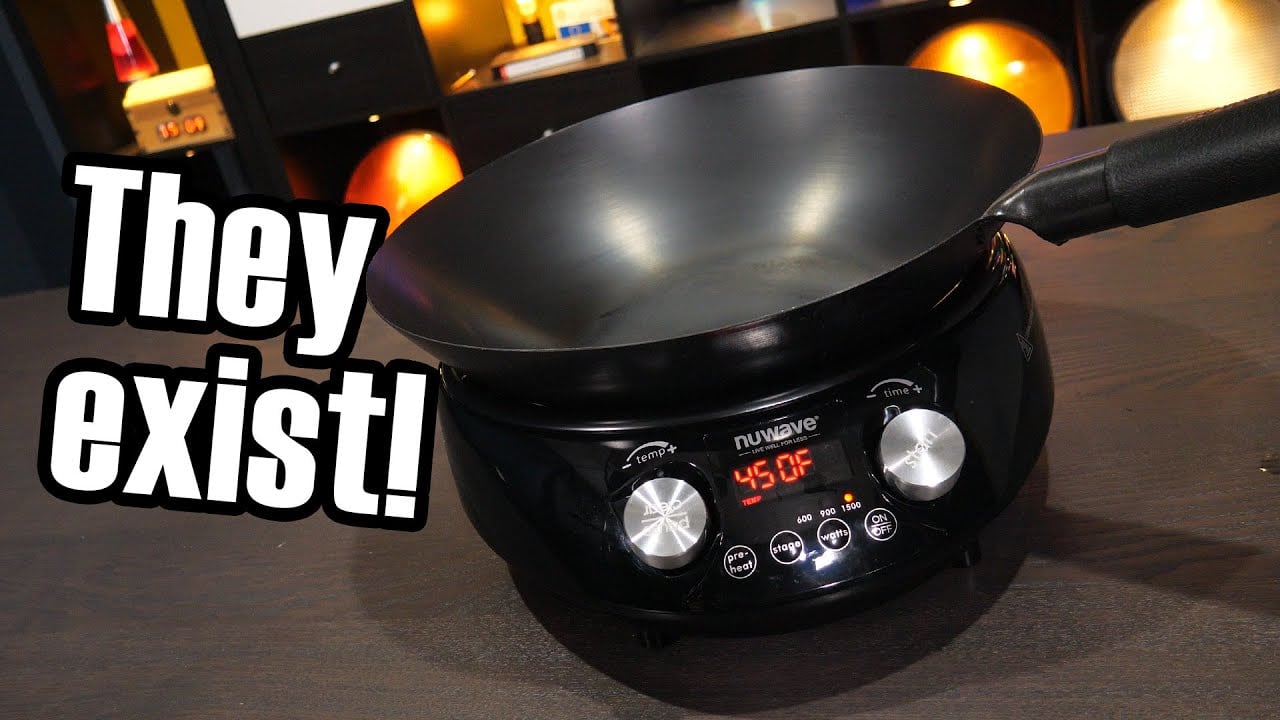
Video: Induction cooking – but what about woks?, Technology Connections. Open the educational video on YouTube.
For glass-component buyers, the transferable lesson is traceability: connect the agreed item specification, incoming package and observed condition. Actual acceptance criteria and sampling must come from the purchase agreement and relevant quality procedure. The cookware receiving examples here do not state Kanger's factory testing, packaging guarantees or customer-case results.
No. If visible damage, an unstable part or an incorrect identity makes use uncertain, keep the item cold and contact the seller. A heating test can change the condition and introduce risk. Induction detection would not establish that a damaged vessel is safe or complete the delivery inspection.
Not by itself. Photograph the parcel and inspect the contents safely. Record the actual condition and consult the seller's process. An intact carton also does not prove that every component is correct or undamaged, so the item identity and visible-condition checks still matter.
Keep the original packaging until the seller confirms what is needed, especially when a concern has been reported. Photos preserve context but do not replace protective materials for a return. Do not retain or handle dangerous loose fragments merely for completeness; ask for safe instructions where necessary.
Check the purchased listing and any split-shipment notice first, then report the missing component through the order's official support route. Do not substitute an unrelated lid as proof the delivery is acceptable. The seller should confirm the contents and the appropriate way to complete or correct the order.
Cookware makers are referenced for their own instructions, not as glass suppliers or endorsements of Kanger. Country-specific terms are examples for the stated market and do not establish universal rights or product approval.



