An induction saucier is useful when you need a whisk to move smoothly from the bottom into the sides, but the curved interior is only one part of the choice. Check the exact pan’s induction approval, the flat underside that actually meets the hob, and whether your whisk can reach the transition without hitting the rim or pulling the handle around. A rounded bowl does not prove that the base fits your appliance, and an induction marking does not prove that a particular utensil works comfortably inside it. Assess these questions separately before heating anything.
A saucier commonly has a gentler transition between its floor and walls than a straight-sided saucepan. That can make a continuous sweeping motion easier to follow around the perimeter. The specific All-Clad D3 saucier linked below is described by its manufacturer as having rounded sides and being compatible with induction. Those statements describe that identified product; they are not approval for every pan advertised with the same shape name.
The practical question is whether your tool reaches the area where ingredients might otherwise remain undisturbed. With the pan cold and empty, move the whisk around the inside curve and across the center. Watch where the wires touch, where they lift away, and whether the tool handle becomes awkward near the rim. This simple preparation check assesses access. It does not measure cooking performance or establish an ideal whisking speed.
A conventional saucepan can still be a sensible choice when your existing utensil already reaches its corners and your task does not require continuous sweeping. Avoid turning a shape preference into a rule that every sauce needs a saucier. Compare the movement required by your recipe with the actual vessels and utensils available, then choose the combination you can control comfortably.
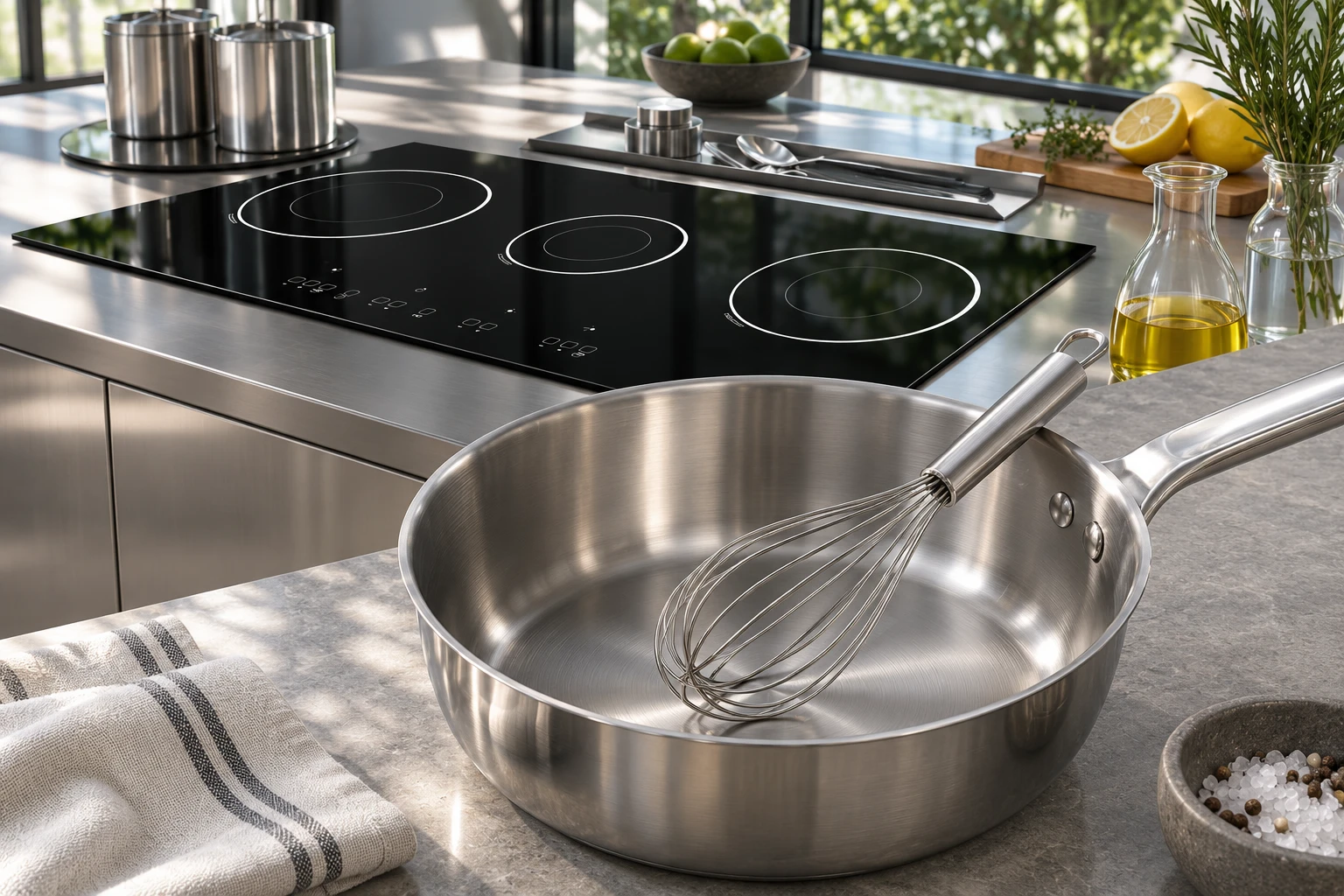
The visible opening and rounded interior are not the same as the pan’s flat base. A bowl-shaped vessel can appear generous at the rim while contacting the glass over a smaller area. For appliance matching, use the hob manual’s stated cookware criteria and the pan maker’s own instructions, rather than treating the advertised diameter as a guaranteed usable base diameter.
Our usable pan-base measurement guide explains how to keep rim measurements and usable underside measurements separate. For a new purchase, ask the seller which dimension is being quoted and whether the base drawing or exact model documentation is available. Do not infer a minimum hob detection size from a photograph, a nominal capacity, or a customer review describing another appliance.
Induction equipment heats compatible cookware through electromagnetic coupling. The U.S. Department of Energy’s explanation provides the background, while your appliance manual supplies the actual operating requirements. A magnet check can be a preliminary clue about the base material, but it cannot approve the pan’s size, flatness, control behavior, or a particular installation. Resolve those details through the relevant instructions.
A balloon whisk, flat whisk, and small sauce whisk do not trace the same path. Consider the width of the head, the length and angle of its handle, and the depth at which you will work. A tool that fits an empty pan may become awkward once the recipe requires you to keep it lower in a shallow quantity of ingredients. Test the route while cold, without claiming that the rehearsal reproduces hot cooking conditions.
Surface permission matters as much as shape. A metal whisk appropriate for one uncoated stainless pan may be unsuitable for another vessel’s coated interior. Read the instructions for both the pan surface and the utensil. Do not assume that a soft-looking tip, a silicone covering, or a familiar brand name establishes a universal temperature or scratch-resistance rating.
Think about where the whisk will rest between additions. Place it in a suitable separate rest or container, away from the cooking glass and controls. A wire head left across a rim can be easy to knock, and a long handle can occupy space needed to reach the hob. Planning a stable resting place is part of choosing a workable setup, rather than an optional finishing detail.
| Check | Look for while cold | What it does not establish |
|---|---|---|
| Inside curve | Whisk reaches floor-to-wall transition | Guaranteed sauce result |
| Tool permission | Utensil allowed on exact surface | Permission for another coating |
| Underside | Documented usable flat base | Rim equals hob contact |
| Handle access | Stable grip and clear control route | Handle stays cool |
| Tool rest | Separate stable resting location | Permission to put tools on glass |
| Care | Pan and tool instructions agree | Universal cleaning method |
This qualitative checklist organizes the exact-model instructions cited below. It supplies no universal rating, measured result or product approval.
Position the cold pan as the appliance instructions require. Hold its handle as you intend to during cooking and move the chosen utensil through the expected arc. Check that your hand does not have to cross an adjacent vessel, that the whisk does not strike a lid handle, and that the pan handle does not obstruct controls. Change the arrangement while everything is still cold if access is poor.
A comfortable tool fit does not justify sliding the vessel around on the glass. Reposition cookware according to the hob’s care instructions and lift rather than drag where the instructions require it. Keep the underside and glass clean before use. This article offers no abrasion test or promise that one finish cannot scratch another; debris, cookware condition, and appliance guidance still matter.
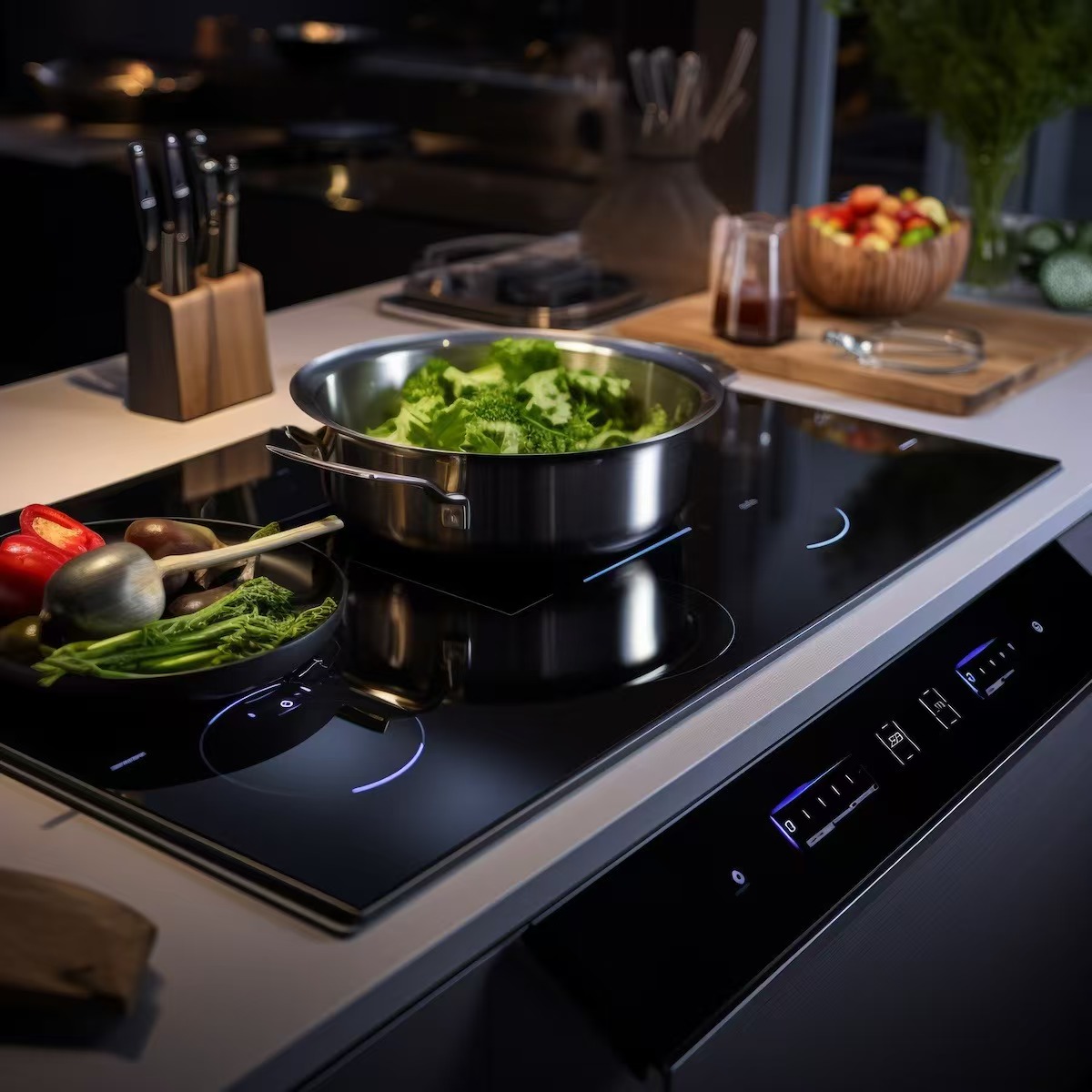
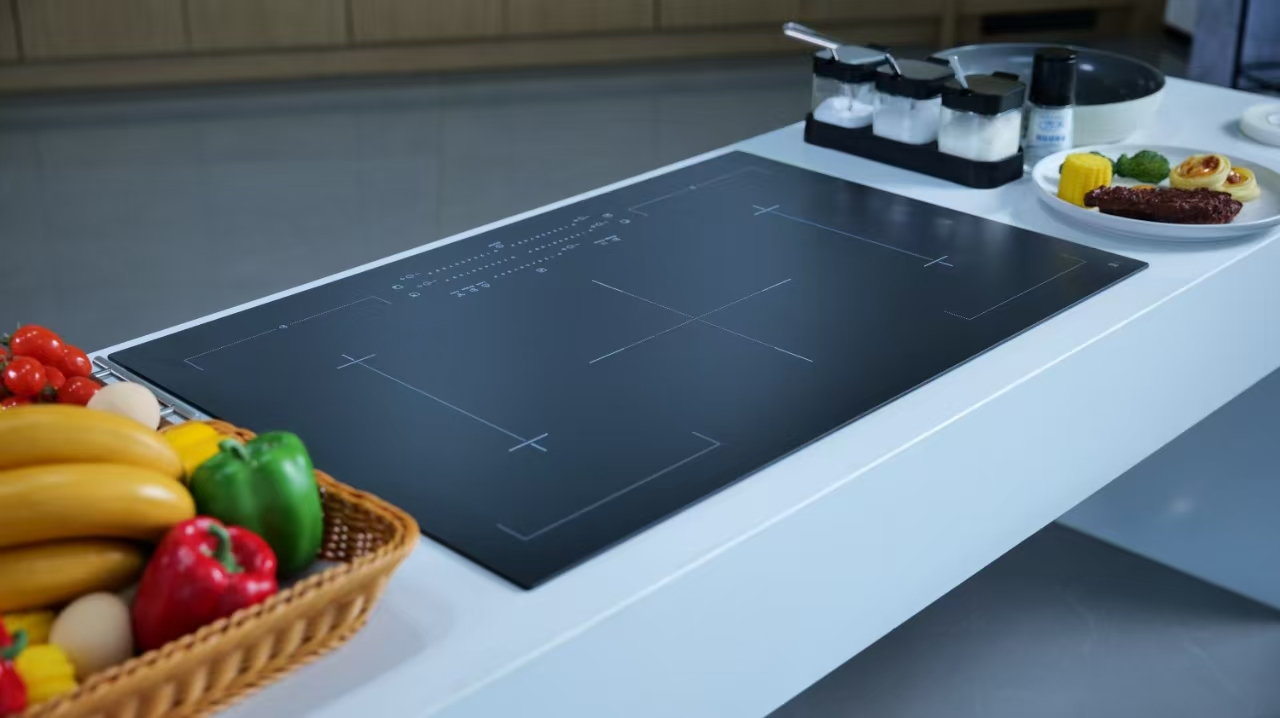
Kanger’s black glass-ceramic cooktop panels are the appliance-facing product connection here. A cooktop panel and the cookware placed above it have different roles, and a panel product photo cannot approve a particular saucier or utensil. For broader material questions, use the stainless cookware and base guidance guide. The present topic is the smaller decision about whether the inside curve and tool give you adequate working access.
Capacity is not a recommended working quantity. A pan may hold a stated amount to its rim while offering much less comfortable space for stirring, adding ingredients, or changing direction with a whisk. Use the recipe and the exact manufacturer’s operating instructions to determine the amount to cook. This guide supplies no universal percentage or safe fill height.
Compare the shape with the task: a wider opening may offer easier hand access but also require a different route for pouring and transferring. A deeper straight-sided vessel may contain a different movement more comfortably. Do not claim that either shape always cooks faster, prevents all lumps, or eliminates scorching. Those outcomes depend on ingredients, technique, equipment, and the specific pan construction.
If you are uncertain between sizes, write down what the utensil must reach, how the handle will sit, and which hob zone is permitted before looking at capacity alone. A short checklist is more useful than buying the largest opening that fits a cupboard. It also gives a supplier concrete questions to answer with drawings and model information.
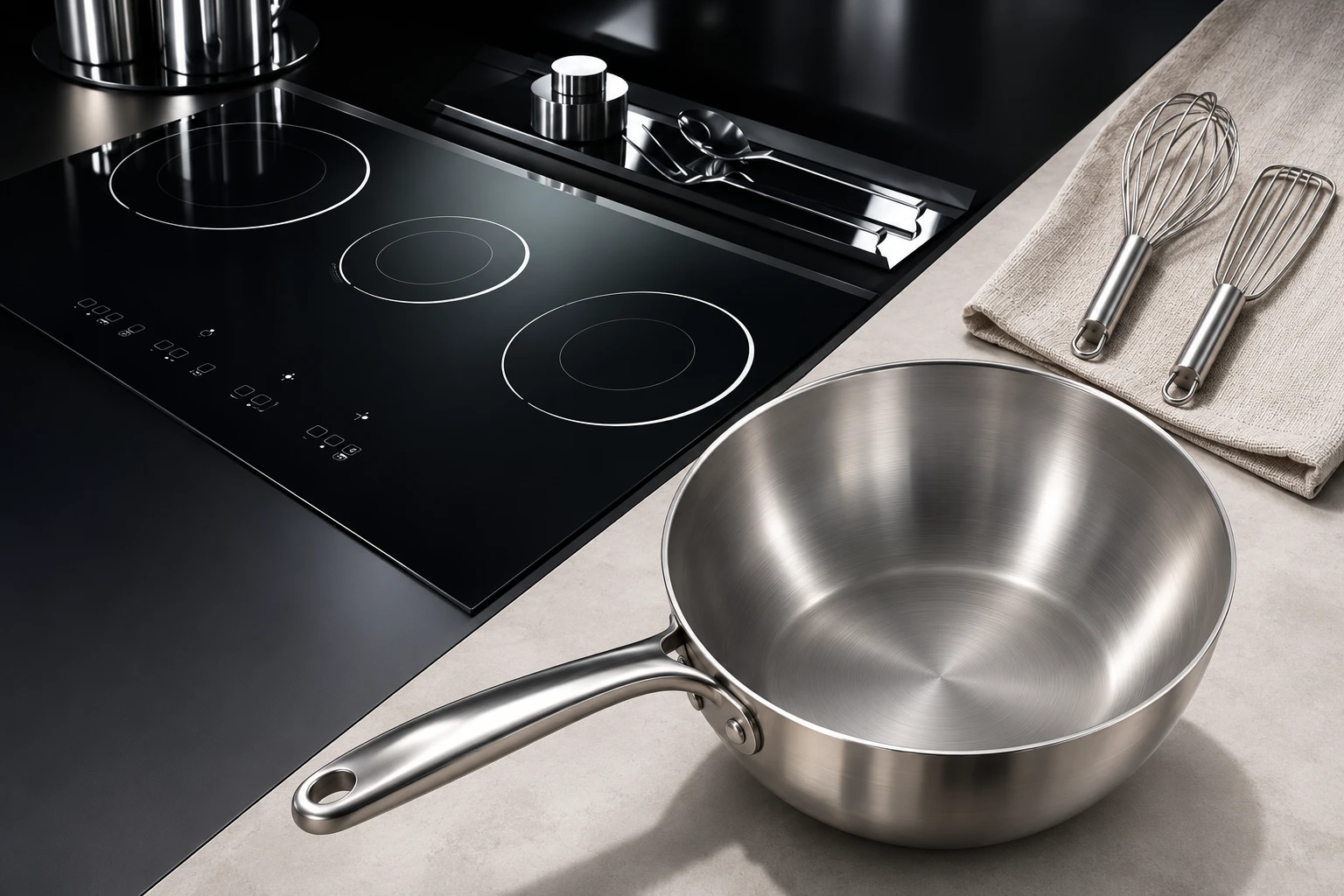
Once a working combination is chosen, prepare a separate landing place and the appropriate dry hand protection before cooking. Our dry oven-glove grip preparation article addresses that handling preparation. A comfortable whisking grip does not mean a cookware handle stays cool, and the presence of a helper handle does not remove the need to follow the maker’s lifting instructions.
Allow the cookware to cool and clean it according to its own care guidance. Inspect the curved transition while cleaning so that residue is not overlooked simply because there is no sharp corner. For surface distinctions, see stainless surface and care distinctions. Do not transfer a cleaner or abrasive recommendation from cookware to the glass panel, or from one pan finish to another.
If a utensil becomes damaged, its covering changes, or the pan’s surface condition raises a concern, stop using that combination and ask the relevant maker for guidance. Do not conduct a high-heat scratch experiment to settle compatibility. A cold fit check helps plan access; it is not a substitute for material permission or an equipment safety assessment.
Ask for the exact pan model, the compatible heat sources, the underside dimensions, and the surface-specific utensil instructions. Request a useful interior photograph showing the transition, rather than relying on a top view that conceals the curve. If an included whisk is advertised, confirm that the current offer actually includes it and identify any separate care requirements.
For a commercial kitchen or product-development brief, keep the cookware questions separate from the glass-panel brief. The panel drawing, markings, installation requirements, and material specification belong with the appliance project. The saucier’s handle, base, interior curve, and utensils belong with cookware selection. Neither supplier’s answer should be used as an unsupported promise about the other product.
The educational video below explains the relationship between induction appliances and cookware. It is background for distinguishing pan shape, compatible base, and cooktop glass. It does not test this saucier, certify a whisk, or establish a heating setting for your recipe.
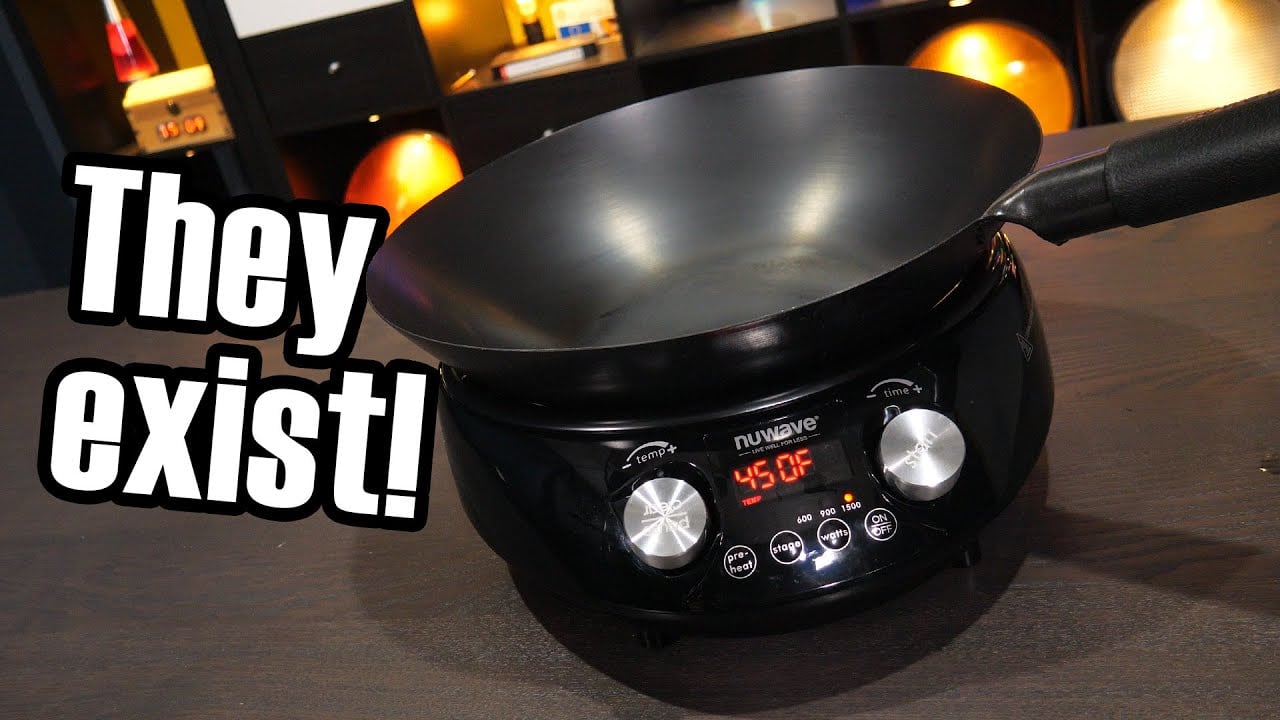
Video: Induction cooking – but what about woks?, Technology Connections. Open the educational video on YouTube.
No. Shape does not establish induction compatibility. Check the exact model’s stated heat sources and match its underside to the appliance manual’s cookware requirements before use.
Not necessarily. The rim can be wider than the flat underside. Confirm which dimension the maker quotes and use the appliance’s own matching criteria.
No. Check the pan surface’s utensil permission and the whisk instructions. A material suitable for one uncoated vessel may be unsuitable for a coated interior.
No. Curved sides may improve access for a suitable tool, but they do not guarantee a cooking result or replace recipe guidance and the appliance instructions.
Cookware makers are cited for their own product instructions, not as glass suppliers or endorsements of Kanger. Model and market-specific guidance does not approve an unidentified item.