 Kanger Glass-ceramic Co., Ltd.
A glass UV printer should be evaluated as a complete printing-and-curing route for the actual glass component. Match the part geometry, surface identity, ink system, artwork, curing equipment and service requirement before comparing machine size or advertised resolution. An attractive printed sample does not automatically qualify an appliance control panel. For OEM work, the useful buying question is whether a documented configuration produces the required decoration repeatedly, including the functional zones and later manufacturing steps that matter to the finished assembly.
Describe the application before choosing a printer
Identify the glass family and the state in which the component arrives at the printing operation. Record dimensions, edge condition, holes, existing decoration, coatings and protective films. Explain which face is to be printed and how the finished part will be viewed or assembled. These details determine the sample that a supplier needs to evaluate.
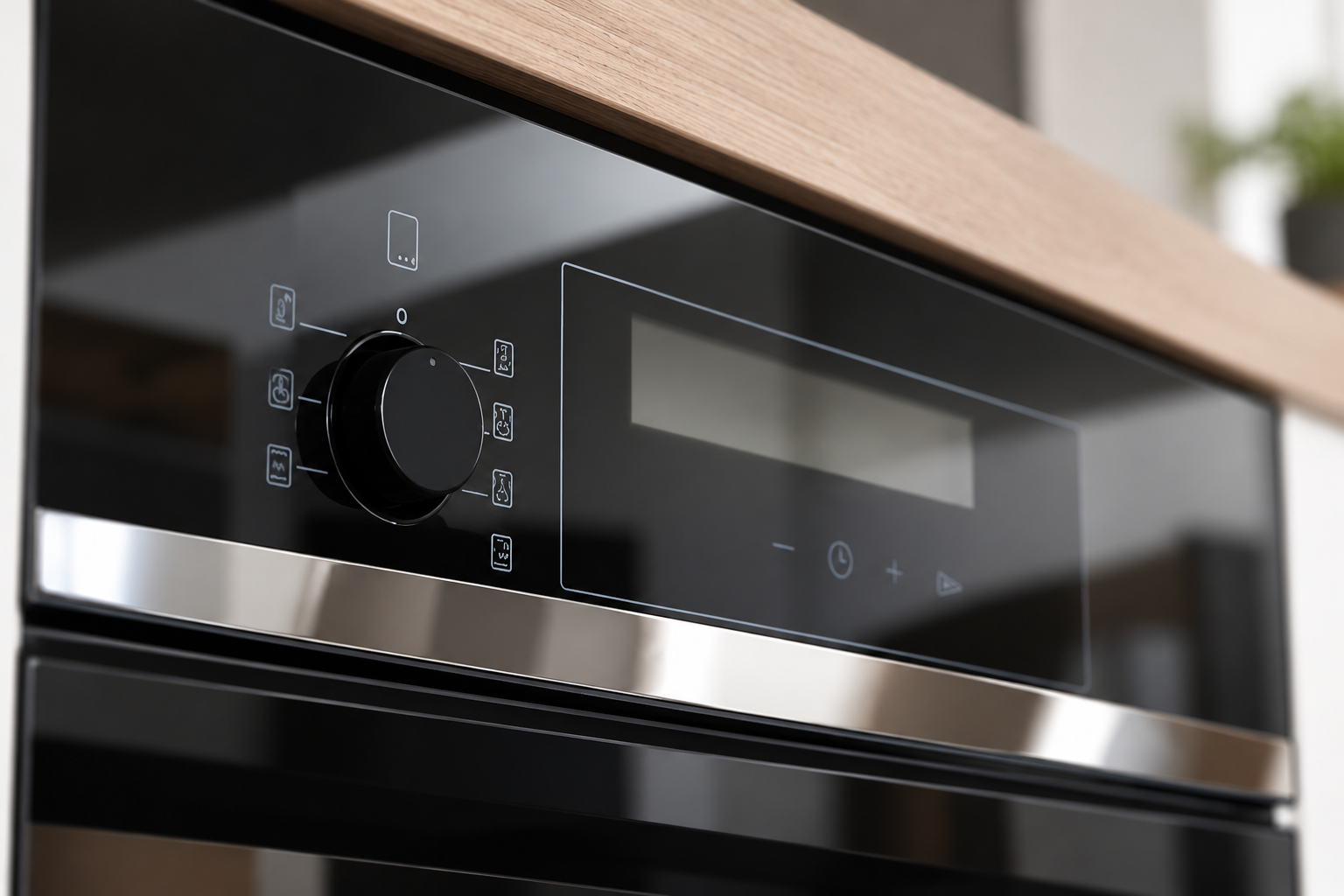
Use a finished component to communicate the application. Kanger’s tempered appliance-control glass is relevant context for control symbols and a display region. The photograph does not establish that its decoration is UV printed, that Kanger operates a UV printer or that a particular ink is approved for the part.
Separate the delivered-glass requirement from the machinery inquiry. The glass supplier confirms the component and surface; the printing-equipment and ink suppliers demonstrate the proposed printing route. Neither party should be assumed to have approved the complete appliance merely by supplying its own item.
Compare support, handling and print access
For a rigid panel, ask the equipment supplier to demonstrate the support and positioning arrangement on representative parts. Check how the part is loaded, located and removed, including a change between sizes or variants. Establish how the route deals with the actual edges and cutouts without introducing unwanted contact or handling damage.
Confirm the printing envelope for the proposed configuration. A bed dimension alone does not describe every relevant clearance, fixture or usable region. Show the supplier the complete part rather than a rectangular outline that omits its surrounding features. Have the supplier state exclusions and demonstrate the intended access.
Include the next operation in the layout review. A convenient printing arrangement may still require a controlled transfer, storage or assembly step. Record the interface between those stages instead of judging the machine as a standalone object that never encounters the rest of the production route.
Identify the surface that the ink will contact
Distinguish bare glass from a coating, an existing printed layer or a temporary protective material. Ask for the ink supplier’s exact compatibility and preparation instructions. A machine’s ability to place ink on a sample does not prove that the ink remains suitable after the intended handling, cleaning and service exposure.
Do not improvise a cleaner, primer or abrasion method on a finished decorated panel. Obtain agreement for the actual surface and record the preparation route used in the trial. If a primer is proposed, ask how its identity, application and effect on appearance will be controlled.
The screen-printing durability guide for appliance glass provides a complementary finished-decoration specification. UV printing and screen printing should each be evaluated against that component requirement; a change of printing method does not remove the need to qualify the delivered surface.
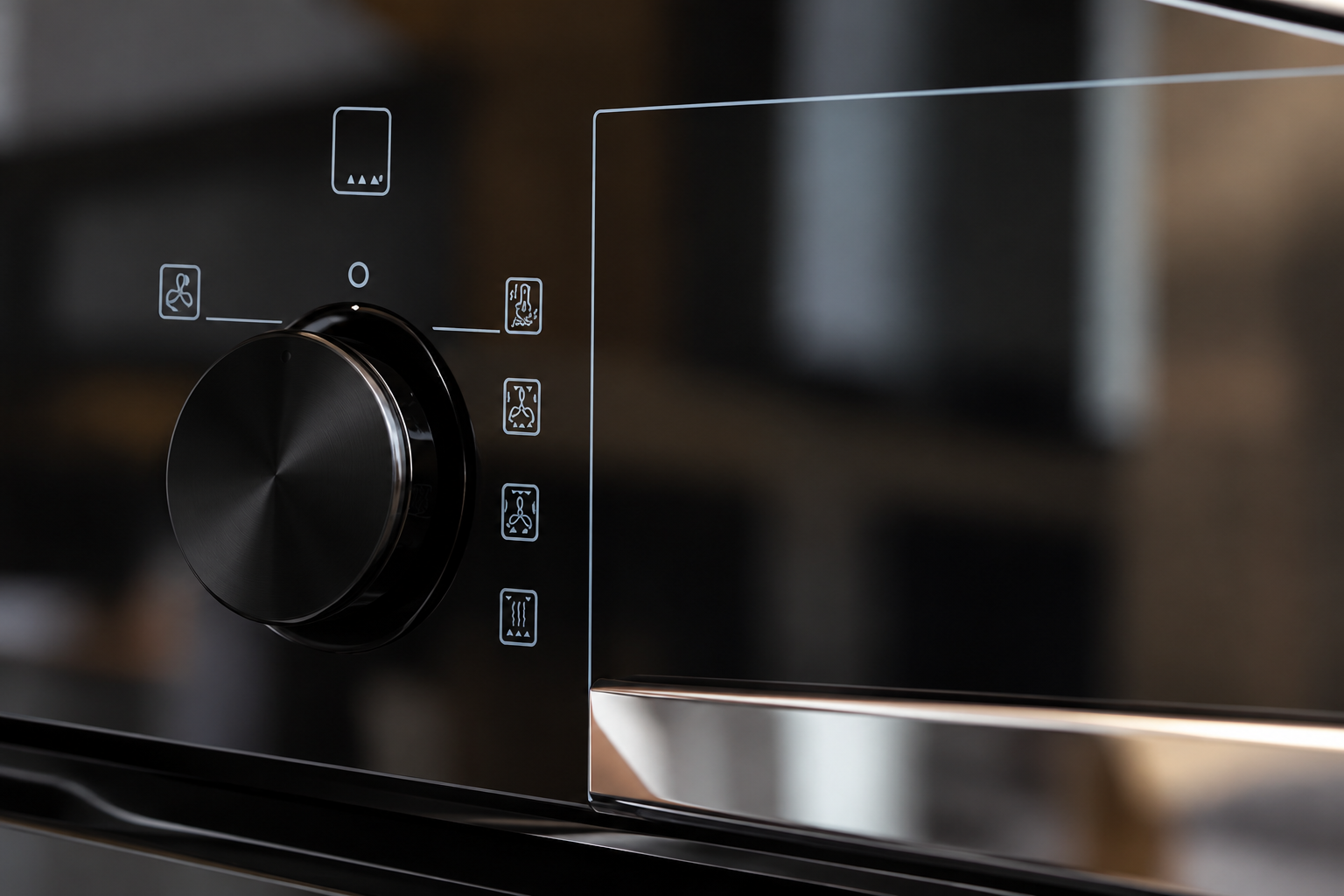
Control artwork and the viewing condition
Define the approved artwork, orientation, reference edges and revision. Specify which symbols, borders and windows matter to the assembly. Review the decoration as it will be seen on the actual substrate and background, not only as a computer file or an isolated colour swatch.
If white ink or several layers are proposed, ask the supplier to explain their sequence and intended function. Have the trial include the combinations that will appear on the finished part. Do not infer opacity, colour consistency or layer compatibility from a different substrate or a single convenient sample.
Keep acceptance observable. Agree the lighting, inspection region, reference sample and method for evaluating registration and appearance. This allows the printing supplier, component supplier and customer to discuss a result using the same conditions rather than arguing over photographs taken under different reflections.
Keep display and sensor requirements explicit
If the glass serves a display, indicator or sensor interface, define the relevant functional zones separately from decorative areas. State what the printing route must preserve and which specialist owns the functional review. A visually pleasing mask is not automatically suitable for the intended optical or electronic assembly.
Use representative assembly conditions when the requirement depends on them. The backlit control-glass guide explains why masks, illumination and sample approval belong together. Do not transfer an approval from one display arrangement to another without examining the changed conditions.
Keep the component drawing and the artwork connected. A changed opening, border or viewing region may affect the decorated layout even when the overall glass size stays the same. The supplier demonstration should show how such a change is identified and released.
| Catalogue claim | Question for an appliance-glass project | Demonstration to request |
|---|---|---|
| Large printing area | Does the usable arrangement accept the complete part and fixture? | Loading, positioning and print-access review on the actual geometry |
| Fine image detail | Are the approved symbols and borders acceptable on the actual surface? | Production-intent artwork under the agreed viewing condition |
| Suitable for glass | Which glass surface, preparation and ink configuration were evaluated? | Documented compatibility trial with the delivered surface |
| UV curing | Is the curing arrangement matched to the selected ink and complete print? | Supplier-defined curing verification for the actual configuration |
| High productivity | Does the demonstrated route include preparation, handling and accepted yield? | A representative run, with exclusions and rejected parts recorded |
| Durable decoration | Which exposure and acceptance criteria support that claim? | Application-specific qualification evidence |
This is a qualitative inquiry table, not a performance rating for any machine or ink. No production speed, resolution, curing limit or service temperature is supplied here.
Match the curing system to the selected material
Ask the ink supplier which curing conditions and verification method apply to its exact formulation. Ask the equipment supplier how the proposed light source, geometry and controls meet those conditions. A shared label such as “UV” does not establish compatibility between every source and every material.
NASA’s ultraviolet-wave explanation places UV outside the visible range. That is useful background for understanding why visual brightness alone is not a curing verification. It does not specify an industrial lamp, ink or exposure setting.
NIST’s UV radiometry facility overview describes calibration and measurement work relevant to industrial UV applications. For a printer inquiry, the practical lesson is to define the measurement and its spectral relevance with the responsible suppliers. No NIST qualification or measurement traceability is claimed for Kanger or a candidate printer.
Qualify the decoration against the real service requirement
Describe the environment that the finished glass is intended to encounter. Include the relevant temperature history, cleaning contact, handling and other application conditions. Have the responsible team define justified exposures and acceptance criteria. A room-temperature print demonstration is not the same as service qualification.
Inspect samples before and after the agreed trial. Record changes in the decoration and the underlying component separately. If a result fails, preserve the sample, its surface identity, artwork revision, ink identity and process record so that the investigation is based on the configuration that actually produced it.
Keep later manufacturing steps in the review. Any proposed heating, bonding, cleaning or assembly operation needs to be evaluated for the selected route. The OEM appliance-panel specification guide provides the delivered-component counterpart to this equipment-selection task.
Include chemical handling and equipment instructions in the scope
Obtain the exact ink, primer and cleaner documentation proposed for the trial. Distinguish product technical instructions from the safety information needed by the workplace. The Canadian Centre for Occupational Health and Safety’s SDS overview explains safety-data-sheet information in Canada’s WHMIS context. It is background for interpreting the document, not a substitute for local requirements; the actual site must determine its applicable handling procedures and controls.
Ask the printer supplier for guarding, access and maintenance instructions. Do not use a production demonstration to improvise access to a light source or moving equipment. The purchase review should identify who is responsible for evaluating the equipment and the proposed materials together.
Specify the support needed to maintain the approved route: material identification, spare or replacement items, maintenance records and the review required after a relevant change. A replacement described as equivalent still needs an approval boundary appropriate to the application.
What to include in the supplier comparison
Provide the part envelope, surface identity, artwork, functional zones and service description. Ask each supplier to state the proposed machine configuration, ink and preparation route, curing arrangement, sample-trial scope and exclusions. Compare those responses against the same requirement sheet.
Request a representative run that includes the work you intend to compare. Record preparation, handling and quality decisions along with printing. A productivity statement that omits those activities may not describe the actual accepted-part route.
For a glass-component inquiry to Kanger, send the drawing and finished-decoration requirement separately. This makes the component request clear while allowing the responsible fabrication team to demonstrate its own printing process without attributing an unverified machine or ink system to the glass supplier.
Educational video: ultraviolet waves
NASA Science’s ultraviolet-wave lesson explains the part of the electromagnetic spectrum discussed above. It is neutral scientific background, not a guide to operating a UV printer or choosing an industrial curing setting.

Watch NASA Science’s ultraviolet-wave lesson
Frequently asked questions
Can a glass UV printer print on every appliance-glass surface?
Do not assume so. Identify the actual surface, preparation route and ink configuration, then require a representative compatibility and service-qualification trial.
Does a high advertised resolution prove decoration quality?
No. Evaluate the actual symbols, borders, registration and appearance on the intended glass under the agreed viewing condition. A resolution claim does not replace that inspection.
Does the pictured Kanger panel prove that its decoration is UV printed?
No. The image provides finished-component context only. It does not identify the printing technology, ink, curing equipment or factory process used to make the part.
Can a UV-printed sample replace an approved screen-printed component?
Only after the relevant change has been reviewed and the proposed route has met the component’s requirements. A different printing method is not automatically an equivalent decoration.


