 Kanger Glass-ceramic Co., Ltd.
A horizontal glass washing machine carries flat glass through washing, rinsing and drying sections while the sheet is supported horizontally. Choose one by matching the actual glass part, surface treatment, handling route, cleanliness requirement and downstream process—not by comparing conveyor width alone. For appliance-panel fabrication, the practical question is whether a documented washing recipe consistently leaves an acceptable surface without introducing scratches, residue or handling damage. This guide explains the questions to put into an equipment inquiry and the sample checks to complete before approving a production route.
Start with the glass component, not the machine catalogue
Write down the material family, drawing revision, thickness range, smallest and largest part, edge condition, holes and cutouts. Identify which surfaces are bare, coated, printed, masked or covered with a protective film. These distinctions matter because a machine that accepts a rectangular sheet mechanically may still use an unsuitable contact or cleaning method for a decorated component.
Use the relevant product family to explain the application. For example, Kanger’s tempered glass for household-appliance panels provides context for a finished control fascia. Its appearance does not establish an approved washer setting, detergent, brush specification or washing sequence. Those require agreement between the glass supplier, equipment supplier and the team responsible for the finished appliance.
Keep the component request separate from the equipment inquiry. The glass request controls the delivered part; the machine inquiry controls the proposed process. Do not assume that Kanger supplies washing machinery or uses a particular machine merely because the finished glass product is shown here.
What the washing and drying sections need to achieve
The process should remove the contamination expected at the chosen production stage, carry it away without redepositing it and leave the part ready for its next operation. Ask the equipment supplier to describe the wash, rinse and dry functions separately. A clean-looking panel at the machine exit is not enough if a later print, bond or inspection step reveals unacceptable residue.
Request a process-flow description showing water circulation, filtration, replenishment, rinse supply and the drying-air route. Identify where debris is collected and how an operator notices a loss of flow or a changed condition. These questions turn a generic equipment description into a route that can be evaluated on representative glass.
The National Glass Association’s guidelines for production of heat-treated architectural flat glass discuss adequate spray flow, recirculating-water filtration and matching brush contact to the glass surface. They concern architectural fabrication. Use these process-control concepts as questions for an appliance-glass trial, rather than transferring an architectural instruction into an appliance specification without validation.
Horizontal or vertical: compare the complete handling route
Horizontal and vertical washers describe the orientation of the part during processing. Orientation alone does not tell you which machine produces a better surface. Compare loading, support, transfer, unloading and the next machine together. A layout that saves floor space may introduce another handling step; a convenient conveyor may need a separate plan for small or irregular parts.
Check the support pattern against the actual drawing. Ask how the proposed route handles leading edges, cutouts and changes between part sizes. Establish who approves the handling envelope and what stops the process when a part is outside it. Have the supplier demonstrate representative parts rather than accepting a statement that a machine is suitable for “all flat glass.”
| Decision | Question for a horizontal route | Question for a vertical route | Evidence to request |
|---|---|---|---|
| Loading and support | Can the support and transfer arrangement handle every intended part? | Can the loading and restraint arrangement handle every intended part? | Approved part envelope and a demonstrated handling sequence |
| Surface contact | Which side contacts transport elements, and is that side decorated? | Which regions contact transport or restraint elements? | Contact map reviewed against the drawing |
| Line integration | How does glass move into and out of adjacent equipment? | Does the next operation need a change of orientation? | Layout and transfer review with the actual part |
| Mixed production | What changes when thickness or part geometry changes? | What changes when thickness or part geometry changes? | Changeover instructions and representative trials |
| Acceptance | Does the route meet the agreed surface and downstream criteria? | Does the route meet the same agreed criteria? | Comparable trial records, using the same inspection method |
This is a qualitative comparison worksheet, not a statement that either orientation is universally faster, cleaner or safer. Select the arrangement that meets the part and process requirements demonstrated in the trial.
Define compatible brush contact before increasing cleaning force
Ask which brush configuration the equipment supplier proposes for each approved surface. Record the relevant supplier recommendations and the setting method. Do not adopt a generic brush-contact depth, detergent concentration or conveyor speed from another glass application. A stronger cleaning action may remove a contaminant while also creating an unacceptable mark.
Include bare glass, decorated areas and any intentionally protected zones in the compatibility review. If the production route involves printed glass, ask whether washing occurs before decoration, after decoration or at more than one stage. Review each stage separately. The screen-printing durability specification complements this review by explaining the need to define the decorated surface and its service requirements.
Inspect the sample before washing as well as afterwards. Otherwise, a pre-existing scratch can be mistaken for a process defect, or a new mark can be dismissed as something that arrived with the part. Record the sample identity and keep comparable photographs under controlled lighting.

Control water, rinsing and drying as separate variables
Ask how the proposed system separates contaminated wash water from the final rinse and how it monitors the conditions that matter to the agreed result. Record the source water and the equipment supplier’s treatment requirements. A universal water-quality number is not supplied here: the necessary limits depend on the glass surface, chemistry, equipment and downstream process.
Water chemistry can influence residue formation. The American Chemical Society’s lesson on forming a precipitate demonstrates how dissolved minerals can interact with soap to produce a solid. This supports the general need to consider chemistry. It is a classroom explanation, not an industrial detergent formula, a rinse-water specification or a diagnosis of every white mark on glass.
Evaluate drying independently from washing. Define what counts as an acceptable dry surface at the exit, then inspect the same part at the next agreed checkpoint. If the result changes after storage or handling, investigate that interval instead of immediately changing the washing recipe. Keep the wash, rinse and dry conditions in the trial record so that another team can reproduce the comparison.
Run a sample trial that answers a defined question
Begin with one controlled question: can this proposed route deliver an acceptable surface on this component at this production stage? Choose samples that represent the actual material, geometry, decoration and expected contamination. Do not use a convenient substitute panel as the only evidence for a part with different contact regions or surface treatments.
Use a documented starting condition and an agreed inspection method. Change one process variable at a time where practical, while keeping the other relevant conditions recorded. A trial that changes brush contact, detergent, water supply and drying simultaneously may show improvement without revealing which change mattered.
Review the downstream operation that the washing process supports. For printing or bonding, the surface review may need a separate process-compatibility check agreed with the responsible specialist. A visually acceptable panel is not automatically qualified for every later operation. The tempered appliance-panel OEM specification guide helps keep material, geometry and finished-surface requirements separate from the proposed cleaning settings.
Make acceptance criteria observable and repeatable
Separate surface cleanliness from scratches, chips, print changes and dimensional issues. Specify the lighting, viewing position, inspection regions and reference samples used for the visual decision. State who resolves a borderline result. The aim is to prevent two teams from accepting and rejecting the same panel using different viewing conditions.
If an instrument is used, define the measurand, method and decision rule. NIST’s measurement-uncertainty guidance provides background on uncertainty in reported measurements. It does not supply a cleanliness limit for appliance glass. Your acceptance limit and method need to be appropriate to the function being controlled.
Connect the machine trial to the existing appliance-panel optical inspection criteria. That resource controls how the delivered surface is judged; this article controls how a proposed washing route is selected and demonstrated. Keeping those tasks separate avoids replacing a finished-part specification with a machine setting.
Investigate marks without treating appearance as a diagnosis
When a panel fails the trial, record where the mark occurs, whether it was present before processing and which stage first reveals it. Check whether the pattern follows a contact region, water path, handling event or storage condition. These observations guide an investigation; they do not prove the cause on their own.
Keep suspect samples and the associated process record. Compare the failed sample with an acceptable one from a known condition. If a proposed cleaning change alters the decoration or leaves another defect, reject that change even when the original mark becomes less visible. For an existing white surface mark, the separate white-haze diagnosis guide explains why cleaning limits and evidence collection matter.
Include safe maintenance and change control in the purchase review
Ask the equipment supplier for access, guarding and maintenance instructions before purchase. Distinguish routine production observation from a task that exposes a worker to hazardous machine energy. Do not reach into a moving conveyor or brush section to correct an apparent quality problem.
For US workplace background, NIOSH’s hazardous-energy-control resource guide explains energy control during machine servicing and maintenance. The employer must determine the applicable requirements and procedure for the actual equipment and task. Other jurisdictions may impose different requirements. This article is not a substitute for the supplier’s instructions, site safety assessment or employee training.
Require a review when a brush, chemical, water-treatment component, drying arrangement or part family changes. Record the reason for the change and the evidence needed to release it. A previously approved result should not be assumed to cover a materially different process.
What to include in a horizontal washer inquiry
Send the approved part envelope, surface identity, planned production stage, expected contamination and acceptance method. Ask for a proposed layout, handling demonstration, process-control description, sample-trial plan, maintenance instructions and clearly stated exclusions. Define which utilities, installation work, operator training and trial support are included in the supplier’s scope.
Compare offers against the same requirement sheet. If one quotation leaves surface compatibility unaddressed, ask for evidence rather than treating a lower price as a like-for-like offer. For a component inquiry to Kanger, provide the glass drawing, application and finish expectation separately from any third-party machinery inquiry. This keeps the delivered panel requirement clear while allowing the fabrication team to qualify its own process route.
Educational video: why water chemistry can create solids
The American Chemical Society’s classroom video demonstrates precipitate formation. It provides neutral chemistry background for the water-quality discussion above. Do not copy the classroom materials or quantities into an industrial washing process.
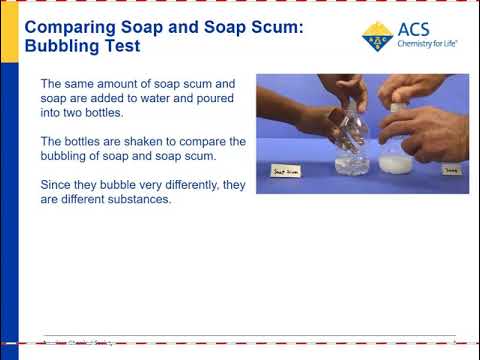
Watch the American Chemical Society’s precipitate demonstration
Frequently asked questions
Is a horizontal glass washing machine better than a vertical washer?
Neither orientation is universally better. Compare the actual part envelope, contact regions, loading and unloading route, downstream operation and demonstrated surface result. Use the same acceptance method when comparing sample trials.
Can one washing recipe be used for bare and printed glass?
Do not assume so. Identify the surface and production stage, obtain the relevant supplier recommendations and validate representative samples. Record separate approved conditions when the surfaces require different treatment.
Does a white mark prove that the rinse water is the problem?
No. Record the condition before and after each relevant stage, retain samples and investigate the process and handling history. Appearance alone does not distinguish residue from other surface defects.
Does Kanger’s appliance-glass product page specify a washing machine?
No. The linked product page provides finished-component context. It is not evidence that Kanger sells a washing machine, uses a particular machine model or approves a universal brush, water or detergent setting.


