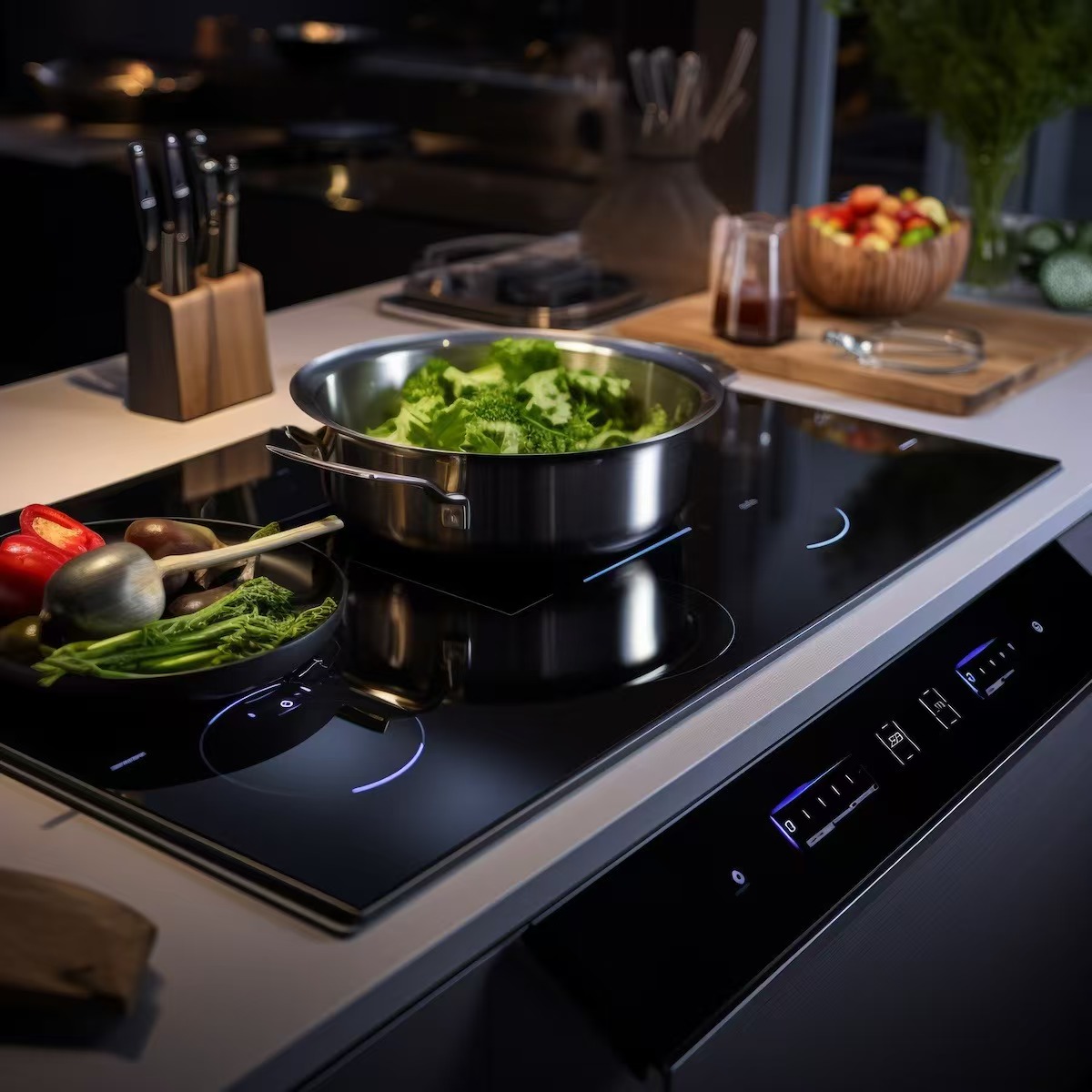
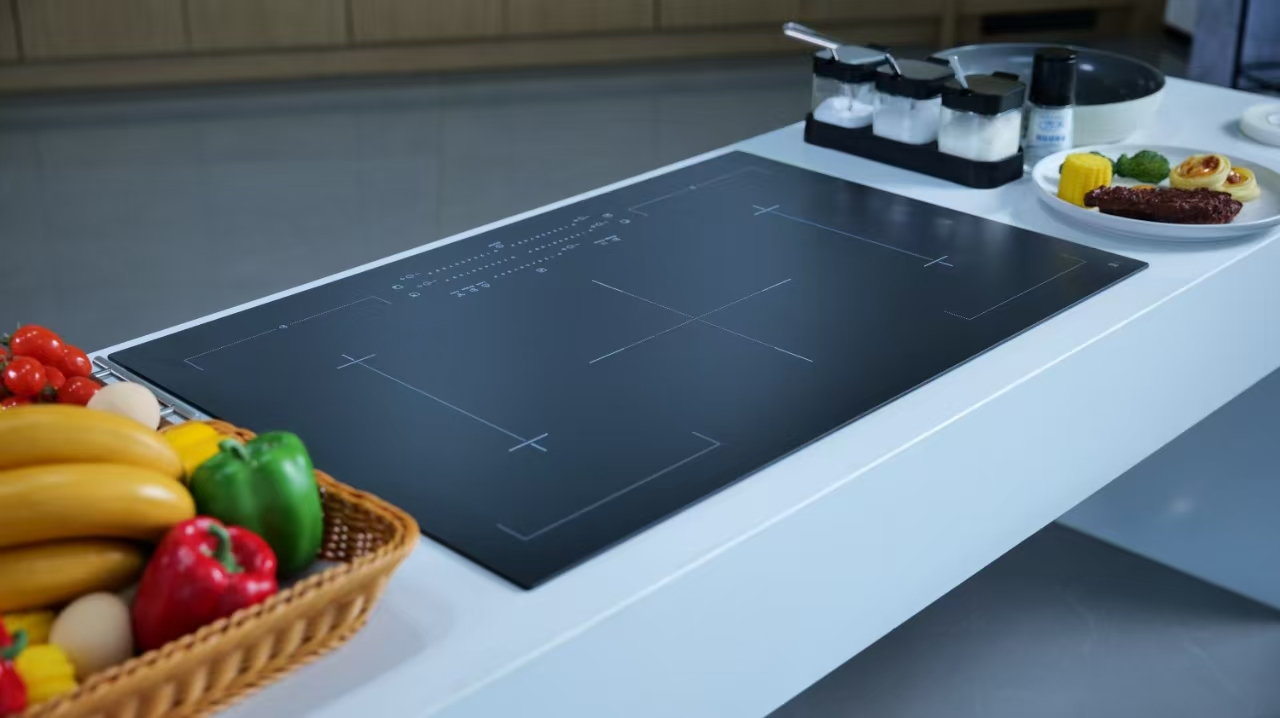
Induction cast iron rust vs seasoning flakes is a surface-identification question before it is a cleaning question. Orange-brown corrosion and loose dark seasoning call for different checks, and neither should be confused with damaged enamel or a mark on the glass cooktop. Let the cookware cool, identify its construction and inspect it away from the hob. Use the pan maker's care instructions for the pan and the appliance instructions for the glass. If the coating is unknown, the handle is insecure or the vessel is cracked, stop using it while obtaining model-specific advice.
A black pan is not necessarily bare seasoned cast iron. It may have an enamel interior, another applied coating or a finish that is difficult to identify from photographs. Check the product description and care booklet before using abrasive methods. A restoration routine intended for uncoated iron can be inappropriate for another surface. Do not test the construction by scratching through it.
Write down the brand, model and whether the problem is inside the food-contact area or on the underside. These details make a service enquiry useful. Include an overall photograph as well as a close view; a close-up alone can hide the shape, handle condition and location of the affected area. If the identity cannot be established, choose another documented vessel for cooking while you investigate.
The following table is a first sorting aid, not a diagnosis from color alone. Inspect a clean, cool and dry pan in ordinary light. A residue may conceal the material beneath it, so avoid making a firm conclusion from an oily or food-covered surface.
| Observation | First check | Decision before treatment |
|---|---|---|
| Orange-brown area | Confirm uncoated iron and affected location | Use the exact rust-care instructions; do not treat an unknown coating |
| Loose dark material | Identify seasoning, residue or an unknown applied finish | Do not diagnose from color alone; request advice if uncertain |
| Chip in a known enamel finish | Check the manufacturer service guidance | Do not apply bare-iron restoration abrasives |
| Mark remains on glass | Inspect panel separately from pan base | Use appliance-specific glass care |
| Crack or loose handle | Stop using the vessel | Obtain service or replacement advice |
The manufacturer's cast-iron troubleshooting guidance distinguishes rust from flaking seasoning. That distinction supports choosing the right care route; it does not establish that every loose black particle is harmless seasoning. An uncertain coating or visible structural damage belongs in a service enquiry rather than an improvised restoration experiment.
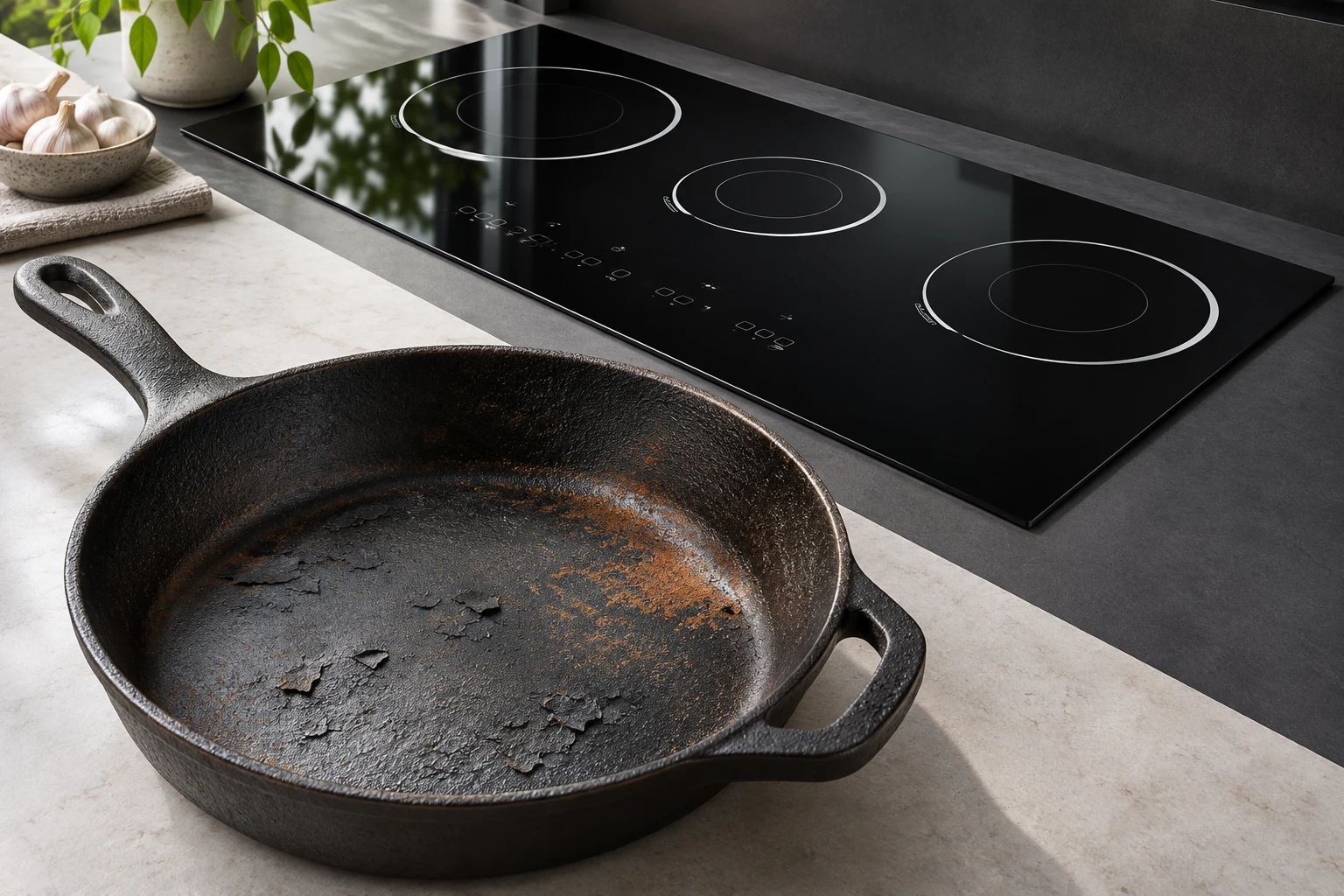
The cooking interior and the glass contact surface are separate inspection areas. A restored interior does not prove that the base is clean, stable or suitable for your appliance. Look underneath for loose debris and residues, and follow the pan's permitted cleaning process before evaluating the surface again. Keep removed material away from the cooking panel and its controls.
Our guide to cast iron on a glass cooktop covers the broader compatibility and handling question. This article concentrates on identifying the surface problem. A magnetic response alone does not answer whether a particular pan's condition, dimensions or base is permitted on your appliance. Use the appliance manual and cookware instructions together, especially if the base has become irregular or the vessel no longer sits as expected.
For confirmed uncoated seasoned iron, find the exact maker's instructions for rust removal or seasoning repair. Read the complete sequence before starting, including washing, drying, oil application, heating and cooling. Do not combine the first step from one guide with a stronger chemical or a different heating schedule from another. The handle and any attachments also need to be suitable for the chosen process.
The official restoration guidance describes a controlled cleaning and reseasoning route for the manufacturer's seasoned cookware. It is evidence for that care process, not permission to restore enamel with the same abrasives. Avoid inventing a universal oven temperature or treatment time. When the pan maker provides a specific recipe, follow its units, ventilation instructions and applicable limits instead of substituting the induction hob as a seasoning station.
Abrasives, metal tools and restoration residues used on iron should not automatically be used on the cooktop. Put the cool pan on a suitable work area and protect the surroundings according to the chosen care instructions. Keep treatment materials clearly separated from the soft items used for routine glass care. If something reaches the cooking panel, consult the appliance instructions before trying to remove it.
Kanger supplies black glass-ceramic cooktop panels for appliance applications. That component role does not make the glass a pan-restoration workbench or give it an unlimited tolerance for impact, scraping or chemicals. For appliance buyers, document the division between cookware care and panel care in the user instructions. A component photograph cannot establish the finished appliance's approved cleaning method.
A useful maintenance record goes beyond saying that the pan was cleaned. Note where it was stored, whether it was fully dry and whether it was stacked with damp items. Review the permitted washing and drying process. The maker's troubleshooting discussion identifies moisture-related conditions as relevant to rust; use that as a prompt to examine the actual routine rather than blame induction heating without evidence.
For loose dark material, record whether it appeared after a particular care treatment and whether the finish was identified beforehand. Do not repeatedly add oil over an unresolved surface problem. A short sequence of dated photographs can help the manufacturer distinguish a recurring care issue from something needing service. Keep the information factual: describe what you saw and did, without assigning an unverified chemical cause.
If you first noticed particles on the hob, stop and inspect both objects after they are safe to handle. A mark remaining on the glass after the pan is lifted is a separate cleaning question. Do not drag the pan around to see whether it polishes the mark away. Keep the vessel off the area until you understand whether debris remains underneath it.
surface-specific burnt food removal explains why cookware deposits should be treated according to their surface. Use that distinction when collecting evidence: photograph the glass without the pan, then the pan base separately. Do not describe a glass scratch as removable rust, or a cookware stain as a glass manufacturing defect, without examination. Different locations can require different support contacts and different remedies.
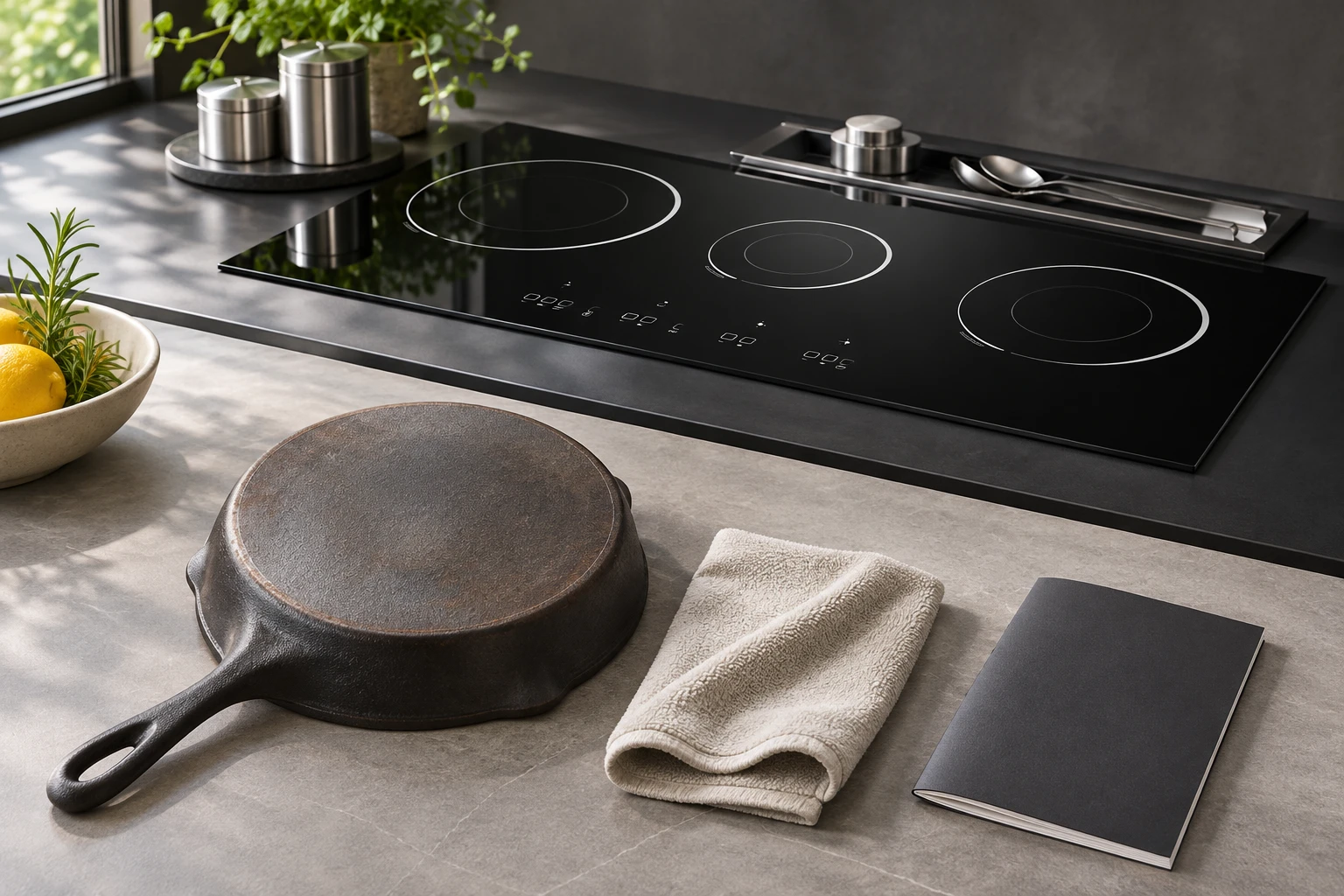
Before reuse, complete the documented care process and let the vessel reach a safe handling condition. Check the rim, handle attachment and base again. Confirm that no loose cleaning material remains and that the pan is ready for the food-contact use described by its manufacturer. Do not treat visual improvement as proof of structural soundness when a crack or insecure handle was present.
Prepare a clear landing place before lifting the pan. Place it in the permitted cooking position without sliding and follow the appliance's normal operating instructions. Do not use a high-power empty-pan trial to prove that restoration worked. If the vessel behaves unexpectedly or releases more unidentified material, stop and seek guidance rather than increasing the heat to burn the problem away.
For a single household pan, the brand, model, construction and care history may be enough to begin an enquiry. For a supplied cookware package, retain the model list and care-document revision so that replacement items do not silently change the maintenance requirements. A package containing both seasoned and coated pans needs clear distinctions; one generic instruction card can invite the wrong treatment.
Ask the supplier to identify the applicable care document and the decision point for replacement or service. Request clarification in writing where the finish is ambiguous. Keep claims limited to the exact item: a successful restoration of one seasoned skillet does not certify another coating or establish a cooktop-panel specification. This is also a useful boundary when translating consumer care instructions for an appliance manual.
The routine after restoration matters because the vessel will return to a real kitchen rather than remain in a demonstration. Choose a clean, dry storage arrangement allowed by the cookware instructions. If pans are stacked, check their condition before assembly and do not trap washing moisture between them. cookware pan protectors discusses cold-storage separators and their removal before cooking.
Assign the next inspection to an observable event, such as taking the vessel out for use, rather than inventing a universal replacement interval. Look at the same areas documented in the earlier photographs. If the issue returns despite following the correct instructions, send the record to the manufacturer. Repeated aggressive treatment without a confirmed surface identity can obscure the original problem and make the next diagnosis harder.
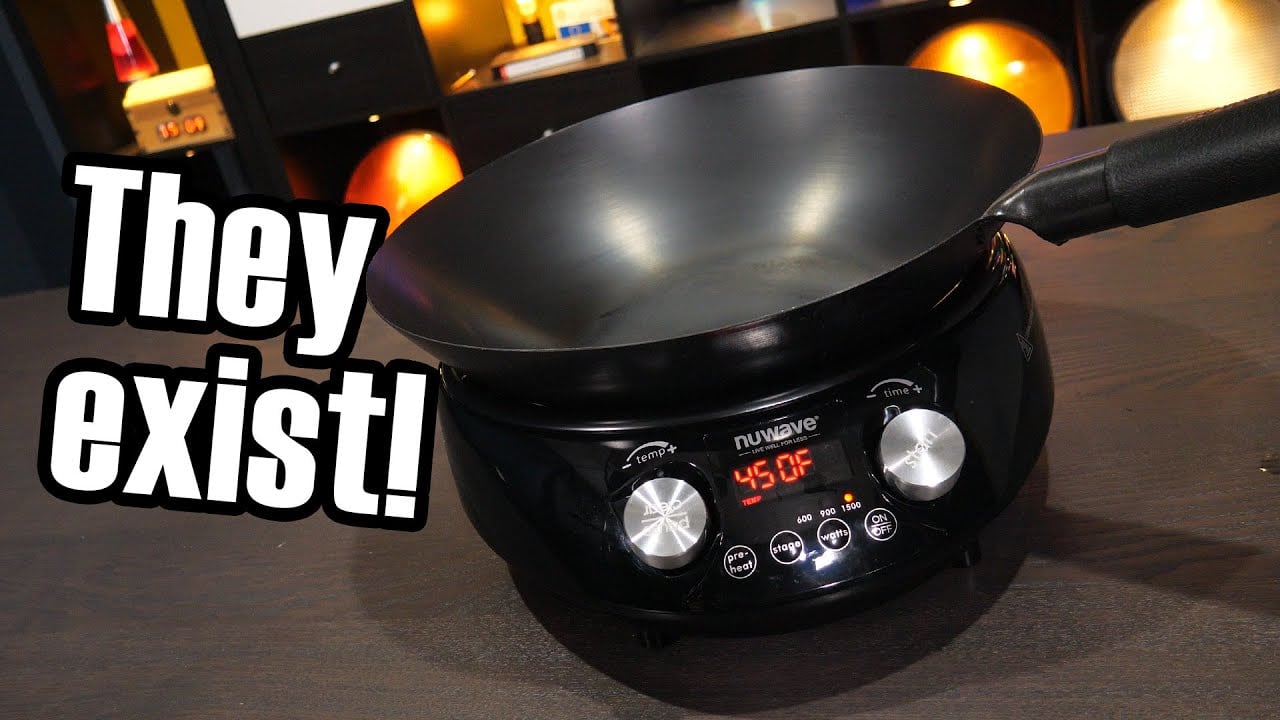
Video: Induction cooking – but what about woks?, Technology Connections. Open the educational video on YouTube.
The video explains induction heating and the relationship between cookware and the appliance. It does not diagnose corrosion, approve a cleaning chemical or prescribe a seasoning process. Use the written care instructions for those decisions. The practical distinction is simple: induction compatibility, pan condition and glass-panel care are separate checks, each of which needs its own evidence.
No. Confirm the vessel's construction and inspect the affected location. Unknown applied coatings, food deposits and damaged finishes must not be labelled seasoning from color alone. Ask the manufacturer when the finish cannot be identified.
Do not transfer a cast-iron restoration method to the cooktop. Use separate surface-specific instructions and keep pan-treatment tools and residues away from the cooking panel.
Rust alone does not identify its cause. Review the pan's care and storage history, including moisture, and compare the observations with the cookware manufacturer's guidance before assigning blame to the appliance.
Stop when the finish is unknown, the vessel is cracked, the handle is insecure, the base condition is uncertain or unidentified material keeps returning. Supply the model, photographs and care history instead of continuing improvised treatment.
These primary documents support specific product instructions and handling distinctions. Their specifications are not transferred to Kanger components or other products.