 Kanger Glass-ceramic Co., Ltd.
Cast iron on a glass cooktop is an appliance-specific compatibility question. Do not assume that a magnetic pan, a smooth-looking base or a low total weight makes every cast-iron vessel acceptable. Check the exact hob manual for cookware material, base shape, size, placement and heating restrictions. Some manufacturers discourage cast iron on particular radiant surfaces because of scratching and retained heat. Where the manufacturer allows it, use clean suitable cookware without sliding, dropping or overheating it. Induction compatibility and permission to use the pan safely on that appliance remain separate checks.
Start with the heating technology and the manual
A smooth glass-ceramic surface may cover radiant heating or an induction system. Cast iron interacts differently with these systems, and the controls and restrictions are not interchangeable. Identify the model and read the cookware section before choosing a pan on the basis of the hob’s appearance.
GE’s radiant smooth-top cookware guidance discourages cast iron in the context it describes and explains concerns about surface scratching and retained heat. That advice should not be converted into a claim that all cast iron is forbidden everywhere, or ignored because a different manufacturer’s model permits it.
The Department of Energy induction overview explains the need for suitable magnetic cookware. Magnetic response is relevant to induction heating, but it does not establish base condition, permitted size or compliance with a particular appliance’s care instructions.
Inspect the base while the pan is cool
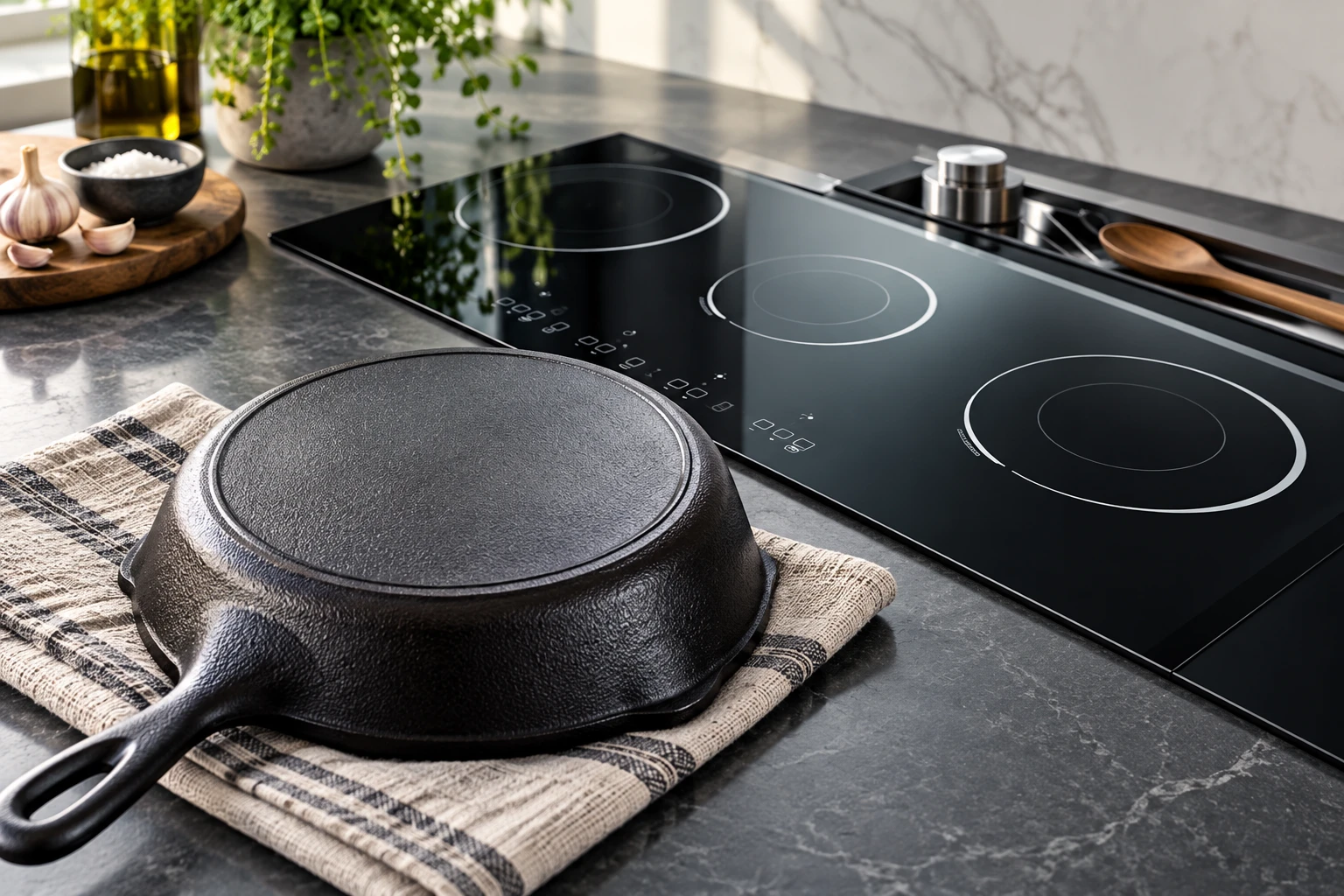
Remove the pan from the appliance and inspect the underside in good light. Look for attached grit, dried food, rough raised features or damage. Do not grind or modify the pan base as an improvised compatibility fix. Check the cookware maker’s instructions as well as the hob manual.
A flat contact surface and appropriate size matter. A decorative or ringed underside may not behave like a continuous flat base, and nominal rim diameter may differ from the contact or magnetic area underneath. Follow the model’s definitions rather than using the widest point of the vessel as the only measurement.
For enamel-coated cast iron, inspect the enamel condition and read the applicable instructions. A coating is not an automatic exemption from cookware restrictions. A damaged base, a rough edge or adhered contamination remains relevant even when the pan is sold as suitable for smooth surfaces.
Keep four compatibility checks separate
| Check | What it addresses | What it cannot prove |
|---|---|---|
| Appliance permits the cookware | Manufacturer’s approved use | Every cast-iron pan is acceptable |
| Base is clean and suitable | Contact and surface-care conditions | No damage can occur during handling |
| Size and loaded mass comply | Placement and load restrictions | Heating behavior is suitable in every mode |
| Magnetic response for induction | Preliminary heating compatibility | Recognition, control or complete safety qualification |
The table is an inspection framework, not a replacement for model instructions. If a requirement is unclear, ask the appliance manufacturer rather than averaging advice from unrelated products.
Lift rather than slide, when movement is safe
A heavy rough base can carry particles across the surface when dragged. Avoid using the glass as a workbench for moving pans, utensils or ingredients. Plan a separate landing area and use the vessel’s intended handles. Do not make an unsafe lift merely to avoid sliding; reduce the task or obtain appropriate help within the cooking instructions.
Whirlpool’s ceramic-glass care guidance warns against sliding cookware and against hard objects falling onto the surface. These handling issues apply independently of whether a pan can be heated by the appliance.
Keep the underside and hob clean according to their respective instructions. Do not place paper, towels, silicone mats or other unspecified material between a pan and the glass as a scratch-prevention shortcut. Such additions require explicit appliance approval and may introduce different operating problems.
Control heat according to the intended cooking task
Cast iron stores heat, so a change at the controls is not the same as an immediate change in the pan. Use settings appropriate to the recipe and appliance. Do not preheat an empty pan aggressively to prove compatibility or use a boost setting simply because the control offers one.
Follow the cookware manufacturer’s preheating instructions and the hob’s restrictions. If the pan overheats, food burns or the appliance limits output, stop and follow the appropriate guidance. Repeatedly restarting a protective shutdown does not establish that the pan is suitable.
On induction, keep the pan in the permitted position and watch for recognition messages. For repeated loss of detection, use the pan-detection checklist. Do not infer a glass defect from a magnetic pan failing to work on one zone.
A sound is not a load or scratch test
A pan may produce a different sound from another vessel on induction. Record the setting, zone and cooking conditions if the noise is a concern. Do not press down on the handle or add weight to suppress a sound. That changes the loading and is not a manufacturer-approved diagnostic method.
Use the induction cookware noise guide to separate sound observations from heating performance. A quiet pan does not prove a surface is undamaged, and a buzzing pan does not by itself prove a crack or excessive weight.
If a sound is accompanied by smoke, burning smell, sparking or a fault, follow the appliance’s stop-use instructions. Do not keep cooking to collect a more dramatic recording. A visible crack needs assessment rather than a cookware experiment.
Loaded weight includes more than the empty skillet
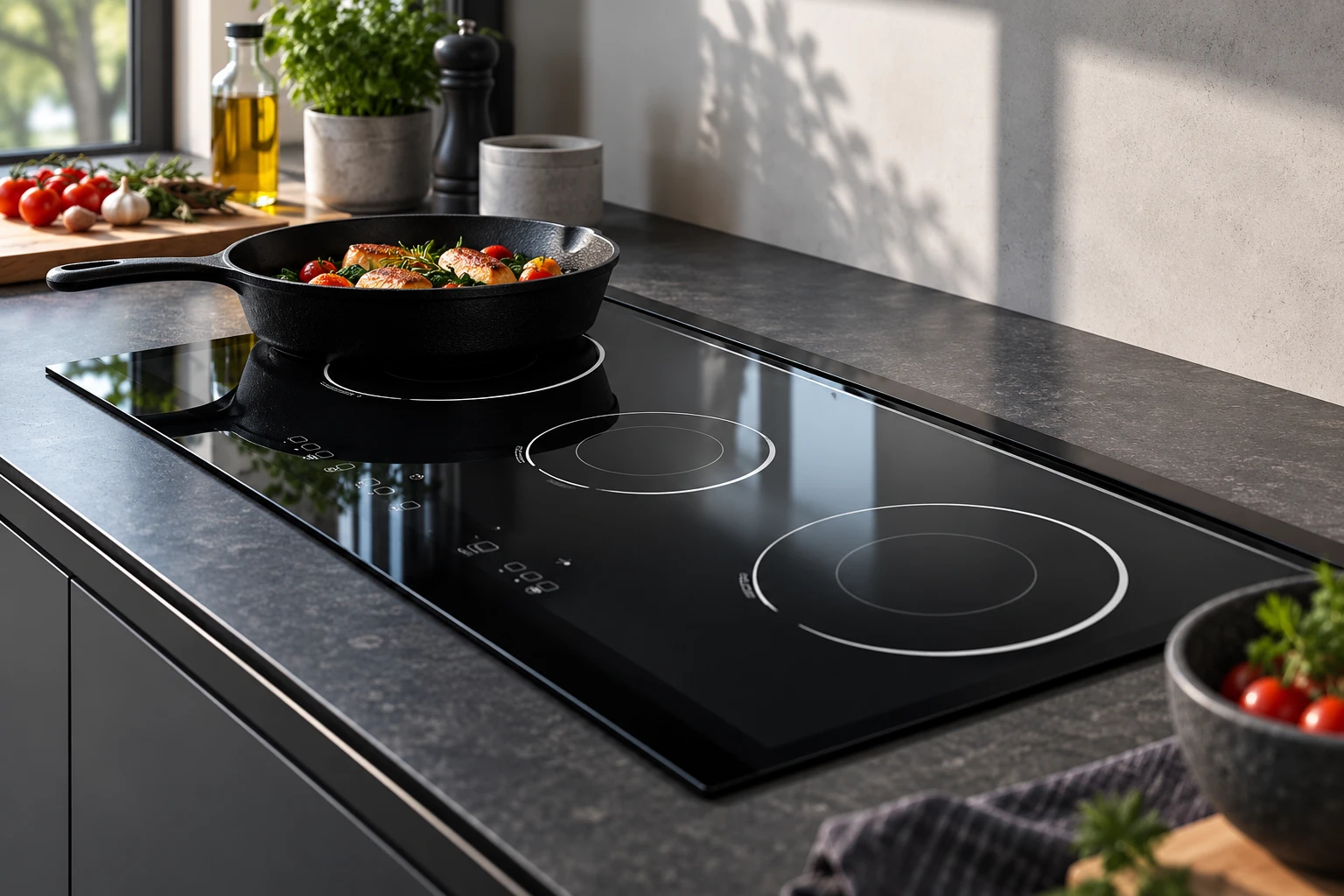
Count the pan, lid, contents and any supported accessory when checking an appliance load restriction. Read whether the stated limit covers the whole surface or another defined condition. Do not apply a generic internet rating to your exact appliance.
Large Dutch ovens, griddles and stockpots also raise questions about base size, overhang and permitted zone arrangements. A vessel below a total mass limit may still violate a cookware restriction. A griddle spanning two zones needs the appliance’s approval; the fact that it physically fits does not qualify the arrangement.
Weigh cool cookware on a separate stable suitable scale if needed. Do not perform a loaded-pan test on glass to discover its strength. If a particular meal would require a vessel that cannot be handled safely, choose another permitted cooking arrangement rather than accepting a handling risk.
Distinguish a transferred mark from damaged glass
After use, follow the model’s cooling and cleaning instructions. Observe a mark in good light before deciding what caused it. A residue, metallic-looking transfer, scratch and actual missing material are different conditions, and one photograph may not distinguish them.
Use only the approved care method. Do not increase abrasive strength until a mark disappears or run a finger across a suspected sharp defect. The surface-loss guide explains why cleaning cannot replace missing glass. Suspected damage requires the appliance service decision.
Preserve the pan and cleaning history if making a complaint. Record whether the vessel was lifted or moved, whether debris was present and what the surface looked like before use. These observations support investigation without proving that either the pan or panel was defective.
What to ask the appliance manufacturer
Provide the model, vessel type, base photographs, base dimensions, complete loaded mass and intended cooking task. Ask whether the specific pan type is permitted, which zone and settings apply, and whether any accessory or handling restriction changes the answer.
Keep the response with the manual. A retailer’s general statement that cast iron works on induction addresses only part of the question. A cookware maker’s compatibility label should also be checked against the appliance requirements. Where the two sets of instructions conflict or remain unclear, obtain clarification before use.
If the hob is already damaged, ask about its condition separately. A pan recommendation for an intact appliance does not authorize continued operation after impact or cracking. Do not ask a material supplier to make a remote safety decision about the installed unit.
How this affects OEM panel projects
Kanger supplies black glass-ceramic panels. OEM teams should specify the actual material, geometry, artwork and mounting interface while defining cookware compatibility at complete-appliance level. A material name alone cannot support a blanket claim that all cast iron is safe.
The cooktop-glass overview describes the component role. A meaningful validation brief identifies the cookware set, base conditions, handling, thermal modes and acceptance criteria. Maintain the link between the tested appliance configuration and the wording in the user instructions.
For comparison trials, agree how a transfer mark, scratch, coating change, chip and crack will be recorded. Keep photographs and relevant sample history. Do not convert one successful demonstration into an unlimited abrasion-resistance or impact guarantee. Ask for evidence scoped to the actual product and use.
Further learning: induction and pans
The neutral video below explains induction and cookware interaction. Its demonstrations help explain why the base matters, but do not approve your skillet for every smooth-top appliance. Follow both the cookware and hob instructions for actual use.
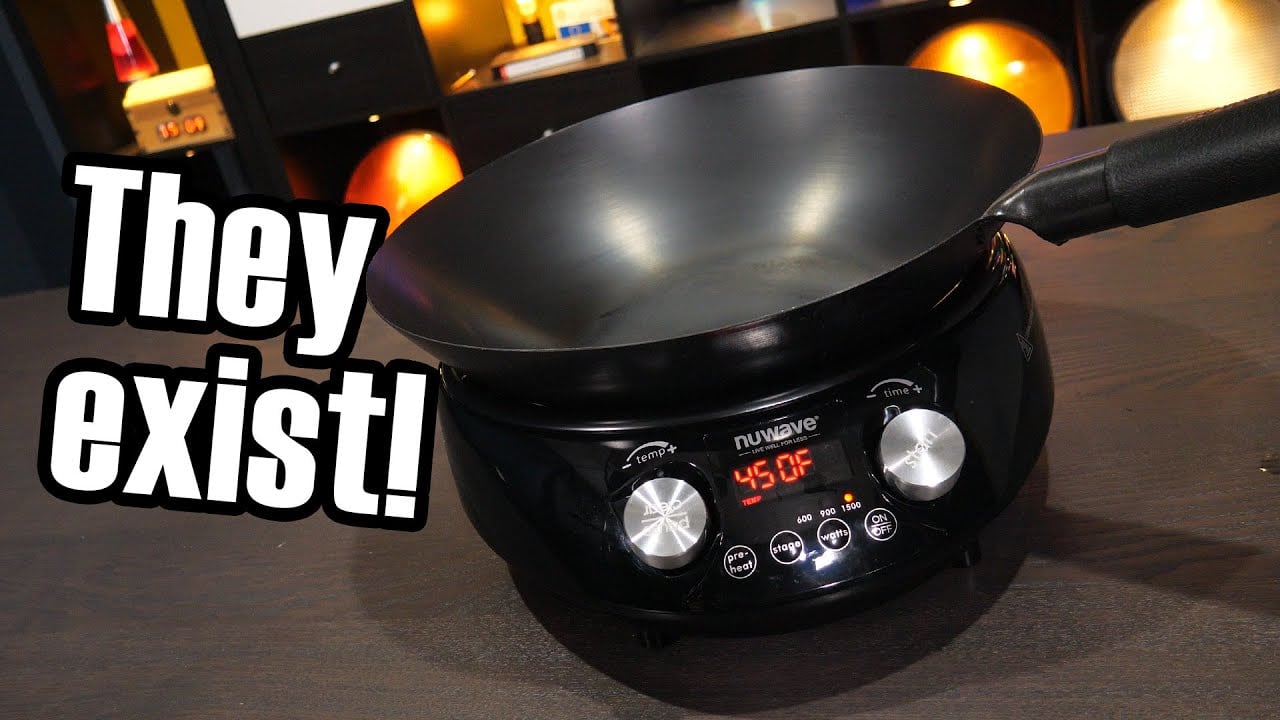
Video: Induction cooking – but what about woks?, Technology Connections. Open the educational video on YouTube.
Frequently asked questions
Does a magnet prove cast iron is safe for my hob?
No. It screens magnetic response for induction. Material permission, base condition, size, handling and heating restrictions still apply.
Can enamel-coated cast iron scratch the surface?
A coating does not remove the need to check base condition and the appliance instructions. Avoid sliding and keep contact surfaces clean; do not assume a universal scratch-free result.
Should I put a mat under the skillet?
Only use an intervening accessory if the appliance manufacturer explicitly permits it under the stated conditions. Do not improvise with towels, paper or unspecified mats.
Can I use cast iron on a cracked glass hob?
Do not use cookware compatibility advice as permission to operate damaged glass. Follow the damaged-appliance instructions and arrange the approved assessment.


