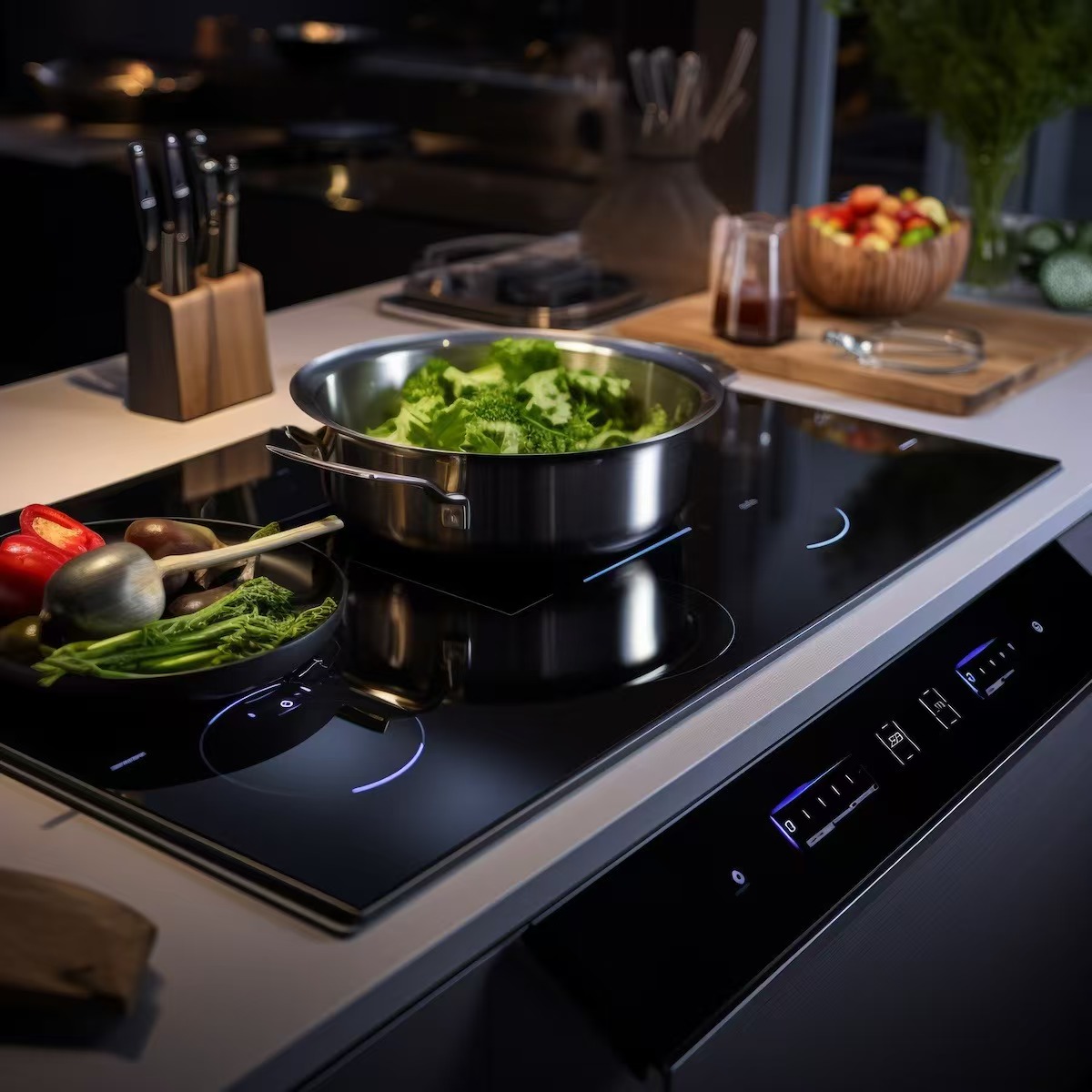
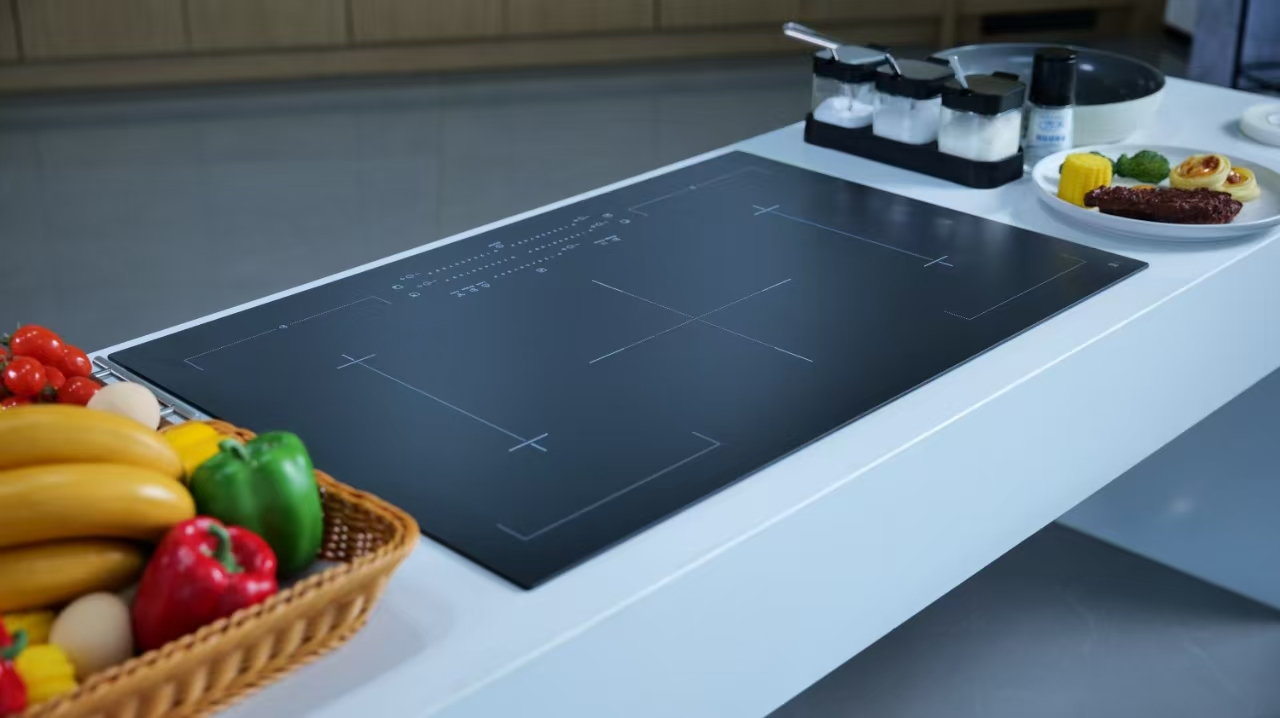
Induction cooking spoon rest placement works best when a clean rest sits on a separate, stable counter where the utensil is easy to reach without crossing an active cooking zone. Keep the glass panel and controls clear. Match the rest to the tool's actual bowl, handle and balance, and check its care instructions rather than assuming that heat resistance permits placement on the hob. This guide concerns the temporary parking of a used cooking spoon; choosing a utensil for a coated pan and supporting a hot lid are separate decisions.
Set out the spoon, the intended rest and the vessel while everything is cold. Walk through the movement from stirring to parking the tool. The useful location is one you can reach without stretching over the pan or threading the handle between other equipment. If the only available position blocks a control or occupies a cooking zone, reorganize the work area before heating.
Give the rest its own space rather than balancing it on another item. A tray crowded with jars, towels and utensils may not provide a reliable landing place. Check whether the spoon can be set down in the same orientation each time, with the working end supported and the handle accessible. A rest that fits a small tasting spoon may be unsuitable for a long cooking paddle.
Product photographs cannot answer every fit question. Place the clean dry tool in the rest on a stable counter and observe the balance. Does the bowl sit within the intended collection area? Does the handle pull the spoon sideways? Can you pick it up without touching the used working end? Use this cold trial to reject a poor arrangement before it becomes part of a hot cooking routine.
A manufacturer may describe a rest as accommodating large utensils, but that is still a statement about its own product. It does not give every spoon rest the same capacity. Check the exact item, including any removable support or non-slip component. Avoid adapting a decorative dish whose intended use and care requirements are unknown simply because the spoon appears to fit.
An unused-looking section of a glass hob can still belong to the appliance's working surface. Do not use zone markings as a guide to accessory storage. Follow the appliance instructions and choose a separate counter location that leaves controls visible and accessible. The rest's heat-resistance description does not override the hob manufacturer's directions for objects on the surface.
Kanger's black glass-ceramic cooktop panels belongs to the appliance component side of this discussion. A panel product description does not establish permission to park kitchen accessories on the finished hob. For appliance teams preparing instructions, a clear illustration of the separate utensil landing area can communicate the intended routine without claiming a universal minimum distance that has not been specified.
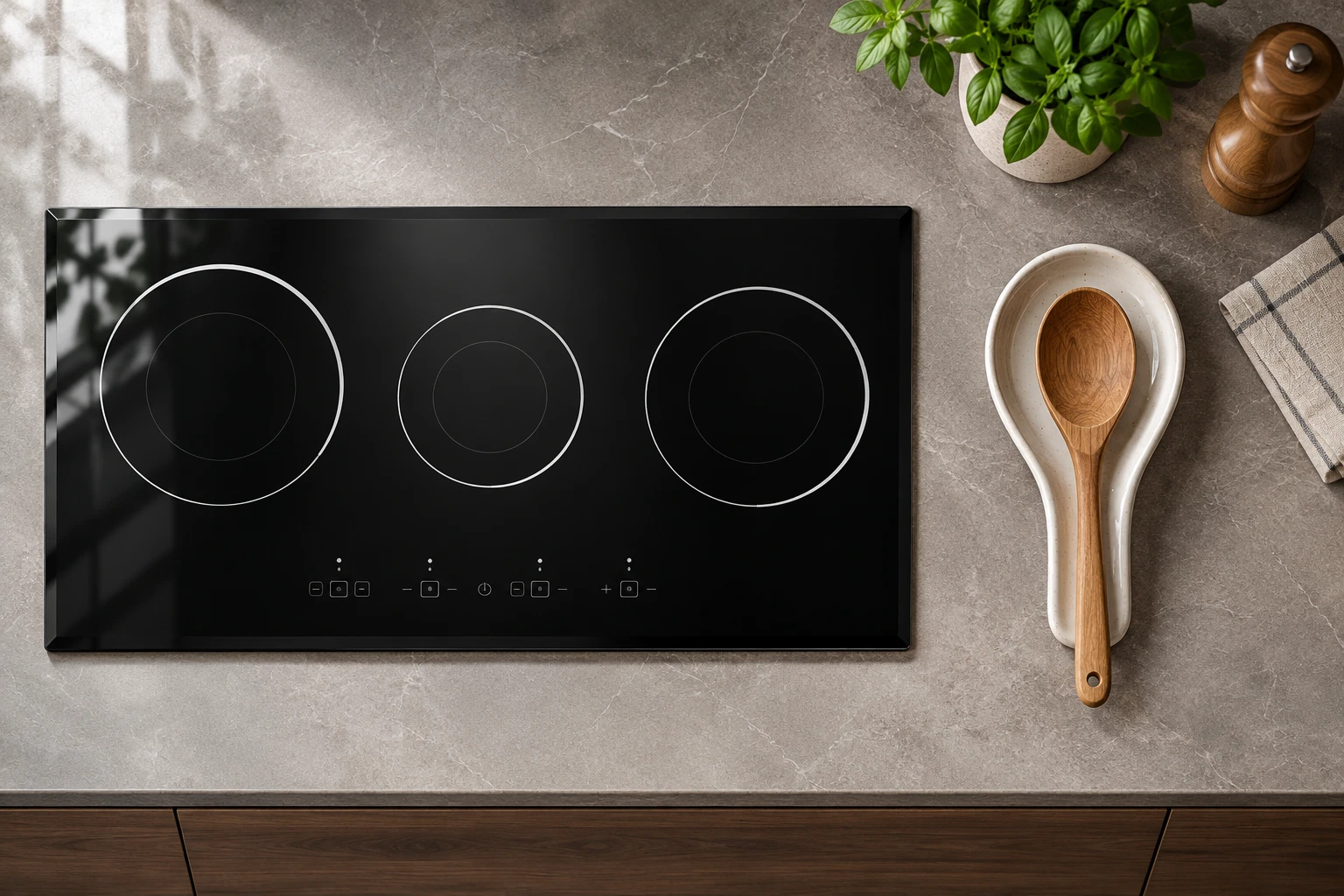
| Check | Acceptable observation | If the check fails |
|---|---|---|
| Working end | Bowl supported within collection area | Choose a rest that suits the actual spoon |
| Balance | Tool stays in intended orientation during cold check | Change the tool or rest; do not wedge it |
| Handle | Accessible without crossing a pan or control | Reposition on a separate counter |
| Drips | Normal drips reach the collection area | Reassess angle and capacity |
| Cleaning | Exact product instructions available | Obtain instructions before choosing a cleaning process |
These are qualitative checks rather than a temperature or clearance specification. Resolve each failed check by changing the layout or choosing a documented accessory. Do not compensate for an unstable rest by placing it closer to a hot pan, wedging it against the appliance or supporting the handle on a control strip.
Some accessories combine a spoon rest with a lid holder. Their functions should still be evaluated separately. An arrangement that supports a spoon does not automatically support a lid of any size, and a lid's position can change access to the spoon. Read the accessory's instructions before using both features together, including how the lid is intended to engage.
This article does not reproduce the separate pan lid holder selection task. If a combined accessory is considered for a cookware package, record which spoon and lid were checked and whether the arrangement was assessed together. Do not infer a load rating or claim spill containment from a marketing image. For an accessory without clear instructions, seek clarification rather than improvise a support arrangement.
The spoon's bowl collects food and drips; the handle is the part you need to grasp again. Orient the utensil so that you can identify and reach its handle without touching adjacent hot cookware. If the handle extends across a passage or beyond the counter edge, choose a different position or tool. A rest should help organize the movement rather than create another obstacle.
Keep clean serving utensils separate from the used cooking tool when that distinction matters to the recipe and food-handling process. Do not use the spoon rest as evidence that a utensil is clean or suitable for another food. Follow the applicable food-handling guidance, and replace or clean the tool and rest when required. Physical support and hygiene are different functions.
Choose an arrangement in which ordinary drips from the working end fall into the intended collection area rather than travel down the handle onto the counter. Observe this during normal use and stop to reorganize if the accessory is being overwhelmed. Do not promise that a shallow rest can contain every sauce or volume; its practical fit depends on the actual spoon and task.
If a spill reaches the glass, use the appliance manufacturer's spill instructions. Do not wipe around an active pan while still holding a loaded utensil in the other hand. Make the area safe first and keep the rest's cleanup separate from the cooktop's cleanup. The important preparation is having a landing place available, so the tool does not need to be laid across the panel during the interruption.
A well-positioned rest cannot make a metal spoon suitable for every coating or a wooden tool suitable for every task. utensil surface compatibility explains why the working material and cookware interior must be matched. Select the tool for the pan first, then select the rest for that tool. Reversing the process can leave you with a convenient parking place for the wrong utensil.
When replacing an old spoon, repeat the fit check. A longer handle or wider bowl can alter the balance even when the new tool has the same general name. In shared kitchens, keep the arrangement obvious enough that another user can follow it. A rest whose safe orientation requires a long explanation may be a poor choice for a busy work area.
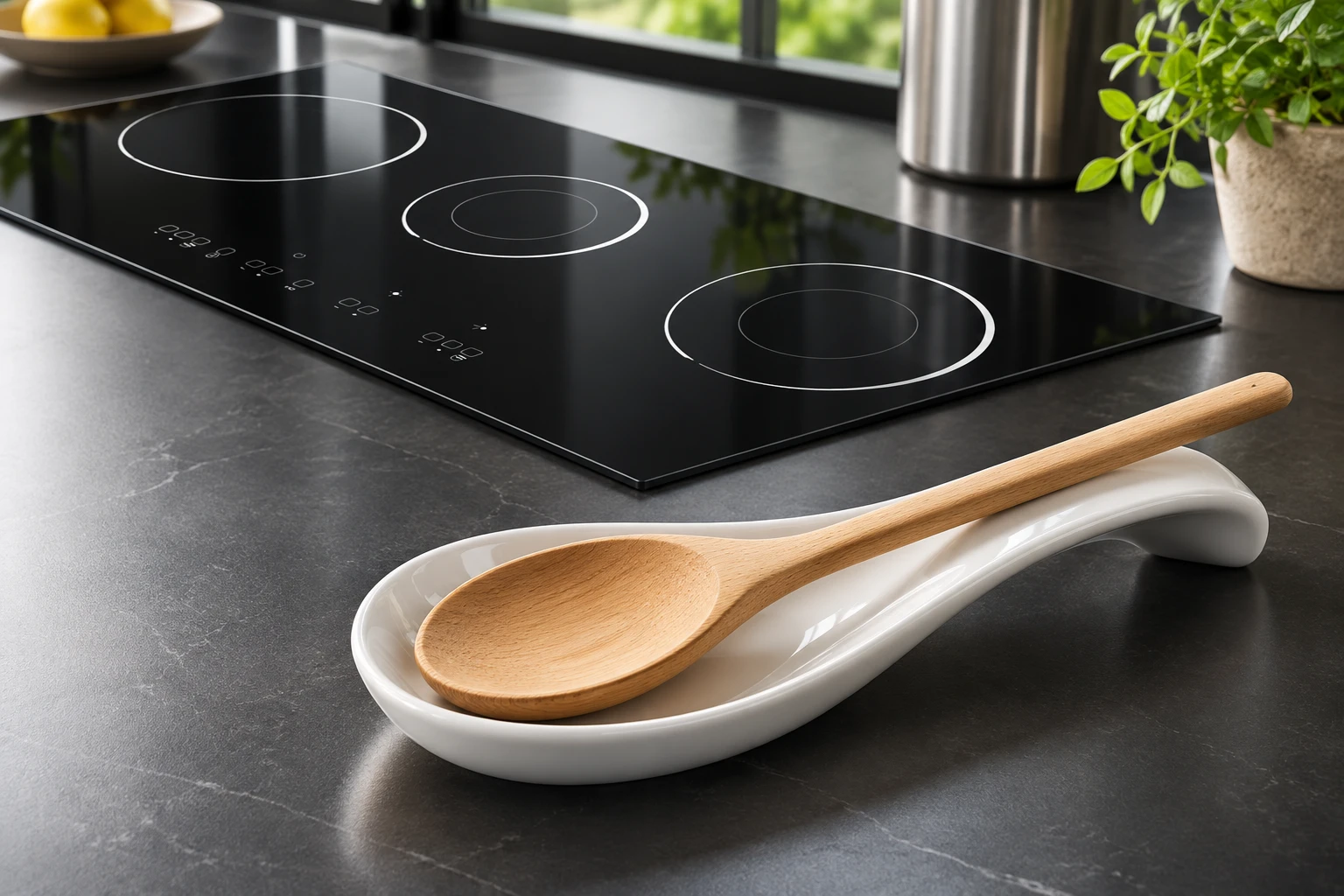
Identify the rest's material and any separate pieces before cleaning. Follow the maker's permitted process for the exact product. A dishwasher-safe claim for one stainless accessory does not establish dishwasher suitability for another ceramic, composite or decorated item. Inspect removable parts as instructed, and do not reassemble a damaged support because the main tray remains intact.
Let cleaned items reach a suitable dry condition before returning them to storage. cookware drying rack discusses the separate drying arrangement around a glass cooking appliance. A spoon rest used during cooking is not automatically a draining rack for wet cookware. Keep those roles distinct so that clean utensils, used tools and washed items do not accumulate in the same small area.
For an appliance-and-accessory package, list the intended spoon types and the place where the accessory will be used. Ask for the rest's material, care instructions, assembly information and limitations. Request dimensions relevant to the working end and handle rather than relying on a broad claim such as universal fit. If the item has several functions, ask how each is intended to be used.
Record what was actually checked in a cold layout trial: the utensil model, counter position, balance, handle access and collection area. This is a documented observation, not a certification of heat performance. If heat or material compliance is part of the purchasing requirement, obtain the supplier's applicable evidence rather than generating an unsupported specification from the layout test.
Imagine a second person reaching for a pan, opening a nearby drawer or carrying a serving bowl. The spoon handle and rest should not obstruct those ordinary movements. A location that works on an empty demonstration counter can become awkward when ingredients and cookware are present. Recheck the arrangement with the normal equipment laid out before committing to a permanent spot.
If space is limited, simplify the work area instead of placing the rest on the cooking surface. Store unused tools away, prepare the serving area beforehand and use an accessory that suits the actual task. Do not invent a clearance measurement; use any distances specified by the appliance or accessory manufacturer and resolve remaining layout questions with the responsible supplier.
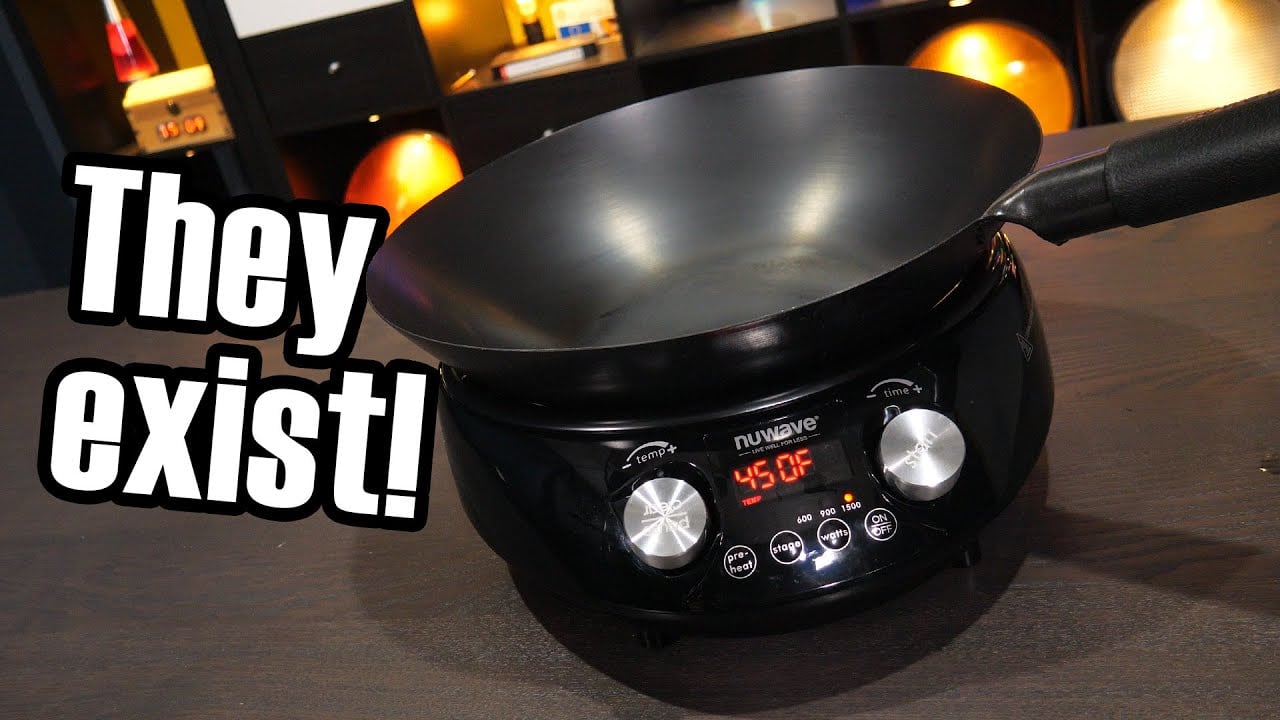
Video: Induction cooking – but what about woks?, Technology Connections. Open the educational video on YouTube.
This educational video explains induction operation and cookware interaction. It is background for distinguishing the pan, appliance and surrounding accessories. It does not certify a spoon rest, authorize storing objects on the hob or supply a temperature rating for utensils. Keep the product instructions as the deciding evidence for placement and care.
Choose a separate counter location and follow the appliance instructions. An unused-looking zone does not establish permission to store an accessory on the glass, and a rest's heat rating does not override the appliance requirements.
No universal fit should be assumed. Check the actual bowl support, handle balance and pickup movement with the clean cold tool. Repeat the check when changing utensil size or shape.
Use each function according to the exact accessory instructions and check the intended spoon and lid together. Spoon support alone is not evidence of unlimited lid support or load capacity.
Document the intended utensils, counter layout, cleaning process and any separate parts. Request product-specific instructions and evidence for performance claims, then record the practical fit observations without presenting them as certification.
These primary documents support specific product instructions and handling distinctions. Their specifications are not transferred to Kanger components or other products.