An induction hob aluminium pan can work when the vessel includes an induction-compatible base and meets the hob manufacturer’s cookware requirements. The aluminium body alone does not establish that compatibility. Check the exact model for an induction designation, inspect the cold underside and compare its usable base with the appliance instructions. A magnet is a helpful first screen, but it does not certify the whole construction, cooking response or fit. If an older aluminium saucepan lacks a compatible base, do not assume a higher power setting will make it work. Confirm the vessel before selecting a heating function.
Cookware descriptions often lead with the body material because it is visible and familiar. Induction suitability concerns the part of the vessel that interacts with the appliance. An aluminium vessel may incorporate another material at its base; a plain aluminium vessel and one designed for induction can therefore look similar from above. Read the model description and underside rather than deciding from the colour or weight of the sidewall.
ENERGY STAR guidance on induction cooking explains induction cooking with suitable ferromagnetic cookware and describes a magnet as a practical compatibility check. That principle does not establish the detailed construction of an advertised pan. Ask the supplier whether the exact model and size are intended for induction. A range name or a photograph of another size is not enough when the product information is ambiguous.
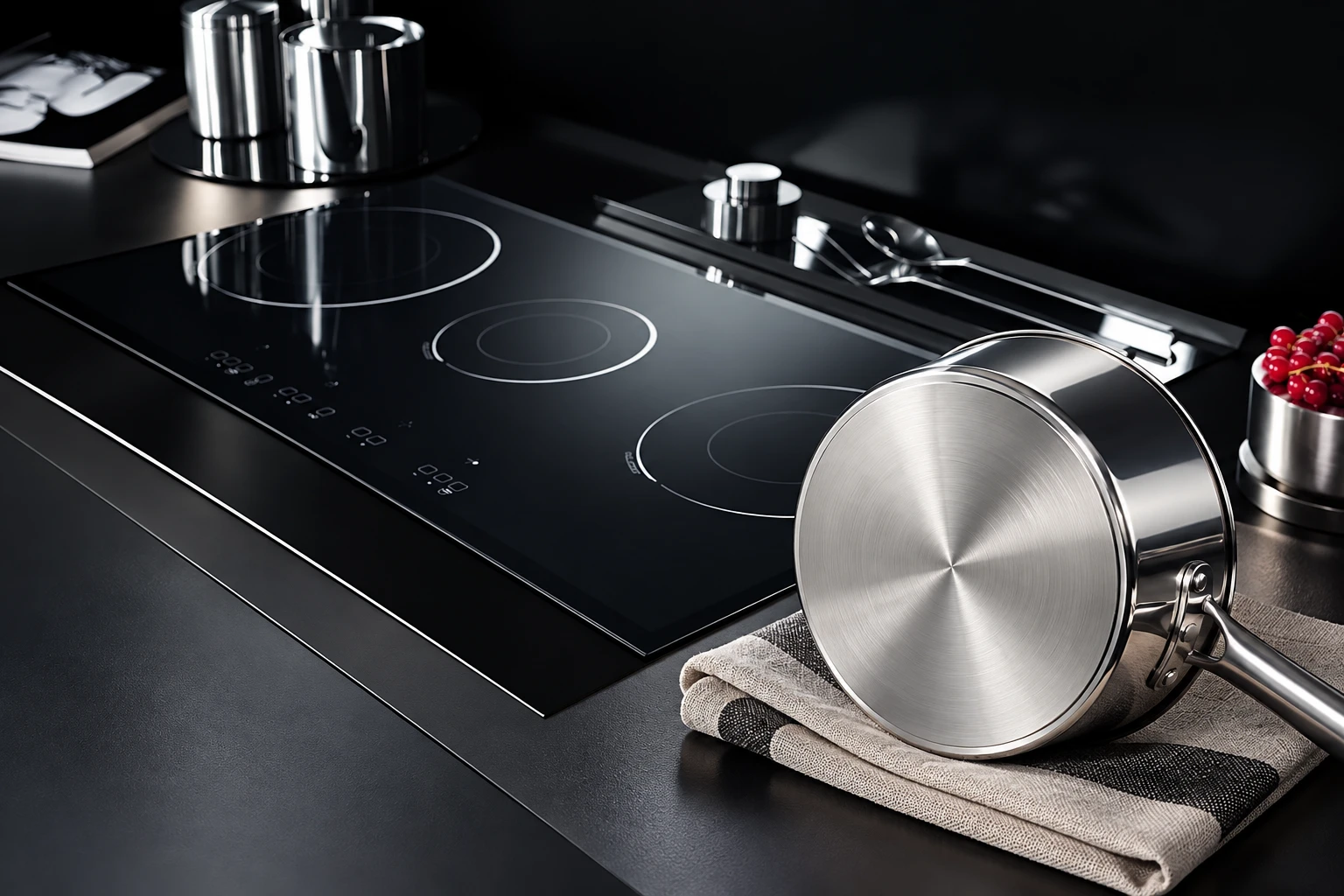
Let the vessel cool and follow its handling instructions before inspecting it. Read any induction marking and identify the actual base area. A decorative ring, a polished finish or a circular insert is not an independent approval. If a magnet is permitted as a screening tool, apply it to the base rather than a handle attachment or other incidental steel part. Keep magnets away from items that restrict their use.
Look for residue, grit, damage or an obvious change in how the vessel sits. Do not grind the base or attach a homemade magnetic plate. A visual check cannot measure internal bonding or certify flatness, but it can reveal a reason to ask for supplier advice. For a used pan, examine the actual item rather than relying on the current catalogue image of a similar model.
The advertised diameter commonly describes the vessel near its rim. Your appliance may require information about a different part of the base. Compare the dimensions specified in the hob instructions with the corresponding pan dimensions. Do not substitute the outer body width simply because it is easier to measure. Our guide to usable pan-base size covers that zone-sizing decision in more detail.
Place the vessel only as the appliance permits, with controls accessible and other cookware clear. A large aluminium body can conceal a smaller magnetic base; appearance alone does not establish whether the zone will detect it. Equally, a pan that works on one zone may need a separate check on another. Keep the exact zone and vessel model together in any support record.
| Check | Useful evidence | What it resolves |
|---|---|---|
| Induction designation | Exact model and size listed for induction by its maker | Intended heat source |
| Base construction | Supplier description of the induction-compatible base | Difference between body and contact area |
| Zone fit | Usable base dimensions compared with hob instructions | Positioning and detection requirements |
| Condition | Cold inspection and supplier response to damage | Whether an item needs assessment |
| Care limits | Current heating, cleaning and utensil instructions | How to use the complete vessel |
The checklist uses documentary evidence rather than a universal thickness or magnet-strength target. Those targets would need a defined product and test method. If the listing and care sheet disagree, ask the supplier to resolve the discrepancy before purchase. Keep a copy of the response so a later replacement can be checked against the same information.
Some aluminium pans carry a nonstick coating, while others use a different cooking surface. The surface description does not show whether the underside is induction-compatible. Conversely, an induction designation does not establish a coating’s composition, durability or permitted temperature. Record these as separate questions and ask for the care instructions that belong to the actual vessel.
Our nonstick pan compatibility and care addresses coated cookware use and care. Do not infer that a compatible base permits empty high-power preheating or unrestricted boost. Follow the pan and appliance instructions together, including any limits on utensils and cleaning. A product with an unclear coating description should not acquire an invented safety assurance simply because it passes a magnet screen.
If the supplier permits a trial, evaluate an ordinary cooking task with suitable contents, supervision and the specified positioning. Start with one representative vessel before replacing an entire set. Observe recognition, stable placement and whether the practical task can be completed under the allowed conditions. Do not create an empty-heating or destructive trial to compare cookware.
Keep observations specific: the model, zone, contents, selected function and any displayed message. A different result from your previous pan does not automatically mean the aluminium body is defective. Construction and the cooking task can differ. An informal kitchen comparison cannot establish laboratory efficiency, temperature uniformity or service life, so avoid turning it into a numerical product claim.
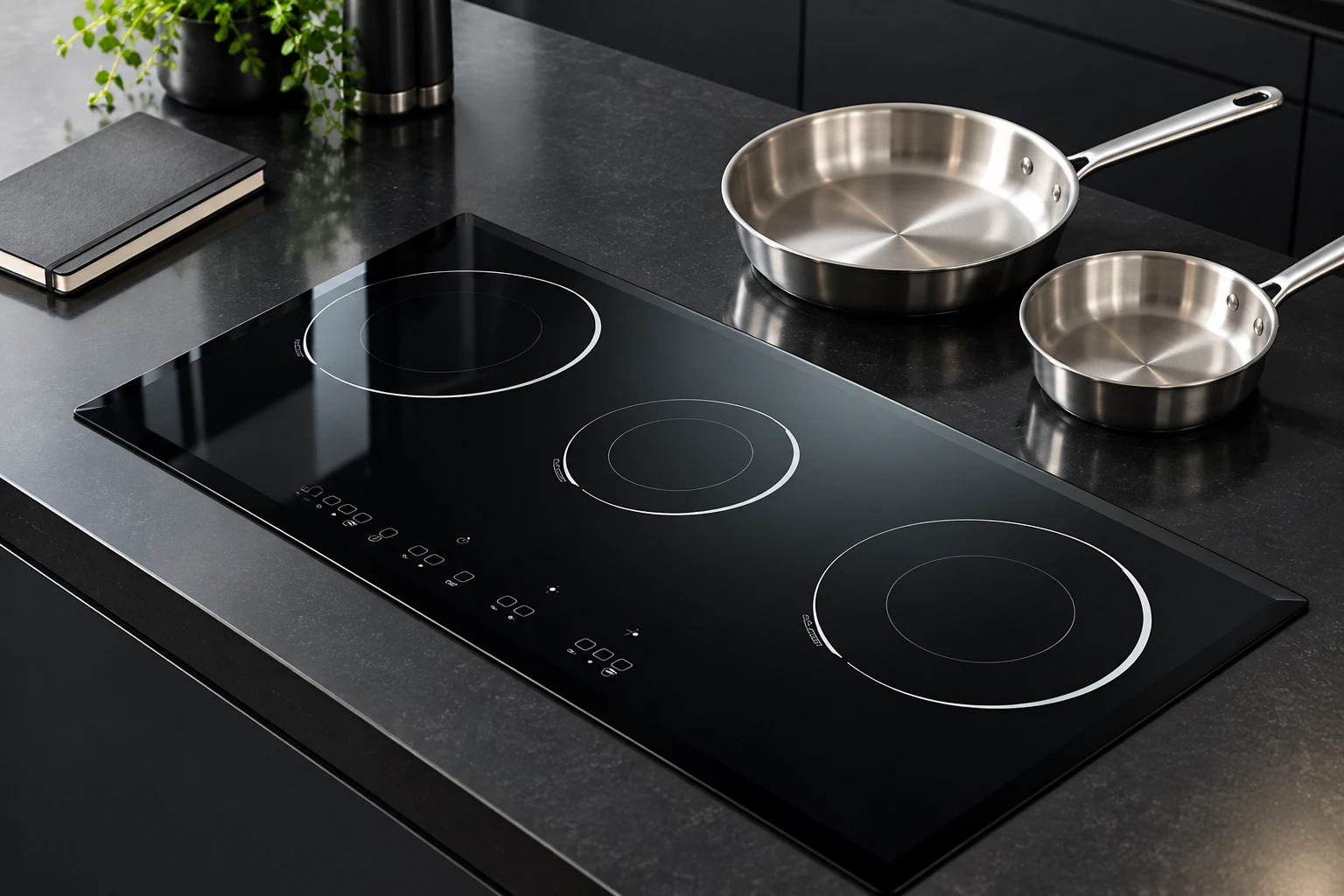
If the hob does not recognize the vessel, return to the model designation, required base size, position and condition. Use the manual’s permitted troubleshooting sequence. Our pan-recognition troubleshooting deals with recognition failures; this article explains why an aluminium label does not settle compatibility. Do not keep increasing power or repeatedly cycling controls to force the appliance to accept a vessel.
If the pan previously worked and now produces a warning, record what changed and contact qualified support when instructed. Do not remove the induction base or dismantle the appliance. A loose component, visible damage or an unresolved service message calls for the appropriate supplier response, not an improvised experiment. Keep a cookware question separate from a confirmed appliance fault.
An adapter is a separate accessory with its own use conditions. Its presence does not convert an unapproved pan-and-hob combination into an approved one. Check the appliance and accessory instructions for the exact arrangement before considering it. If the appliance prohibits the accessory, the fact that a retailer sells one is not a reason to override that restriction.
Do not place foil, loose steel, cloth or another improvised layer beneath cookware to influence detection. The hob, vessel and any permitted accessory form a combined arrangement that needs to follow the applicable instructions. Where compatibility cannot be established, choose a documented suitable vessel rather than treating an accessory as a shortcut around missing evidence.
Keep the cold underside clean and avoid dragging grit across the glass. Follow the recommended lifting method, using suitable protection when the vessel is hot or heavy. An aluminium body does not make the glass scratch proof, and a dark mark is not enough to diagnose its cause. Use the appliance’s cleaning guidance instead of abrasive experiments based on a guessed material transfer.
The Kanger black glass-ceramic cooktop panel shows the Kanger surface family relevant to this discussion. It does not prove the hidden appliance design or compatibility with any pan. For OEM sourcing, agree the panel drawing, finish and assembly interface separately from the finished appliance’s cookware evaluation. The black glass-ceramic material overview gives material context without certifying a particular cookware combination.
Retain the pan identification, receipt, induction statement and care sheet. For a set, check each piece you intend to use rather than assuming the smallest saucepan shares every property of the largest one. If a model is revised, ask whether its base or use instructions changed. Similar appearance does not guarantee identical construction across production versions.
U.S. Fire Administration cooking-safety guidance emphasizes attending cooking. Compatibility does not remove that responsibility or make a coated vessel tolerant of every heating condition. For a support request, provide the exact pan and hob models, zone, message and observations. Clear evidence helps resolve the question without replacing glass or cookware by guesswork.
Technology Connections explains induction and cookware geometry. The demonstration provides physical background; it does not certify the material, coating, base or size of a particular vessel, or approve accessories for your appliance.
Video: Induction cooking – but what about woks?, Technology Connections. Open the educational video on YouTube.
Yes, if the exact vessel has an induction-compatible base and meets the appliance requirements.
No. Check the complete vessel construction and manufacturer designation, not just the body material.
No. It is a preliminary screen alongside model designation, base dimensions, condition and instructions.
Only consider an accessory arrangement permitted by the exact appliance and accessory instructions. Do not improvise layers.



