 Kanger Glass-ceramic Co., Ltd.
An induction hob not detecting a pan usually calls for a cookware and positioning check before a glass replacement. Confirm that the appliance is an induction model, select the intended cooking zone, and try a known compatible pan with a clean, flat magnetic base. Match the base to the zone using the appliance manual. If that pan works elsewhere but repeatedly fails on one zone, record the display and contact the appliance service provider. A blinking setting alone does not prove that the glass-ceramic panel is defective.
This guide separates simple user checks from appliance engineering and service work. It is not an instruction to open a hob, alter its safety controls, or change its glass thickness. Stop using an appliance with cracked glass, smoke, a burning smell, a damaged supply lead, or repeated electrical protection trips. Follow the manufacturer’s isolation and service instructions.
First confirm what the appliance is reporting
Write down the make, model, selected zone, displayed symbol, and the sequence that leads to the problem. A lock symbol, a residual-heat indicator, a flashing power setting, and a fault code describe different conditions. Use the model’s manual rather than interpreting an unfamiliar letter from another brand’s troubleshooting guide.
Check whether the controls respond before focusing on the pan. A unit that will not switch on presents a different question from a unit that accepts a power setting and then reports missing cookware. For a recently installed appliance, note whether the issue has existed since installation. Supply and installation checks belong to the installer or qualified technician, rather than a trial-and-error change by the user.
Keep the first observation simple: “The left zone flashes after selection with pan A; the right zone accepts the same pan.” That report is more useful than “the new glass blocks induction,” because it describes something a service team can reproduce without assuming the cause.
Check the base rather than the cookware label alone
The U.S. Department of Energy’s explanation of induction cooking describes an electromagnetic field transferring energy to compatible cookware. The pan becomes the heat source. This is why a conventional aluminum or glass vessel should not be assumed suitable merely because it survives high temperatures.
On a cool, dry pan away from the appliance, a small magnet can provide an initial compatibility check. Test the underside that faces the cooking surface. Attraction to a handle or a decorative rim answers the wrong question. Magnetic attraction is a screening observation; it does not override the appliance’s requirements for the pan’s base size and construction.
Describe the actual contact area. A wide pan rim may conceal a much smaller metal disk underneath. A product sold as stainless steel may have a different base construction from another stainless steel pan. Photographing the underside next to a ruler helps the service provider understand the relevant geometry without relying on the diameter printed on packaging.
Center a correctly sized pan on the selected zone
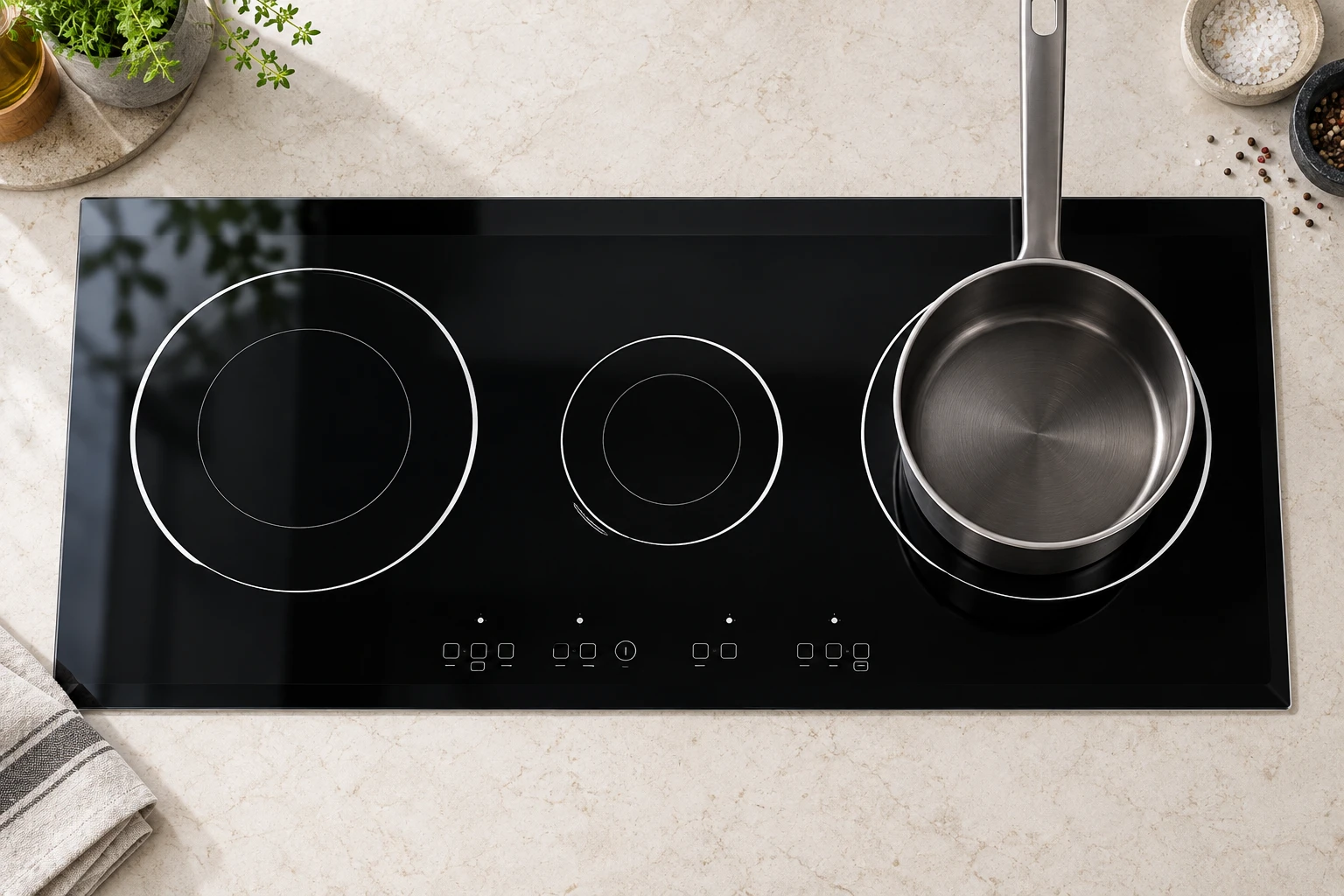
Choose a pan that the appliance manual identifies as suitable for that zone. Use the base dimension, rather than the open top, when making the comparison. Place it centrally within the intended cooking area. Do not assume one minimum diameter applies to every model, or that covering a particular percentage of a printed circle guarantees detection.
GE’s induction troubleshooting guidance treats unsuitable cookware, pan size, and position as relevant checks when burners do not operate or settings flash. Its instructions apply to the appliances described there; another brand’s manual remains the authority for that brand’s symbols and dimensions.
Make one change at a time. If you change the pan, the cooking zone, and the control mode together, a successful result will not show which change mattered. First center the original pan. Then try a known compatible alternative on the same zone. Only after recording that comparison should you compare another zone.
Use a short comparison record to narrow the problem
The following table is a troubleshooting record, not a pass/fail standard or a promise that a particular symptom has one cause. Carry out only the ordinary operating checks permitted by the appliance manual. Do not run a pan empty as a detection experiment, bypass an interlock, or repeatedly reset an appliance showing a persistent fault.
| Observation | Useful comparison | What to record next |
|---|---|---|
| One pan is not recognized | Known compatible pan on the same zone | Base construction, base diameter, centering, and displayed symbol |
| A small pan fails on a large zone | A zone/pan pairing permitted by the model manual | The manual’s permitted pairing and the actual base size |
| Several suitable pans fail on one zone | The same pans on another permitted zone | Which zone fails and whether the result is repeatable |
| No zones respond as expected | Control state and installation history | Lock indication, exact fault code, and service history |
| The problem began after service | Before/after service records | Replacement part identity and the authorized service report |
Record an unsuccessful comparison too. For example, a pan that works on one zone but fails on another does not by itself prove a damaged coil. The zones may have different permitted cookware sizes. The record helps a technician choose the next check; it does not replace that check.
Check cleanliness, stability, and operating conditions
When the appliance and cookware have cooled, inspect the pan bottom and the glass surface under ordinary light. Remove loose debris using the cleaning method approved for the exact appliance. Do not put a pad, sheet of metal, or improvised spacer between the pan and hob to make it register. The appliance may have specific restrictions on accessories.
Notice whether the cool pan rocks on an appropriate flat surface. Record visible distortion without trying to hammer, grind, or otherwise reform the base. The point is to identify a useful difference between the suspect pan and a known working one, not to repair cookware beside an energized appliance.
Whirlpool’s operating checks also distinguish cookware questions from lockout, ventilation, and other operating conditions. If the problem appears only after extended use or after items were stored near ventilation openings, preserve that timing in the report. Do not remove panels or reach into ventilation openings to investigate.
Why the glass is part of the assembly, not the whole diagnosis
A glass-ceramic cooktop panel provides the working surface and forms part of an engineered appliance assembly. The heating and detection functions also depend on the cookware, coil arrangement, electronics, control settings, and the complete installation. A component photograph cannot establish the performance of those combined parts.
Kanger’s black glass-ceramic cooktop panel is a relevant component family for an OEM discussion. It is not evidence that an arbitrary replacement pane will cure a pan-detection fault. Use the appliance manufacturer’s specified service part and authorized procedure for an installed unit. Similar appearance is insufficient to establish interchangeability.
For a new OEM design, keep panel thickness, finished shape, decoration, mounting, and the coil-to-cookware arrangement under the appliance team’s controlled specification. If the problem follows a component change, compare the released drawing and the actual installed part before assigning responsibility. Do not publish a universal Kanger thickness or detection tolerance without project-specific evidence.
Our induction and infrared panel comparison explains the wider application distinction. The cooktop-panel flatness guide addresses component measurement. Neither document turns an installed appliance fault into a glass-only acceptance test.
Keep flat-hob and shaped-wok systems separate
A curved wok designed for a matching induction unit is not an appropriate reference pan for an ordinary flat hob. Shape belongs to the complete cooking system. The independent educational channel Technology Connections explores this relationship in “Induction cooking – but what about woks?” The video is background on the technology and geometry, rather than an installation or repair instruction for your model.
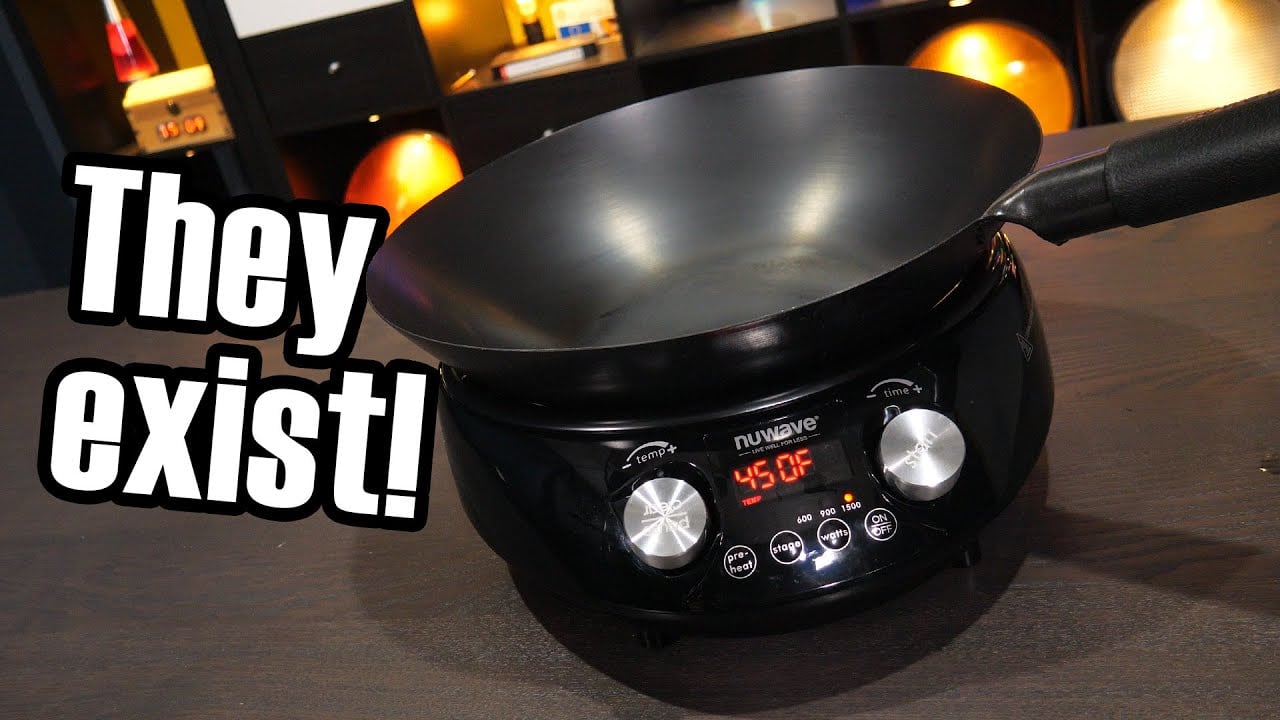
Watch the Technology Connections explanation on YouTube. Use the written appliance manual for the permitted cookware and operating steps.
Give the service team a complete, concise report
Prepare the model and serial number, the exact display, the affected zones, and the comparison record. Add photographs of the pan underside and the unpowered cooking surface. Say whether the same cookware worked before, whether a service visit or installation change occurred, and whether the issue is constant or intermittent.
For an OEM sample investigation, add the panel part number, drawing revision, assembly revision, and the sample identity. Keep an unmodified comparison unit if one exists. The practical aim is to reproduce the symptom while preserving the original configuration. Follow the broader cooktop-panel failure-analysis workflow if there is physical damage requiring a separate investigation.
A clear report should finish with a question the responsible team can answer: which approved cookware and zone combination should be tried, which documented service check follows, or whether the appliance must remain out of service. Avoid asking a glass supplier to approve changes to a powered appliance from a photograph.
Frequently asked questions
Why does my induction hob not detect a pan that a magnet sticks to?
Magnetic attraction is only an initial compatibility check. The magnetic base area, permitted size, positioning, construction, and the appliance’s operating condition still matter. Compare a known compatible pan on the same zone and follow the model manual.
Does a flashing power level prove that the glass is faulty?
No. Interpret the display using the exact appliance manual. Unsuitable cookware and positioning are among the possible checks; a flashing setting alone does not identify a defective glass panel.
Should I replace the glass to improve pan detection?
Do not replace or alter the glass as a troubleshooting experiment. Have the appliance diagnosed and use its specified service part if replacement is required. A visually similar pane is not proof of compatibility.
Can I keep testing if the glass is cracked?
Stop using the appliance and follow its isolation and service instructions. Do not continue comparison tests on a cracked cooking surface.


