An induction hob non stick pan needs two separate checks: a base approved for induction and use instructions suitable for its coated cooking surface. A nonstick label describes the food-contact surface, not whether the hob can heat the base. Check the exact pan model, its induction designation and the hob’s cookware requirements. Then follow the pan maker’s guidance on heating, utensils, cleaning and replacement. Do not assume that induction compatibility permits empty high-power preheating, unrestricted boost use or any cleaning method. The correct choice is the vessel whose documented conditions match your intended cooking.
Start with the heat source. ENERGY STAR induction cooking guidance explains that induction requires compatible cookware and describes a magnet as a practical initial check. The coating visible inside a frying pan does not answer that base question. A coated pan can have different materials underneath, and two products with similar interiors may be designed for different heat sources. Identify the exact item rather than relying on a generic collection photograph.
Look for a manufacturer statement or induction symbol associated with the particular size and model. Product ranges can contain pieces with different dimensions or construction, so confirm the smallest pan as well as the main skillet. If the listing is vague, request the current care instructions and base dimensions. A retailer category label is less useful than a clear declaration covering the vessel in your hands.
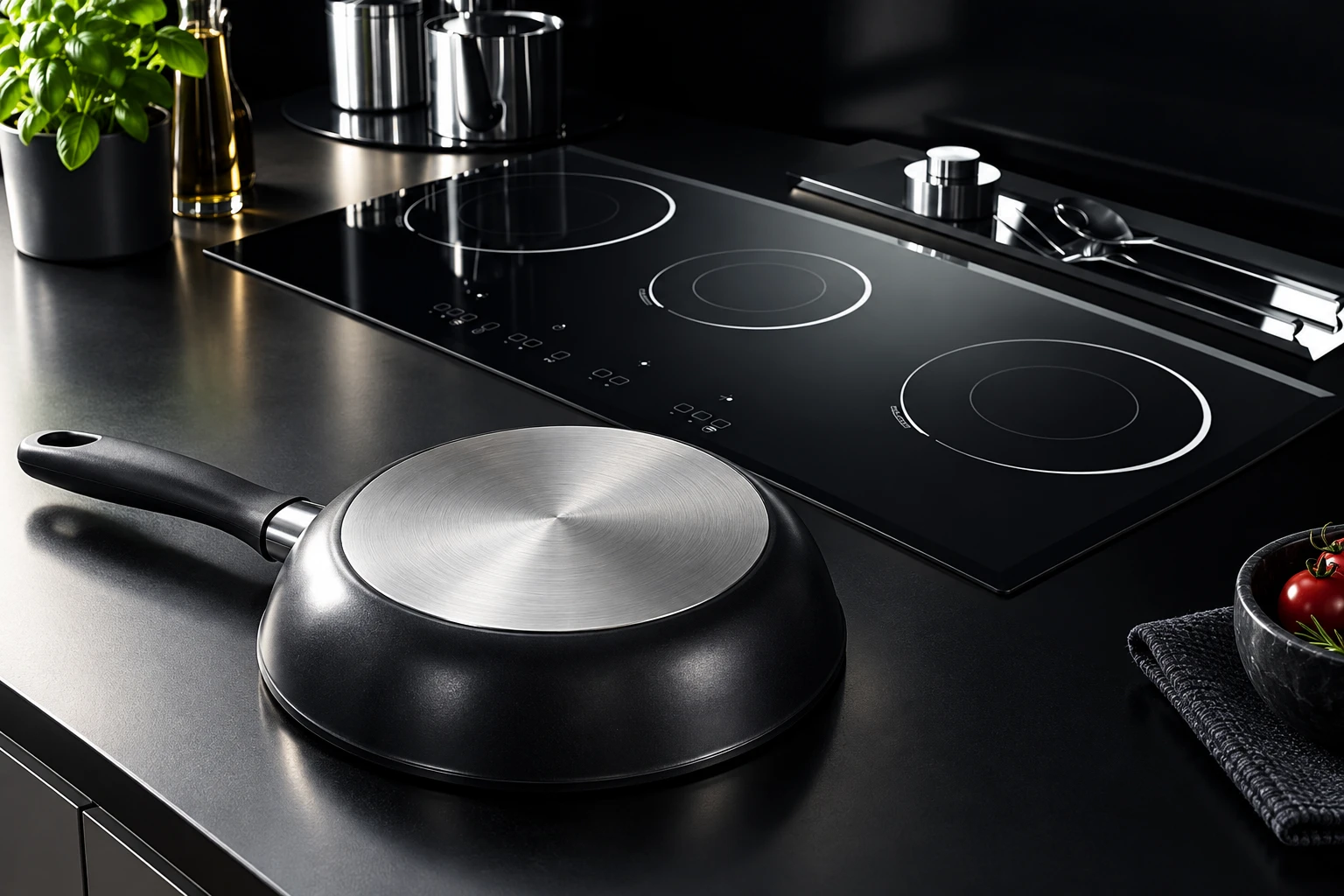
A coating’s marketing name does not identify the magnetic behavior of the base. Equally, a pan that heats on induction does not thereby establish a coating’s composition, temperature limit or durability. Keep those claims separate in your purchase notes. Do not turn an unfamiliar coating description into an unsupported assurance about health, service life or resistance to overheating.
For a procurement decision, ask the supplier for the declarations relevant to your market and intended use. This article does not certify a coating or prescribe one material over another. Compare the documented operating conditions with your recipes and cleaning routine. If the evidence is missing, mark the question unresolved rather than substituting an internet claim about a similarly named product.
Find the pan maker’s directions on starting temperature, contents, preheating and permitted heat settings. Read the hob manual alongside them, including restrictions on cookware and high-power functions. Do not import an empty-pan routine from an uncoated skillet without checking whether it is permitted for the coated vessel. The fact that a zone detects the pan is only one part of suitability.
Use any setting chart within the conditions stated by its author. Hob numbers are not universal pan temperatures, and a boost function is not a general promise of safe preheating for every vessel. If either set of instructions is unclear, ask the relevant manufacturer before trying the disputed method. Avoid testing the limit by waiting for smoke, visible discoloration or a warning message.
Check the usable base size against the intended zone, as described in pan-size checks. Make sure the handle position leaves controls accessible and does not create a collision with nearby cookware. A wide frying rim can obscure a smaller base beneath it; do not use the rim alone to judge detection. A stable setup matters when food is stirred or turned.
Plan where a lid and utensils will rest. Keep them away from active controls and out of a position where someone must reach across hot cookware. The guidance in U.S. Fire Administration cooking guidance includes supervision and handle placement. Follow it together with the appliance’s layout instructions. Avoid moving a hot pan casually between zones to compensate for a compatibility problem. Establish the correct permitted setup before cooking begins.
| Check | What to verify | Why it matters |
|---|---|---|
| Induction suitability | Declaration for the exact pan model and size | Coating appearance does not establish base compatibility |
| Zone matching | Usable base dimensions and hob instructions | Avoid selecting only by rim diameter |
| Heating procedure | Permitted preheating, contents and power guidance | Recognition by the hob does not remove pan restrictions |
| Utensils and cleaning | Supplier-approved tools, chemicals and washing method | Care requirements belong to the actual product |
| Wear or damage | Manufacturer inspection and replacement advice | Do not judge continued suitability from a product nickname |
The table deliberately avoids an invented universal temperature limit. Limits and methods depend on the specific vessel and appliance. Save the current documents so a future user can reproduce the permitted routine rather than relying on a remembered recommendation.
Begin with the recipe and the manufacturer-approved heating method. Stay with the pan and observe the food response. A coating that releases food easily does not make unattended cooking appropriate. If a recipe calls for a method outside the vessel’s documented conditions, choose cookware intended for that method instead of assuming a shorter heating period makes it acceptable.
For gentle cooking, distinguish an active simmer from a convenience keep-warm feature. Our simmer adjustment covers adjustment by the cooking task, while keep-warm function limits addresses holding and function descriptions. Neither establishes a maximum coating temperature. The food, vessel and appliance need to be considered together. Do not use a hot glass surface or a control number as an improvised measurement of the pan’s interior temperature.
If the hob will not recognize the pan, stop changing heat settings and check the exact base, position and zone requirements. Compare the appliance message with the manual. Our pan-detection checks explains that troubleshooting sequence. It should not be replaced with repeated high-power attempts or an assumption that the coating is preventing induction.
Do not add an adapter disc or protective sheet unless the exact appliance explicitly permits it and the complete arrangement is suitable for the pan. A workaround can change the thermal interface and introduce restrictions absent from the original purchase description. An approved induction-ready vessel is a different proposition from an improvised stack of accessories. Resolve the full setup rather than checking only one component.
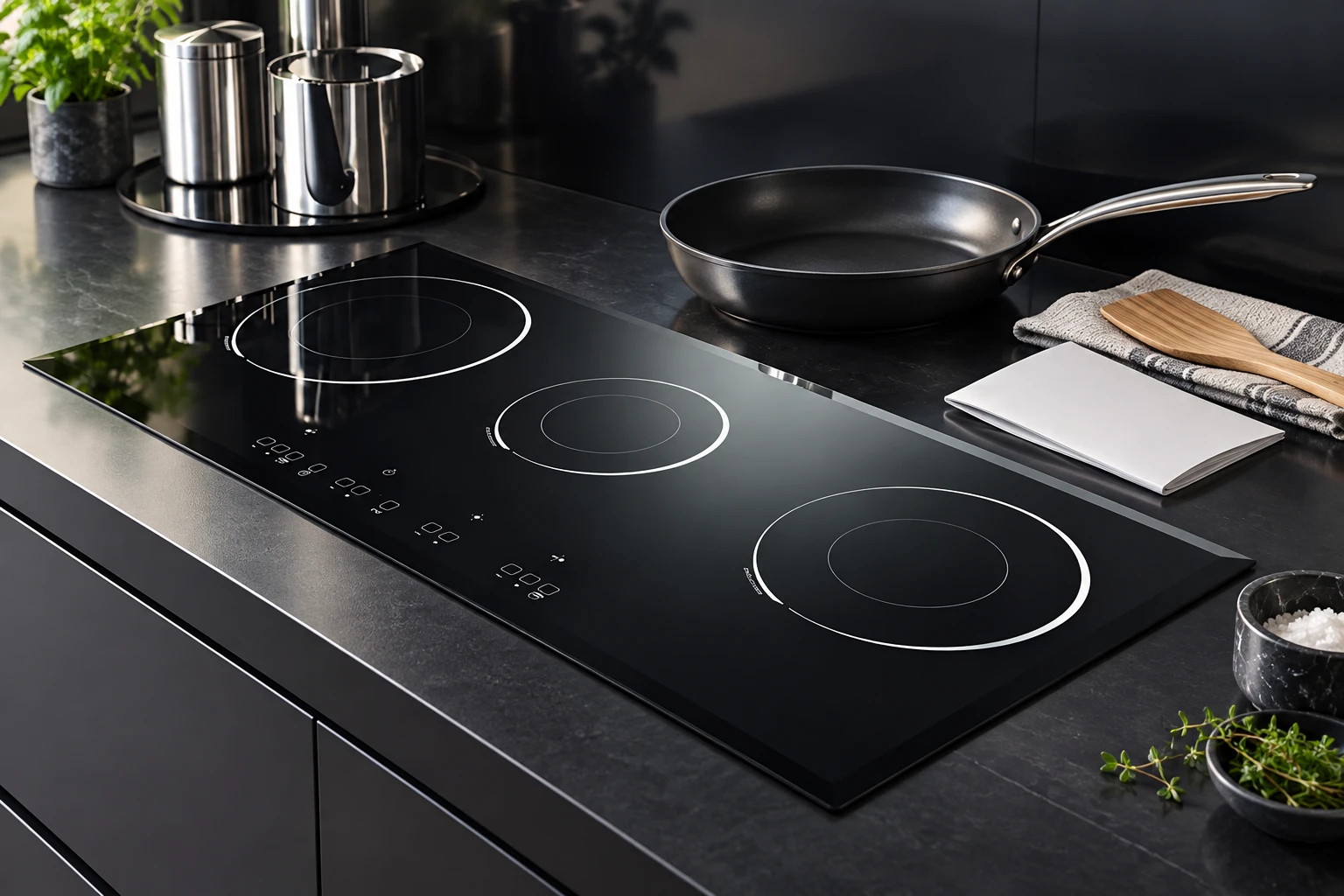
Keep the cold pan base free of attached food and grit. Lift the vessel with suitable protection instead of deliberately dragging it over the glass. Check the care instructions before placing it down after washing or storage. A clean interior does not establish that the underside is clean, particularly when the pan has been on another work surface.
For the coated interior, use only utensils and cleaning practices permitted by the supplier. Do not assume that every soft-looking pad or household cleaner is acceptable. Let the manufacturer’s instructions govern cooling and washing. Avoid transferring an abrasive glass-cleaning tool to the inside of the pan merely because both tasks occur in the same kitchen. The surfaces and their approved care methods differ.
If the coating appears damaged or the pan shape has changed, stop and consult the manufacturer’s assessment or replacement advice. Record the actual condition and history. This article cannot determine continued suitability from a photograph or define one wear threshold for all coated cookware. Avoid unsupported claims that every mark is harmless or that every discoloration proves the same failure.
For a support request, provide the model, approximate age, heat source, cooking routine and cleaning method. Include clear photographs of the base and interior. State what changed rather than guessing a chemical or electrical cause. Do not continue a questionable routine merely to reproduce a more dramatic symptom. A documented response is more useful than deliberately escalating heat or abrasion.
The Kanger black glass-ceramic cooktop panel is the relevant Kanger surface product for this cooking interface. Its drawing, appearance and assembly requirements belong in a panel specification. They do not certify a third-party cookware coating or authorize a particular empty-pan test. A photograph of black glass does not establish the complete appliance’s temperature-control behavior.
For OEM evaluation, record the intended cookware and its permitted method alongside the assembled appliance configuration. Keep panel appearance acceptance separate from cooking-performance evidence. The black glass-ceramic material overview supplies material context; it is not a cookware certification. When customer instructions mention coated pans, have them reviewed against the appliance and cookware documentation actually used in the project.
Before cooking, confirm the model, compatible zone, clean base, permitted heating method and safe handle position. Have an appropriate utensil and a separate rest ready. Keep the care document accessible to anyone sharing the kitchen. These checks make the routine repeatable without claiming that a generic article can replace product instructions.
After use, follow the approved cooling and cleaning sequence and inspect only under suitable safe conditions. Retain any support answer with the exact item details. If you replace the pan, repeat the checks rather than assuming its successor has identical limits. Compatibility and care are ongoing decisions tied to real products, not permanent properties of the word nonstick.
Technology Connections explains the interaction between induction and cookware geometry. Watch it for physical background to base compatibility; the examples do not certify a particular pan, coating or Kanger panel assembly.
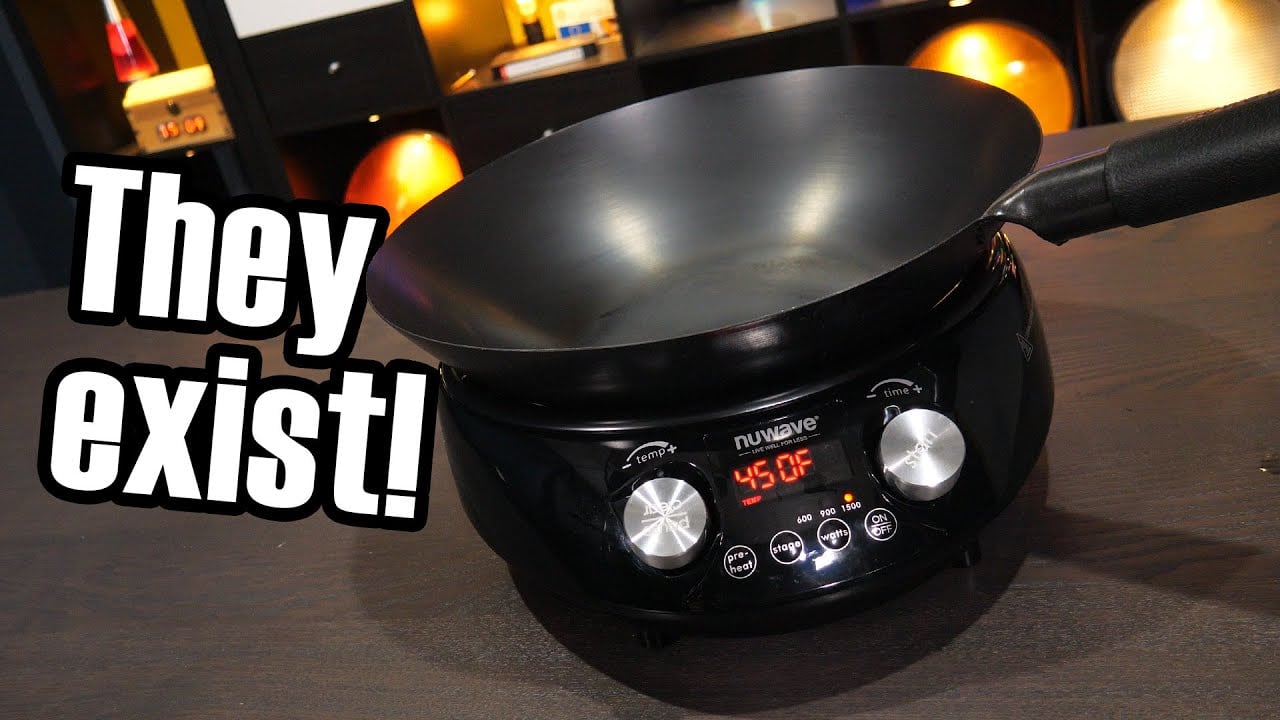
Video: Induction cooking – but what about woks?, Technology Connections. Open the educational video on YouTube.
No. Its base must be intended for induction and match the particular hob’s cookware requirements.
No. Follow the pan and appliance instructions for heating method, contents and power functions.
No. It screens magnetic response at the base and says nothing about the coating’s permitted temperatures.
Consult the exact product’s inspection or replacement guidance and document the condition without further damaging tests.



