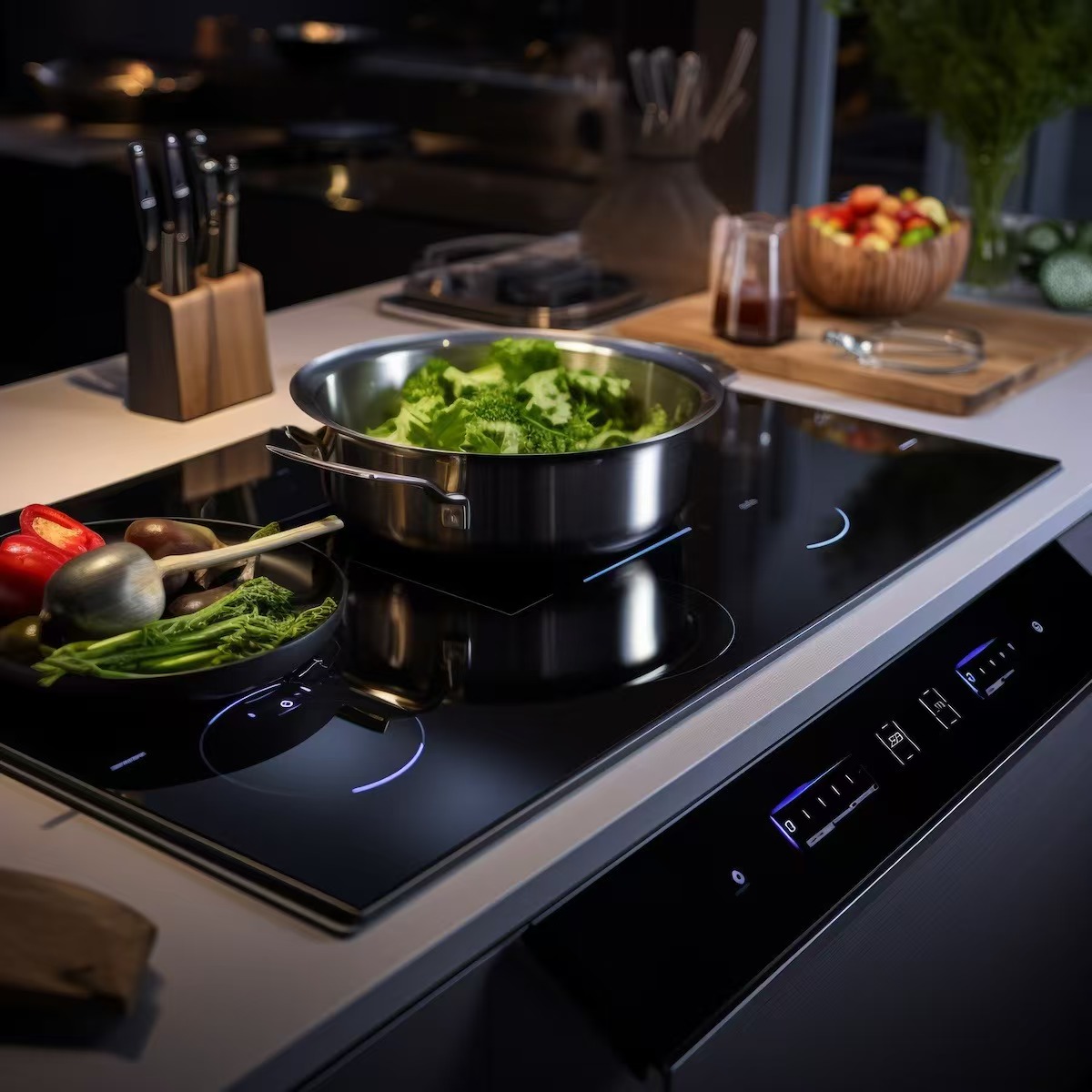
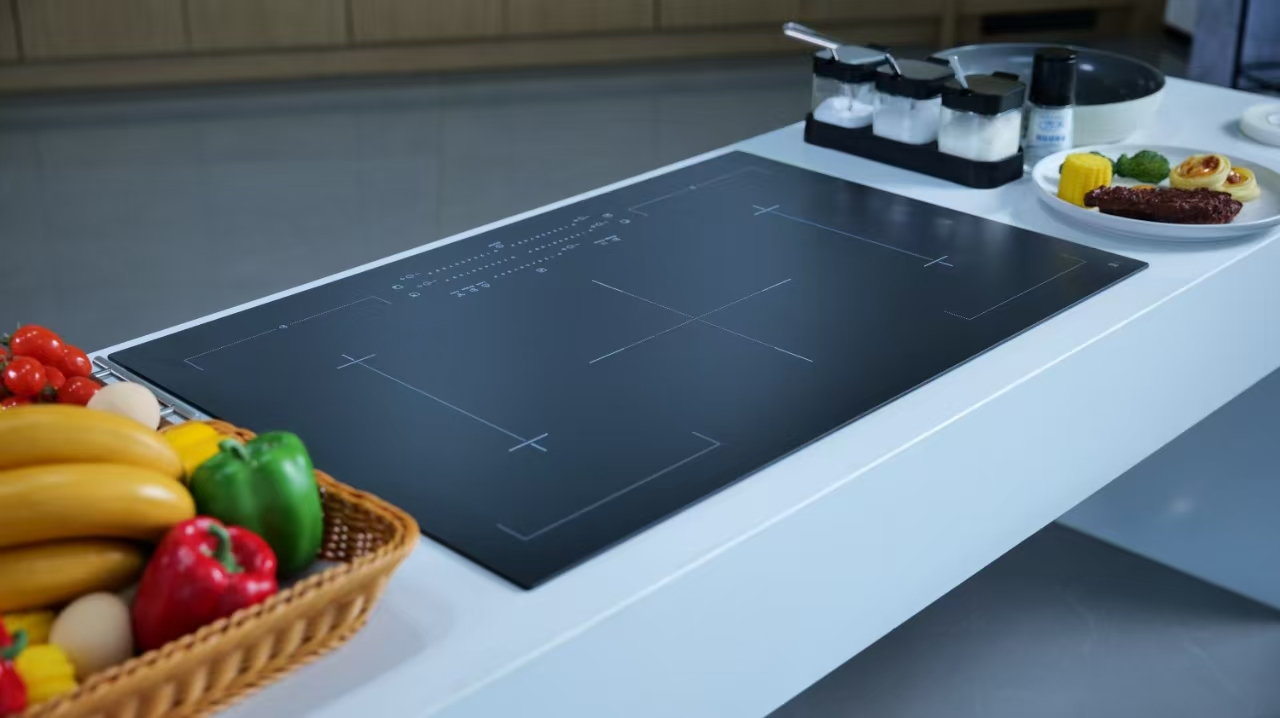
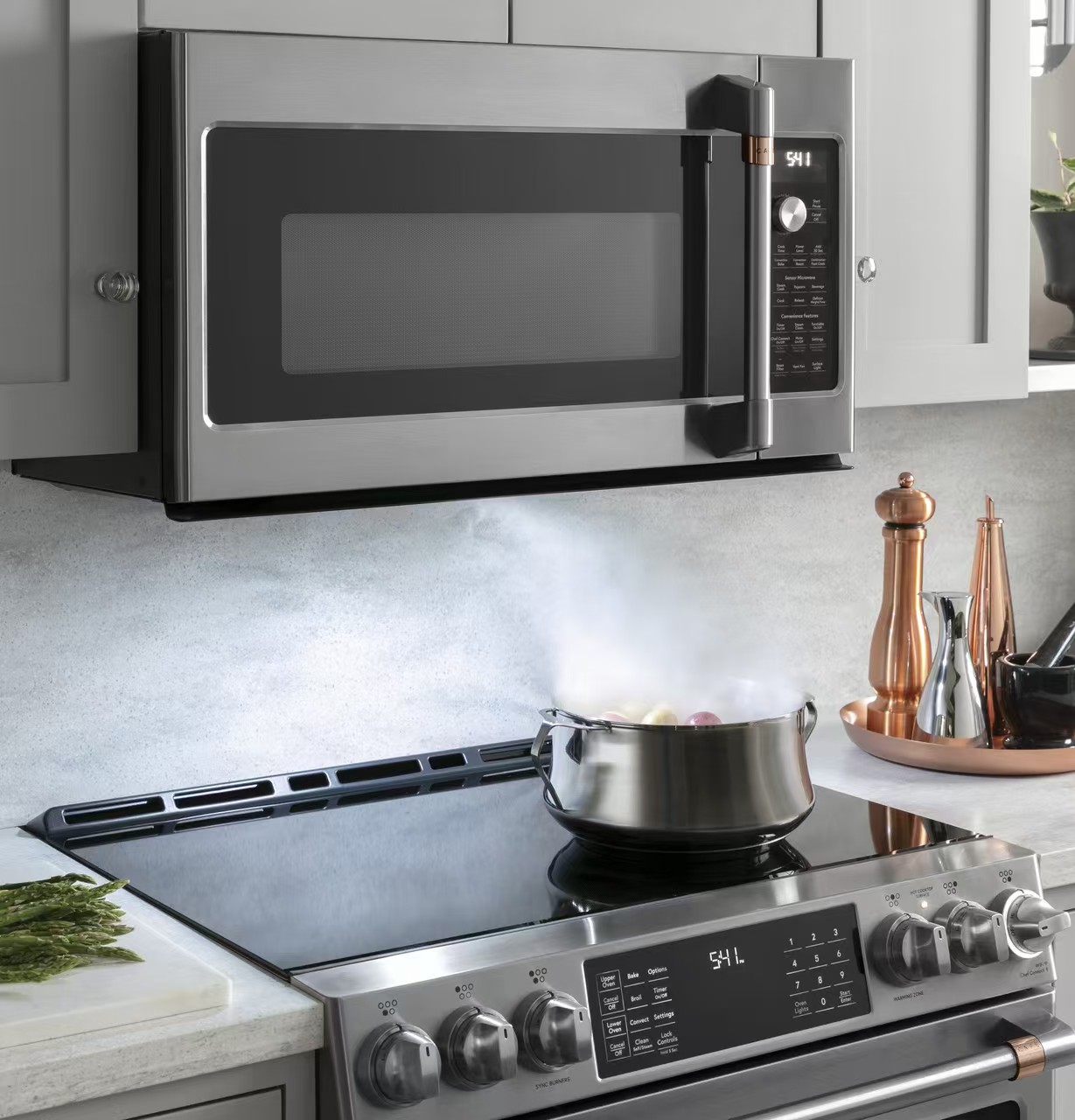
An induction hob keep warm function usually provides a low heating mode intended to maintain warmth, but its operation depends on the appliance. It is not automatically a food-temperature guarantee, a reheating program or permission to leave cooking unattended. First identify the exact feature in your model’s manual. Then use suitable cookware, supervise the pan and check the food itself when safe hot holding matters. A warm symbol on the glass does not show the temperature throughout the food. Pause modes, low power settings and residual-heat indicators should not be treated as interchangeable features.
A manufacturer may use similar wording for several functions. One setting may maintain gentle heat on a selected zone. Another may temporarily reduce several zones during a pause. A residual-heat indicator may simply warn that the surface remains hot after cooking. An oven warming program can also appear in search results for induction ranges, even though it has no bearing on the hob. Read the section for the cooking surface and the exact model.
Write down the feature name and what the manual says it controls: one zone, all active zones, a selected power level or an actual measured cooking temperature. If the documentation does not specify a food temperature, do not invent one from the symbol. A setting described as suitable for melting or warming has a different purpose from a validated commercial holding system. This distinction is essential before deciding how to use it with a particular meal.
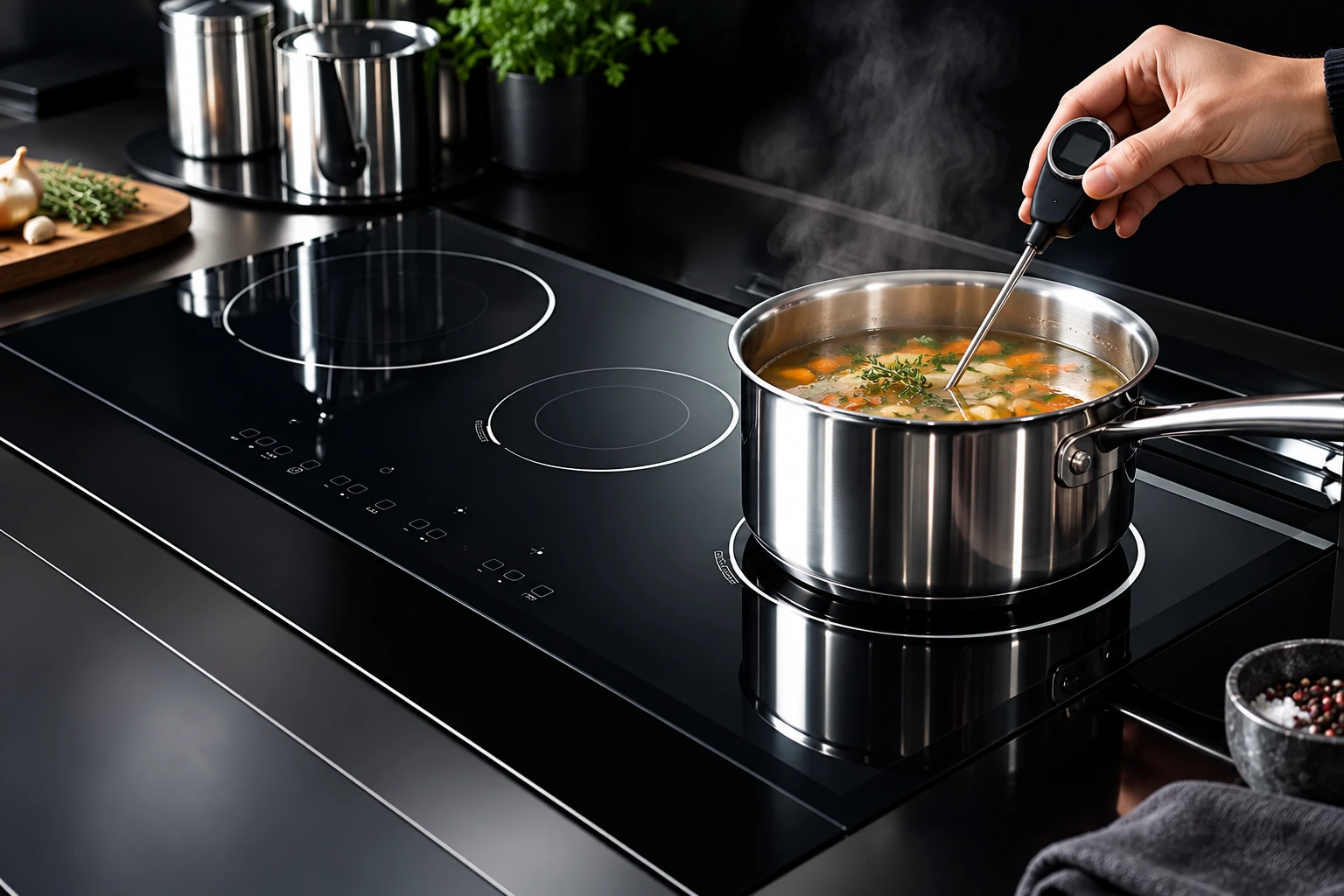
Induction transfers energy into compatible cookware. The resulting food temperature depends on the pan, contents, amount, lid, stirring and heat loss as well as the selected mode. The background in ENERGY STAR guidance on electric cooking explains why induction requires compatible cookware. It does not establish a universal relationship between a numbered hob setting and a temperature inside food. Two pans at the same setting can therefore behave differently without demonstrating a fault in the glass surface.
A low setting may cycle power or use a control method that is not visible to the cook. A quiet pan is not evidence of a particular holding temperature. Likewise, surface warmth felt near the pan is not a reliable measure of the food. Keep the pan centered as instructed and avoid adapters or mats unless the appliance explicitly permits them. Changing the cooking interface introduces additional uncertainty rather than improving the meaning of a warm indicator.
For household guidance, USDA guidance for holding cooked food hot states that food already cooked or reheated should be held at or above 140°F (60°C). That is a food-temperature condition, not a suggested temperature for the glass panel or a promise attached to a keep-warm button. Local food-service requirements can differ; a commercial operation must follow its applicable rules and validated procedures. The hob label alone cannot establish compliance.
Use an appropriate food thermometer according to its instructions when checking food temperature. Measure the food rather than pressing a sensor against the hot pan base. Consider cooler portions and the consistency of the contents, and follow the recipe and food-safety instructions for checking and stirring. If you cannot confirm safe holding conditions, choose an appropriate alternative method or follow safe cooling and storage guidance. Do not rely on taste, appearance or steam to resolve uncertainty.
| Control state | Possible meaning | What still needs checking |
|---|---|---|
| Keep warm selected | Appliance-specific gentle heating mode | Manual instructions, suitable cookware and food temperature |
| Low numbered setting | Reduced power under the hob’s control scheme | Actual cooking response; no assumed temperature conversion |
| Pause enabled | Temporary change to active-zone operation | Which zones change and how previous settings resume |
| Residual-heat symbol | Surface may remain hot after use | Burn precautions; it is not an active holding program |
| Timer running | Reminder or zone-linked countdown | Whether the timer sounds only or stops the zone |
The table describes distinctions to verify, not a standard set of features present on every hob. Use the exact manual to interpret the symbols on your appliance.
Do not assume the keep warm function is suitable for reheating cold leftovers or bringing raw ingredients to a safe cooking endpoint. Those tasks require their own time and temperature instructions. A gentle holding setting may be intended only for food that is already hot. Read both the appliance instructions and the relevant food-safety guidance before choosing the process. The name of a convenience function does not change the requirements for the food being prepared.
For example, a pan of soup that is ready to serve presents a different task from a refrigerated container placed on the hob. In the first case, you are assessing maintenance of an already hot condition. In the second, you are reheating, and a keep-warm label supplies no validated schedule. Avoid giving either task a universal number of minutes. The quantity, starting condition and chosen method all matter, and the appropriate endpoint must be checked directly.
Use compatible cookware that meets the hob’s size and placement instructions. A small pan may fall outside a zone’s detection limits, while an unusually wide vessel may warm unevenly. Check the base rather than judging by the upper rim. If the hob does not recognize the pan, resolve that issue using pan-detection checks instead of repeatedly increasing the setting. A heating mode cannot do its intended job when the cookware is not accepted.
Follow the recipe and appliance guidance on lids and stirring. Keep handles and controls accessible, and do not leave towels, paper or utensils on the control area. U.S. Fire Administration cooking-fire guidance advises turning the burner off when leaving the kitchen. A convenience mode does not remove that precaution. If your plans change, switch to an appropriate safe holding or storage method rather than treating the hob as an unattended storage surface.
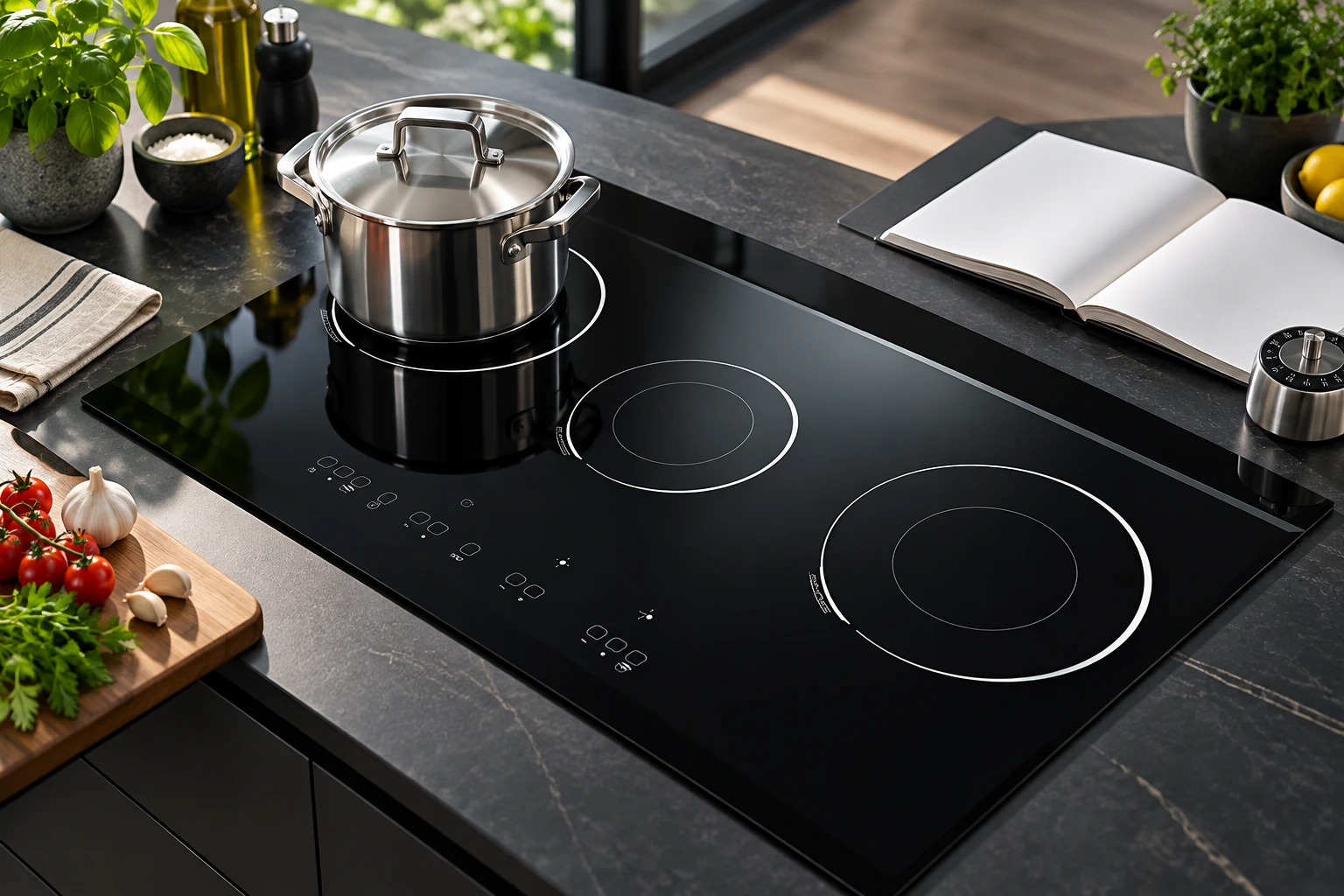
Some timers sound an alarm; others stop a selected zone. Check which action applies before relying on a countdown while holding food. The induction hob timer guide explains this distinction. If the zone switches off, a remaining residual-heat indication does not establish that the food will stay hot enough. Confirm the actual operating state and plan for serving, continued verified holding or safe storage as appropriate.
Pause is another separate function. It may alter several zones and later restore previous settings. That behavior is covered in pause-function guidance, and should not be inferred from a keep-warm icon. Check whether timers continue and how the appliance resumes. Automatic time limits also vary. Never extend an uncertain holding process by repeatedly restarting controls without knowing the temperature condition of the food.
If a permitted keep-warm mode appears ineffective, record the model, zone, pan base dimensions, approximate amount and type of food, selected function and elapsed time. Note whether the appliance accepted the pan and whether another zone was running. Record thermometer observations with the measurement method. Avoid claiming that the glass is insulating too much or the electronics are defective from a single lukewarm meal.
Try only checks the manual permits, and stop if the appliance shows damage, abnormal operation or a repeated fault message. There is no need to open the hob or measure live electrical parts. A technician can use a clear record to distinguish an unsuitable use case from an appliance fault. If the glass is cracked, do not continue operating it merely because a low setting appears to work.
The Kanger black glass-ceramic cooktop panel is a material component of a larger appliance. The complete hob combines the glass, heating system, controls and sensors. A claim about holding temperature must therefore be verified on the assembled system, with defined cookware and food conditions. Material temperature resistance alone does not establish cooking accuracy or food-safety performance. The black glass-ceramic overview gives context for the material and its applications.
For OEM approval, distinguish a design requirement such as legible warm-mode graphics from a measured performance claim. Document the control software, test setup, permitted cookware and relevant operating instructions. Ensure that users can distinguish active warming from residual heat. A graphic that looks convincing in a product photograph is not evidence that the system maintains a specified food temperature.
The neutral video below explains induction-cookware interaction. It provides background on how a pan receives energy, not a food-holding procedure or a temperature certification for a warm mode.
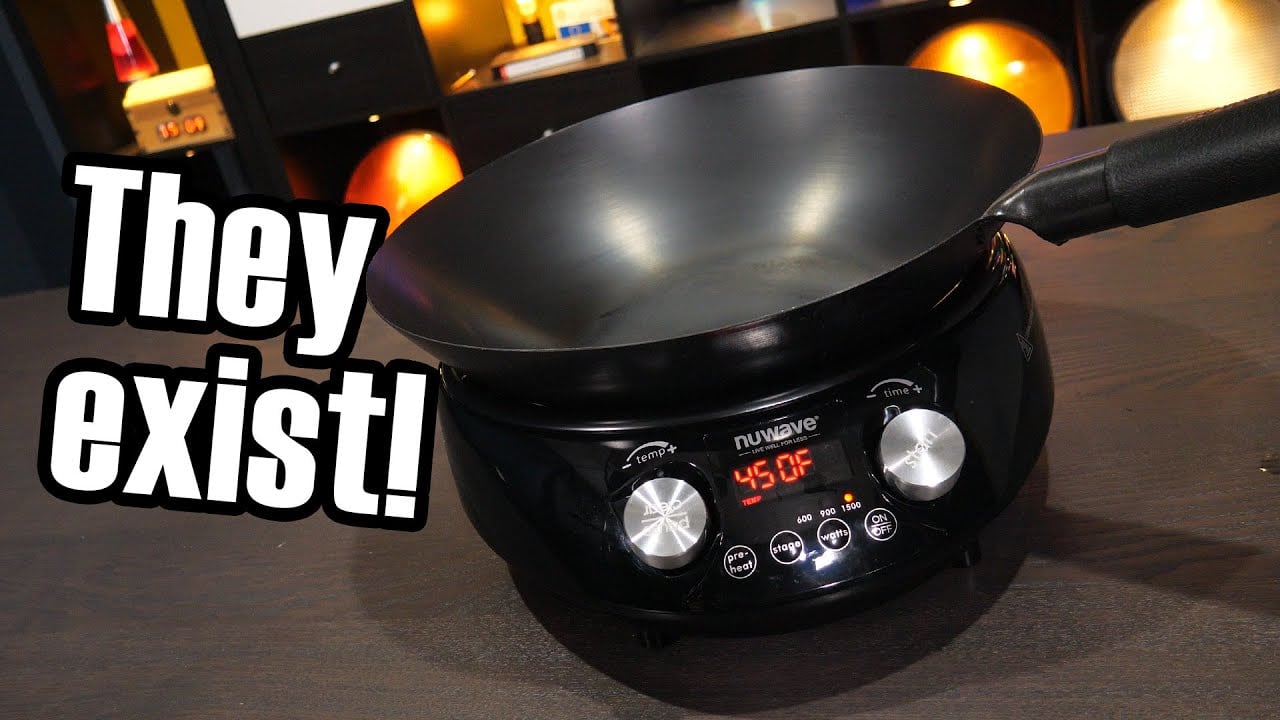
Video: Induction cooking – but what about woks?, Technology Connections. Open the educational video on YouTube.
No. Identify the exact function and verify the food-temperature conditions required by the guidance that applies to your situation. A control label alone is insufficient.
Do not assume that a holding function is a reheating program. Follow the appliance instructions and appropriate food-safety guidance for reheating and verify the required endpoint.
No. A residual-heat indication warns of remaining surface heat; it does not establish an active heating program or a safe food-holding temperature.
Do not use the feature as permission for unattended cooking. Follow the manual and cooking-fire guidance, including turning the burner off when leaving the kitchen.